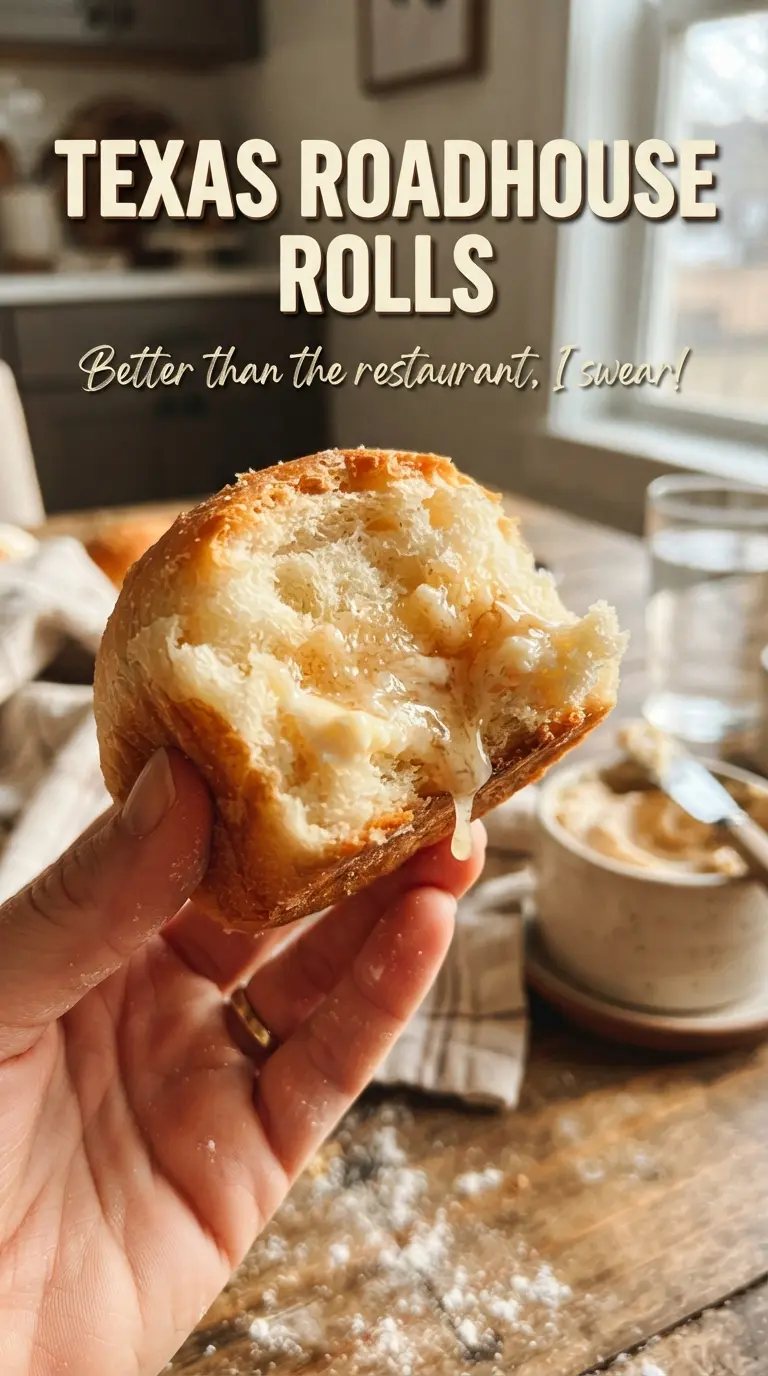
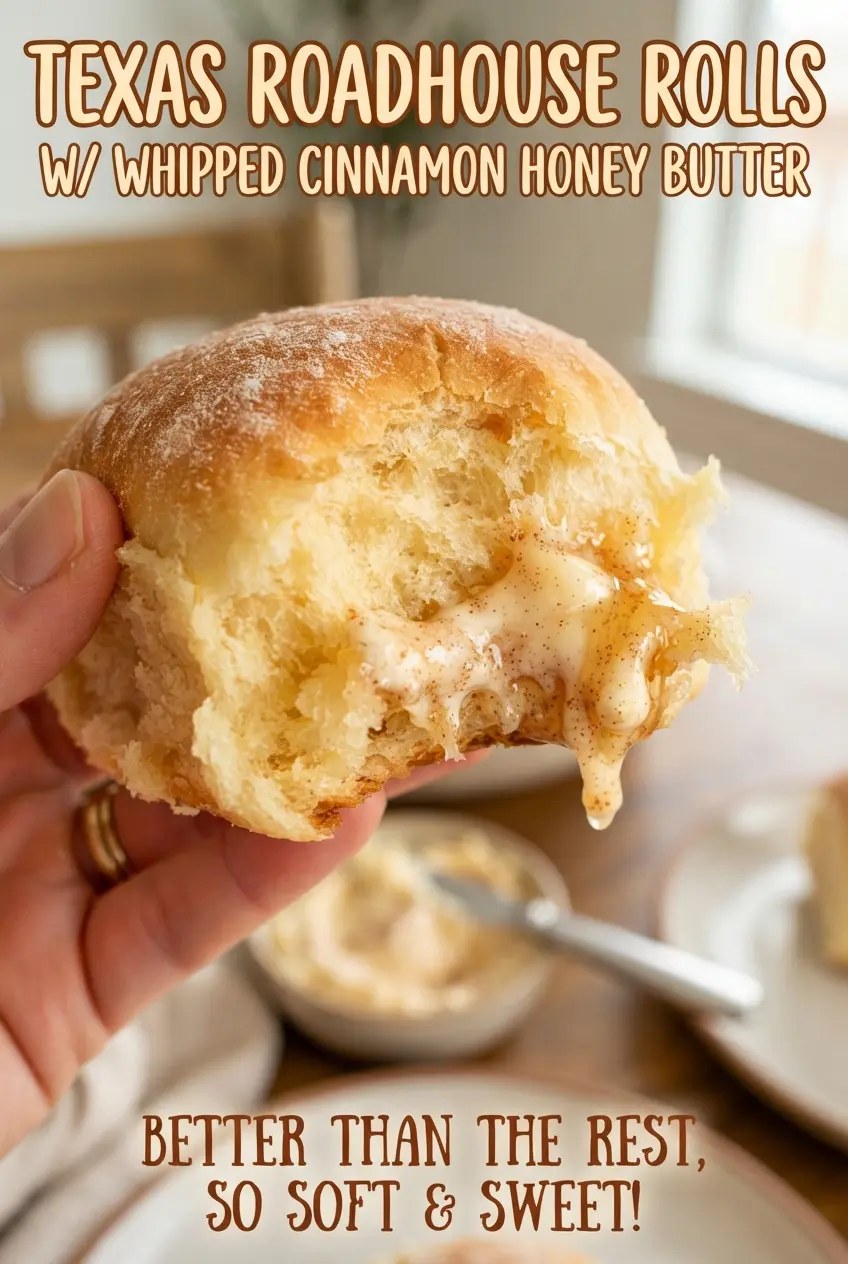
Texas Roadhouse rolls come out soft, airy, and just a little sweet, with a tender crumb that pulls apart in feathery layers. The tops bake to a pale golden finish, then get brushed with butter so every square lands on the table glossy and warm. Paired with cinnamon honey butter, they hit that sweet-savory balance that makes people reach for a second roll before they’ve finished the first.
What makes this version work is the double rise and the way the dough is handled. The first rise builds flavor and structure; the second gives the rolls their cloud-like texture. Cutting the dough into squares instead of shaping tight rounds keeps that classic pull-apart feel, and brushing with melted butter right after baking softens the crust just enough without making it greasy.
Below, I’ll show you how to keep the dough soft, how to avoid dense rolls, and how to get the cinnamon honey butter whipped light instead of heavy. If you’ve ever wanted that restaurant-style basket at home, this is the part worth paying attention to.
These came out unbelievably soft, and the cinnamon honey butter made them taste just like the restaurant. The dough puffed up beautifully on the second rise, and the centers stayed fluffy instead of doughy.
Save these soft Texas Roadhouse rolls for the nights when you want fluffy pull-apart bread and whipped cinnamon honey butter on the table.
The Double Rise Is What Keeps These Rolls Light, Not Dense
Most homemade dinner rolls fail in one of two ways: they bake up tight from under-proofing, or they turn bready and dry because the dough was overloaded with flour. These Texas Roadhouse-style rolls depend on a soft, enriched dough and two proper rises. That first rise gives the yeast time to build flavor, while the second rise is what fills the dough with enough air to bake up pillowy.
The other thing that matters is resisting the urge to pack in flour when the dough feels sticky at first. This dough should be soft and slightly tacky, not stiff. If you knead in too much flour, the rolls will still rise, but they won’t have that delicate, almost cottony texture people remember from the restaurant version.
What Each Ingredient Is Doing in the Dough and the Butter
- Whole milk — Warm milk gives the dough richness and helps the yeast wake up without shocking it. Skim milk will work, but the rolls lose some of that tender, bakery-style softness.
- Active dry yeast — The foam test matters here. If it doesn’t get foamy in the warm milk and water, the rolls won’t rise well, so it’s worth checking before you move on.
- Butter — Melted butter goes into the dough for flavor and softness, then more butter gets brushed on the baked rolls so the crust stays supple. For the cinnamon honey butter, the softened butter has to be truly soft or the spread turns lumpy instead of fluffy.
- Powdered sugar and honey — Powdered sugar keeps the honey butter smooth and light, while honey gives it that signature sweet finish. Granulated sugar won’t whip the same way and leaves the spread grainy.
- All-purpose flour — This is the best flour for the job because it gives structure without making the rolls chewy. Bread flour will make them a little tougher and less classic.
Building the Dough So It Stays Soft From Start to Finish
Waking up the yeast
Stir the warm milk, water, yeast, and a spoonful of sugar together, then leave it alone until the top looks foamy and a little swollen. That foam tells you the yeast is active and ready to work. If the mixture stays flat, the milk was probably too hot, too cool, or the yeast was old.
Kneading to the right texture
Once the flour goes in, knead until the dough looks smooth and feels soft under your hands. It should clear the sides of the bowl but still cling a little at the bottom or fingertips. If it becomes dry and firm, stop adding flour; that’s how you lose the airy crumb these rolls need.
Shaping the classic squares
After the first rise, roll the dough into a rectangle and fold it before cutting into squares. That fold helps create the layered, pull-apart texture the restaurant rolls are known for. Cut cleanly with a knife or bench scraper so the edges don’t get smashed flat, then give the pieces space to puff up before baking.
Baking and buttering at the end
Bake just until the tops turn pale golden. Overbaking is the fastest way to dry these out, since they’re meant to stay soft. Brush them with melted butter the second they come out of the oven so the tops stay tender and glossy.
How to Adapt These Rolls for Different Tables and Different Schedules
Dairy-Free Rolls
Use an unsweetened non-dairy milk with some body, like oat milk, and swap in a plant-based butter that tastes good on its own. The rolls will still be soft, but the flavor won’t be quite as rich, so don’t skip the final buttering step.
Make-Ahead Dough for Busy Days
After the first rise, cover the dough tightly and refrigerate it overnight. Chilling slows the yeast down without ruining the texture, and the dough is actually easier to handle the next day. Let it warm slightly before shaping so it puffs properly on the second rise.
Less-Sweet Version
Cut the sugar in the dough a little if you want a more neutral roll, but leave the honey butter alone. The rolls themselves still need enough sugar to support the yeast and keep the crumb tender, and the classic sweet finish comes from the spread anyway.
Storage and Reheating
- Refrigerator: Store in an airtight container for up to 3 days. They’ll firm up a little in the fridge, but they soften again when warmed.
- Freezer: Freeze the baked rolls for up to 2 months. Wrap them well, then thaw at room temperature before reheating.
- Reheating: Warm in a 300°F oven for 5 to 8 minutes, covered loosely with foil if needed. Microwave reheating works in a pinch, but it can make the rolls rubbery if you overdo it.
Answers to the Questions Worth Asking
Texas Roadhouse Rolls
Ingredients
Equipment
Method
- Combine the whole milk, warm water, active dry yeast, and 1 tablespoon sugar in a mixing bowl, then let stand 5 minutes until foamy.
- If the mixture is not foamy after 5 minutes, let it stand a bit longer before continuing.
- Add the remaining sugar, large egg, melted butter, salt, and all-purpose flour, then knead for 8 minutes until soft and smooth.
- Cover the dough and let rise for 1 hour until doubled in size, then punch it down gently before shaping.
- Roll the dough into a 1/2-inch thick rectangle, fold in half, then cut into 2-inch squares.
- Place the squares on a parchment-lined sheet pan, cover, and rise for 1 hour until puffy.
- Preheat the oven to 350F, then bake for 12-15 minutes until golden.
- Brush the baked rolls with melted butter right after they come out of the oven.
- Whip the softened butter, powdered sugar, honey, and ground cinnamon until fluffy.
- Serve the warm rolls with the whipped cinnamon honey butter.


