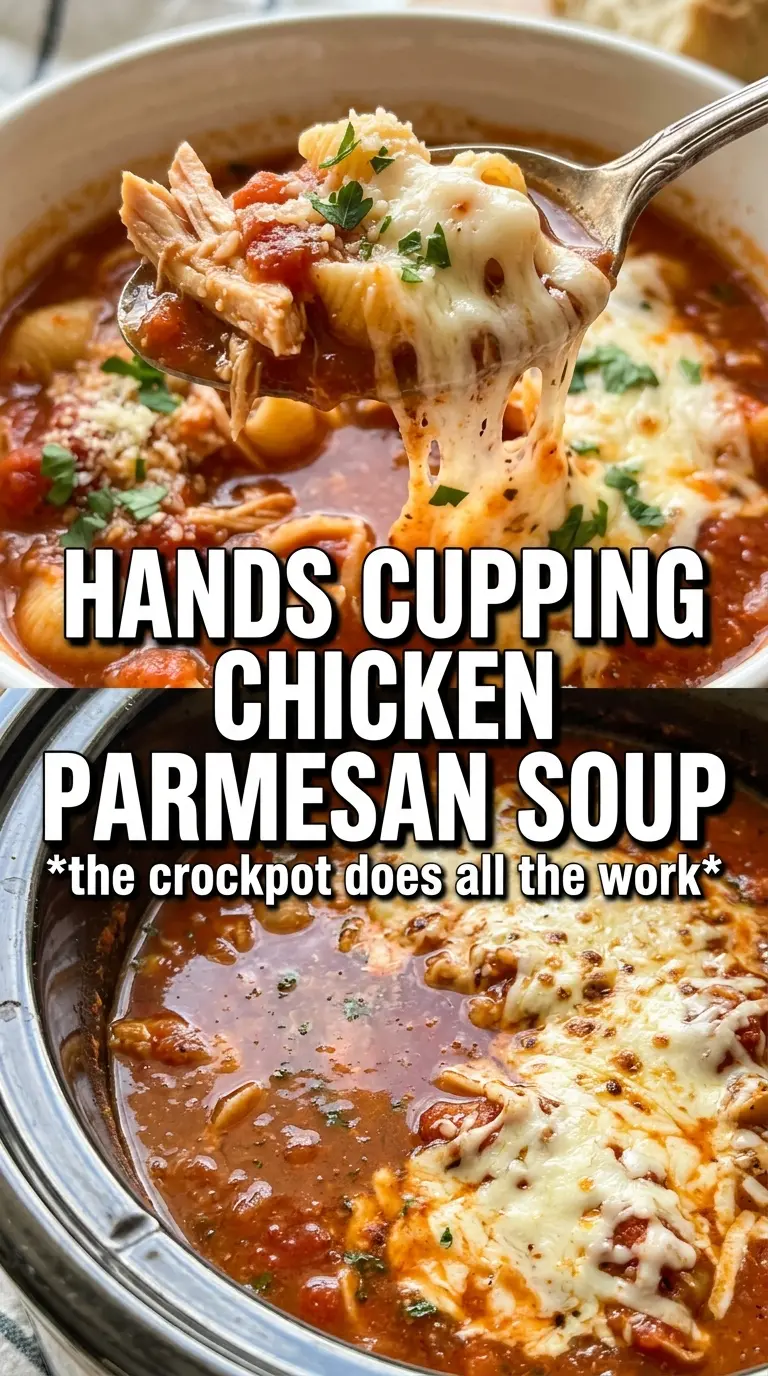
Tomato-rich broth, tender shredded chicken, and a blanket of melted cheese give this Crockpot Chicken Parmesan Soup all the comfort of chicken parm without the breading, frying, or extra pans. The slow cooker does the heavy lifting here, but the finishing touches matter: pasta cooked just until tender, parmesan stirred in for body, and mozzarella melted on top so every bowl lands with that familiar chicken parmesan pull.
What makes this version work is restraint. Raw chicken goes straight into the pot with crushed tomatoes, diced tomatoes, broth, tomato paste, garlic, onion, and herbs, then simmers until the meat is easy to shred. The pasta gets added near the end so it keeps its shape instead of turning mushy, and the cheese is added at the finish, where it can melt without disappearing into the soup.
Below, I’ve included the timing that keeps the pasta from overcooking, the best way to get the cheese to melt cleanly, and a few swaps that help if you want a thicker bowl or need to work with what’s already in the pantry.
The chicken shredded beautifully after 6 hours on low, and the pasta stayed tender without getting mushy because I added it at the end like you said. The mozzarella on top made it taste exactly like chicken parm in soup form.
Save this Crockpot Chicken Parmesan Soup for the night you want tomato-rich comfort, tender chicken, and a cheesy finish without standing over the stove.
The Key to Keeping the Pasta from Turning Soft and Heavy
In a slow cooker soup like this, the biggest mistake is treating the pasta like part of the long simmer. It isn’t. If you add penne or rigatoni at the start, it drinks up too much liquid, goes bloated, and turns the broth starchy. The chicken needs the long cook time, but the pasta only needs the last stretch, when the soup is already seasoned and the base is built.
The other thing that matters is the heat level when the pasta goes in. By that point the chicken is already tender and the broth is hot enough to cook the pasta on High without dragging the whole pot through another all-day simmer. That keeps the noodles intact and gives you a soup that still tastes brothy instead of turning into a casserole in a bowl.
What the Tomatoes, Cheese, and Breadcrumbs Are Doing Here
- Crushed tomatoes — These give the soup its body and the smooth, saucy base that reads like chicken parmesan instead of plain chicken noodle soup. Use a good canned brand if you can; this is where the flavor starts.
- Diced tomatoes — They add little bursts of texture so the soup doesn’t feel completely blended. If you only have another can of crushed tomatoes, use it; the result will be smoother but still work.
- Tomato paste — This concentrates the tomato flavor and gives the broth that deeper, cooked-all-day taste. Don’t skip it unless you have to; it adds more than color.
- Freshly grated parmesan — Grate it yourself if possible, because pre-shredded parmesan doesn’t melt as smoothly. Stirring it in off the heat helps it disappear into the broth instead of clumping.
- Mozzarella — This is the chicken parm finish. It should melt on top in soft strands, not vanish into the soup, so add it at the end and warm it just enough to go glossy.
- Garlic breadcrumbs — They replace the breaded chicken cutlet feeling in a simpler way. Add them at the very end so they stay crisp against the hot soup.
Building the Soup in the Right Order
Starting with the Raw Chicken and Tomato Base
Place the raw chicken in the Crockpot first, then pour the tomatoes, broth, tomato paste, garlic, onion, and herbs over the top. The chicken doesn’t need to be browned for this recipe to work, because the long, moist cook will make it tender enough to shred. If the onion is diced small, it softens into the broth instead of staying chunky and sharp. Give everything a stir only enough to distribute the tomato paste so you don’t leave streaks of it at the bottom.
Cooking Until the Chicken Shreds Cleanly
Cook on Low for 5 to 6 hours, or on High for about 3 hours if you’re short on time. The chicken is ready when it pulls apart easily with two forks and doesn’t resist in the center. If it still feels rubbery, it needs more time; if you shred it too early, it falls apart into dry threads instead of juicy pieces. Pull the chicken out onto a plate, shred it, and return it to the pot so the soup keeps that meaty texture throughout.
Adding the Pasta Without Overcooking It
Stir in the pasta and cook on High for 25 to 30 minutes, just until it’s tender with a little bite in the center. The broth should be at a steady simmer, not a hard boil, or the pasta can split and go mushy at the edges. If the soup looks too thick at this stage, add a splash of broth before the pasta goes in, because pasta will tighten it up as it cooks.
Melting the Cheese at the Finish
Ladle the soup into bowls, then top each serving with mozzarella and parmesan. A brief trip under the broiler or a quick microwave blast melts the cheese without overcooking the soup underneath. If you dump the cheese straight into the pot, it disappears into the broth and you lose the chicken parm effect that makes this dish work. Finish with basil and garlic breadcrumbs for crunch and freshness.
How to Adapt This Soup When You Want It Richer, Lighter, or Dairy-Free
Make It Thicker and Heartier
Use just 3 1/2 cups of broth instead of 4, or let the finished soup sit uncovered for 10 to 15 minutes before serving. That gives the broth a more stew-like feel and helps the tomato base cling to the pasta. If you want even more body, stir in an extra spoonful of tomato paste before the pasta goes in.
Use Boneless Chicken Thighs Instead
Chicken thighs bring a richer flavor and stay juicy even if the slow cooker runs a little long. They shred easily and give the soup a slightly fuller finish than chicken breasts. The soup will taste a touch more savory and less lean, which works well with the tomato and cheese.
Dairy-Free Version
Skip the mozzarella and parmesan and finish with extra basil plus a generous drizzle of good olive oil. The soup still has the chicken parm-inspired tomato base, but it loses the creamy, salty finish that cheese brings. If you want a little more richness, add a spoonful of dairy-free pesto to each bowl.
Gluten-Free Serving
Use gluten-free penne or rigatoni and cook it only until just tender, since gluten-free pasta can get soft faster in hot broth. Another good option is to skip pasta in the soup and serve it over cooked rice or with gluten-free bread on the side. The base of the soup itself is naturally gluten-free if your broth is certified gluten-free.
Storage and Reheating
- Refrigerator: Store the soup for up to 4 days. The pasta will keep absorbing broth, so expect it to thicken overnight.
- Freezer: Freeze the soup without the pasta for the best texture. Dairy-free portions freeze well; add fresh pasta and cheese after thawing and reheating.
- Reheating: Warm it gently on the stove over medium-low heat or in the microwave in short bursts, adding a splash of broth if needed. Don’t boil it hard, or the pasta breaks down and the chicken turns stringy.
Answers to the Questions Worth Asking
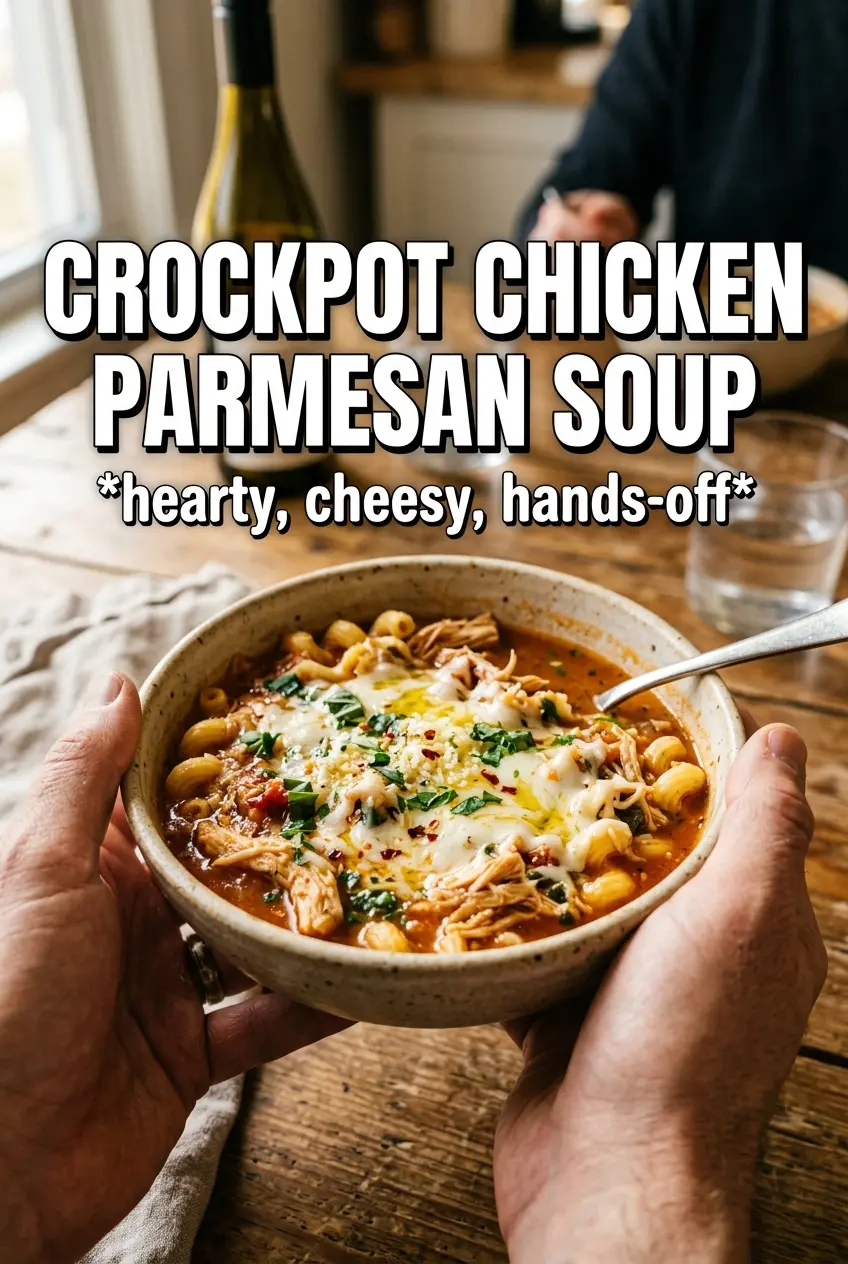
Crockpot Chicken Parmesan Soup
Ingredients
Equipment
Method
- Place the raw chicken in the crockpot, then add the crushed tomatoes, diced tomatoes, chicken broth, tomato paste, minced garlic, diced onion, Italian seasoning, and dried basil. Season with salt and black pepper to taste.
- Cook on Low for 5-6 hours (or High for about 3 hours) until the chicken is tender and easily shreds. Keep the lid on so the soup stays at a steady simmering temperature.
- Remove the chicken, shred it, and return the shredded chicken to the crockpot. Stir to evenly distribute the chicken throughout the tomato broth.
- Add the penne or rigatoni and cook on High for 25-30 minutes until tender. Stir once or twice so the pasta cooks evenly and doesn’t stick.
- Ladle soup into bowls and top each bowl with mozzarella and parmesan. Broil or microwave briefly until the cheese melts and turns glossy.
- Garnish each bowl with fresh basil and garlic breadcrumbs for the chicken-parm effect. Serve immediately while the topping is hot and bubbling.