Stuffed pepper soup has the same comfort you get from classic stuffed peppers, but in a bowl that comes together faster and eats like a proper weeknight dinner. The broth turns rich and tomato-forward, the peppers stay tender with a little bite, and the rice soaks up just enough of the pot to make every spoonful hearty without turning muddy. A handful of cheddar on top melts into the hot soup and gives it that familiar stuffed-pepper finish.
The trick here is building the base in layers. Browning the beef first gives the broth depth, and cooking the tomato paste with the onions and peppers takes away that raw canned-tomato edge. I also like to add the rice uncooked right into the soup, but only after the broth is at a steady simmer. That gives you a fuller body without dirtying another pot.
Below, I’m walking through the small details that keep the rice from overcooking and the broth from tasting flat. There’s also a storage note that matters more than it does with most soups, since the rice keeps absorbing liquid after the pot comes off the heat.
The rice stayed tender, the peppers still had a little bite, and the broth tasted like stuffed peppers without all the work. My husband went back for a second bowl before I’d even sat down.
Save this stuffed pepper soup for the nights when you want all the flavor of stuffed peppers in one easy pot.
The Part Most People Get Wrong: Cooking the Rice in the Pot
The rice is what makes this soup hearty, but it’s also the part that can wreck the texture if you rush it. If the soup is boiling hard when the rice goes in, the grains break down on the outside before the center cooks through, and you end up with a starchy, heavy pot. A gentle simmer keeps the broth clear enough to taste the tomatoes and peppers instead of turning everything into porridge.
The other thing that matters is liquid. Rice drinks a lot as it cooks, and it keeps drinking after the heat is off. That’s why this soup is best served when the rice is just tender, not left to sit until it’s fully swollen and soft in the pot. If it thickens too much, a splash of broth brings it right back.
What Each Ingredient Is Actually Doing in the Bowl
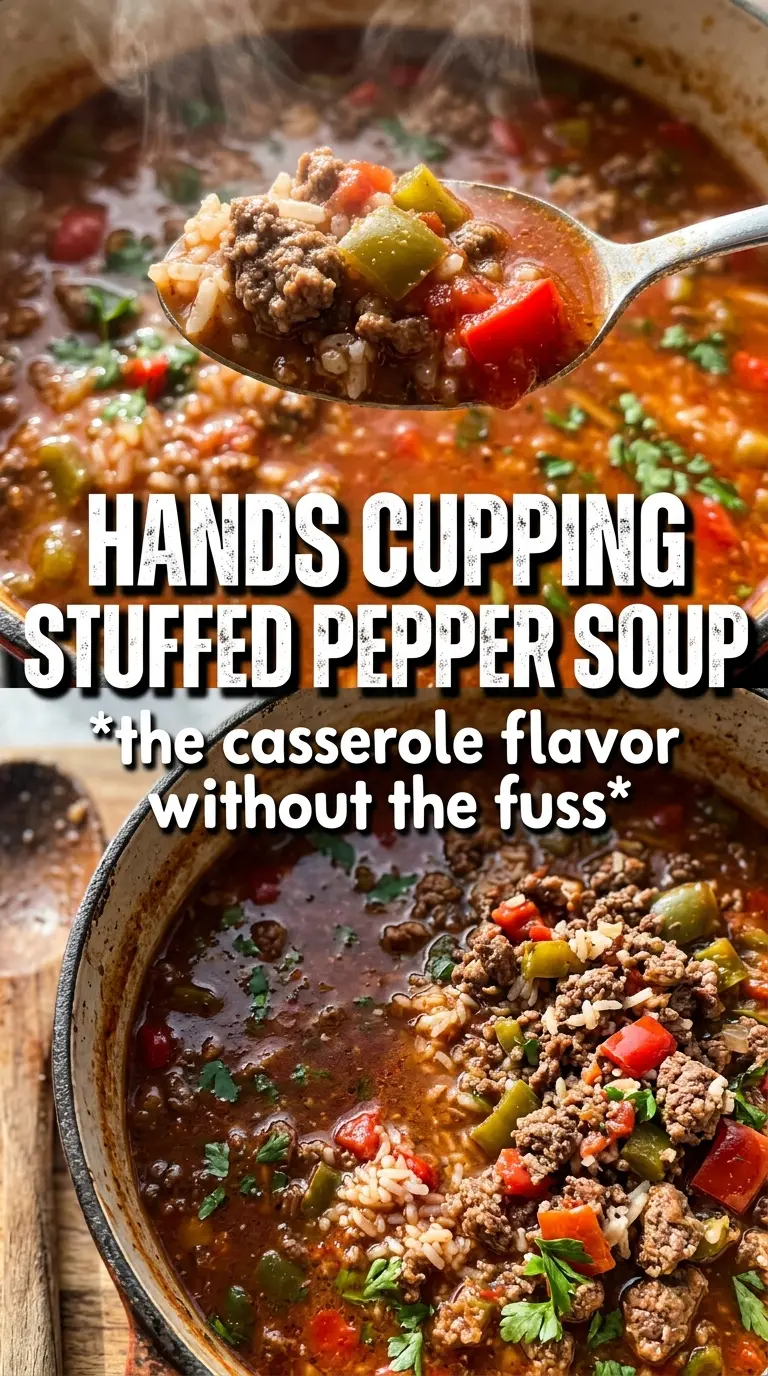
- Ground beef — This gives the soup its savory backbone. An 80/20 blend adds enough fat for flavor, and draining the excess after browning keeps the broth from turning greasy.
- Green and red bell peppers — The green peppers bring the classic stuffed-pepper taste, while the red pepper adds sweetness that rounds out the tomatoes. Dice them evenly so they soften at the same pace.
- Tomato paste — This is the quiet ingredient that deepens the whole pot. Cooking it for a minute or two with the vegetables wakes up its flavor and keeps the soup from tasting flat.
- Crushed tomatoes and diced tomatoes — Crushed tomatoes thicken the broth, while diced tomatoes leave little bites of tomato in the soup. If you only have one type, use it, but the mix gives better texture.
- Uncooked long grain rice — Long grain white rice holds its shape better than short grain, which can go soft and sticky in a soup like this. If you swap in brown rice, it needs a longer simmer and more broth.
Building the Pot So the Broth Stays Rich, Not Flat
Browning the Beef First
Cook the beef until it loses its pink color and starts to pick up browned bits on the bottom of the pot. Those browned bits are where the flavor lives, so don’t pour them down the drain with the fat. Drain off only the excess grease, then move straight into the vegetables while the pot is still hot.
Softening the Peppers and Onion
Add the onion and both peppers to the same pot and cook them until the onion turns translucent and the peppers take on a little softness around the edges. You’re not trying to brown them deeply here; you’re building sweetness and giving the peppers a head start before the broth goes in. Garlic goes in at the end of this stage so it doesn’t scorch.
Letting the Tomato Base Bloom
Stir the tomato paste into the hot vegetables and cook it for about 2 minutes before adding the liquids. It should darken slightly and smell a little sweeter and less sharp. If the paste sticks, the heat is too high; lower it and keep stirring so it doesn’t burn and turn bitter.
Simmering the Rice Until Just Tender
Once the broth, tomatoes, and seasonings are in, bring everything to a boil, then drop it to a steady simmer before adding the rice. Cover the pot and cook until the rice is tender but still has a little structure, about 18 to 20 minutes. If the soup looks too thick before the rice is done, add a splash of broth instead of turning up the heat.
Finishing With Cheese and Herbs
Ladle the soup into bowls and top it with shredded cheddar while it’s still steaming hot. The cheese should soften and melt on contact, not sit there in clumps. A little chopped parsley cuts through the richness and gives the bowl a fresh finish that keeps the tomato broth from tasting heavy.
Three Useful Ways to Adapt This Soup Without Losing What Makes It Good
Make it with ground turkey
Swap the beef for ground turkey if you want a lighter soup. Turkey doesn’t bring as much fat, so keep the tomato paste step and consider a small splash of olive oil in the pot to help the vegetables soften. The flavor stays clean and pepper-forward, just a little less rich.
Make it gluten-free
This soup is already naturally gluten-free as written if your broth is certified gluten-free. The key thing to watch is the stock and any pre-shredded cheese, since packaged ingredients sometimes carry additives you wouldn’t expect. The texture and flavor stay the same.
Use brown rice instead of white
Brown rice works, but it needs more time and more liquid. Start checking it around 30 to 35 minutes, and keep extra broth nearby because it will absorb more as it cooks. The finished soup will be nuttier and a little chewier, which some people prefer in a soup like this.
Storage and Reheating
- Refrigerator: Store leftovers for up to 4 days. The rice will keep absorbing broth, so expect the soup to thicken.
- Freezer: It freezes, but the rice softens after thawing. For the best texture, freeze it without rice if you know you’ll be making it ahead, then cook fresh rice when you reheat.
- Reheating: Warm it gently on the stove over medium-low heat with a splash of broth or water. Don’t boil it hard, or the rice will go mushy and the tomatoes can taste dull.
Answers to the Questions Worth Asking

Stuffed Pepper Soup
Ingredients
Equipment
Method
- Brown the ground beef in a large pot over medium-high heat, then drain excess fat.
- Sauté the onion and all diced bell peppers in the same pot for 4-5 minutes until slightly softened.
- Add the minced garlic and tomato paste, then cook for 2 minutes while stirring until fragrant.
- Stir in the crushed tomatoes, diced tomatoes, beef broth, Italian seasoning, garlic powder, and smoked paprika, then bring to a boil.
- Add the uncooked long grain white rice, reduce heat to maintain a gentle simmer, cover, and simmer 18-20 minutes until the rice is cooked.
- Season with salt and pepper to taste, then serve hot topped with shredded cheddar and fresh parsley.