When the water reaches a rolling boil, the eggs are already on their way to the texture that makes a deviled egg worth eating: tender whites and yolks that mash without turning chalky. I take the pan off the burner before the covered rest, which keeps the eggs from rattling around in boiling water. That gentle finish gives these Spicy Deviled Eggs a creamy filling with a steady little kick of cayenne.
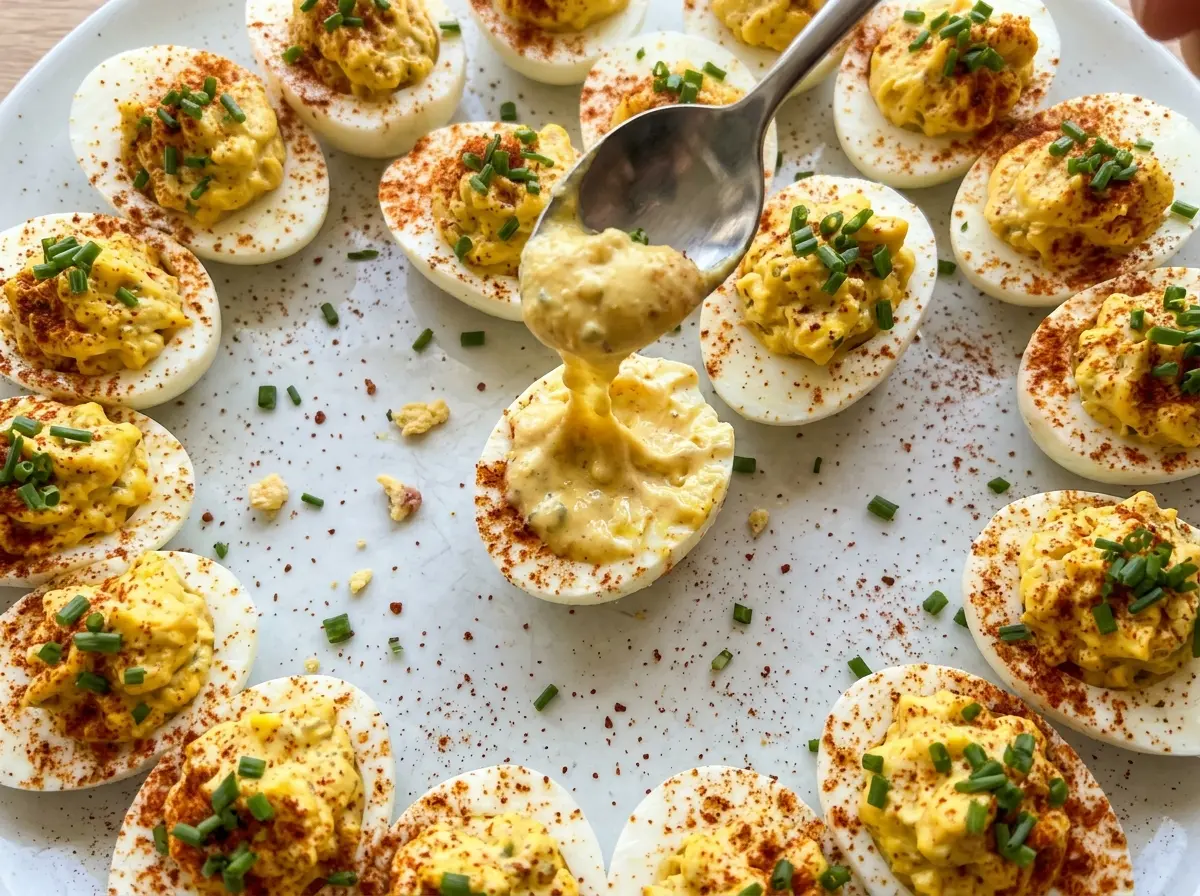
The filling comes together from the yolks, mayonnaise, Dijon, white vinegar, and seasonings, all mashed until smooth. The vinegar brightens the richness, while Dijon brings a quiet savory tang that keeps the cayenne from tasting one-note. A final dusting of paprika adds color on top, and a short rest in the refrigerator lets the filling settle into the whites. Each half is cool, creamy, and pleasantly peppery.
Kitchen Note
I divide the filling across all 12 egg-white halves before adding the paprika. That way the last few halves get as much as the first ones, and the finished platter looks even without having to scrape filling from one egg to another.
Save these Spicy Deviled Eggs for a gathering when you want creamy yolks, a measured cayenne kick, and paprika-dusted tops.
Why the Eggs Keep Cooking After the Pot Leaves the Burner
Hard-cooked eggs can go from tender to rubbery when they spend too long over direct heat. Here, the water comes to a rolling boil first, but the burner does not stay on for the covered rest. The hot water and covered saucepan provide the heat the eggs need to finish cooking gently, without the constant bubbling that can jostle the whites.
The timing depends on giving the eggs that uninterrupted, covered rest. Lifting the lid to check them lets heat escape, and returning the pan to the burner changes the method from a gentle finish to continued boiling. I leave the saucepan covered for the full 12 minutes, then move the eggs straight to the ice bath. That sequence is the difference between a yolk that mashes smoothly and one that feels dry or crumbly in the filling.
This approach also makes the cooking easy to repeat: bring the water to a rolling boil over medium-high heat, remove the saucepan from the heat, cover it, and let the eggs sit. There’s no need to watch for a simmer once the lid is on. The eggs can rest while you prepare the cold water and ice bath.
Why Mayo and Vinegar Matter More Than Extra Cayenne

- Eggs — Large eggs give the method its dependable timing and provide enough yolk for a creamy filling in each half. Use eggs that are intact; a cracked shell can let water seep in as they cook. Smaller or larger eggs won’t match the same cooking window as closely.
- Mayonnaise — This is what turns mashed yolks into a soft, spoonable filling instead of a dry paste. A familiar, mild mayonnaise works well; a strongly seasoned one can take over the Dijon and cayenne. If you need a dairy-free version, use dairy-free mayonnaise in its place and expect the flavor to vary a little by brand.
- Dijon mustard — Dijon adds a rounded savory tang that supports the egg without making the filling taste sharply mustardy. Its smooth texture blends easily with the yolks. A different mustard can make the filling sweeter or more pungent, so Dijon is the best choice for this balance.
- White vinegar — The clean acidity cuts through the richness of the yolks and mayonnaise. White vinegar keeps the filling bright without adding another strong flavor or color. I’d keep it rather than swap in an assertive vinegar, which can shift the whole filling.
- Cayenne pepper — Cayenne gives this version its warm heat, and it spreads evenly when mashed into the yolk mixture. Its intensity can vary by brand, so taste the filling before spooning it into the whites if you’re sensitive to spice.
- Paprika — Paprika is sprinkled over the filled halves, giving each one a clear red finish and a gentle peppery aroma. It works best as the final garnish here, where you can see it instead of losing its color in the yellow filling.
From Rolling Boil to Neat, Creamy Halves
Bring the water to a boil, then let the covered pan do the work
Place the large eggs in a 3-quart saucepan and add 8 cups of cold water, or enough to cover the eggs by 1 inch. Bring the water to a rolling boil over medium-high heat. Remove the saucepan from the heat, cover it, and leave the eggs undisturbed for 12 minutes. Don’t keep the pan on the burner during that rest; the cooking continues in the covered hot water.
Cool the eggs before peeling and halving
While the eggs rest, combine the remaining 4 cups of cold water and the ice in a 2-quart bowl. Transfer the eggs to the ice bath and cool them for 5 minutes. Peel the eggs once they’ve cooled, then halve each one lengthwise. Lift the yolks into a medium bowl and keep the white halves intact for filling.
Mash the filling until it’s smooth
Add the mayonnaise, Dijon mustard, white vinegar, cayenne, kosher salt, and black pepper to the yolks. Mash everything together until no dry, crumbly yolk remains and the mixture looks cohesive. If small yolk lumps are left behind, they’ll still be noticeable in the finished filling, so take the extra moment to mash them out. The mixture should be soft enough to spoon into the whites.
Fill, dust with paprika, and chill
Spoon the yolk mixture into the egg-white halves, distributing it among all 12. Sprinkle the tops with paprika so each half gets a little color. Refrigerate the assembled eggs for at least 20 minutes before serving. The chill gives the filling time to settle and keeps the eggs pleasantly cool on the platter.
Small Changes That Keep the Eggs Spicy, Creamy, or Dairy-Free
A gentler cayenne finish
Use less cayenne in the yolk mixture if you want the eggs warmly seasoned rather than noticeably hot. The Dijon and black pepper still give the filling a savory edge, while the smaller amount of cayenne keeps the heat in the background.
Dairy-free deviled eggs
Replace the mayonnaise with the same amount of dairy-free mayonnaise. It keeps the yolk mixture creamy without dairy, though the exact tang and saltiness depend on the product you use. The rest of the filling stays the same.
Paprika in every bite
For a more evenly distributed paprika flavor, mash the paprika into the yolk filling instead of sprinkling it over the finished halves. You’ll lose the bright red dusting on top, but the paprika will be present throughout the filling.
Storage and Reheating
- Refrigerator: Store the eggs covered and refrigerated for 3 to 4 days. The whites may soften slightly, and the paprika topping can lose some of its fresh appearance.
- Freezer: Freezing isn’t recommended. Cooked egg whites turn watery and rubbery after thawing, and the filling can lose its smooth texture.
- Reheating: These are served cold, so don’t reheat them. Warming the assembled eggs makes the whites soft and the filling less pleasant.
Questions That Come Up With Spicy Deviled Eggs
Spicy Deviled Eggs
Ingredients
Method
- Place the eggs in a 3-quart saucepan and add 8 cups of the cold water, or enough to cover the eggs by 1 inch.
- Bring the water to a rolling boil over medium-high heat.
- Remove the saucepan from the heat and cover it.
- Let the eggs sit for 12 minutes.
- Meanwhile, combine the remaining 4 cups cold water and the ice in a 2-quart bowl.
- Transfer the eggs to the ice bath and cool for 5 minutes.
- Peel and halve the eggs lengthwise.
- Place the yolks in a medium bowl.
- Mash the yolks with the mayonnaise, Dijon mustard, vinegar, cayenne, salt, and black pepper until smooth.
- Spoon the filling into the egg-white halves.
- Sprinkle with paprika.
- Refrigerate for at least 20 minutes before serving.


