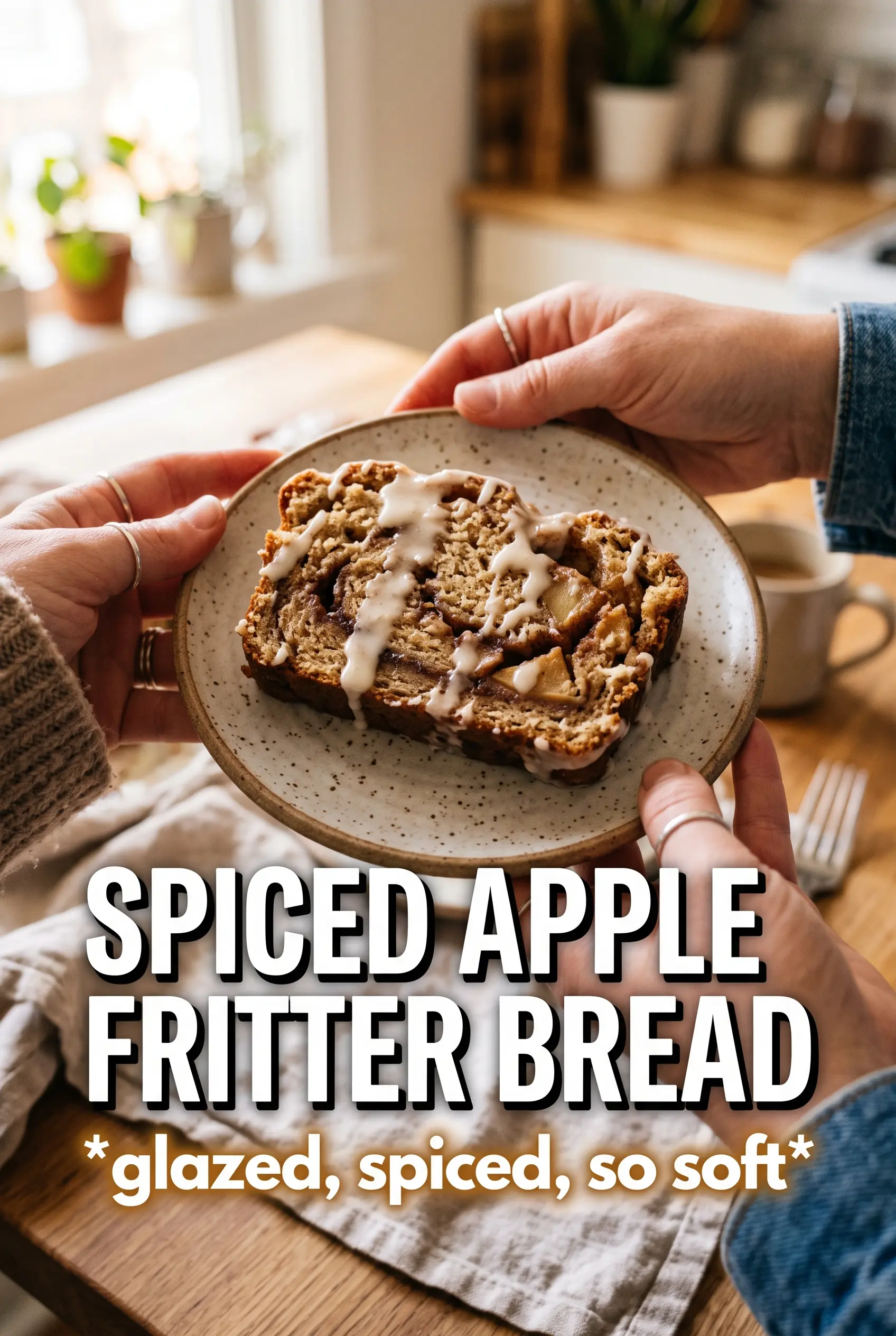
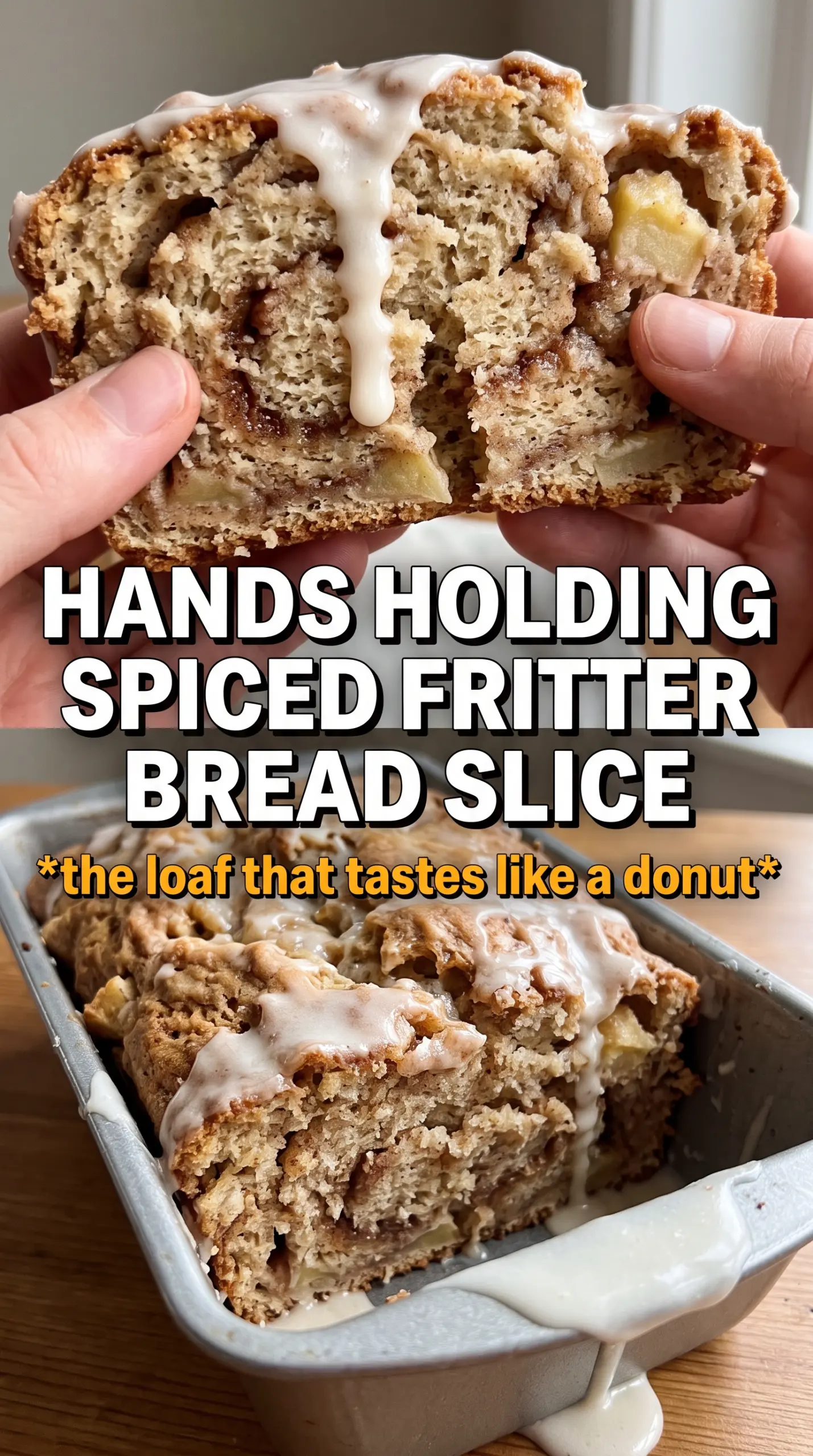
Spiced apple fritter bread bakes up with a tender crumb, pockets of cinnamon-apple filling, and that bakery-style glaze that sinks into the top just enough to set into a sweet finish. It slices cleanly once cooled, but the first warm piece has the best contrast: soft bread, juicy apples, and a ribbon of spice in every bite. It’s the kind of loaf that disappears fast because it tastes like a cross between quick bread and an apple fritter, without the mess of frying.
The trick is keeping the apple layer separate enough to create swirls instead of muddying the batter. Tossing part of the spiced sugar with the diced apples draws out a little moisture and concentrates the flavor, while the buttermilk keeps the loaf plush and gives the baking soda something to work with. The batter is thick on purpose, so the fruit stays suspended instead of sinking to the bottom.
If you’ve ever had apple bread turn dry or bland, the notes below will help you avoid both problems. I’ve also included a few useful swaps and the one storage trick that keeps each slice tasting fresh the next day.
The glaze soaked into the warm loaf just enough, and the cinnamon-apple swirl stayed distinct instead of turning into a mushy layer. My kids were asking for the last slice before it even cooled.
Save this spiced apple fritter bread for the mornings when you want cinnamon-glazed loaf with a tender crumb and real apple swirls.
The Swirl That Keeps the Apples from Disappearing
Apple quick breads fail for two opposite reasons: the fruit sinks, or it melts into the batter and turns the loaf dense and wet. This version avoids both by splitting the spiced sugar. Half gets tossed with the diced apples, which helps season the fruit and pull out a little surface moisture, and the other half stays in the loaf as a ribbon of cinnamon sweetness.
The batter should look thick enough to hold its shape when you spread it into the pan. That thickness matters. Thin batter gives you a loaf that bakes up flat and gummy around the apples, while a sturdier batter traps the fruit in layers and gives you that fritter-like swirl when you slice it.
What the Apples, Buttermilk, and Warm Spices Are Each Doing
- Apples — Peel and dice them fine so they soften during baking and distribute evenly through the loaf. A firmer baking apple gives the best texture here because it holds its shape instead of collapsing into jam.
- Buttermilk — This is what keeps the crumb tender and gives the baking soda enough acid to lift the loaf. If you don’t have it, use milk mixed with a little lemon juice, but the flavor and texture won’t be quite as plush.
- Cardamom and allspice — These small amounts matter. Cinnamon carries the main flavor, but cardamom and allspice make the loaf taste layered instead of one-note.
- Butter and sugar — Cream them until the mixture looks pale and fluffy. That step traps air, which is part of what gives this quick bread a lighter, more cake-like crumb instead of a heavy one.
Building the Loaf So It Bakes Through Without Drying Out
Creaming the Base
Beat the softened butter and granulated sugar until the mixture looks lighter in color and a little fluffy around the edges. That air is doing real work here, so don’t rush this stage. If the butter is too cold, it won’t incorporate properly and the loaf will bake up tight. Add the eggs one at a time, then the vanilla, and stop mixing as soon as the batter looks smooth.
Adding the Dry Ingredients and Buttermilk
Whisk the flour, baking powder, baking soda, and salt together first, then alternate the dry ingredients with the buttermilk. The batter should stay thick and creamy, not runny. Overmixing at this point is what makes quick bread chewy and tunnelled, so stir only until the last streaks of flour disappear. A few tiny lumps are better than an overworked batter.
Layering the Apples
Spread half the batter in the pan, add the apple mixture, then sprinkle on the remaining spiced sugar before covering with the rest of the batter. Use a knife to make a light swirl, not a full stir. If you over-swirl, the layers blend together and you lose the defined cinnamon streaks that make this loaf special. Bake until a toothpick comes out clean or with just a few moist crumbs, then glaze it while the bread is still warm so the icing melts slightly into the top.
Three Ways to Adjust the Loaf Without Losing the Fritter Effect
Make it dairy-free
Use plant-based butter and swap the buttermilk for unsweetened non-dairy milk mixed with 1 tablespoon lemon juice. The loaf will still bake up tender, though the crumb may be a touch less rich and the glaze will be a little lighter.
Use pears instead of apples
Firm pears can stand in for apples if that’s what you have, but choose ones that are still slightly crisp. Softer pears break down faster, which gives you a wetter center and less distinct fruit pieces.
Make it less sweet
Reduce the glaze to a thin drizzle or skip it altogether and dust the top with cinnamon sugar while the loaf is warm. The bread itself is still flavorful without the full glaze, and the spiced apple layer carries plenty of sweetness on its own.
Storage and Reheating
- Refrigerator: Store slices in an airtight container for up to 4 days. The crumb firms up a bit in the fridge, but the flavor stays good.
- Freezer: Freeze individual slices tightly wrapped for up to 2 months. Thaw at room temperature so the glaze doesn’t get sticky and slide off.
- Reheating: Warm slices for 10 to 15 seconds in the microwave or a few minutes in a low oven. Too much heat dries the loaf out and makes the glaze overly runny.