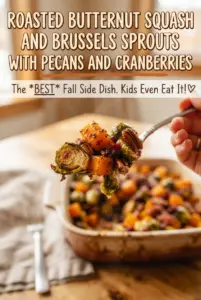
Roasted butternut squash and Brussels sprouts earn their place on the table when the edges go caramelized, the centers stay tender, and the sweet-tart finish pulls everything together. The squash turns silky in the oven, the Brussels sprouts pick up those dark, crisp edges that taste almost nutty, and the cranberries and pecans keep each bite moving between soft, chewy, and crunchy.
The trick is giving the vegetables enough space on the pan to roast instead of steam. A hot oven and a single layer matter here more than anything else, because that’s what builds color before the maple balsamic goes on. The glaze gets tossed in at the end so it clings lightly instead of burning during roasting.
Below, I’ve included the small details that make this side dish dependable: how to keep the sprouts crisp, when to add the glaze, and which swaps still keep the balance of sweet, sharp, and toasty just right.
The squash caramelized beautifully and the Brussels sprouts stayed crisp around the edges instead of turning mushy. The maple balsamic brought everything together, and the toasted pecans added the perfect crunch.
Roasted butternut squash and Brussels sprouts with pecans and cranberries is the side dish to pin for holiday dinners, weeknight mains, and any table that needs a sweet-savory finish.
The Mistake That Keeps Roasted Squash and Brussels Sprouts Soft Instead of Crisp
The difference between caramelized vegetables and a pan of steaming ones comes down to crowding. Butternut squash and Brussels sprouts both give off moisture as they roast, and if they’re piled on top of each other, that moisture has nowhere to go. You end up with tender vegetables, but not the browned edges that make this dish worth repeating.
Use a large sheet pan and spread everything out in a single layer. If the pan looks packed, split it into two pans. Tossing halfway through helps the sprouts brown on the cut sides and keeps the squash from sticking, but don’t keep moving them around too much or you’ll interrupt the browning before it has time to happen.
What the Maple, Balsamic, and Toasted Pecans Are Doing Here
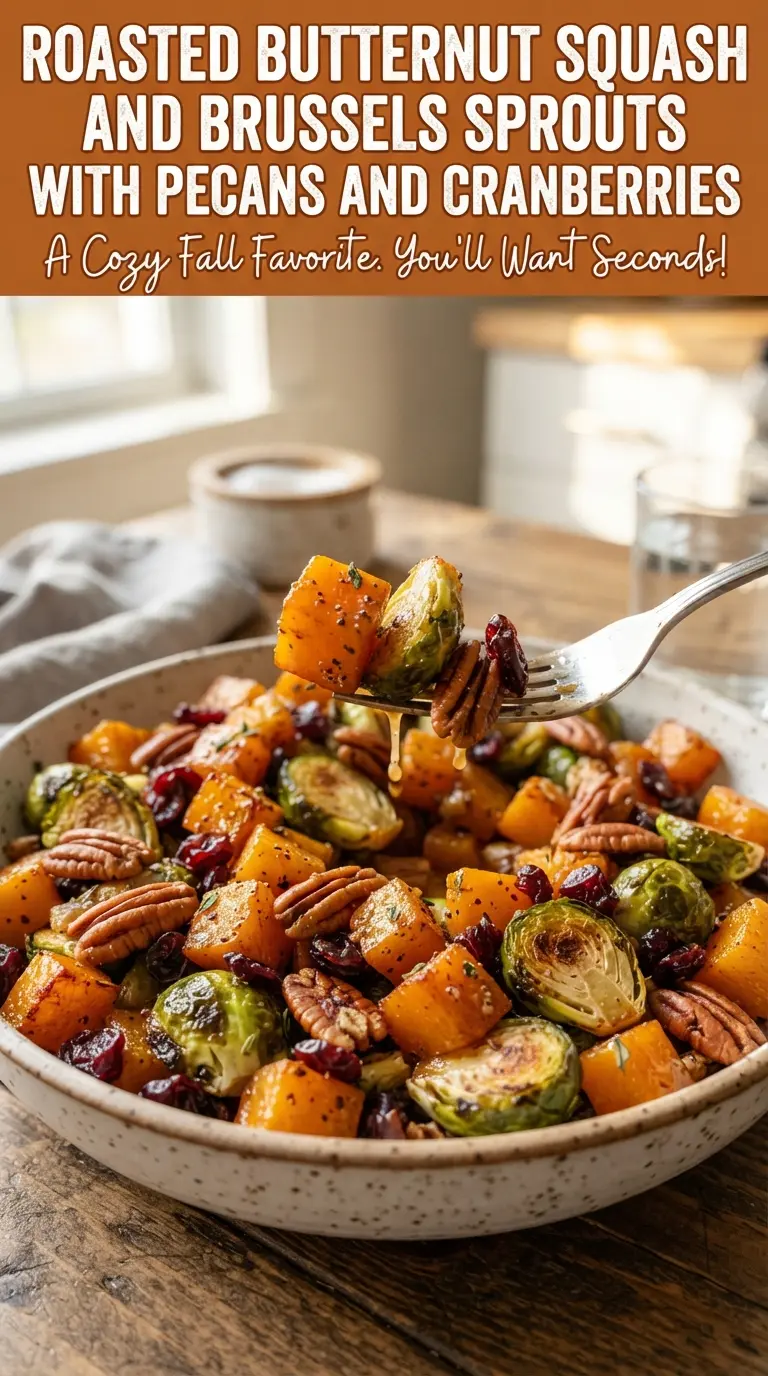
- Butternut squash — This is the sweet, creamy base of the dish. It browns best when cut into even cubes, and peeling it matters because the skin stays tough at this roasting time. If you need a swap, sweet potato works well and gives a similar texture with a little less silkiness.
- Brussels sprouts — Halved sprouts roast with cut sides down against the pan, which is where the best browning happens. Look for tight, bright green sprouts; older ones can turn sulfurous and dull. If some outer leaves fall off, keep them on the pan because they crisp up like little chips.
- Maple syrup and balsamic vinegar — This glaze isn’t there to coat the vegetables heavily. It’s there to add shine, sweetness, and enough acid to keep the dish from tasting flat. Use real balsamic if you can; a harsh cheap vinegar can overpower the cranberries and make the finish taste sharp instead of balanced.
- Pecans — Toasted pecans bring the crunchy finish this dish needs. Raw pecans taste soft and dusty by comparison, and they disappear into the vegetables instead of standing out. If yours aren’t already toasted, warm them in a dry skillet or on a tray in the oven for a few minutes until fragrant.
- Dried cranberries — These add chew and a bright tart note that keeps the sweet roasted vegetables from feeling heavy. If your cranberries are very dry, toss them in while the vegetables are still warm so they soften slightly without breaking down.
Building the Roast So Every Bite Has Color, Crunch, and Balance
Coating the Vegetables Evenly
Toss the squash and Brussels sprouts with olive oil, salt, and pepper until every piece looks lightly coated, not slick. The oil helps the edges blister and brown, while the seasoning goes on now so it can cling before the vegetables dry out in the oven. If the pan looks wet, you’ve used too much oil, and the vegetables will roast unevenly.
Roasting Until the Edges Caramelize
Roast at 425F for 25 to 30 minutes, tossing halfway through. You’re looking for deep golden spots on the squash and browned cut faces on the sprouts, with tender centers that still hold their shape. If the vegetables are soft but pale, they need more time; if they’re getting too dark before they turn tender, the pieces were cut too small.
Finishing With the Glaze and Crunch
Whisk the maple syrup and balsamic together, then toss it with the hot vegetables just before serving. Adding it at the end keeps the glaze glossy and prevents the sugars from burning. Fold in the cranberries and pecans last so the nuts stay crisp and the cranberries keep their chew.
How to Adapt This for Different Tables and Different Diets
Make It Vegan and Naturally Dairy-Free
This recipe already lands in dairy-free territory as written, so nothing has to change. The glaze, nuts, and fruit carry the whole dish without butter or cheese, which keeps the vegetables front and center and makes it easy to serve with almost any main.
Swap the Pecans for Walnuts or Pumpkin Seeds
Walnuts bring a deeper, slightly more bitter crunch, while pumpkin seeds give you a lighter, toastier bite and make the dish nut-free. Toast either one first so the flavor stays lively; raw seeds or nuts taste flat against the sweet squash.
Use Sweet Potato Instead of Butternut Squash
Sweet potato gives a softer, earthier result and roasts a little faster than butternut squash, so check for tenderness early. The flavor leans less silky and a little more starchy, but the maple balsamic still fits it well.
Storage and Reheating
- Refrigerator: Store leftovers in an airtight container for up to 4 days. The Brussels sprouts soften a bit, but the flavor stays strong.
- Freezer: The roasted vegetables freeze, but the texture becomes softer after thawing. Freeze without the pecans if possible, then add fresh toasted nuts after reheating.
- Reheating: Warm in a 400F oven for 8 to 10 minutes or in a skillet over medium heat. The biggest mistake is microwaving until everything turns limp; dry heat brings back some of the edges.
Questions I Get Asked About This Recipe
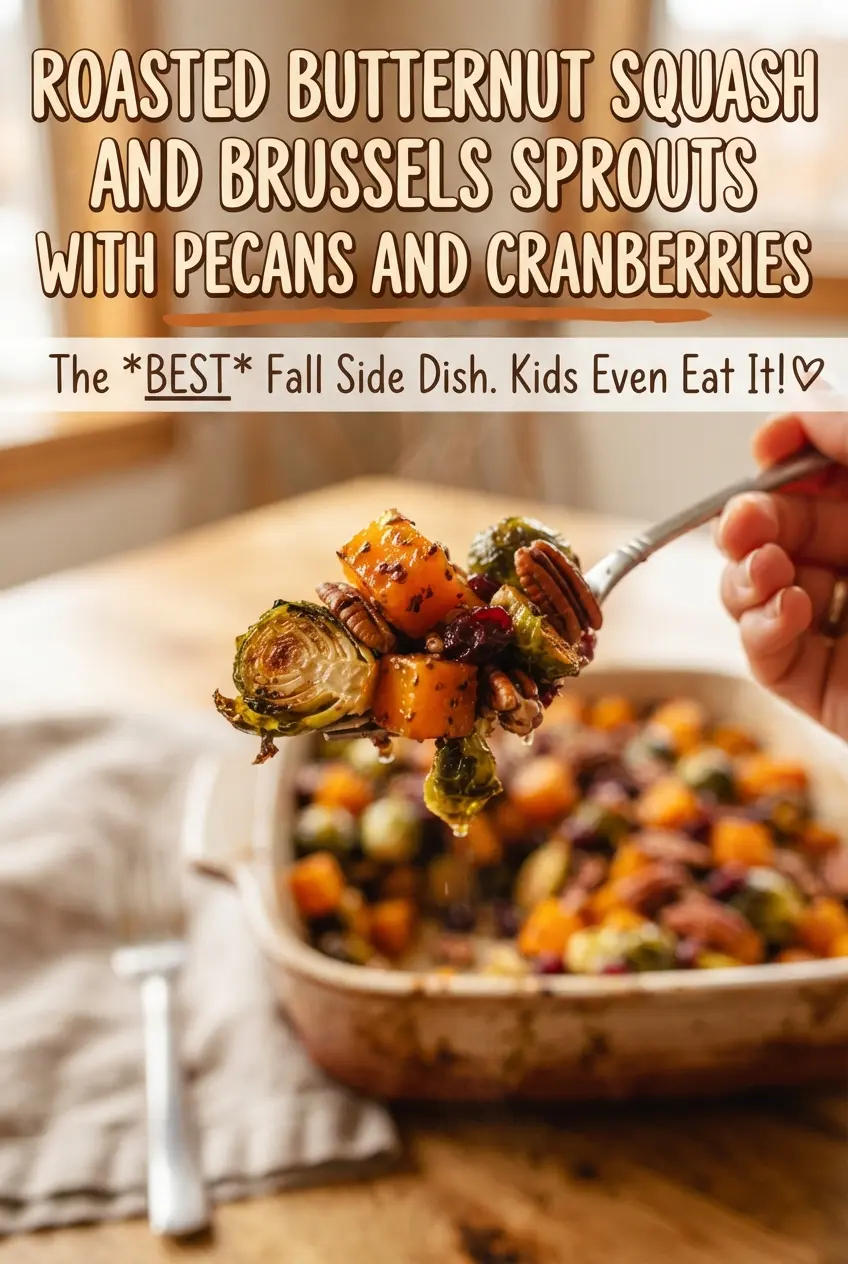
Roasted Butternut Squash and Brussels Sprouts with Pecans and Cranberries
Ingredients
Equipment
Method
- Preheat the oven to 425°F. Position a rack in the middle so the vegetables roast evenly.
- Toss the butternut squash and Brussels sprouts with olive oil, salt, and black pepper on a large sheet pan. Spread into an even layer so the edges can caramelize.
- Roast for 25-30 minutes, tossing halfway, until tender and caramelized. Look for browned, crisp edges and squash that pierces easily.
- Whisk maple syrup and balsamic vinegar together in a small bowl. Stir until smooth and glossy.
- Toss the roasted vegetables with the maple balsamic, dried cranberries, and toasted pecans. Serve warm so the pecans stay crunchy and the cranberries rehydrate slightly.