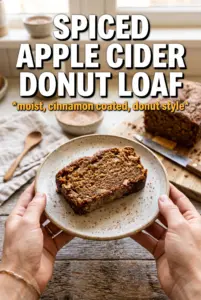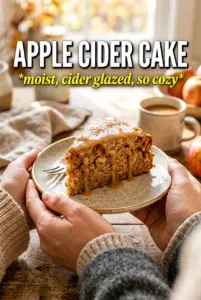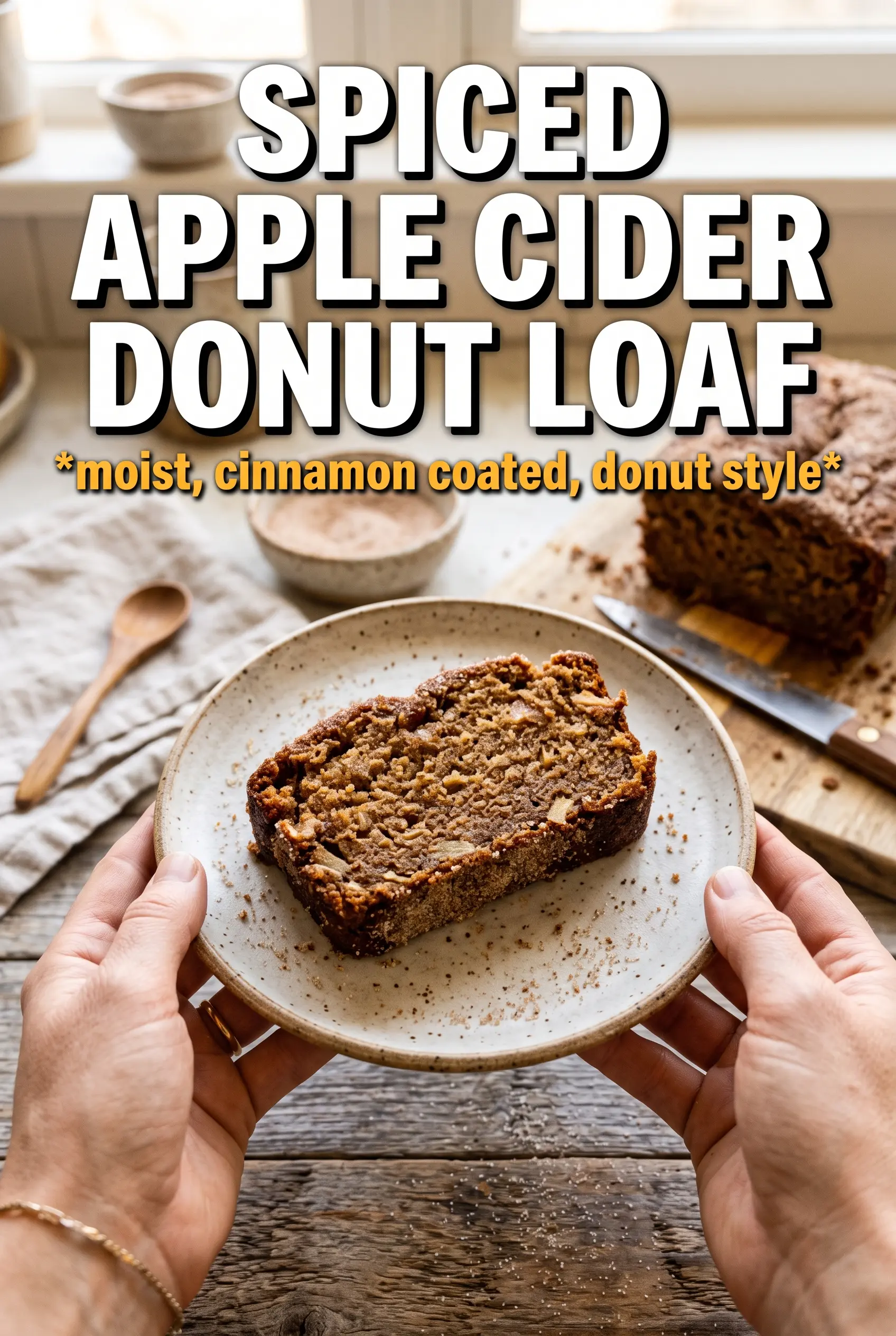
Spiced Apple Cider Donut Loaf bakes up with a deep golden crust, a tender crumb, and that unmistakable cinnamon-sugar finish that makes it feel like a bakery treat without any fuss. The apple cider gives the loaf a gentle tang and a little extra depth, while the buttered sugar coating locks in the same kind of sweet, spiced crunch you get from a fresh cider donut. It slices cleanly, but the edges stay just a little sticky in the best way.
What makes this version work is the reduced cider. Cutting the liquid down concentrates the apple flavor so it doesn’t disappear once it hits the flour and sour cream. The batter also leans on oil instead of butter, which keeps the loaf soft for days, and the sour cream adds enough richness to keep the crumb from turning dry or cakey.
Below, I’ve included the small details that matter most: how far to reduce the cider, when to brush on the butter so the coating sticks, and what to watch for if you want a clean slice after that sugar crust sets up.
The cider flavor came through without being heavy, and the cinnamon sugar stuck perfectly as soon as I brushed on the butter. The loaf stayed moist for three days, and the end slices had that donut-like crust everyone wanted.
Save this Spiced Apple Cider Donut Loaf for the cinnamon-sugar crust, tender crumb, and that concentrated cider flavor.
The Cider Reduction Is What Keeps This Loaf From Tasting Flat
A lot of cider baked goods end up tasting like spiced cake with a faint apple note, which is a shame when the cider is supposed to be the point. Reducing the cider before it goes into the batter concentrates the flavor and removes some of the extra water that would otherwise thin the loaf. If you skip that step, the crumb can bake up softer in a wet, slightly bland way instead of tasting distinct and cozy.
The other thing worth paying attention to is the balance between oil, sour cream, and sugar. Oil keeps the loaf tender even after it cools, while sour cream adds body and a little tang that makes the spices pop. The spices look bold on paper, but they settle into the batter nicely; cardamom and allspice keep the flavor from reading like plain cinnamon bread.
What Each Ingredient Is Actually Doing in This Loaf
- Apple cider — Reducing it by half is the key move here. You keep the apple flavor but lose the extra liquid that would dilute both the batter and the spice.
- Vegetable oil — This gives the loaf a softer, longer-lasting crumb than butter would. Butter tastes great, but it firms up as it cools, and this loaf is better when it stays plush.
- Sour cream — It adds moisture and richness without making the batter loose. Full-fat sour cream works best, but plain Greek yogurt will stand in if that’s what you have.
- Cardamom and allspice — These two are what make the flavor taste like a cider donut instead of just a cinnamon loaf. Keep them measured, though; too much and they start to compete with the apple.
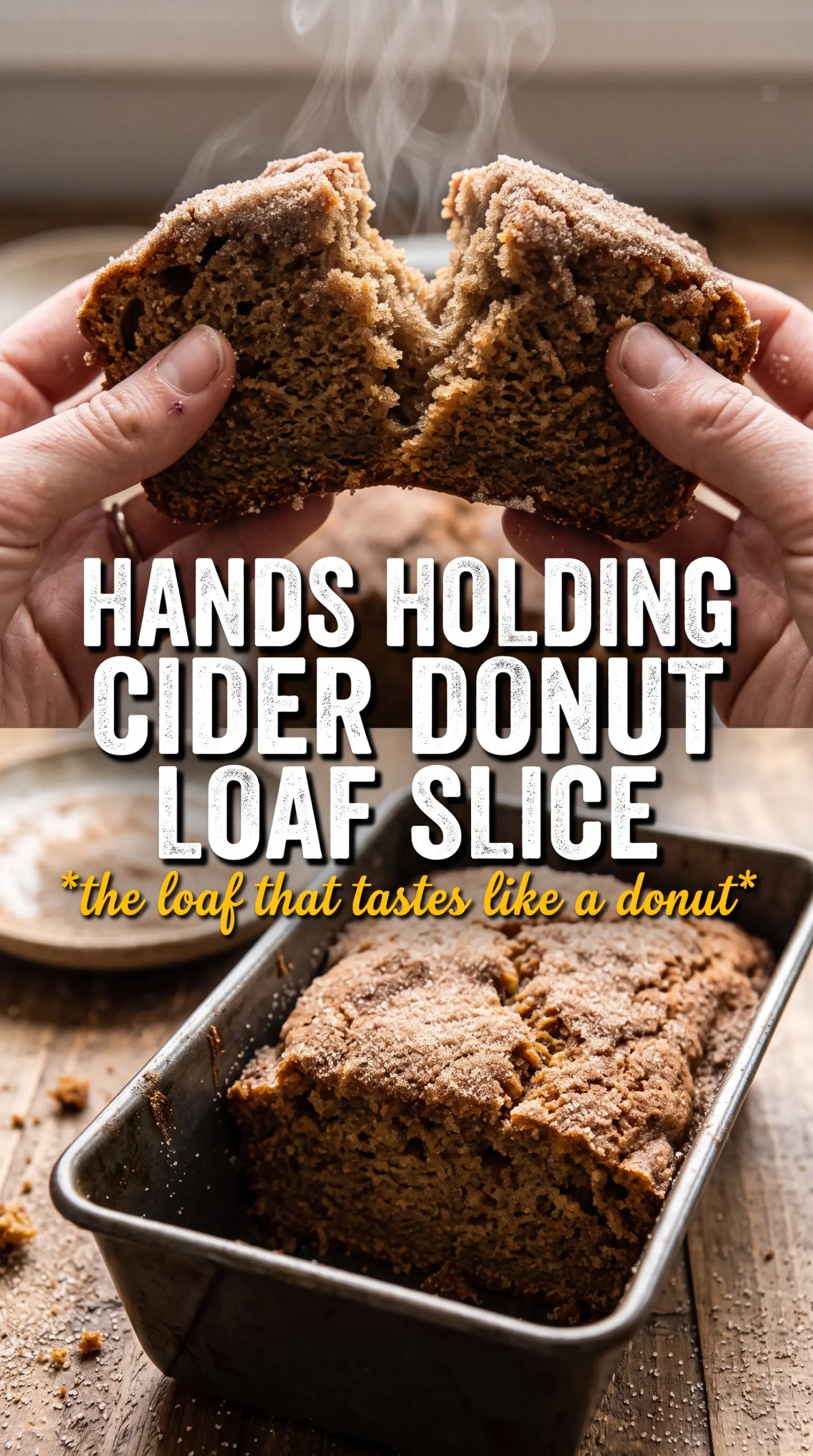
- Cinnamon sugar coating — The butter needs to go on while the loaf is still warm so the sugar clings instead of sliding off. That coating is what gives you the donut-like finish, so don’t wait until the loaf is cool.
Building the Batter, Baking the Crust, and Coating It Before It Cools
Reduce the cider first
Set the cider over medium heat and let it simmer until it drops to about half its original volume. You’re looking for a slightly syrupy look and a deeper, more concentrated apple aroma. Pull it off the heat and let it cool before it goes into the batter, or it can thin the eggs and sour cream and throw off the texture.
Mix the wet ingredients until smooth
Whisk the oil, both sugars, eggs, vanilla, reduced cider, and sour cream until the mixture looks glossy and fully combined. The batter should look thick but pourable, with no streaks of egg or sour cream left behind. If you rush this part, the loaf can bake unevenly, with little dense pockets through the center.
Fold the dry ingredients just until they disappear
Add the flour mixture and fold only until the last dry streaks are gone. Overmixing builds too much gluten and gives you a tight, bready loaf instead of that soft, donut-like crumb. A few small lumps are fine; they usually smooth out in the oven.
Brush and coat while warm
Once the loaf comes out and sits just long enough to come out of the pan cleanly, brush it generously with melted butter on all sides. Roll or sprinkle the sugar-cinnamon mixture over the warm surface immediately. If the loaf cools too much first, the butter won’t grab the coating and the crust will turn patchy instead of evenly sandy and crisp.
How to Adapt This Loaf Without Losing the Donut Feel
Make It Dairy-Free
Swap the sour cream for an unsweetened dairy-free yogurt with a thick texture, and use melted dairy-free butter or neutral oil for the coating. The loaf will still be moist, but the tang will be a little softer and the crust won’t taste quite as buttery.
Use Greek Yogurt Instead of Sour Cream
Plain full-fat Greek yogurt works well here if that’s what’s in the fridge. It gives the same structure and moisture, though the crumb comes out just a touch less rich than with sour cream.
Make It Gluten-Free
A good 1:1 gluten-free baking blend can work, but don’t use one that’s mostly starch. You need a blend with enough structure to hold the cider and sour cream without collapsing in the middle.
Storage and Reheating
- Refrigerator: Store tightly wrapped for up to 4 days. The sugar coating softens a bit, but the loaf stays moist.
- Freezer: Freeze the uncoated loaf for best results, wrapped well and sealed in a freezer bag for up to 2 months. Add the butter and cinnamon sugar after thawing so the crust tastes fresh.
- Reheating: Warm slices briefly in the microwave or a low oven. If you reheat too long, the sugar coating melts into the crumb and the loaf loses that donut-style finish.