The bacon starts to render before the green beans ever hit the pan, leaving a savory base that carries through every bite. I let it cook until crisp, then use some of those drippings for the onion and garlic. That simple order gives these smothered green beans a rich, slow-cooked flavor without needing a long ingredient list.
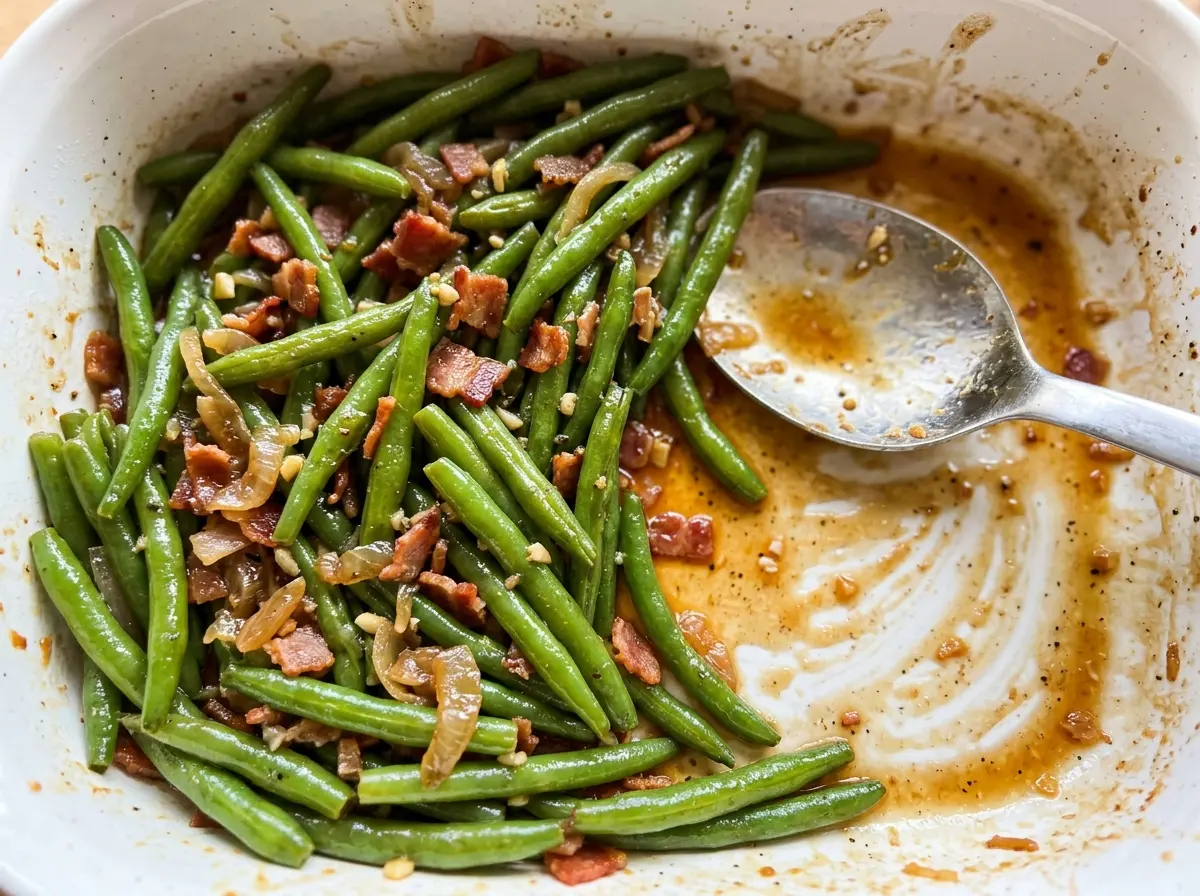
Fresh green beans can be disappointing when they’re cooked just until crisp-tender for a dish that’s meant to be soft and comforting. Here, they simmer covered in chicken broth until very tender, then the lid comes off so the remaining liquid can reduce a little. The beans turn yielding, the onion softens into the broth, and the bacon brings its smoky flavor back to the skillet at the end.
Kitchen Note
Once the bacon is crisp, transfer it to a plate and leave exactly 2 tablespoons of drippings in the skillet. That gives the onion enough fat to soften without leaving the finished beans greasy.
Save these smothered green beans for a side dish with tender beans, savory broth, and bacon in every serving.
Why Smothered Green Beans Shouldn’t Stay Crisp-Tender
Green beans are often cooked quickly to preserve a bright color and a little snap. That’s a good goal for a fresh, crisp side, but it’s not the texture this skillet is meant to deliver. The covered simmer lets the beans soften all the way through while the broth, onion, garlic, and bacon build a savory cooking liquid around them.
Keep the heat low once the broth reaches a simmer. A hard boil evaporates liquid too fast and can leave the beans unevenly cooked: tender on the outside but still firm in the middle. With the lid on, the trapped steam helps cook them gently. Once they’re very tender, uncovering the skillet gives the remaining broth a chance to reduce instead of leaving a pool at the bottom.
Think of the finished beans as soft and spoonable, not limp from neglect. The lower heat and covered pan are doing deliberate work, and the tenderness cue matters more than the brightest possible green color.
What the Bacon, Broth, and Fresh Beans Each Bring

- Bacon — Chopped bacon supplies both the rendered fat for the onion and the smoky, salty flavor that seasons the beans. It doesn’t need to be an expensive cut; choose bacon you enjoy eating, and cook it until crisp so it holds its own when stirred back into the skillet. There isn’t a direct bacon substitute that gives the same rendered fat and flavor without changing the dish.
- Yellow onion and garlic — Yellow onion softens into a mild, savory base, while the garlic adds a sharper note. Fresh garlic is worth using here because it cooks briefly; minced garlic from a jar can taste sharper and less fragrant. Keep the garlic ready before adding it, since it needs only a short cook.
- Fresh green beans — Fresh beans are the right choice for this braise because they keep their shape as they soften. Pick firm beans without limp or shriveled spots, and trim the stem ends before cooking. Canned beans are already soft and won’t hold up to the covered simmer; frozen beans release extra moisture and won’t behave exactly the same way.
- Low-sodium chicken broth — Broth gives the beans enough liquid to cook under the lid and adds savory depth. Low-sodium broth lets the bacon contribute its salt without making the finished skillet too salty. A good everyday carton works well; there’s no need to use a specialty stock.
Build the Skillet in Five Stages
Render the bacon until crisp
Set a 12-inch skillet over medium heat and cook the chopped bacon for 8–10 minutes, stirring occasionally. You’re looking for browned, crisp pieces and a pool of rendered fat in the pan. If the bacon is still pale and soft, give it time rather than turning up the heat; scorching the edges can make the drippings taste bitter. Transfer the bacon to a plate and leave 2 tablespoons of drippings in the skillet.
Soften the onion in the drippings
Add the chopped yellow onion and cook over medium heat for 4–5 minutes, stirring occasionally. It should turn soft and translucent around the edges without taking on much color. If it starts browning quickly, lower the heat so it has time to soften before the garlic goes in. The onion should feel tender, not crisp, when you stir it.
Give the garlic a brief turn in the pan
Stir in the minced garlic and cook for 30 seconds. The garlic should smell fragrant as it mixes with the onion and bacon drippings. Keep it moving and don’t let it sit against the hot skillet; garlic can scorch quickly, and burnt bits will carry a bitter flavor into the broth.
Simmer the beans until very tender
Add the trimmed green beans, chicken broth, kosher salt, and black pepper. Bring the liquid to a simmer, cover the skillet, and lower the heat so it cooks gently for 25–35 minutes. The beans should be very tender when pierced, not just bright and crisp. If the liquid is bubbling hard beneath the lid, lower the heat; a gentle simmer gives the beans time to soften evenly.
Reduce the broth and return the bacon
Stir the cooked bacon back into the skillet, then simmer uncovered for 2–4 minutes. The remaining broth should reduce slightly while still coating the beans. Keep the pan uncovered for this finish; leaving the lid on traps steam and slows the reduction. Stir gently so the tender beans stay whole.
Small Changes That Suit Different Tables
A gluten-free skillet
Use gluten-free low-sodium chicken broth and gluten-free bacon. The beans, onion, garlic, salt, and pepper stay the same, so the finished dish keeps its familiar tender texture and savory flavor.
Keep more crunch in the bacon
For bacon with a crisper bite, leave it on the plate while the beans finish reducing and stir it in just before serving, rather than simmering it with the beans. The smoky flavor is still there, but the bacon spends less time in the broth and stays firmer.
Cut the beans into shorter pieces
After trimming, cut the green beans into shorter lengths for a more spoonable skillet. Smaller pieces may soften sooner, so begin checking them near the early end of the cooking range and stop when they’re very tender. You’ll get the same bacon-and-broth flavor in bites that are easier to serve.
Storage and Reheating
- Refrigerator: Refrigerate within 2 hours and use within 3–4 days. The beans soften a little more as they sit.
- Freezer: Freeze in an airtight freezer-safe container for up to 2–3 months. The beans will be softer after thawing, but the smoky broth flavor holds up.
- Reheating: Warm covered in the microwave, stirring once, until heated through. Reheat only what you plan to serve so the beans don’t go through repeated heating and cooling.
Questions That Come Up With Smothered Green Beans
Smothered Green Beans
Ingredients
Equipment
Method
- Cook the bacon in a 12-inch skillet over medium heat for 8–10 minutes, stirring occasionally, until crisp.
- Transfer the bacon to a plate and leave 2 tablespoons of drippings in the skillet.
- Add the onion and cook over medium heat for 4–5 minutes, stirring occasionally, until softened.
- Stir in the garlic and cook for 30 seconds.
- Add the green beans, chicken broth, salt, and pepper.
- Bring to a simmer, cover, and cook over low heat for 25–35 minutes, until the beans are very tender.
- Stir the bacon back in and simmer uncovered for 2–4 minutes, until the remaining broth is slightly reduced.


