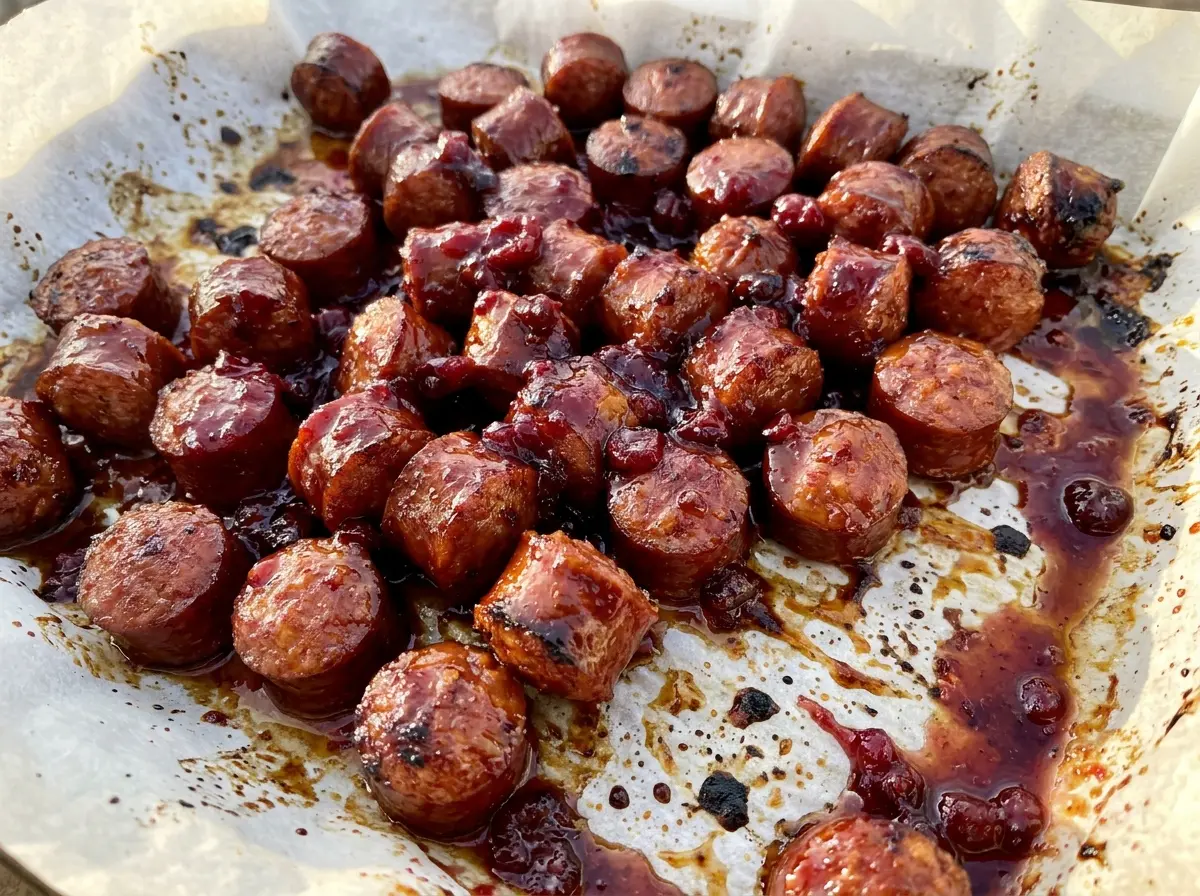
The cranberry glaze starts bubbling around the sausage rounds, and the whole-berry sauce turns glossy while the berries stay visible. That’s the moment these Sheet Pan Smoked Sausage Cranberry Bites are ready to come out of the oven. I like that the sausage gets a chance to brown before it meets the sweet-tart glaze; the result is more interesting than coating everything at the start.
There’s no complicated sauce to cook on the stovetop. Stir the four glaze ingredients together in a bowl, roast the sausage on parchment, then toss the rounds with the cranberry mixture for a short final bake. Keep the pieces in a single layer both times they go into the oven, and you’ll get lightly browned edges with glaze that bubbles and clings instead of sitting in a puddle.
Kitchen Note
Give the glazed rounds the full 5-minute rest on the pan. The coating settles as it rests, and the bites are easier to lift without smearing the glaze across the parchment.
Save these Sheet Pan Smoked Sausage Cranberry Bites for a glossy, sweet-tart party bite that comes together on one sheet pan.
Why the Cranberry Glaze Goes on After the Sausage Browns
It’s easy to think the sausage should roast in the glaze from the beginning, but the two-stage bake gives each part a better chance to do its job. The rounds spend their first stretch in the oven uncovered by sauce, so they can turn lightly browned before the cranberry mixture coats them. That first bake also warms the sausage through without asking the glaze to carry the whole cooking process.
The second bake is brief and has a different cue: the glaze should be bubbling and clinging to the sausage. Cranberry sauce contains fruit and sugar, so adding it only for the finish keeps the focus on a glossy coating rather than a long roast in sauce. Tossing the rounds before returning them to the pan helps distribute the berries, mustard, and vinegar around the pieces. Then spread everything back into one layer so the glaze can heat evenly.
This order is also useful when you’re watching the pan. Light browning tells you the sausage has had its first roast; bubbling glaze tells you the coated bites are ready for their short rest. Those are two clear checkpoints, not a vague guess at doneness.
What the Whole-Berry Sauce and Dijon Bring to the Glaze

- Whole-berry cranberry sauce — This is the base of the coating, and the berries give the finished bites their recognizable cranberry texture. Choose a 14-ounce can labeled whole-berry; different brands can vary in sweetness and how many berries you see, but the category matters more than choosing a premium brand. Jellied sauce makes a smoother glaze, so it won’t give the same berry-studded finish.
- Dijon mustard — Dijon brings a sharp, savory edge that keeps the glaze from reading as plain cranberry sweetness. A standard grocery-store Dijon works well here; there’s no need for a specialty mustard. I keep Dijon in the mix rather than swapping in a milder mustard, which would change the balance.
- Packed light brown sugar — Brown sugar rounds out the tartness of the cranberry and vinegar. Pack it into the measuring spoon so the amount is consistent. Light brown sugar gives the intended gentle molasses note; a different kind of sweetener would alter both flavor and the glaze.
- Apple cider vinegar — The vinegar supplies the bright, tangy note that ties the fruit and mustard together. Use apple cider vinegar for the intended flavor; its mild fruitiness fits the cranberry better than a sharper vinegar would.
- Fully cooked smoked sausage — Because the sausage is already cooked, the oven time is about browning and heating it before the glaze finish. Choose a 14-ounce package of fully cooked smoked sausage, and cut the rounds evenly so they roast at a similar pace. The smoke and seasoning vary a little by brand, so an everyday package is fine if you already like its flavor.
Build the Glaze First, Then Give the Sausage Two Oven Passes
Stir the Cranberry Glaze Until Combined
Put the whole-berry cranberry sauce, Dijon mustard, packed light brown sugar, and apple cider vinegar in a medium bowl. Stir until the ingredients are combined and the mustard is no longer sitting in a separate streak. The sauce will still have visible berries; that’s part of its texture, not a sign it needs more mixing. Set the bowl aside while you prepare the pan.
Arrange the Sausage for Its First Roast
Heat the oven to 400°F and line an 18×13-inch rimmed sheet pan with parchment paper. Cut the fully cooked smoked sausage into 1/2-inch-thick rounds and arrange them in a single layer. Give the rounds space rather than stacking or overlapping them, since the exposed sides are what brown. Bake for 15 minutes, turning the pieces halfway through, until lightly browned.
Toss Each Round in the Glaze
Spoon the cranberry glaze over the browned sausage and toss until the rounds are coated. If berries collect in one spot, keep tossing so they’re spread among the pieces. Return the sausage to the pan and spread the rounds back into a single layer. This step matters: piled-up pieces won’t heat as evenly as pieces with room around them.
Bake Until the Glaze Bubbles and Clings
Return the pan to the oven for 6 to 8 minutes. Watch for bubbling glaze that clings to the sausage rather than looking like a loose pool on the parchment. The whole-berry sauce will remain textured, so look for the coating around the rounds, not a perfectly smooth surface. Let the bites rest on the pan for 5 minutes before serving.
Three Ingredient Choices That Change the Bites
Choose a More Tart or Sweeter Whole-Berry Sauce
Whole-berry cranberry sauce brands differ a bit in sweetness and berry texture. Keep the same 14-ounce can size and choose a brand whose tartness you enjoy; a tarter sauce makes the glaze taste brighter, while a sweeter one softens the mustard and vinegar notes. The finished bites will still have the same berry-studded coating.
Make the Bites Vegetarian with Fully Cooked Plant-Based Sausage
Replace the smoked sausage with a 14-ounce package of fully cooked plant-based smoked sausage and cut it into 1/2-inch-thick rounds. Keep the same oven temperature and sheet-pan sequence, using the lightly browned edges and bubbling, clinging glaze as your cues. The bites will be less rich than the original and the texture depends on the brand, but the cranberry glaze still gives them a sweet-tart finish.
Pick a Sausage with a Different Smoke and Seasoning
A different fully cooked smoked sausage changes the savory side of the bite without changing the glaze. A more strongly seasoned sausage makes the contrast with cranberry more pronounced; a milder one lets the fruit stand out. Keep the package size and slice thickness the same for the same pan arrangement.
Storage and Reheating
- Refrigerator: Refrigerate leftovers within 2 hours and keep them covered for 3 to 4 days. The glaze softens and gets less tacky after chilling.
- Freezer: Freeze the cooled bites in an airtight container for up to 2 months. The sausage stays usable, though the glaze may be a little softer after thawing.
- Reheating: Warm portions in the microwave in short bursts, turning the bites between bursts, until they reach 165°F. Avoid one long high-power blast, which can make the sausage tough before the center is hot.
Questions That Come Up While Making These Cranberry Bites
Sheet Pan Smoked Sausage Cranberry Bites
Ingredients
Equipment
Method
- Stir the cranberry sauce, Dijon mustard, brown sugar, and apple cider vinegar together in a medium bowl until combined.
- Heat the oven to 400°F.
- Line an 18x13-inch rimmed sheet pan with parchment paper.
- Arrange the sausage rounds in a single layer on the pan.
- Bake for 15 minutes, turning them halfway through, until lightly browned.
- Spoon the cranberry glaze over the sausage and toss to coat.
- Spread the rounds back into a single layer.
- Bake for 6 to 8 minutes, until the glaze is bubbling and clings to the sausage.
- Let the bites rest on the pan for 5 minutes before serving.


