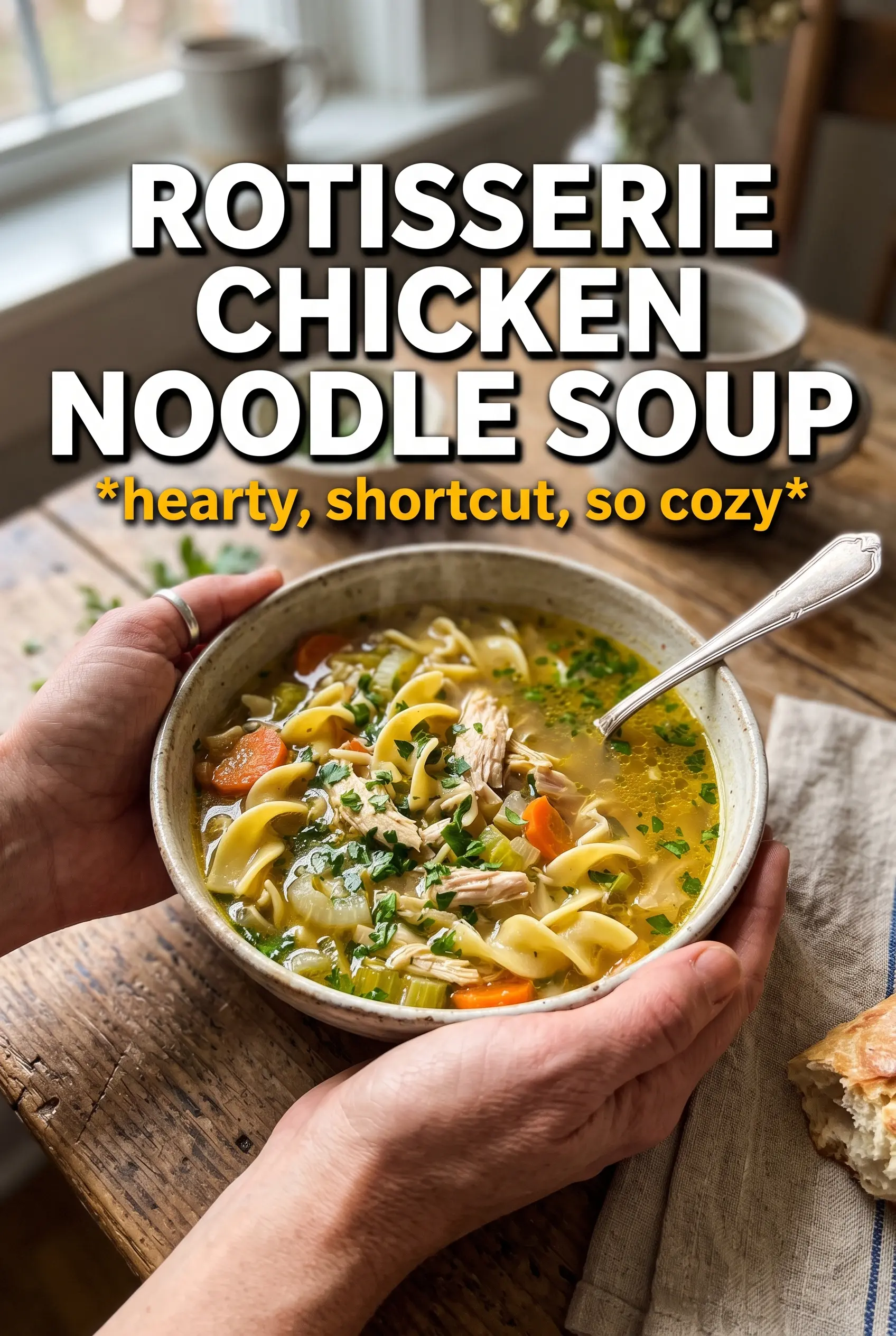
Rotisserie chicken noodle soup lands in the bowl with the kind of comfort that doesn’t ask for much back. The broth stays light and savory, the chicken is already tender and seasoned, and the egg noodles soak up just enough flavor without turning heavy. It tastes like you spent the afternoon simmering stock, but it comes together fast enough for a weeknight.
The shortcut works because the rotisserie chicken brings built-in depth, and the soup only needs a short simmer to pull everything together. The vegetables soften first so the broth gets a little sweetness, then the noodles go in near the end so they keep their shape. That timing matters. If the noodles cook from the start, they’ll swell, soften too much, and steal broth from the bowl.
Below you’ll find the small details that make this version dependable: how to keep the noodles from going mushy, how to season the broth so it tastes full instead of thin, and what to change if you want to stretch it a little farther.
The noodles stayed tender without falling apart, and the broth had enough body from the rotisserie chicken that I didn’t need extra seasoning until the very end. My kids actually ate the carrots, which never happens with soup here.
Save this rotisserie chicken noodle soup for the nights when you want a fast broth, tender noodles, and dinner in one pot.
The trick to keeping the noodles from drinking the whole pot
The biggest mistake in chicken noodle soup is letting the noodles sit in the broth too long. Egg noodles keep softening after they’re cooked, so if you simmer them with the vegetables from the beginning, they’ll turn bloated and the soup will go from brothy to starchy. Adding them near the end keeps the texture loose and the broth clear enough to taste like soup instead of pasta water.
The other thing that matters here is the rotisserie chicken itself. Because it’s already cooked, it only needs enough time to warm through and give its seasoning to the broth. Long simmering dries it out and makes the meat stringy. A short finish keeps the chicken tender and the broth clean.
- Rotisserie chicken — Pull the meat off while it’s still warm if you can. It shreds easier and the pieces stay in better shape when they hit the broth. Remove the skin so it doesn’t leave greasy patches on the soup.
- Egg noodles — These cook fast and soften quickly, which is exactly why they go in last. If you only have wide pasta, cook it separately and add it to each bowl instead of the pot.
- Broth — Use a broth you’d drink on its own. Since there’s no long stock simmer here, the broth has to carry the base flavor. If yours tastes flat, a little extra salt at the end fixes more than more herbs will.
What each ingredient is doing in the pot

- Rotisserie chicken — This is the shortcut that gives the soup body fast. The dark meat adds more flavor than breast meat alone, so don’t worry if the mix isn’t perfectly even.
- Carrots, celery, and onion — This trio builds the base. Cook them until the onion turns translucent and the carrots start to soften at the edges; if they stay raw, the soup tastes sharp and unfinished.
- Garlic and dried herbs — Garlic adds depth, while thyme and parsley bring the familiar chicken-soup flavor without needing a long simmer. Fresh garlic matters here more than powdered garlic because it melts into the broth instead of tasting dusty.
- Olive oil or butter — Either works. Butter gives a rounder, richer base; olive oil keeps the soup a little lighter. Use what you have.
- Egg noodles — They thicken the soup just enough without making it heavy. Add them after the chicken has simmered briefly so they finish in the broth and absorb flavor instead of overcooking in plain water.
Building the broth without overcooking the chicken
Softening the vegetables first
Start by cooking the onion, carrots, and celery in the oil or butter until the onion looks glossy and the carrots lose their raw edge. This takes about five minutes and gives the broth a sweeter, rounder base. If the pan looks dry before the vegetables have softened, lower the heat instead of letting the edges brown too fast. Browning is fine in some soups, but here it can make the broth taste muddy.
Waking up the garlic and herbs
Add the garlic after the vegetables have softened and cook it for just a minute, until it smells fragrant. Garlic burns fast, and once it turns bitter there’s no fixing it. Stir in the dried thyme, parsley, and garlic powder right after the garlic so the herbs get coated in fat and bloom a little before the broth goes in. That step keeps the soup from tasting thin.
Finishing with chicken and noodles
Pour in the broth, bring it to a boil, then add the shredded chicken and let it simmer for about ten minutes. That’s enough time to warm the meat and let the flavors blend without drying it out. Add the egg noodles at the end and cook until they’re just tender with a little bite left in the center. Season generously with salt and pepper after the noodles are cooked, because they’ll absorb some of the seasoning while they finish.
How to stretch this soup, lighten it up, or make it dairy-free
Use leftover chicken instead of rotisserie
Cooked leftover chicken works well here, but it won’t bring the same seasoned depth as rotisserie chicken. If your leftovers are plain, taste the broth at the end and add a little extra salt and thyme to compensate.
Make it gluten-free
Swap the egg noodles for a gluten-free pasta that holds its shape, but cook it just until tender and watch it closely. Gluten-free noodles can break down faster than egg noodles, so if you plan to store leftovers, keep the pasta separate and add it to each bowl.
Make the broth richer without adding cream
A small knob of butter stirred in at the end gives the broth a softer finish without turning it heavy. If you want a deeper savory taste, simmer a parmesan rind in the pot while the soup cooks, then pull it out before serving.
Storage and Reheating
- Refrigerator: Store for up to 4 days. The noodles will continue to soften, so the soup gets thicker by day two.
- Freezer: The broth and chicken freeze well, but noodles turn soft after thawing. Freeze the soup without the noodles if you want the best texture later.
- Reheating: Warm gently on the stove over medium-low heat. If the soup has thickened in the fridge, add a splash of broth or water before heating, and don’t let it boil hard or the noodles will fall apart.
Answers to the questions worth asking
Rotisserie Chicken Noodle Soup
Ingredients
Equipment
Method
- Heat the olive oil or butter in a large pot over medium heat, then add the onion, carrots, and celery. Sauté for 5 minutes, stirring until the vegetables begin to soften.
- Add the garlic to the pot and cook for 1 minute. Stir until fragrant, then keep everything moving so it doesn’t brown.
- Pour in the chicken broth and add the dried thyme, dried parsley, and garlic powder. Bring the mixture to a boil, then reduce slightly if needed to keep it bubbling.
- Add the shredded rotisserie chicken to the pot. Stir to distribute it through the broth.
- Simmer for 10 minutes. You should see a steady, gentle bubble around the chicken and vegetables.
- Add the egg noodles and stir. Cook for 6-8 minutes, until the noodles are tender.
- Season generously with salt and pepper to taste. Stir well and taste so the broth is well balanced.
- Garnish with fresh parsley right before serving. Serve hot for the best texture and flavor.