When a fork slips into a Yukon Gold potato with no hard center, you’re at the point where the mash will come together without much effort. Firm pieces won’t smooth out, while potatoes cooked until they’re falling apart can take on more water than you want. I make these rosemary garlic mashed potatoes with evenly cut pieces, then mash them while they’re still hot.
The garlic and fresh rosemary get warmed in butter before the milk goes in. That gentle order gives the butter time to pick up the aromatics, and warming the milk with it keeps the mixture from cooling the potatoes. The finished mash is creamy and savory, with rosemary flecks and enough garlic to come through without taking over.
There’s a little more to the seasoning than salting the finished pot. The potatoes cook in salted water, then get a final measure of salt and black pepper after the butter mixture is stirred in. The result is a smooth, buttery bowl of potatoes that still tastes like potatoes.
Kitchen Note
Chop the rosemary finely before it goes into the butter. Coarse needles can feel stringy in otherwise smooth potatoes, while a fine chop distributes the herb through every spoonful.
Save these rosemary garlic mashed potatoes for a creamy, herb-scented side with Yukon Golds and gently warmed garlic butter.
Why These Potatoes Get Seasoned Twice
Salt in the cooking water and salt at the end do different jobs. The potato pieces cook in water seasoned with kosher salt, which gives the potatoes a chance to take on seasoning as they soften. Waiting until the end to add all the salt would leave you relying on seasoning at the surface of each bite.
The final teaspoon goes in after the butter mixture, when you can taste the whole pot together. Butter and milk soften the impression of salt, while black pepper adds a little warmth. Stirring in the finishers at the end lets you season the creamy mash itself, rather than guessing how salty it will taste before the dairy is mixed through.
That’s also why I keep the two salt additions separate instead of treating them as one measure. The first supports the potatoes as they cook; the last brings the finished bowl into balance. Once the potatoes are mashed and the butter mixture is incorporated, the seasoning tastes rounded rather than sharp or flat.
What Yukon Golds, Rosemary, and Whole Milk Bring to the Pot

- Yukon Gold potatoes — Their naturally creamy texture makes smooth mashed potatoes without relying on a heavy hand with the masher. Choose firm potatoes without soft spots. Other yellow potatoes are the closest swap; russets make a fluffier, less buttery mash.
- Fresh rosemary — Fresh leaves bring a woodsy, piney note that stands up to the potatoes and butter. Fresh thyme is a good herb swap for a softer, more delicate flavor. Dried rosemary has a sharper, more concentrated taste, so it won’t give quite the same fresh finish.
- Garlic — Freshly minced cloves disperse through the butter and give the mash a mellow savory backbone. Jarred minced garlic works in a pinch, though its flavor is less bright. Mince it evenly so larger pieces don’t stand out in the finished potatoes.
- Unsalted butter and whole milk — Butter carries the garlic and rosemary, and whole milk loosens the mash while keeping it rich. Two-percent milk works if that’s what you have; the result will be a little less full-bodied. Unsalted butter keeps the final seasoning easier to control.
- Black pepper — It gives the creamy potatoes a gentle bite that keeps the butter from tasting one-note. Add it with the final salt so it disperses through the finished mash.
How to Cook and Mash the Potatoes Without Losing Their Creamy Texture
Simmer the cut potatoes until fork-tender
Put the peeled, 1 1/2-inch potato pieces in a 6-quart pot with 8 cups of water and 1 tablespoon of kosher salt. Bring the pot to a boil over high heat, then reduce the heat and simmer for 15 to 20 minutes. Check a piece with a fork: it should slide in easily without a firm center. If the fork meets resistance, give the potatoes more time rather than mashing them while they’re still firm.
Warm the garlic and rosemary in butter
While the potatoes simmer, melt the butter in a small saucepan over low heat. Stir in the minced garlic and finely chopped rosemary and cook for 2 to 3 minutes, until fragrant but not browned. Keep the heat gentle; browned garlic can bring a bitter edge to a mild, creamy dish. Stir the milk into the butter mixture and heat it gently until warm, without letting it boil.
Mash first, then add the warm butter mixture
Drain the potatoes and return them to the pot. Mash until mostly smooth before adding the warm butter mixture gradually. Adding it in stages makes it easier to work the liquid through the potatoes without leaving a pool at the bottom. Stop when the mash looks creamy and mostly smooth; there’s no need to keep working it once the texture is where you want it.
Season the finished mash and let it rest
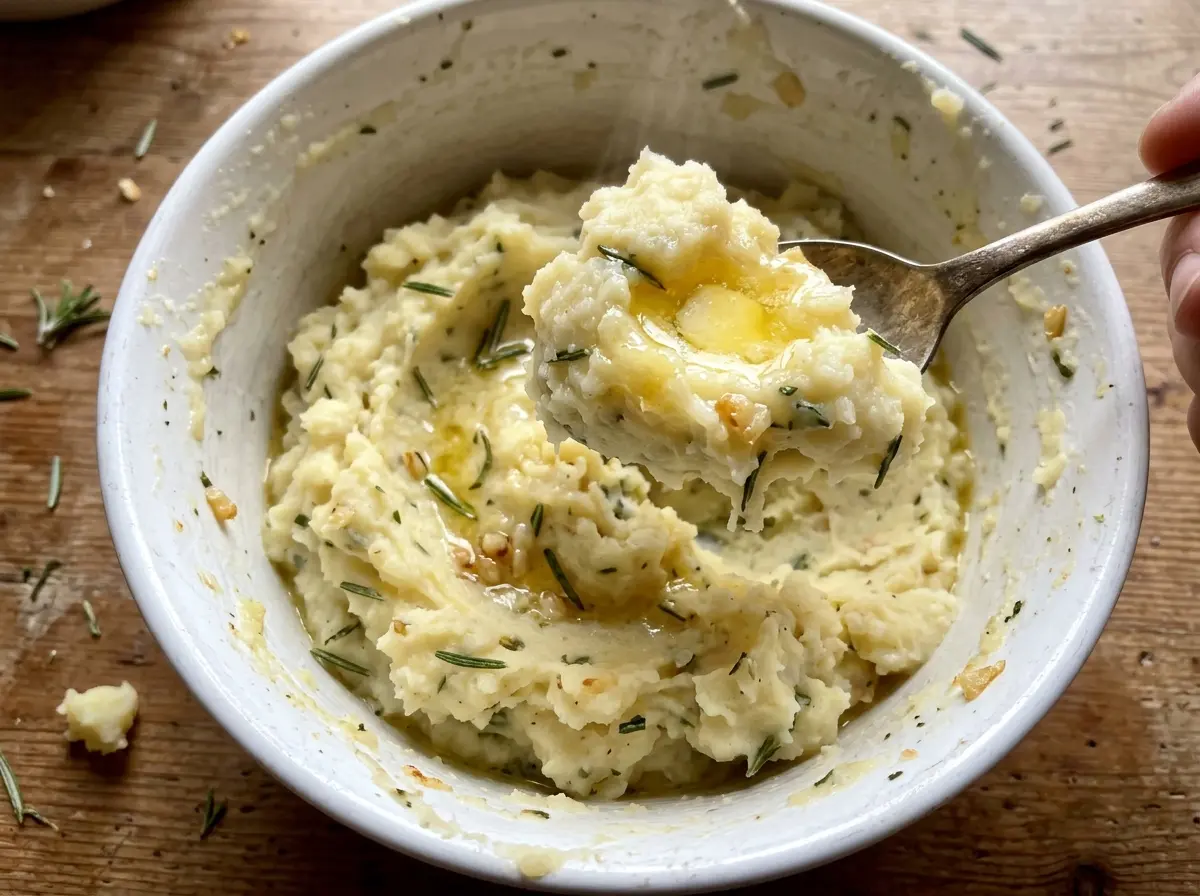
Stir in the remaining 1 teaspoon of kosher salt and the black pepper, distributing them through the pot. Let the potatoes rest for 2 minutes before serving. That short pause gives the finished mash a moment to settle after mixing. Serve while it’s warm and soft, with the rosemary and garlic visible throughout.
Simple Ways to Adapt This Rosemary Garlic Mash
Make it dairy-free with oat milk and plant butter
Replace the unsalted butter and whole milk with the same amounts of plant-based butter and unsweetened, unflavored oat milk. Warm them together with the garlic and rosemary just as you would the dairy ingredients. The potatoes will still mash smoothly, though the result will be less buttery and may have a faint oat flavor.
Trade rosemary for fresh thyme
Use finely chopped fresh thyme in place of the rosemary in the butter. Its flavor is gentler and less piney, so the garlic comes forward more clearly. Keep the same preparation: warm the herb and garlic in butter over low heat before stirring in the milk.
Storage and Reheating
- Refrigerator: Store covered for 3 to 4 days. The mash will firm up as it chills.
- Freezer: Freeze in an airtight container for up to 1 month for the best texture. Thaw overnight in the refrigerator; the potatoes may be a little less silky after freezing.
- Reheating: Warm in a saucepan over low heat, stirring often until hot throughout. Avoid high heat, which can scorch the bottom before the center warms.
Questions That Come Up When Making These Mashed Potatoes
Rosemary Garlic Mashed Potatoes
Ingredients
Equipment
Method
- Place the potatoes in a 6-quart pot and add the water and 1 tablespoon of the kosher salt.
- Bring to a boil over high heat, then reduce the heat and simmer for 15 to 20 minutes, until the potatoes are fork-tender.
- While the potatoes cook, melt the butter in a small saucepan over low heat.
- Add the garlic and rosemary and cook for 2 to 3 minutes, stirring, until fragrant but not browned.
- Stir the milk into the butter mixture and heat gently until warm; do not let it boil.
- Drain the potatoes and return them to the pot.
- Mash until mostly smooth, then gradually mix in the warm butter mixture.
- Stir in the remaining 1 teaspoon kosher salt and the black pepper.
- Let the potatoes rest for 2 minutes, then serve.


