The potatoes go into the pot looking like neat little cubes, but they come out soft enough to crush with a fork. That’s the moment to drain them well, not rush them straight into the masher with water clinging to the pieces. I make Pioneer Woman Mashed Potatoes when I want a generous pan of creamy potatoes that can go from the stovetop to the table warm and ready to serve.
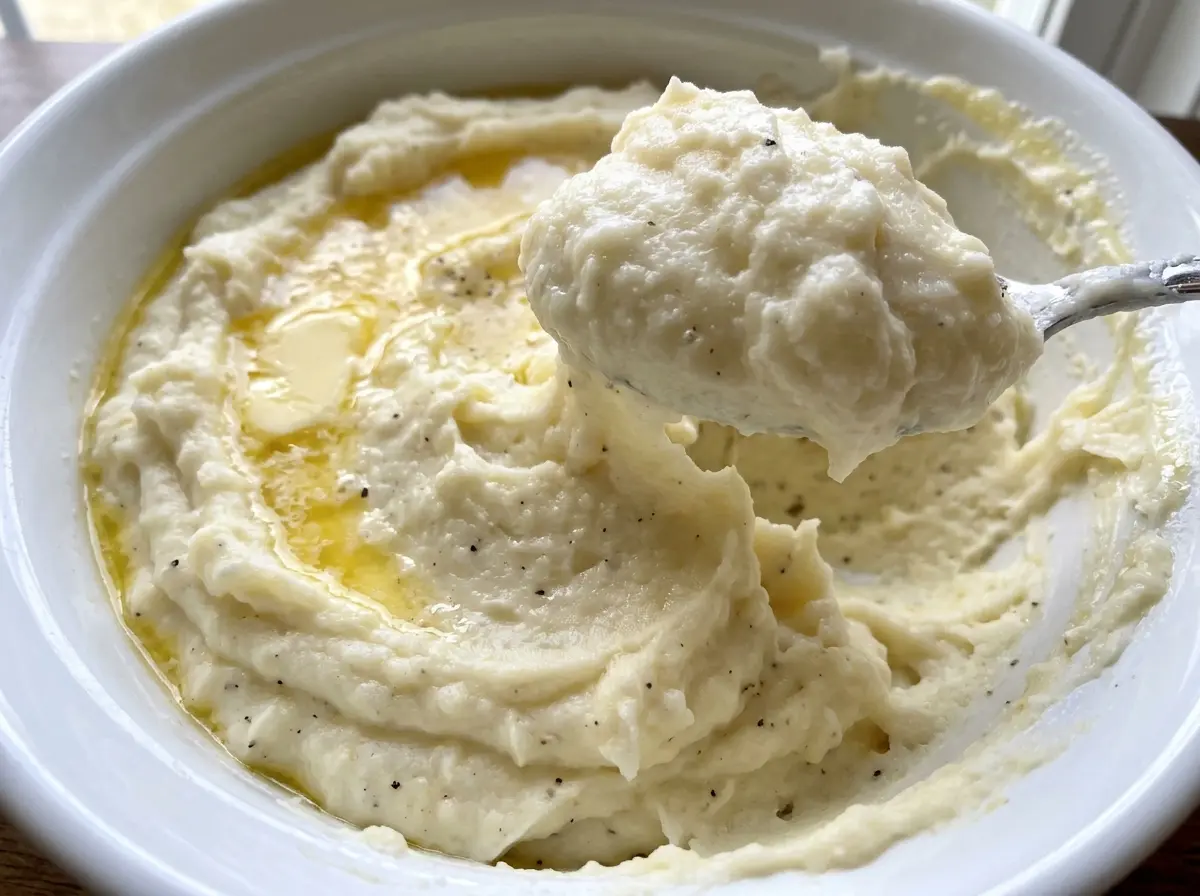
Russets give this mash its familiar fluffy base, while softened butter and cream cheese make it rich without needing a complicated technique. I mash those in first, then stir in the warmed half-and-half and seasonings. Stopping as soon as everything looks creamy keeps the texture pleasant instead of overworked.
The final bake is part of what makes this a casserole-style side: the mashed potatoes go into a greased 9×13-inch dish and heat uncovered until hot throughout. You’ll have enough for 10 servings, with a soft, creamy center in every scoop.
Kitchen Note
Once the warm half-and-half goes in, stir only until the mash looks creamy. I stop there rather than trying to work out every tiny lump; too much mixing can make potatoes pasty.
Save Pioneer Woman Mashed Potatoes for a big dinner: fluffy russets, cream cheese, and a warm-from-the-oven finish.
Why These Mashed Potatoes Go Back in the Oven
These potatoes are fully cooked before they ever reach the baking dish. The stovetop does the work of softening the russets and turning them into mash; the oven is the finishing stage that heats the creamy mixture throughout in one serving pan. That distinction helps you judge what to look for: the potatoes don’t need to brown or form a crust. They’re ready when the casserole is hot throughout.
Baking uncovered also means you can place the dish on the table without transferring a pot of mash at the last minute. It’s a useful format for a meal with several dishes to manage, especially because this batch serves 10. Use the specified 9×13-inch dish so the potatoes have room to heat in an even layer, and start checking near the end of the baking window rather than waiting for a particular surface color.
Think of the oven as the final warm-through, not a second cooking method for the potatoes. If the mash is already creamy and seasoned before it goes into the dish, the baking step can focus on getting that whole pan hot.
How Russets, Cream Cheese, and Half-and-Half Shape the Texture

- Russet potatoes — Their starchy texture gives the mash a soft, fluffy base. Choose firm potatoes without green patches, then peel and cut them into evenly sized pieces so they soften at a similar pace.
- Butter — Softened unsalted butter blends into the hot potatoes easily and lets the seasoned salt provide the measured seasoning. Cutting it into pieces helps it incorporate without leaving larger buttery pockets.
- Cream cheese — This adds body and a gentle tang that plain butter alone won’t bring. Let it soften and cut it into pieces before mashing; cold, firm chunks take longer to blend evenly.
- Half-and-half — Warm it before stirring it in. The warm dairy loosens the mash without cooling the potatoes as much as a cold addition would, and it gives the finished mixture its creamy consistency.
- Seasoned salt and black pepper — Seasoned salt brings more than saltiness, so keep it distinct from the kosher salt used in the cooking water. Freshly ground black pepper gives the finished mash a sharper, more noticeable pepper flavor.
From Cold Water to a Hot, Creamy Casserole
Start the Russets in Cold, Salted Water
Put the peeled, 1-inch potato pieces in an 8-quart pot and cover them with cold water by 1 inch. Stir in the kosher salt before bringing the pot to a boil. Starting with cold water gives the pieces time to heat through more evenly instead of softening mainly at the edges. Once the water boils, reduce the heat to a simmer.
Simmer Until a Fork Slides In Easily
Simmer the potatoes for 20 to 25 minutes. Test a piece with a fork; it should be very tender, with the fork entering easily rather than meeting a firm center. If the pieces are still resistant, they need more time in the simmering water before you drain them. Tender potatoes mash smoothly, while firm centers can leave stubborn lumps.
Mash in the Butter and Cream Cheese
Drain the potatoes well, then return them to the pot. Add the softened butter and cream cheese, and mash until the potatoes are mostly smooth. The mixture will look rich and thick at this point; that’s expected before the half-and-half goes in. If water remains in the pot after draining, it can dilute the mash, so give the potatoes time to drain thoroughly.
Stir in the Warm Dairy and Seasonings
Add the warmed half-and-half, seasoned salt, and freshly ground black pepper. Stir just until the mixture looks creamy and the seasonings are distributed. The finished mash should be soft enough to spoon into the baking dish, not beaten until it turns stretchy or pasty. Taste for the seasoning balance before transferring it to the dish.
Bake the Pan Until Hot Throughout
Spoon the mash into a greased 9×13-inch baking dish and spread it into an even layer. Bake uncovered at 350°F for 20 to 25 minutes, until hot throughout. Because the potatoes are already cooked, don’t wait for browned edges as your signal to stop. The center should be hot along with the sides.
A Dairy-Free Pan and a Denser Potato Variation
Make the Mash Dairy-Free
Replace the butter with plant-based butter, the cream cheese with dairy-free cream cheese, and the half-and-half with an unsweetened dairy-free half-and-half alternative. Use each in the same proportion as its dairy counterpart and warm the dairy-free half-and-half before stirring it in. The potatoes will still be creamy, though the exact richness and tang depend on the products you choose.
Use Yukon Golds for a More Compact Mash
Swap the russets for Yukon Gold potatoes, keeping the same weight and cutting them into 1-inch pieces. Yukon Golds make a denser, naturally buttery-tasting mash rather than the lighter, fluffier texture russets give. Cook until the pieces are very tender when pierced, since potato variety and piece size can affect how quickly they soften.
Storage and Reheating
- Refrigerator: Store leftovers in an airtight container for 3 to 4 days. The mash may firm up as it chills.
- Freezer: Freeze airtight portions for up to 1 month for best quality. Thaw them in the refrigerator; the texture may be a little less smooth after freezing.
- Reheating: Reheat covered in a 350°F oven until the center reaches 165°F. Keeping the dish covered helps prevent the surface from drying out before the middle is hot.
Questions That Come Up Before the Potatoes Hit the Table
Pioneer Woman Mashed Potatoes
Ingredients
Equipment
Method
- Put the potatoes in an 8-quart pot and cover with cold water by 1 inch; stir in the kosher salt.
- Bring to a boil, then reduce the heat and simmer for 20 to 25 minutes, until the potatoes are very tender when pierced with a fork.
- Drain the potatoes well and return them to the pot.
- Mash with the butter and cream cheese until mostly smooth.
- Stir in the warm half-and-half, seasoned salt, and black pepper until creamy, taking care not to overmix.
- Spoon the potatoes into a greased 9x13-inch baking dish.
- Bake uncovered at 350°F for 20 to 25 minutes, until hot throughout.


