Silky turkey gravy is what turns a good roast into a proper meal. It should coat the back of a spoon, cling to mashed potatoes, and pool around the turkey without turning pasty or greasy. This version stays smooth because the roux is cooked long enough to lose that raw flour taste before the stock goes in, and the warm liquid gets whisked in gradually so the gravy thickens evenly instead of turning lumpy.
The other thing that matters is the pan drippings. Those browned bits at the bottom of the roasting pan carry most of the turkey flavor, so they’re worth scraping up and adding back in. A little thyme lifts the gravy, and a splash of soy sauce deepens the color and adds savory backbone without making it taste like soy sauce.
Below, I’ve included the small details that keep gravy glossy instead of gluey, plus the one step that makes it easier to salvage if it starts out a little too thick.
The gravy turned out smooth and rich, and the thyme plus soy sauce gave it that deep Thanksgiving flavor without tasting salty. Mine thickened right on cue after about 10 minutes.
Save this perfect turkey gravy for the roast dinners that need a smooth, savory sauce with no lumps.
The Trick to Gravy That Stays Smooth Instead of Turning Gluey
The most common gravy mistake is rushing the roux or dumping in cold stock all at once. If the flour doesn’t cook first, the gravy tastes raw. If the liquid goes in too fast, the flour clumps before it can disperse. This recipe avoids both problems by taking the roux to a light golden color and then whisking in warm stock gradually, which gives the flour time to hydrate evenly.
- Cook the roux until it smells nutty. That’s your sign the flour taste has mellowed and the gravy will taste rounded, not dusty.
- Use warm stock. Cold liquid slows everything down and makes lumps more likely.
- Whisk constantly while adding the liquid. The motion matters more than speed here. Slow, steady whisking keeps the sauce smooth.
- Let it simmer long enough to thicken. Gravy often looks thin at first, then tightens after a few minutes on the heat.
What the Pan Drippings, Thyme, and Soy Sauce Are Each Doing

- Turkey pan drippings. These give the gravy its built-in roast flavor and a deeper color. If you don’t have enough fat from the pan, top it off with butter to reach the full 1/4 cup.
- Warm turkey or chicken stock. Turkey stock gives the most flavor, but a good chicken stock works well too. Use the best box or carton you can find, since there’s nowhere for bland stock to hide.
- Fresh thyme. Fresh thyme gives a cleaner, brighter finish than dried. If you only have dried thyme, use half as much and add it early so it has time to soften.
- Soy sauce. This is the quiet flavor booster in the pot. It deepens the color and adds savory depth without making the gravy taste obviously like soy sauce.
Building the Gravy in the Pan Without Breaking It
Separating the Fat
Pour the pan drippings into a measuring cup and let them sit for a minute so the fat rises to the top. Skim off exactly 1/4 cup of fat for the roux. If the pan juices are cloudy, that’s fine — they’ll go back in later for flavor. Just don’t pour all the drippings straight into the flour, or the gravy can turn greasy and thin.
Cooking the Roux
Whisk the flour into the fat over medium heat and keep it moving for 3 to 4 minutes. The mixture should look smooth and smell a little nutty, not pale and pasty. If it stays white, the gravy will taste raw. If it gets too dark, the thickening power drops and the final sauce can turn thinner than you want.
Whisking in the Stock
Add the warm stock a splash at a time at first, whisking until the mixture turns smooth before adding more. Once it loosens, you can pour more steadily. Stir in the defatted pan juices, thyme, and soy sauce, then let the gravy simmer until it lightly coats a spoon. If it gets too thick, thin it with a little extra warm stock; if it’s too thin, simmer a few minutes longer.
Finishing and Straining
Season with salt and pepper at the end, not at the start. Pan drippings can already be salty, and the gravy concentrates as it simmers. Strain it if you want a perfectly smooth finish, especially if the thyme leaves or browned bits are chunky. Serve it hot, because gravy thickens as it cools.
How to Adapt This Gravy for Different Tables
No turkey drippings
Use butter in place of the drippings and add a spoonful of the browned roasting juices if you have them. The gravy won’t have quite the same roasted depth, but the stock, thyme, and soy sauce still build a solid, savory base.
Gluten-free gravy
Swap the flour for a gluten-free all-purpose blend that thickens on its own. The texture will be close, though some blends need an extra minute or two of simmering to lose any starchiness.
Dairy-free and richer without cream
This recipe is already dairy-free if you use turkey drippings instead of butter. To make it taste fuller, don’t skip the simmer; that reduction is what gives the gravy body and gloss.
Make-ahead for the holiday table
You can make the gravy a day ahead, chill it, and reheat it gently with a splash of stock. It will thicken in the fridge, so wait to do your final thinning until it’s hot again.
Storage and Reheating
- Refrigerator: Store in an airtight container for 3 to 4 days. It will thicken as it cools.
- Freezer: Gravy freezes well for up to 2 months. Cool it completely, portion it into freezer-safe containers, and leave a little space for expansion.
- Reheating: Warm it slowly on the stove over low heat with a splash of stock or water, whisking until smooth. High heat can make it separate or turn pasty before it loosens again.
Questions I Get Asked About This Recipe
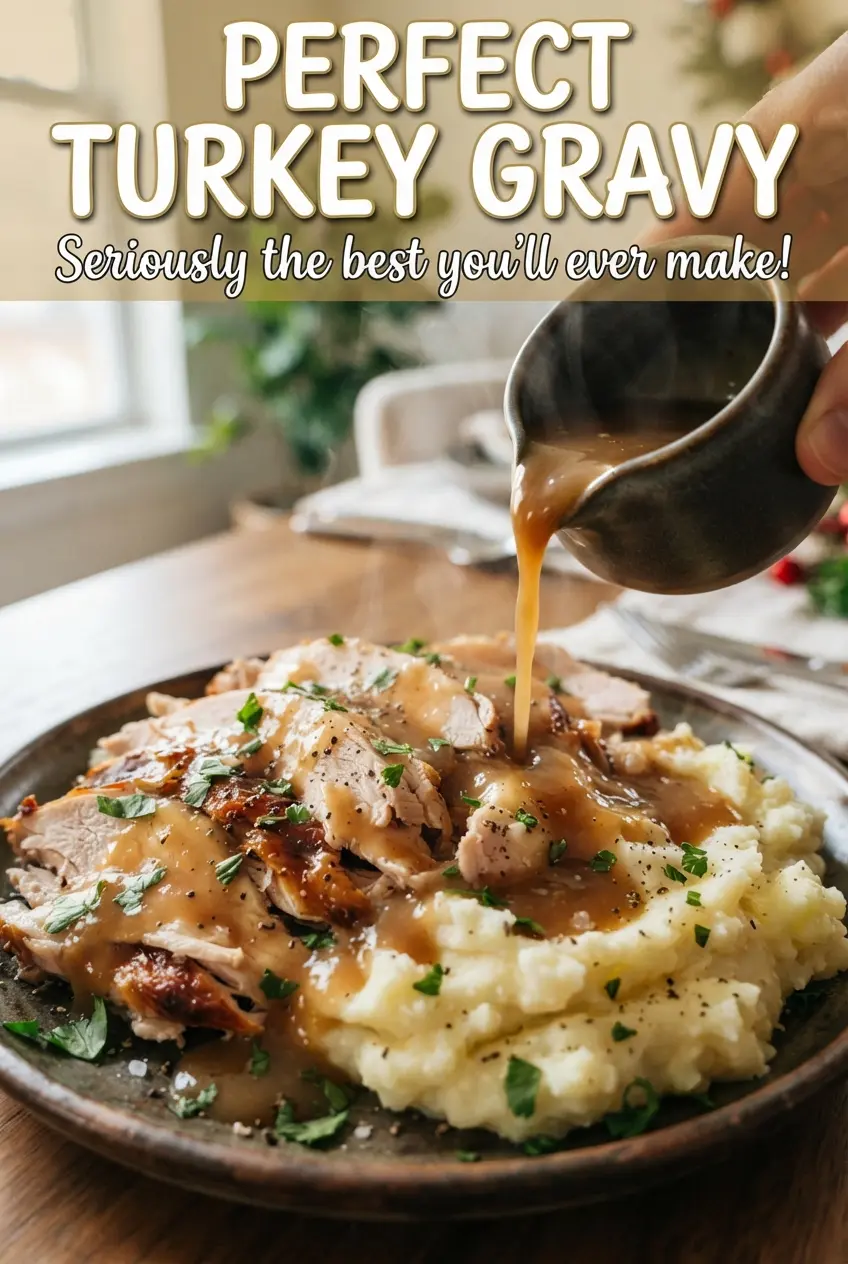
Perfect Turkey Gravy
Ingredients
Equipment
Method
- Pour the roasting pan drippings into a measuring cup and let the fat rise to the top.
- Spoon 1/4 cup of the fat into a saucepan over medium heat and whisk in the all-purpose flour.
- Cook the roux 3-4 minutes, whisking continuously, until golden brown.
- Gradually whisk in the warm turkey or chicken stock and the defatted pan juices until smooth.
- Add the fresh thyme leaves and soy sauce, then simmer 8-10 minutes until thick enough to coat a spoon.
- Season with salt and pepper to taste.
- Strain if desired and serve hot.