Remi's Ratatouille Soup turns the classic Provençal vegetable stew into a spoonable, deeply savory bowl that still tastes bright and fresh. The vegetables keep their shape just enough to give every bite some texture, while the tomatoes and broth cook down into a silky base that tastes like it simmered all afternoon. A finish of fresh basil and good olive oil keeps it from feeling heavy, even though it's packed with eggplant, zucchini, yellow squash, and peppers.
The little details matter here. Salting the eggplant first pulls out excess moisture, which helps it brown instead of going spongy in the pot. Building the soup in stages also keeps the zucchini and squash from disappearing into mush before the broth has had time to take on all that flavor. Herbs de Provence does a lot of the heavy lifting, but the fresh basil at the end is what makes the whole pot taste alive.
Below, you'll find the technique that keeps the vegetables tender without turning them bland, plus a few smart ways to adapt the soup if you're missing an ingredient or want to make it ahead.
The eggplant stayed tender instead of turning mushy, and the broth picked up so much flavor from the vegetables. I finished it with parmesan like suggested and the whole pot disappeared in one night.
Save Remi's Ratatouille Soup for a bowlful of tender summer vegetables, fragrant herbs, and a tomato broth that tastes even better the next day.
The Trick to Keeping Ratatouille Soup from Turning to Mush
Ratatouille soup lives or dies on how you treat the vegetables. If everything goes into the pot at once, the zucchini and squash collapse before the eggplant has a chance to soften properly, and you end up with a muddy, overcooked texture. Staging the vegetables gives each one its own window: onion and peppers build the base, eggplant cooks long enough to lose its raw edge, and the quicker-cooking squash goes in later so it stays intact.
The other thing that matters is heat control. Once the tomatoes and broth are in, this soup wants a steady simmer, not a hard boil. Boiling tears the vegetables apart and dulls the herbs. A gentle simmer leaves you with a broth that's still bright and a pot full of tender vegetables that hold their shape just enough to make the soup feel substantial.
What Each Vegetable Is Doing in the Pot
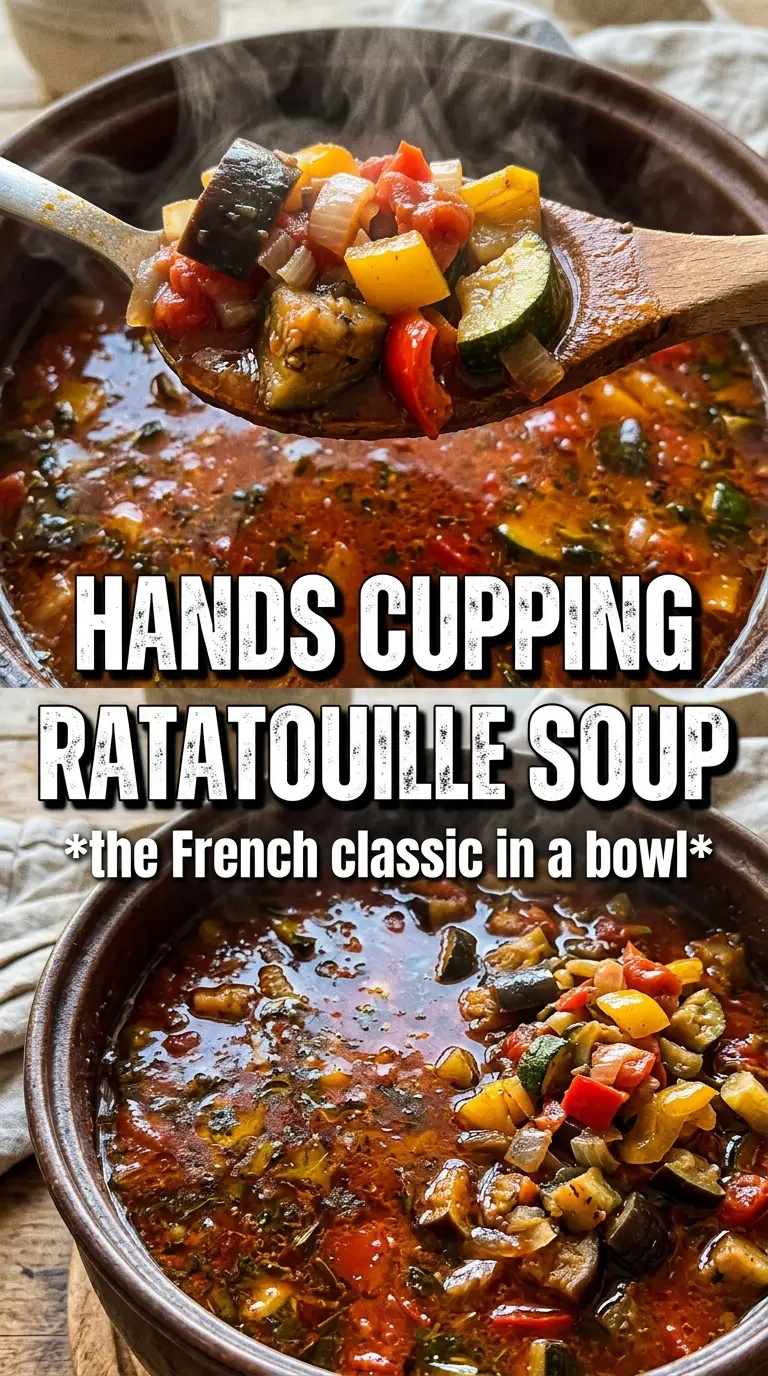
- Eggplant — This is the vegetable that gives the soup body and that soft, almost creamy texture once it's simmered. Salting it first is worth the extra few minutes because it pulls out moisture and keeps the cubes from acting rubbery in the pot.
- Zucchini and yellow squash — These bring tenderness and a lighter, sweeter note. They don't need much cooking, which is why they go in after the eggplant has started to soften; if they simmer too long, they lose all their structure.
- Red bell peppers — They add sweetness and a little freshness that balances the tomatoes. The onion and peppers are cooked first because they can take the heat and create the first layer of flavor.
- Crushed tomatoes plus diced tomatoes — The crushed tomatoes make the broth lush, while the diced tomatoes leave pockets of texture. Using both keeps the soup from tasting flat or pureed.
- Herbs de Provence, basil, and thyme — Herbs de Provence gives you the classic French backbone, but the dried basil and thyme reinforce the tomato base. Fresh basil at the end is non-negotiable if you want the soup to taste vivid instead of canned.
- Olive oil — A good olive oil matters here because it's part of the finish, not just the sauté. A final drizzle on top makes the soup taste rounder and more finished.
Building the Soup in the Right Order
Salting the Eggplant First
Start by tossing the diced eggplant with salt and letting it sit long enough to sweat. You'll see moisture gather on the cut surface, and that's what you want to remove before the eggplant hits the pot. Rinse it well and pat it dry so the cubes can brown instead of steaming in their own liquid. If you skip this step, the eggplant often turns soft before it turns flavorful.
Softening the Aromatics
Cook the onion and red bell peppers in olive oil until they look glossy and have lost their raw crunch. This is the base of the soup, so don't rush it; the pot should smell sweet and savory before anything else goes in. Add the garlic only near the end of this stage so it doesn't burn, which would give the whole soup a bitter edge. Once the garlic is fragrant, the pot is ready for the vegetables that need more time.
Layering in the Vegetables
Add the eggplant first and let it cook until the edges start to soften. Then add the zucchini and yellow squash, which need less time and should still look slightly firm before the broth goes in. This staggered approach keeps the vegetables distinct instead of collapsing into one soft mass. If the pan looks dry at this point, the olive oil should still coat the vegetables lightly; if it's sticking hard, the heat is too high.
Simmering the Broth Down
Pour in both tomatoes, the broth, and the herbs, then bring the pot just to a simmer. You want gentle bubbles breaking around the edges, not a rolling boil. Cook until the vegetables are tender enough to pierce with a spoon but still recognizable. The soup should look thick and rustic, with the broth taking on a deep red-orange color from the tomatoes and herbs.
Finishing with Fresh Basil
Stir in the fresh basil after the heat comes down. Adding it too early mutes its bright, peppery edge, and the soup loses one of the things that makes it taste alive. Taste for salt and pepper at the end, then finish with a drizzle of good olive oil. A little parmesan on top brings the whole bowl together, especially if you like a saltier, richer finish.
How to Adapt This Ratatouille Soup for Different Kitchens
Make It Vegan
The soup itself is already vegetable-based, so the only change is the finish. Skip the parmesan or use a dairy-free alternative, then lean on the olive oil and fresh basil at the end to keep the bowl satisfying. The flavor stays rich because the tomatoes and slowly cooked vegetables do the work.
Add Chickpeas for a Fuller Main Dish
Stir in a drained can of chickpeas with the tomatoes and broth if you want more protein and a heartier texture. They take on the herbed tomato broth well and make the soup feel more like a full meal without changing the flavor much. This is the move for nights when you want one bowl to count as dinner.
Use What You Have for the Squash
If you only have zucchini or only yellow squash, use all one or the other. The soup will still work; you'll just lose a little color contrast and some of the subtle sweetness that comes from using both. Keep the cut size even so the pieces cook at the same pace.
Storage and Reheating
- Refrigerator: Store in an airtight container for up to 4 days. The vegetables soften a little more as it sits, and the broth gets even better.
- Freezer: This freezes well for up to 3 months, though the zucchini will be softer after thawing. Cool completely before freezing, and leave a little space in the container for expansion.
- Reheating: Warm it gently on the stovetop over medium-low heat until hot. Don't boil it again or the vegetables will break down too much and the broth can taste flat.
Answers to the Questions Worth Asking
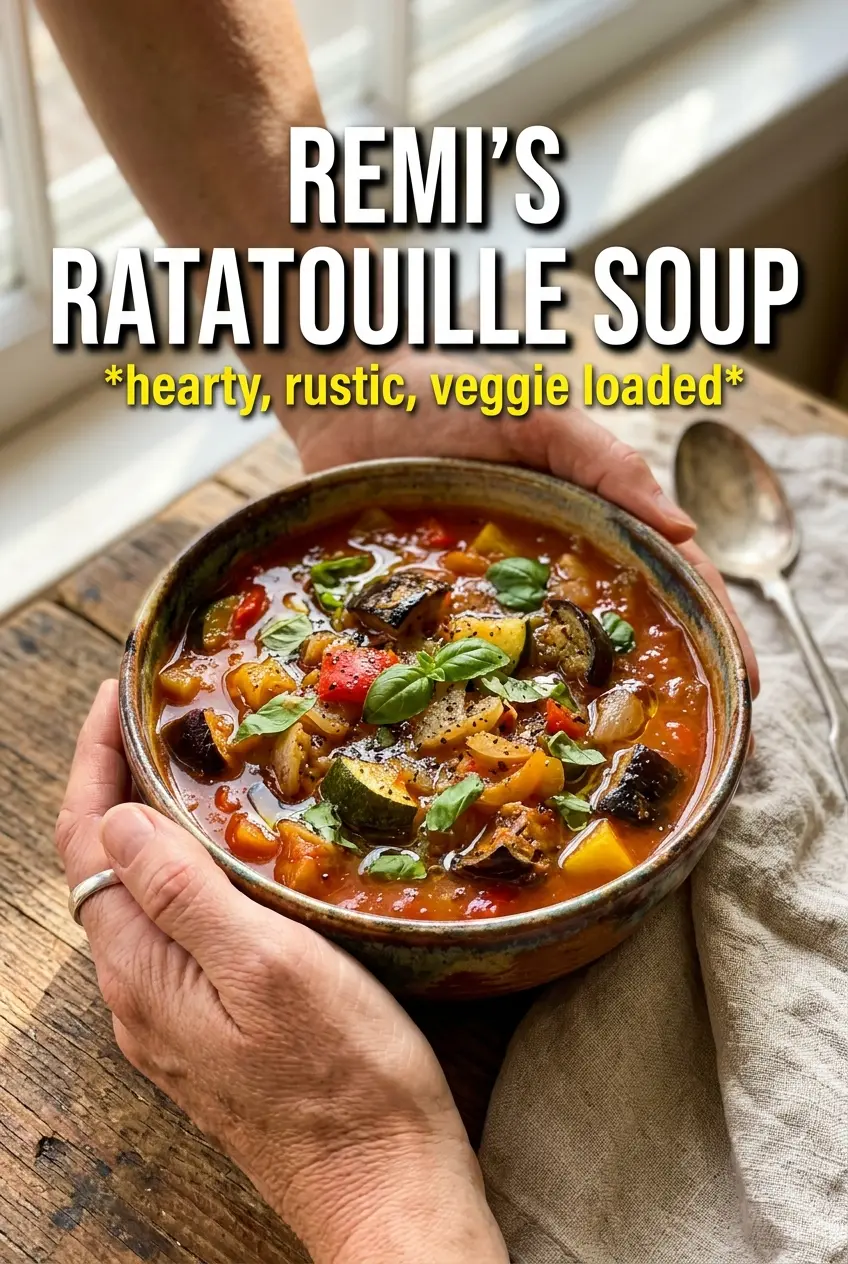
Remi's Ratatouille Soup
Ingredients
Equipment
Method
- Toss diced eggplant with salt and let sit 15 minutes, then rinse and dry. The eggplant should look slightly wilted as it sits, then feel drier after rinsing.
- Heat 3 tablespoons olive oil in a large pot over medium heat, then sauté the onion and red bell peppers for 5 minutes. Stir until softened and glossy with a light golden edge.
- Add the minced garlic and the eggplant, then cook for 5 minutes. Cook until the eggplant starts to turn tender and the pot smells fragrant.
- Add the zucchini and yellow squash, then cook for 3 minutes. Keep them moving so they brighten in color but don’t fully break down yet.
- Add the crushed tomatoes, diced tomatoes, vegetable broth, herbs de Provence, dried basil, dried thyme, and red pepper flakes. Stir well so the seasonings are evenly distributed.
- Simmer for 20-25 minutes until all vegetables are very tender. You should see the edges of the diced vegetables soften and the broth thicken slightly.
- Stir in the chiffonade fresh basil, then season with salt and black pepper to taste. The basil should look vivid and not dull, indicating it’s been warmed through.
- Finish with a drizzle of good olive oil. Add extra parmesan on top if desired right before serving.