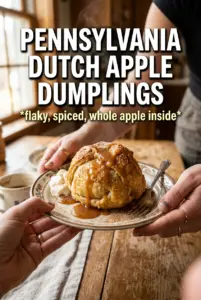
Golden pastry wrapped around a whole baked apple has a way of turning an ordinary dessert into something people remember. The crust bakes up tender at the seams and crisp where it peeks above the syrup, while the apple inside softens just enough to keep its shape. Spoon a little of the cinnamon-sugar syrup over the top and you get that old-fashioned, sticky-sweet finish that makes these dumplings feel earned, not fussy.
This version works because the pastry starts cold and the syrup is poured in hot. That contrast helps the dough hold its shape while the apples steam gently inside their wrappers. The filling is simple on purpose: brown sugar, cinnamon, and butter melt together in the center of each apple, so every bite has a soft, caramel-like middle without needing a long list of extras.
Below you’ll find the small details that matter most here, including how to keep the dough from tearing and how to tell when the apples are tender without letting the pastry get too dark.
The pastry stayed sealed and the syrup thickened into the perfect spoonable sauce. I used small apples like you said and they baked through without turning mushy.
Save these Pennsylvania Dutch apple dumplings for the night you want tender apples, flaky pastry, and cinnamon syrup all in one pan.
The Pastry Needs to Stay Cold Long Enough to Wrap, Not Warm Enough to Stretch
The mistake that ruins apple dumplings is usually a soft, sticky dough that tears the second you lift it. Cold shortening or butter gives you a pastry that holds its structure while you work, which matters because each circle has to wrap a whole apple without leaving thin spots. If the dough feels tacky, stop and chill it for a few minutes; trying to force it through at that point usually means seams that split in the oven.
These dumplings also depend on small apples. Big apples take longer to soften, and by the time the fruit is tender the pastry can get too dark. A smaller apple gives you a better balance: cooked-through fruit, sealed pastry, and syrup that reduces around the edges instead of boiling the crust apart.
What the Apples, Butter, and Syrup Are Each Doing Here
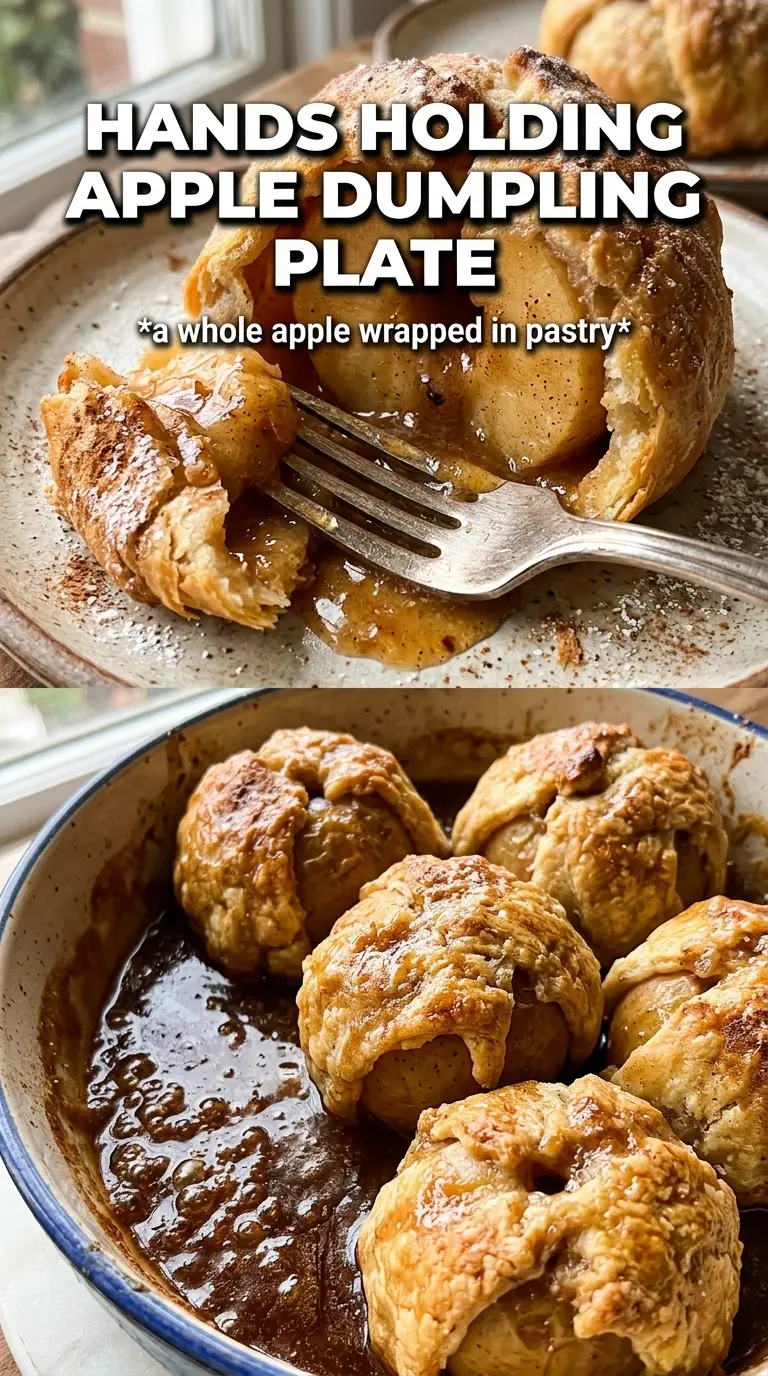
- Small whole apples — These hold their shape better than slices and give you that classic dumpling look. Tart apples work best because the syrup and filling are already sweet; Granny Smith is the safe choice, but any firm baking apple that isn’t mealy will do.
- Brown sugar — This melts into the apple and helps form the thick, caramel-like center. Dark brown sugar gives a deeper molasses note; light brown sugar keeps the flavor a little cleaner.
- Butter — The butter inside the apple turns the filling from dry cinnamon sugar into a soft, spoonable pocket. The butter in the syrup adds gloss and a richer finish, so don’t skip it even if the recipe looks simple.
- Shortening or butter in the pastry — Shortening gives the most forgiving crust and helps the dumplings keep a neat shape. Butter brings better flavor, but it can be a little softer to handle, so chill it well if you use it.
- Ice water — Just enough to bring the dough together keeps the pastry tender instead of tough. Add it slowly; too much water makes the dough harder to roll and more likely to shrink.
The Moment the Syrup Goes In Changes Everything
Mixing the Pastry Without Overworking It
Cut the fat into the flour and salt until the mixture looks like coarse crumbs with a few pea-sized bits left. Those little pieces are what create a tender crust as the dumplings bake. Add the ice water a tablespoon at a time and stop as soon as the dough holds together when pressed. If you knead it into a smooth ball, the crust will bake up tough instead of flaky.
Wrapping the Apples Cleanly
Roll each portion into a circle wide enough to cover the apple from edge to edge, then center the fruit in the middle. Fill the core cavity before wrapping so the sugar and butter melt inside the apple instead of leaking into the pan too early. Pinch the seams tightly, especially where the pastry overlaps at the top. Any open seam turns into a split once the hot syrup starts bubbling around it.
Boiling the Syrup Before It Hits the Pan
The syrup should come to a full boil on the stove before you pour it around the dumplings. That hot syrup helps start the cooking right away and gives you a smoother, slightly thicker sauce by the end of baking. Pour it around the pastry, not over the tops, so you don’t wash away the seams or soak the crust before it has time to set. The dumplings are done when the pastry is deeply golden and a knife slides easily into the apples.
Use Butter Only for a Richer Crust
Butter gives the pastry a fuller flavor and a slightly more delicate bite, but it softens faster while you’re wrapping the apples. If you go this route, chill the dough well and work quickly. The result is a more flavorful dumpling, just with a little less forgiveness than shortening.
Make It Dairy-Free Without Losing the Syrup
Use a plant-based butter that bakes well in both the pastry and the syrup. You’ll still get a glossy finish and a soft, rich center, though the flavor will be a little less rounded than with real butter. Pick one with a neutral taste so the cinnamon and apple still lead.
Make Them Ahead and Bake Later
You can assemble the dumplings a few hours ahead and keep them covered in the refrigerator, but don’t pour on the syrup until you’re ready to bake. If they sit in liquid too long, the pastry starts to soften before it ever goes into the oven. Add the hot syrup right before baking for the best structure.
Swap the Apples for Pears in a Pinch
Firm pears can work if that’s what you have, but they soften faster and can collapse sooner than apples. Choose ones that are still quite firm and check them a few minutes early. You’ll get a softer, more fragile dumpling, but the syrup and pastry still make it worth baking.
Storage and Reheating
- Refrigerator: Store leftovers covered for up to 3 days. The pastry softens as it sits, but the flavor deepens and the syrup gets even more fragrant.
- Freezer: These freeze best after baking. Wrap each cooled dumpling tightly and freeze for up to 2 months; the crust won’t be as crisp after thawing, but the texture still holds up better than you might expect.
- Reheating: Warm in a 325F oven, covered loosely with foil, until heated through. Microwaving will soften the pastry too much and can make the syrup watery, so the oven is the better choice if you want the crust to stay intact.
Questions I Get Asked About This Recipe
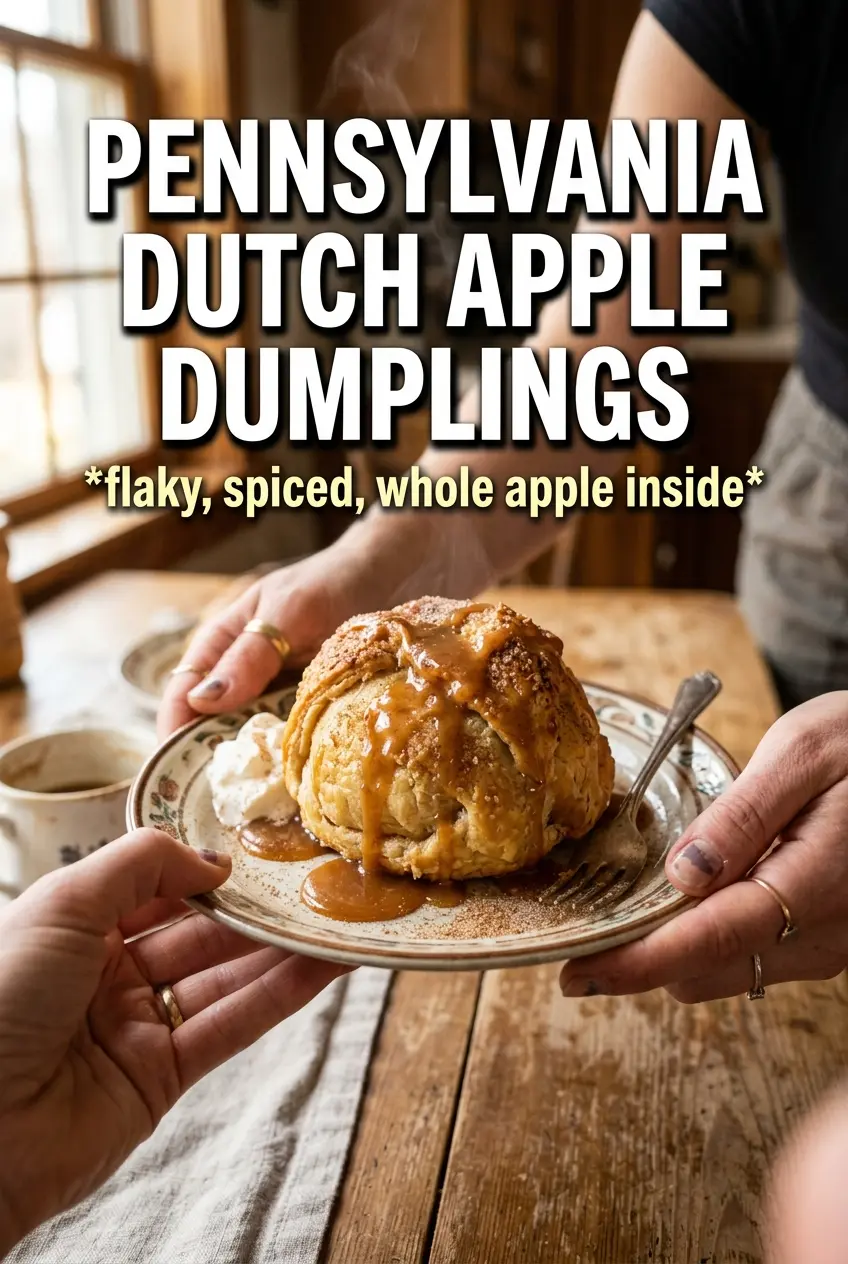
Pennsylvania Dutch Apple Dumplings
Ingredients
Equipment
Method
- Preheat the oven to 375F and grease a 9x13 baking dish so the dumplings release easily.
- Combine the all-purpose flour and salt, then cut in the cold shortening or butter until the mixture looks crumbly.
- Add ice water a spoonful at a time until the dough comes together, then divide it into 6 portions.
- Roll each portion into a circle large enough to wrap one apple.
- Place an apple on each pastry circle, then fill the core cavity with 1 tablespoon brown sugar, 1/2 teaspoon cinnamon, and a pat of butter.
- Wrap the pastry around each apple and pinch the edges to seal, then place the dumplings in the prepared baking dish.
- Combine the water, granulated sugar, brown sugar, unsalted butter, and cinnamon in a saucepan and bring to a boil.
- Pour the hot syrup around the dumplings so it pools in the dish and partially surrounds each apple.
- Bake at 375F for 40-45 minutes until the pastry is golden and the apples are tender, with syrup bubbling around the edges.