Parmesan herb roasted acorn squash turns from plain and earthy to crisp-edged and deeply savory in the oven, with tender centers that still hold their shape. The squash caramelizes at the cut edges while the Parmesan melts into a salty crust, so every bite lands somewhere between roasted vegetable and gratin.
The trick is slicing the acorn squash into rings instead of wedges. Rings give you more flat surface area against the pan, which means better browning and less steaming. A hot oven, a single layer, and a flip before the cheese goes on keep the squash from getting soggy, and the garlic and herbs perfume the oil just enough to season every edge.
Below, I’ll walk through the small choices that make this side dish work: how to get the squash tender without losing the crust, why the cheese goes on halfway through, and what to change if you need a dairy-free version.
The squash turned tender without falling apart, and the Parmesan on top got crisp at the edges instead of greasy. I served it with chicken, and even the person who usually skips vegetables went back for seconds.
Save this Parmesan Herb Roasted Acorn Squash for a crisp, savory side with caramelized edges and a golden Parmesan crust.
The Reason Rings Beat Wedges for Roasting Squash
Acorn squash can go from beautifully browned to disappointingly soft if the pieces are cut too thick or stacked too close together. Rings fix that problem. They expose more flesh to the heat, brown evenly on both sides, and cook through in about the same amount of time, so you get tender squash with defined edges instead of mushy wedges.
The other key move is adding the Parmesan after the first roast, not at the start. Cheese put on too early tends to scorch before the squash is tender. By flipping the slices first and then finishing with the cheese, you give the squash a head start and let the Parmesan dry out into a crisp, savory layer instead of melting into a greasy puddle.
What Each Ingredient Is Doing in This Dish
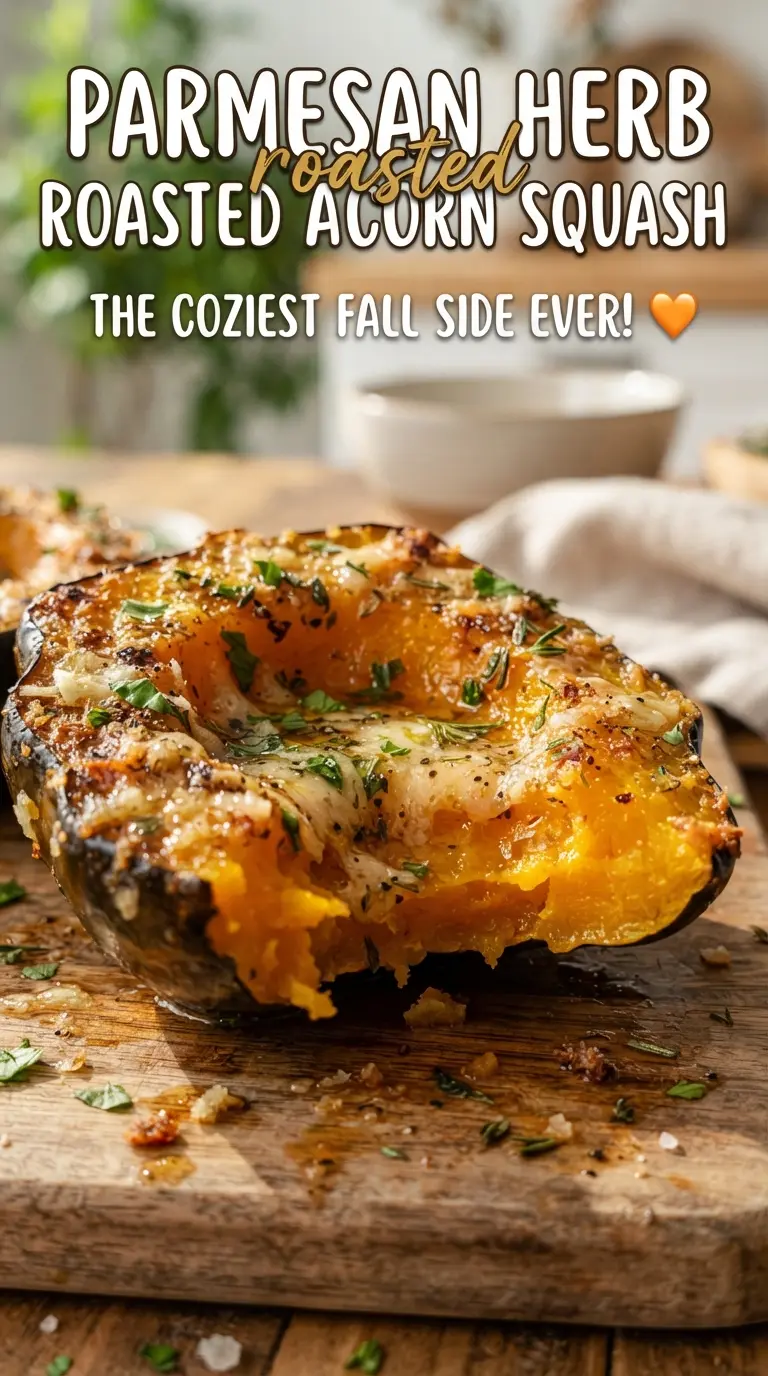
- Acorn squash — This is the backbone of the dish. Its dense flesh holds up to roasting and turns creamy at the center while the cut edges brown. Slice it into even 1/2-inch rings so everything finishes at the same time.
- Olive oil — Oil carries the herbs and helps the squash caramelize instead of drying out. A good everyday olive oil is fine here; save the fancy bottle for finishing. Use enough to lightly coat every slice, or the squash will roast up patchy and pale.
- Garlic, thyme, and rosemary — These give the squash its savory backbone. Fresh herbs matter because dried thyme and rosemary can taste dusty in such a simple side dish. If you only have dried, use half the amount and crush it between your fingers before adding it to the oil.
- Parmesan — The cheese is the crust, not just a garnish. Grated Parmesan melts and dries into a crisp, salty top layer. Buy a block and grate it yourself if you can; pre-shredded cheese often has anti-caking agents that keep it from browning as cleanly.
Roasting the Squash So It Browns Before It Softens
Getting the Pan Hot and the Slices Even
Start with a parchment-lined sheet pan and a preheated 400°F oven. The parchment keeps the cheese from welding itself to the pan, and the hot oven gives the squash a head start on browning. Arrange the rings in a single layer with space between them; if they touch, they steam instead of roast.
Coating the Squash in the Herb Oil
Toss the squash with the olive oil, garlic, thyme, rosemary, salt, and pepper until every surface looks lightly slicked. The goal is not a heavy marinade. Too much oil pools on the pan and can make the squash limp, while too little leaves dry spots that roast unevenly.
Flipping, Then Adding the Parmesan
Roast the slices for 20 minutes first, until the undersides are starting to color and the squash is beginning to soften. Flip each ring carefully with a thin spatula, then shower the tops with Parmesan. If the squash still feels rigid at this point, it needs a few more minutes before the cheese goes on, or the tops will finish before the centers do.
Finishing for a Crisp Crust
Return the pan to the oven for 12 to 15 minutes more, just until the squash is tender and the cheese is golden at the edges. Pull it when the Parmesan looks crisp rather than deeply dark brown, because it keeps cooking for a minute on the hot pan. Let it sit briefly before serving so the crust sets and lifts more cleanly.
How to Adapt This Side Dish for Different Tables
Dairy-Free Parmesan Style
Skip the Parmesan and use a dairy-free Parmesan-style topping that browns well, or mix nutritional yeast with a little almond flour for a savory crust. You’ll lose some of the salty melt, but you’ll keep the toasted, nutty finish that makes the squash feel finished instead of plain.
More Herb-Forward and Bright
Add a little chopped sage or thyme leaves over the finished squash, or a tiny squeeze of lemon right before serving. This keeps the dish from feeling too rich and gives the sweet squash a sharper edge.
Make It a Little Crunchier
For extra texture, add a small handful of finely chopped toasted walnuts after roasting. They won’t replace the Parmesan crust, but they add a nutty crunch that plays well with the soft centers.
Storage and Reheating
- Refrigerator: Store leftovers in an airtight container for up to 4 days. The Parmesan will soften, but the flavor stays good.
- Freezer: Freezing isn’t a great fit here. The squash turns watery after thawing and the cheese crust loses its texture.
- Reheating: Warm on a sheet pan in a 375°F oven for about 10 minutes, or until heated through. A skillet also works for crisping the edges again. The microwave will make the squash soft and the cheese rubbery.
Answers to the Questions Worth Asking
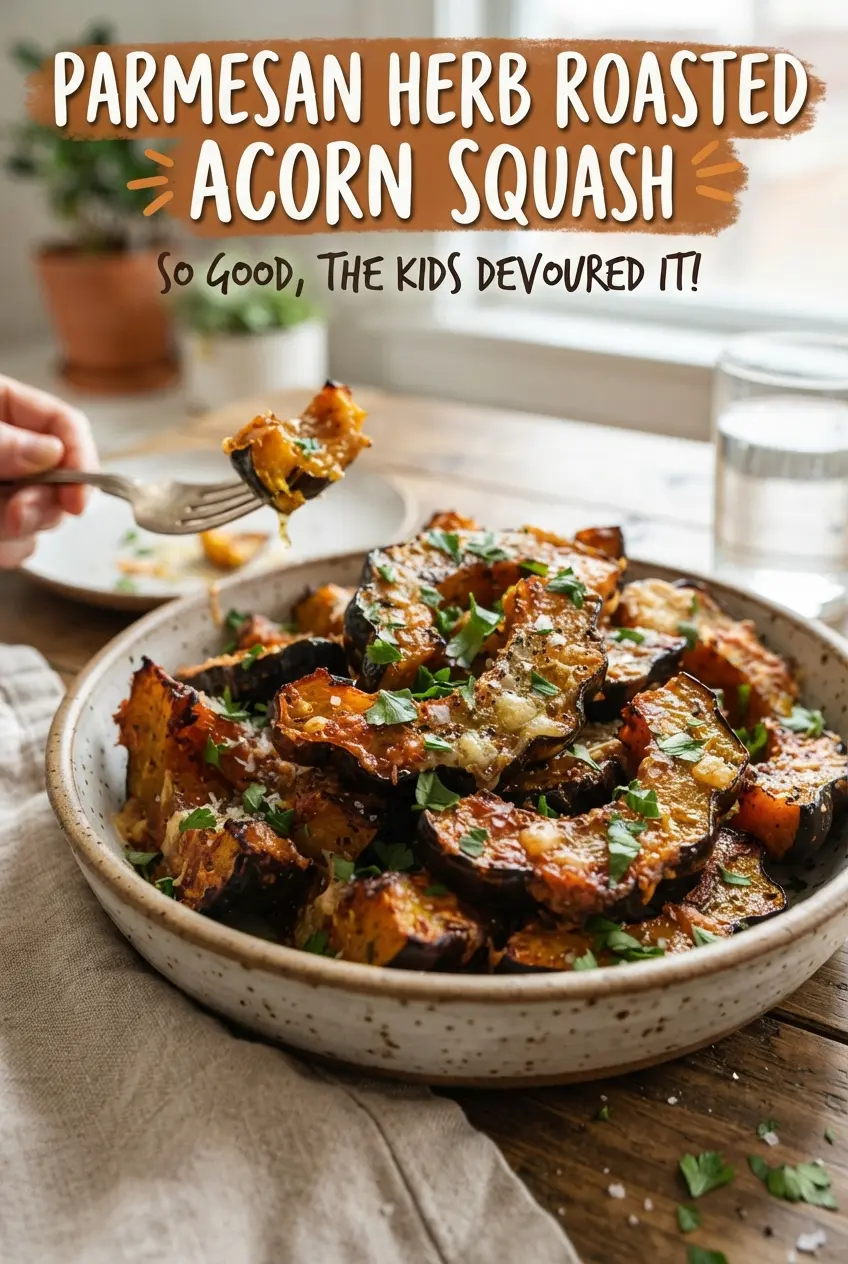
Parmesan Herb Roasted Acorn Squash
Ingredients
Equipment
Method
- Preheat oven to 400F and line a sheet pan with parchment. Use the hot oven to kick-start browning right away.
- Toss acorn squash rings with olive oil, garlic, thyme leaves, rosemary, salt, and black pepper until evenly coated. Make sure each ring has a light sheen of seasoning.
- Arrange squash in a single layer on the sheet pan. Roast for 20 minutes until the edges begin to caramelize.
- Flip the squash slices and sprinkle generously with grated Parmesan. Aim for full coverage so the crust crisps as it bakes.
- Roast for 12-15 minutes more at 400F until tender and the Parmesan is golden and crisp. Look for deep golden spots and a dry, crunchy cheese top.


