Once the cranberries start heating, a few pop against the side of the saucepan, and the sharp berry smell quickly softens with orange. That change is the cue I look forward to in this Orange Amaretto Cranberry Sauce: it starts bright and tart, then turns glossy and fragrant as the berries break down. The sugar gives the fruit a rounded sweetness without hiding its tang.
Orange juice and finely grated zest bring two different kinds of citrus flavor, while amaretto adds a gentle almond note at the end. I stir it in after taking the pan off the heat, which keeps that aroma clear. The sauce is easy to make ahead, too; chilling gives it time to thicken and lets the cranberry, orange, and almond settle into one balanced spoonful.
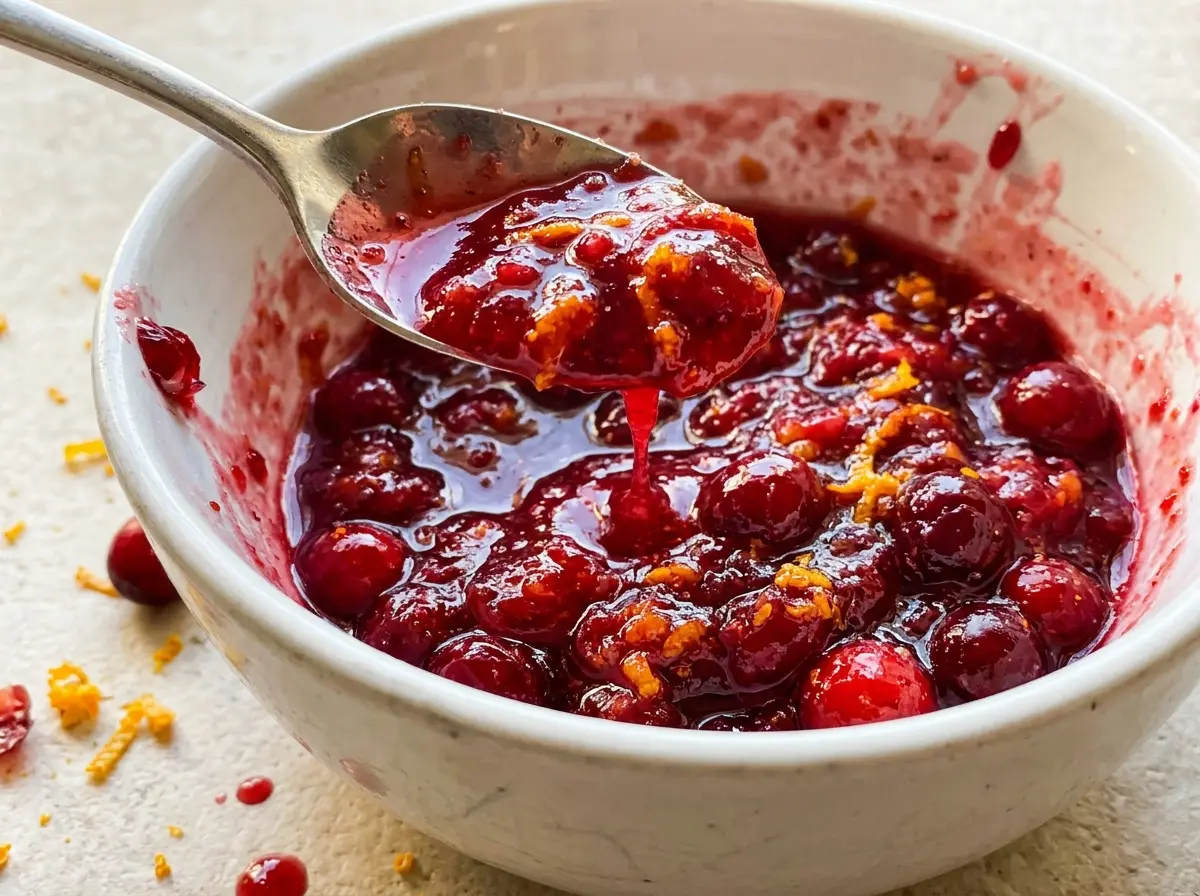
Kitchen Note
Stir the amaretto in only after the pan is off the heat. That last-minute addition keeps its soft almond aroma distinct instead of letting it fade into the simmering fruit.
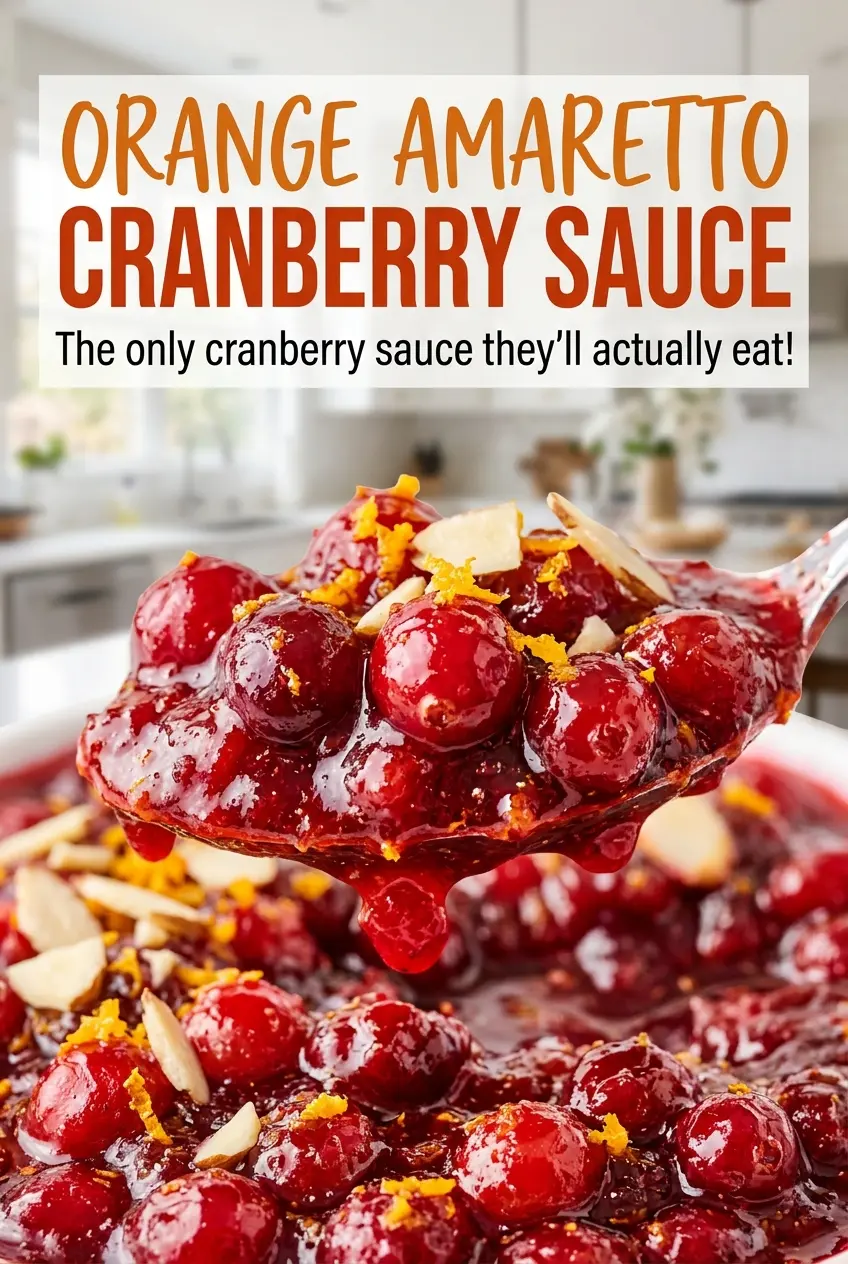
Save this Orange Amaretto Cranberry Sauce for a make-ahead side with tart berries, bright citrus, and a hint of almond.
Why the Sauce Looks Loose Before the Cranberries Cool
Hot cranberry sauce can look thinner than you expect, even when the berries have burst and the liquid has reduced. Cranberries contain natural pectin, and as the fruit cooks down, that pectin helps the sauce thicken. It doesn’t turn into a firm jelly in the saucepan; the texture continues to settle as the sauce cools.
That’s why I judge the finish by the fruit and the simmer, not by expecting a cold-sauce consistency while it’s still hot. Once chilled, it should mound softly on a spoon rather than run like juice. If you keep cooking just to force a hot sauce to look fully set, you risk reducing it past the soft, spoonable texture that works so well alongside a meal.
What the Orange and Amaretto Bring to the Cranberries
- Cranberries — Fresh and frozen both work here. Choose firm berries if buying fresh; frozen berries are a handy option when fresh ones aren’t available. They bring the sharp, tart base and the natural pectin that helps the sauce thicken.
- Granulated sugar — It balances cranberry tartness and dissolves cleanly into the cooking fruit. I stick with plain granulated sugar for a clear berry-and-orange taste; a brown sugar swap would add a molasses note that competes with the amaretto.
- Orange juice and zest — The juice gives the berries citrus sweetness, while finely grated zest adds fragrant orange oils. Bottled orange juice works; fresh juice and zest have a brighter aroma. If you don’t have zest, you can leave it out, knowing the orange note will be gentler.
- Amaretto — This almond-flavored liqueur gives the finished sauce its distinctive warm, sweet edge. Use the amaretto you enjoy drinking; there’s no need for a premium bottle, since the amount is small and the cranberries remain the main flavor. For an alcohol-free version, leave it out rather than trying to mimic the almond note with another ingredient.
Build the Sauce in the Pan, Then Give It Time to Chill
Start with the Full Cranberry Base
Combine the cranberries, sugar, orange juice, water, orange zest, and kosher salt in a 2-quart saucepan. Stir so the sugar is moistened by the juice and water before the pan heats. A 2-quart pan gives the berries room to bubble as they cook.
Dissolve the Sugar Before Lowering the Heat
Bring the mixture to a boil over medium-high heat, stirring until the sugar dissolves. You’re looking for the sugar grains to disappear into the liquid, not for the berries to cook completely at this stage. Once it boils, reduce the heat to medium-low so the sauce can simmer steadily without a hard, constant boil.
Simmer Until Most Berries Burst
Leave the saucepan uncovered and simmer for 10 to 15 minutes, stirring occasionally. The berries will pop and soften, and the liquid will thicken as the fruit breaks down. Stop when most of the cranberries have burst and the sauce looks glossy; a few whole berries are fine.
Finish with Amaretto and Chill
Take the pan off the heat, then stir in the amaretto. Transfer the sauce to a serving bowl and let it cool to room temperature before covering it. Refrigerate for at least 2 hours before serving so the texture can settle and the flavors have time to meld.
Simple Changes for a Different Cranberry Sauce
Make It Alcohol-Free
Leave out the amaretto for a cranberry-orange sauce without the liqueur. You’ll lose the almond aroma, but the fruit and citrus still make a balanced sauce.
Choose Fresh or Frozen Cranberries
Use either fresh or frozen cranberries in the same quantity. Frozen berries are convenient when fresh ones aren’t on hand; the sauce may take toward the longer end of the simmer to reach the same burst-and-thickened look.
Soften the Orange Note
Skip the orange zest if you prefer a milder citrus aroma. The orange juice still brings a gentle citrus sweetness, but the finished sauce won’t have the same bright fragrance.
Storage and Reheating
- Refrigerator: Keep the sauce covered and refrigerated for 3 to 4 days. It will firm up as it chills.
- Freezer: Freeze in an airtight container for up to 2 months. Thaw it in the refrigerator before serving; the texture may be a little softer after thawing.
- Reheating: No reheating is needed; serve it chilled after its refrigerator rest.
Questions That Come Up When Making Cranberry Sauce
Orange Amaretto Cranberry Sauce
Ingredients
Equipment
Method
- Combine the cranberries, sugar, orange juice, water, orange zest, and salt in a 2-quart saucepan.
- Bring to a boil over medium-high heat, stirring until the sugar dissolves.
- Reduce the heat to medium-low and simmer uncovered for 10 to 15 minutes, stirring occasionally, until most of the cranberries burst and the sauce thickens.
- Remove the pan from the heat and stir in the amaretto.
- Transfer the sauce to a serving bowl and cool to room temperature.
- Cover and refrigerate for at least 2 hours before serving.


