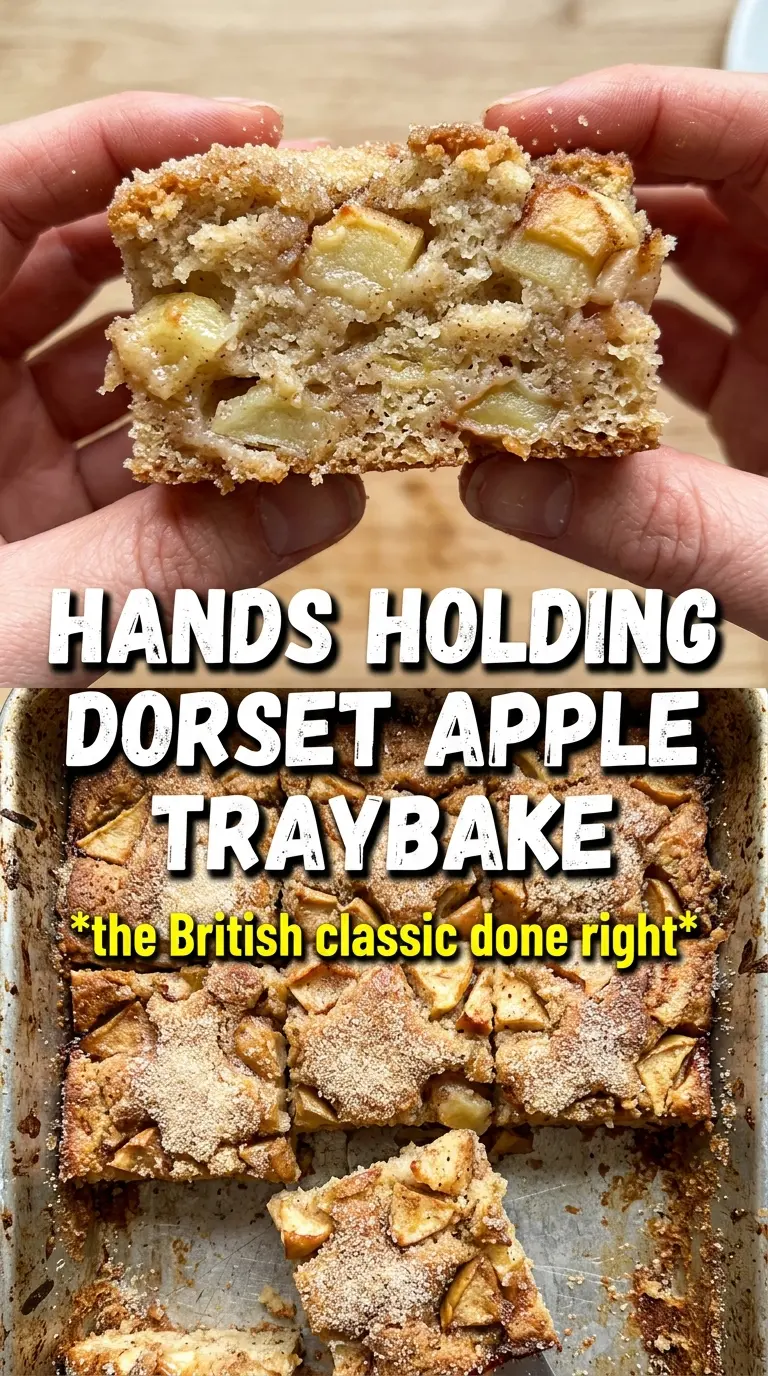
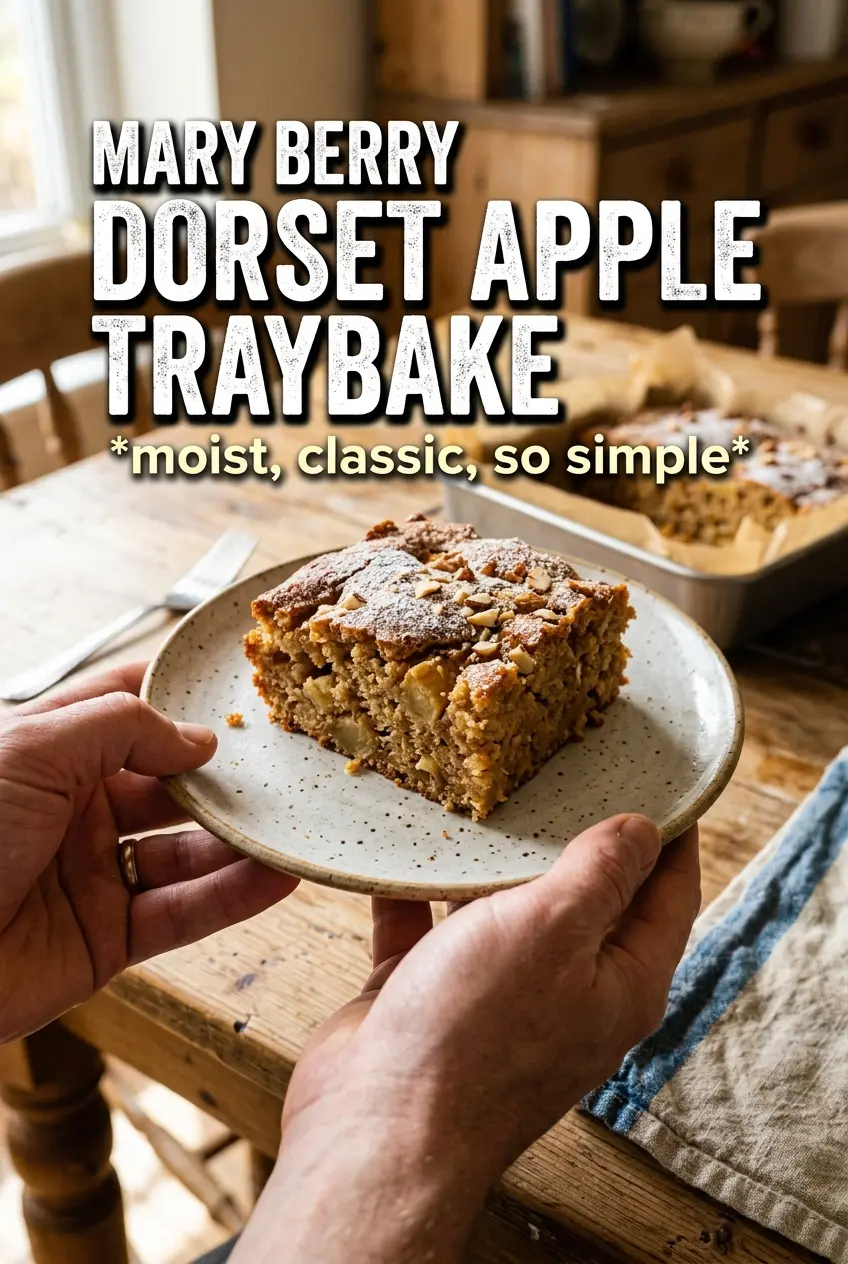
Mary Berry Dorset Apple Traybake bakes into a square of soft, buttery crumb with little pockets of tender apple in every slice and a crackly cinnamon sugar top that turns golden in the oven. It cuts neatly once cooled, but it still feels homey and generous on the plate, which is exactly why I keep coming back to it for afternoon tea, pudding, or a bake sale tin that disappears fast.
The trick is in the balance. The batter starts with a proper creaming of butter and sugar, which gives the traybake its lightness, then the apples go in at the end so they stay distinct instead of melting into the crumb. Cooking apples matter here because they soften without turning to mush, and the demerara topping gives you that thin, crisp finish that keeps each square from tasting flat.
Below, I’ve included the small details that make the difference between a dense apple cake and a traybake with a tender middle, plus the swaps that still work if you only have plain flour on hand.
The crumb stayed soft for two days and the apple pieces didn’t sink at all. That cinnamon sugar top turned crisp in the oven, and it sliced into perfect squares once it cooled.
Love the golden cinnamon sugar top and soft apple crumb in this Dorset Apple Traybake? Save it to Pinterest for the next time you want a neat, moist traybake that cuts into clean squares.
The Part That Keeps This Traybake Light Instead of Heavy
The biggest mistake with an apple traybake is treating it like a quick dump-and-stir cake. If the butter and sugar aren’t beaten until pale and airy, the finished bake turns tight and a little stodgy, especially once the apples release moisture in the oven. That first creaming step is doing the work of lifting the crumb.
The other trap is overmixing after the flour goes in. Once the flour is added, stir only until the batter disappears into the bowl. A few streaks are fine while you’re folding in the apples, because the batter is meant to be thick and the cake finishes setting in the oven, not in the bowl.
- Cooking apples — They soften into distinct pieces without turning watery. Bramley is the classic choice, but any tart cooking apple works better than a sweet eating apple here.
- Self-raising flour — This gives you lift and a tender crumb without extra fuss. If you use plain flour, add the baking powder listed in the recipe card or the traybake will bake up flatter.
- Demerara sugar — This is what gives the top its crisp, crackly finish. Granulated sugar works in a pinch, but you’ll lose some of that caramel-like crunch.
- Cinnamon — Use it in both the batter and the topping so the flavour runs through the whole traybake instead of sitting only on top.
What Each Ingredient Is Actually Doing in This Dorset Apple Traybake
- Butter — Softened butter creams properly with the sugar, which is what gives the crumb its fine, tender texture. Cold butter won’t trap as much air, so the cake bakes heavier.
- Eggs — Add them one at a time so the batter stays smooth and doesn’t curdle. If it looks split after an egg goes in, keep beating; it usually comes back together once the flour is added.
- Milk — Just a couple of tablespoons loosens the batter enough to spread in the tin without thinning it out. Whole milk is best, but semi-skimmed works fine.
- Vanilla — It rounds out the apple and cinnamon without taking over. Use the real thing if you can, because the flavour sits quietly in the background and makes the cake taste fuller.
- Plain flour swap — If that’s what you have, use the added baking powder so the traybake still rises properly. Without it, the texture turns much denser and more biscuit-like.
Getting the Batter, Apples, and Topping to Behave in the Oven
Creaming the base properly
Beat the butter and sugar until the mixture turns noticeably lighter in both colour and texture. It should look fluffy and a little whipped, not grainy and greasy. If you rush this stage, the traybake loses height and the crumb comes out compact. Scrape the bowl once or twice so no butter sits stuck on the sides.
Folding in the dry ingredients
Add the flour, baking powder if needed, and cinnamon, then fold gently until the batter just comes together. Stop as soon as you no longer see loose flour, because overmixing develops the gluten and makes the cake tough. The batter will be thick, and that’s exactly what you want. It should mound in the bowl rather than pour.
Adding the apples without sinking them
Fold in the diced apples at the very end and spread the batter into the lined tin straight away. Roughly diced apples work better than tiny cubes because they hold their shape and stay visible in each slice. If you pause too long, the batter tightens and becomes harder to spread evenly, so get it into the tin once the apples are mixed through.
Finishing with the sugar crust
Mix the demerara sugar with cinnamon and scatter it over the top before baking. That layer forms the most useful contrast in the whole traybake: soft crumb underneath, crisp top above. Bake until the centre springs back when touched and a skewer comes out clean, then let it cool before cutting or the squares will crumble.
How to Adapt This Traybake When the Pantry Is Working Against You
Plain flour with baking powder
Use plain flour plus the extra baking powder listed in the ingredients. The result is almost the same as self-raising flour, though the crumb can be a touch less delicate. Don’t skip the baking powder or the bake will lose lift.
Dairy-free version
Swap the butter for a solid dairy-free baking block rather than spreadable margarine, which contains too much water. The flavour is slightly less rich, but the texture still stays close if the substitute is designed for baking.
A sharper apple flavour
Use all tart cooking apples and avoid mixing in sweet eating apples. The finished traybake tastes brighter and more old-fashioned, with the apples standing out against the buttery base instead of blending into it.
Storage and Reheating
- Refrigerator: Keep in an airtight container for 4 days. The crumb stays moist, though the sugar topping softens a little after the first day.
- Freezer: This traybake freezes well in squares. Wrap individual pieces tightly and freeze for up to 2 months, then thaw at room temperature still wrapped so condensation doesn’t make the top sticky.
- Reheating: Warm a square briefly in a low oven or give it 10 to 15 seconds in the microwave. Too much heat dries the crumb out and makes the apples taste dull.
Questions I Get Asked About This Recipe
Mary Berry Dorset Apple Traybake
Ingredients
Equipment
Method
- Preheat your oven to 180C (350F). Grease and line a 30x23cm (12x9 inch) roasting tin or baking pan.
- Beat the unsalted butter and granulated sugar together until light and fluffy. Mix thoroughly so the traybake rises evenly.
- Add the eggs one at a time, beating well after each. Stir in the vanilla extract and milk until the batter looks smooth.
- Fold in the self-raising flour, baking powder if using, and cinnamon until just combined. Stop as soon as no dry flour remains.
- Fold in the diced cooking apples; the batter will be thick. Keep apple pieces distributed so they bake into the crumb.
- Spread the batter into the prepared tin. Mix the demerara sugar with cinnamon and sprinkle it evenly over the top.
- Bake for 40-45 minutes at 180C (350F) until golden, springy to the touch, and a skewer comes out clean. Avoid overbaking to keep the crumb moist.
- Cool the traybake before cutting into squares. Dust lightly with powdered sugar right before serving for a clean finish.