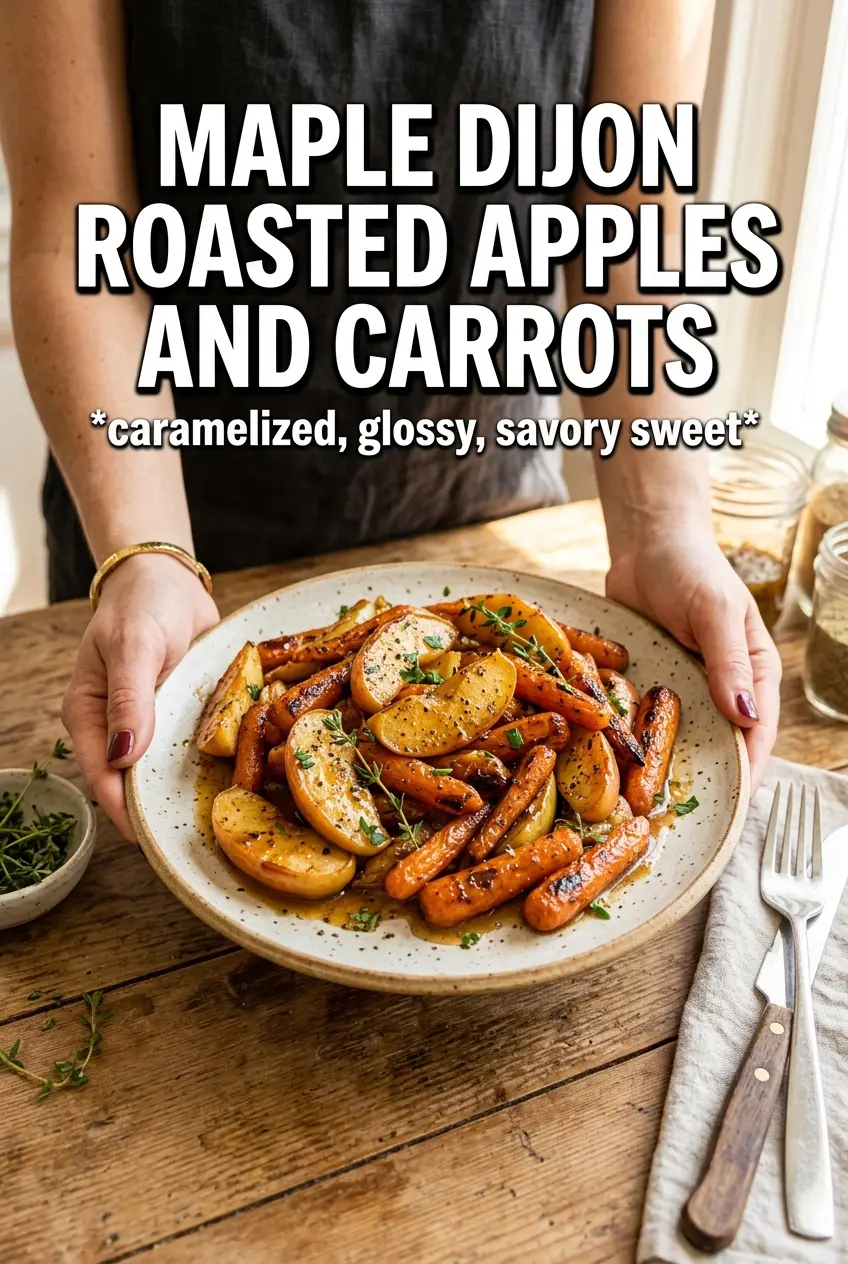
Maple Dijon roasted apples and carrots hit that sweet-savory middle ground that keeps a side dish from fading into the background. The carrots come out tender at the center with caramelized edges, while the apples soften just enough to turn jammy at the tips without collapsing into sauce. That contrast is the whole reason this dish ends up back on the table again and again.
The glaze does the heavy lifting here. Maple syrup brings body and a glossy finish, Dijon gives the sharp edge that keeps the sweetness from feeling flat, and a little apple cider vinegar wakes up both the fruit and the carrots. Roasting the carrots first matters because they need more time than the apples; if everything goes in together, the apples go soft before the carrots are properly roasted.
Below, I’ve included the small timing detail that keeps the texture right, plus a few smart swaps if you need to adjust for what’s in the kitchen.
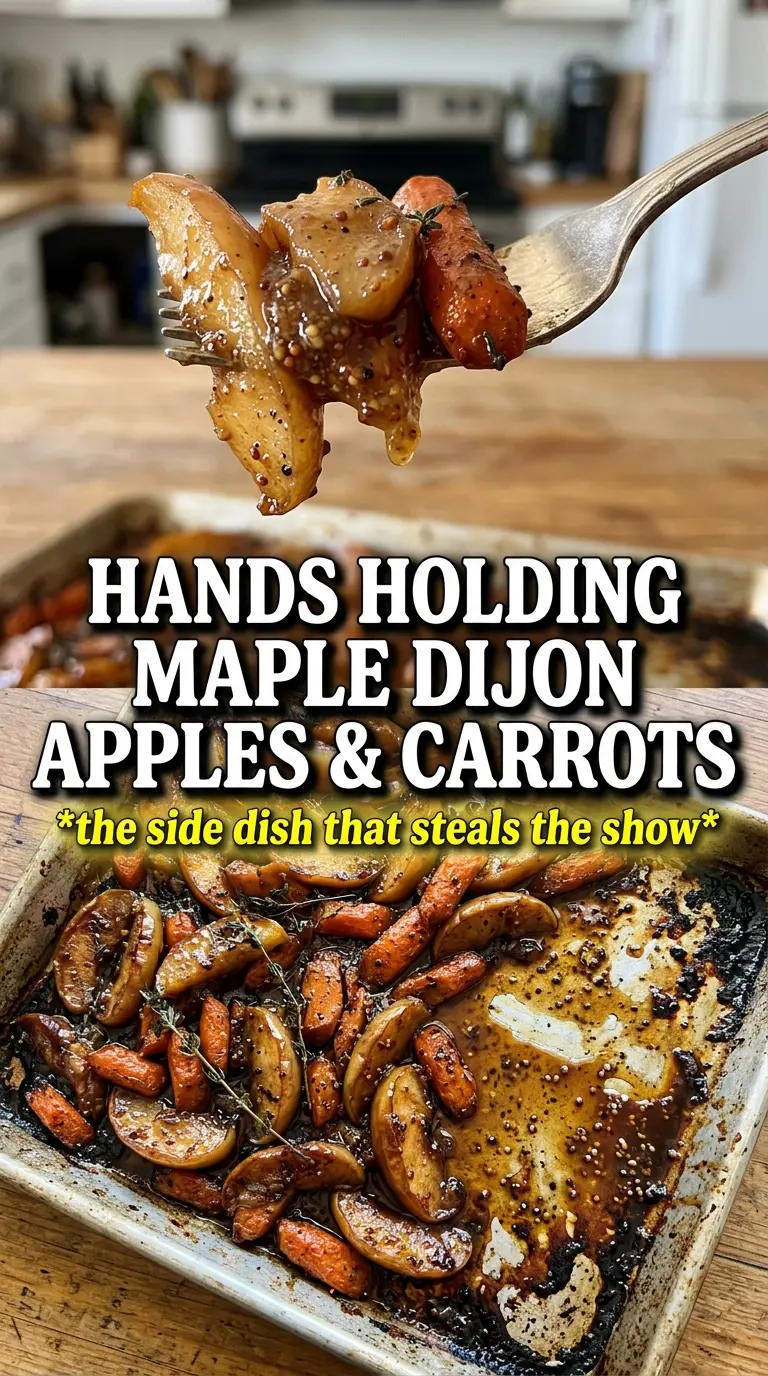
The carrots got those caramelized edges I was hoping for, and the apples held their shape instead of turning mushy. That maple-Dijon glaze clung to everything and made the whole pan taste finished.
Save these maple Dijon roasted apples and carrots for the nights when you want a glossy, oven-roasted side with sweet edges and a sharp mustard bite.
The Shortcut That Keeps Apples from Going Soft Before the Carrots Are Done
Roasting apples and carrots in the same pan sounds simple, but the timing is where most versions go sideways. Carrots need a head start because they’re denser and hold onto their structure longer, while apples soften fast once the heat starts pulling out their moisture. If both go in at once, the apples usually slump before the carrots get those browned edges that make this side dish worth serving.
The other thing that matters is spacing. A crowded pan steams the vegetables and fruit instead of roasting them, which means pale carrots and watery glaze. Give everything a single layer and use a large sheet pan so the maple-Dijon mixture can reduce on contact with the hot metal instead of pooling underneath.
What Each Ingredient Is Actually Doing in This Pan
- Carrots — Diagonal slices give you more surface area, which means more browning and better glaze coverage. Cut them about 1/2 inch thick so they stay tender without turning limp.
- Apples — Use a firm, sweet-tart apple that can hold a wedge shape in the oven. Softer apples can work, but they’ll turn saucier and lose that clean bite against the carrots.
- Maple syrup — This is what gives the glaze its sheen and helps everything caramelize. Honey can work in a pinch, but it tastes a little rounder and less clean with the mustard.
- Dijon mustard — Dijon is the sharp edge that keeps the dish from reading as dessert. Grainy mustard won’t emulsify the same way, so the glaze won’t cling as evenly.
- Apple cider vinegar — The vinegar keeps the glaze from becoming sticky-sweet and helps brighten the roasted fruit. Don’t skip it unless you’re replacing it with another acid like lemon juice.
- Fresh thyme — Fresh thyme has a woodsy note that works with both apples and carrots. Dried thyme can stand in, but use less because it’s more concentrated and can take over.
- Cinnamon — Just enough to echo the apples without pushing the dish toward pie filling. More than a small pinch makes the glaze taste muddy.
Roasting the Carrots First, Then Bringing the Apples In
Mix the glaze until it looks glossy and unified
Whisk the maple syrup, Dijon, olive oil, apple cider vinegar, garlic, thyme, salt, pepper, and cinnamon until the mixture looks smooth and slightly thickened. If the mustard is left streaky, it won’t coat the vegetables evenly and you’ll get pockets of sharpness instead of a balanced glaze. The garlic should be finely minced so it softens in the oven rather than burning on the pan.
Give the carrots their head start
Toss the carrots in the glaze first and spread them out on the parchment-lined baking sheet. Roast them for 15 minutes before adding anything else. That first stretch lets the carrots begin browning before the apples introduce extra moisture, which is what keeps the pan from turning soggy.
Add the apples only when the carrots are already taking color
Add the apple wedges and toss them gently in the remaining glaze on the pan. Roast for another 15 minutes, just until the carrots are tender and the apples are golden at the edges. If the apples are overcooked, they’ll lose their shape and the dish turns soft instead of glossy and distinct.
Finish with fresh thyme and serve right away
Scatter fresh thyme over the top as soon as the pan comes out of the oven. The herbs smell brightest against the hot glaze, and serving immediately keeps the apples from collapsing as they sit. This dish is at its best when the carrots still have a little bite and the glaze is shiny, not set into a sticky shell.
How to Adjust the Pan Without Losing the Balance
Make it dairy-free without changing a thing
This recipe is naturally dairy-free, which is part of why it works so well as a side for a bigger meal. The glaze gets its richness from olive oil and maple syrup, so there’s no need to add butter unless you want a softer, more rounded finish.
Use pears instead of apples for a softer finish
Firm pears can replace the apples if that’s what you have, but they’ll cook down faster and taste a little gentler. Add them at the same point you would add the apples, then watch closely so they don’t turn mushy before the carrots are done.
Swap in maple and whole-grain mustard for a more rustic pan
Whole-grain mustard gives you a little texture and a slightly milder bite, but the glaze won’t be as smooth. Use it if you want a more rustic look, and whisk it especially well so the maple still coats the carrots and apples evenly.
Make a bigger batch without steaming the pan
If you double the recipe, use two sheet pans instead of cramming everything onto one. A crowded pan traps steam, and then you lose the roasted edges that make the glaze taste caramelized instead of just sweet.
Storage and Reheating
- Refrigerator: Store leftovers in an airtight container for up to 4 days. The apples will soften more as they sit, but the flavor stays good.
- Freezer: I don’t recommend freezing this dish. The carrots and apples both lose their texture after thawing, and the glaze turns loose.
- Reheating: Warm leftovers in a 375F oven on a sheet pan until hot, about 10 minutes. The oven helps bring back some of the roasted edges; the microwave makes the apples collapse and the glaze go thin.