The pastry is easiest to roll when it’s thawed enough to bend but still cold to the touch. If it gets warm and floppy, the filling smears and the spirals lose their shape before they reach the oven. I keep the puff pastry on the parchment while I roll it, then chill the finished log so these jalapeno popper pinwheels slice neatly into 24 pieces.
The filling has the familiar creamy, sharp-cheddar flavor, with bacon for a salty bite and seeded jalapeno for a little heat. Leaving a narrow strip of pastry bare gives the roll a clean seam to seal, so the filling stays tucked into the spirals instead of crowding the edge. Once they bake, the pastry puffs around the warm cheese and turns golden at the edges.
They’re good while warm, after a short rest on the baking sheet, when the pastry is crisp and the centers are still creamy.
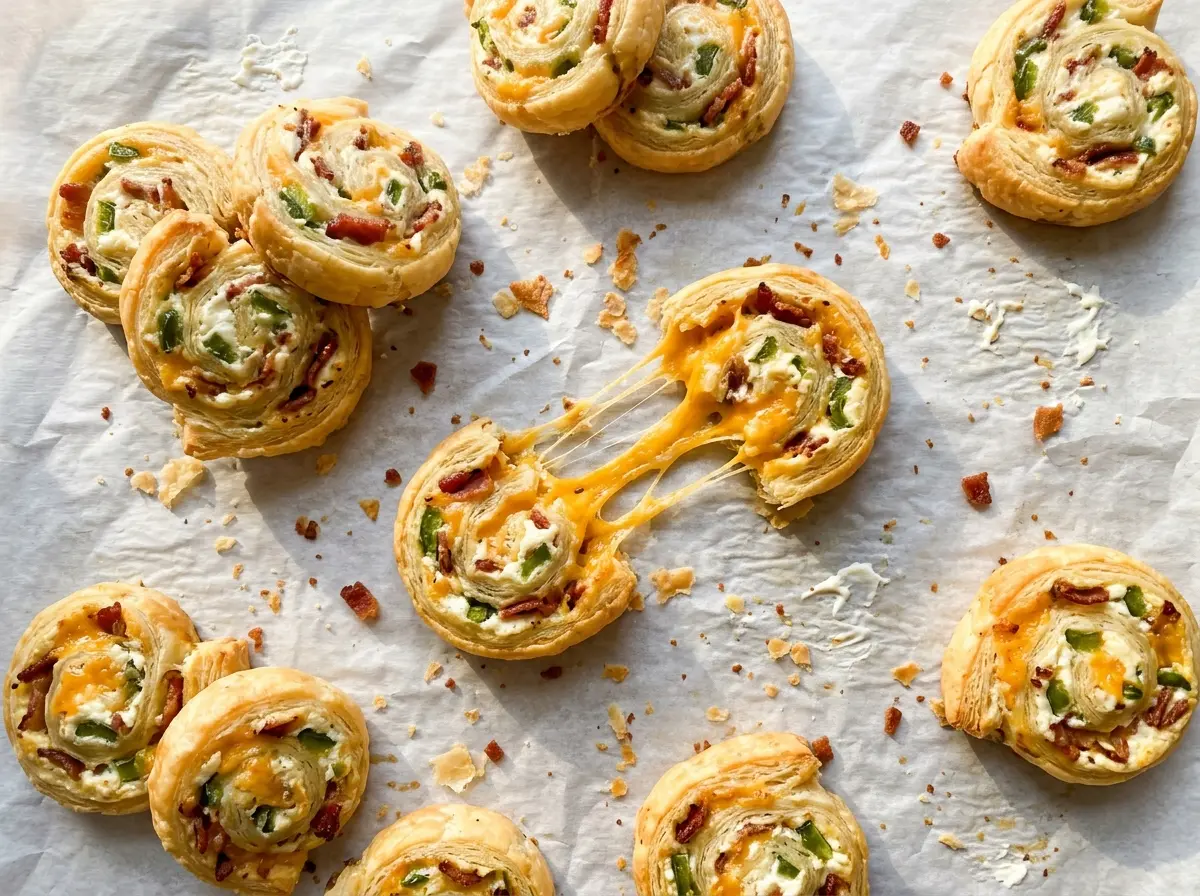
Kitchen Note
Take the time to chop the seeded jalapeno very finely. Big pieces make the filling uneven from one spiral to the next, while a fine chop lets its heat spread through the cream cheese.
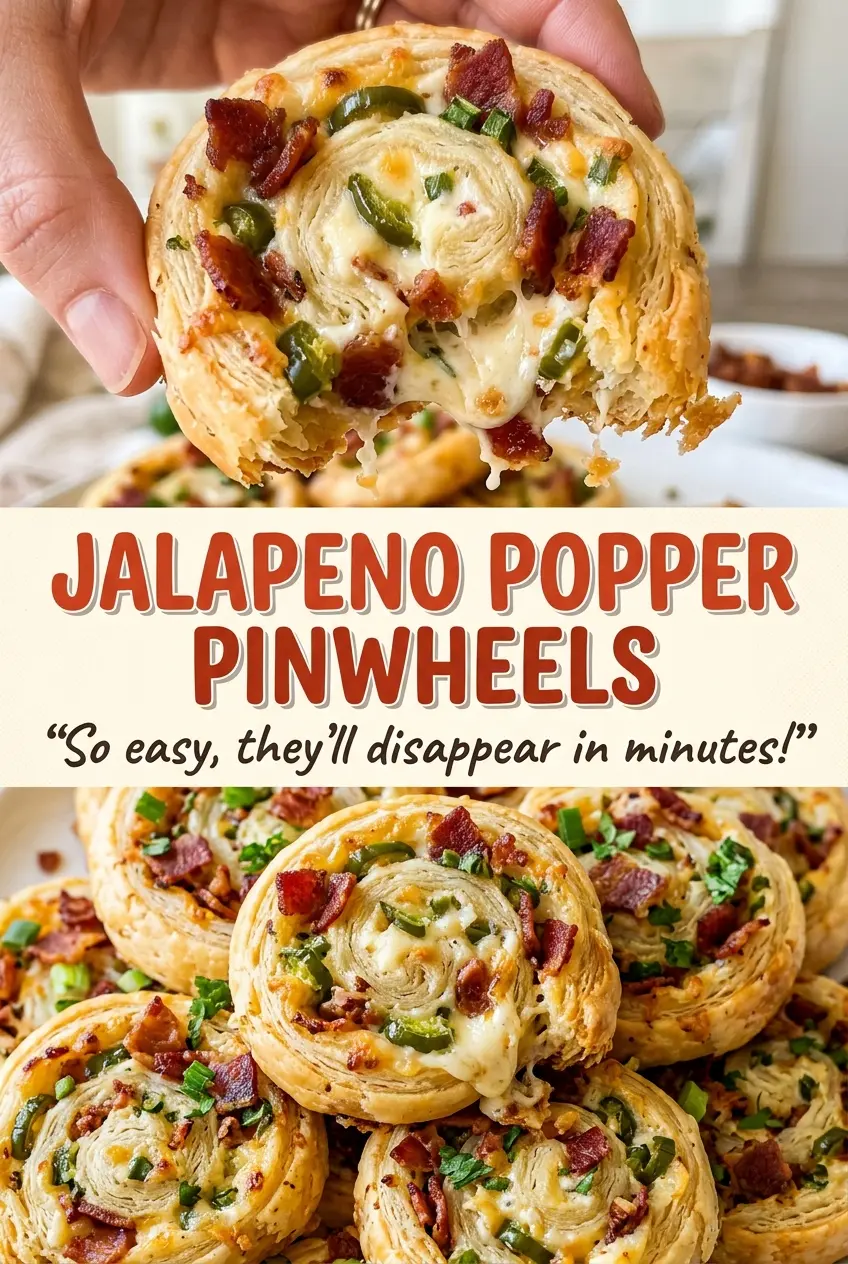
Save these jalapeno popper pinwheels for a party spread: flaky pastry, creamy cheddar filling, and a gentle kick of jalapeno in every spiral.
That Bare Strip of Pastry Is What Keeps the Filling Inside the Spiral
A pastry roll needs a seam, not a second layer of filling. Spreading the mixture over the whole rectangle leaves nowhere for the pastry to grip itself closed; the roll can loosen as you slice it, and cheese may push out from the edge. Leaving a half-inch border along one long side gives the pastry a clean place to meet and seal.
Roll from the opposite long edge toward that bare strip, so the filling travels inward with each turn instead of being pushed toward the seam. Keep the roll snug, but don’t crush the pastry as you go. A tight, even spiral gives each piece a similar balance of pastry and filling, and pinching the seam closed helps the log hold together when you cut it.
This small detail also makes the pinwheels easier to arrange cut side down. You’ll see the spiral clearly before baking, and the filling stays distributed through the pastry rather than collecting in one loose pocket. If a little filling peeks out at an end, that’s fine; the important part is that the long seam is closed.
What the Creamy Filling Needs From Each Ingredient
- Cream cheese — It gives the filling its thick, tangy base and helps the other ingredients stay together. Block-style cream cheese is easiest to work with once softened; whipped or tub-style versions are looser. Neufchatel can stand in at the same amount, though the filling will be a little less rich and may feel softer.
- Sharp cheddar — Sharpness matters here because it cuts through the cream cheese rather than disappearing into it. A store-brand sharp cheddar works well; freshly shredded cheese tends to blend more smoothly than pre-shredded cheese. Monterey Jack can replace it in the same amount for a milder, softer-tasting filling.
- Bacon — Cooked, crumbled bacon brings the smoky, salty note that makes the filling taste like a popper. Use bacon you enjoy eating on its own; turkey bacon also works when cooked and crumbled, with a leaner and less rich result.
- Jalapeno — Fresh pepper gives the filling a clean, green heat that pickled jalapenos won’t quite match. For a gentler pepper flavor, use one medium poblano in its place; the finished pinwheels will be milder.
- Puff pastry — Its layered dough is what creates the flaky, lifted spirals, so a different dough won’t give quite the same texture. A store-brand sheet is fine as long as it’s thawed but still cold. Gluten-free puff pastry is a practical swap if you need one, though the layers may bake up a little differently.
- Egg — Beaten with water, it brushes over the exposed pastry to help it brown. A beaten egg white can be used instead, but the surface will usually be less deeply golden.
Roll, Chill, Slice, Then Bake Until the Edges Turn Golden
Stir the Filling Until It’s Even
Stir the softened cream cheese, cheddar, cooked crumbled bacon, jalapeno, and garlic powder together in a medium bowl. Keep mixing until the cheese and bacon are spread throughout rather than sitting in separate clumps. If the cream cheese is still firm, it’ll be harder to combine smoothly, so give it time to soften before you begin. Set the filling aside while you get the pastry ready.
Spread and Roll the Pastry
Heat the oven to 400°F and line a large baking sheet with parchment paper. Roll the thawed but cold pastry on the parchment into a 10-by-12-inch rectangle, then spread the filling evenly over it, leaving a half-inch border along one long edge. Roll tightly from the opposite long edge toward the bare border and pinch the seam closed. Refrigerate the log for 15 minutes, until it’s firm enough to slice.
Cut the Log Into Even Pinwheels
Beat the egg with the water in a small bowl while the log chills. Slice the log crosswise into 24 pieces, about a half-inch thick, and set each piece cut side down on the prepared baking sheet. If the slices compress as you cut, use a steady motion rather than pressing hard; the goal is to keep the pastry’s spiral visible. Brush the exposed pastry on each piece with egg wash.
Bake for Puff and Color
Bake for 18 to 22 minutes, until the pastry has puffed and turned golden brown. The color is a more useful cue than pale dough at the edge; give the tray the full bake if the pastry still looks blond. Let the pinwheels cool on the baking sheet for 5 minutes before serving. That short rest gives the pastry time to settle so the warm filling isn’t as loose when you pick one up.
Easy Swaps for a Different Heat Level or Dietary Need
Use pepper jack for a warmer, cheesier bite
Swap the sharp cheddar for the same amount of shredded pepper jack. It brings extra pepper heat and a milder cheese flavor, so the jalapeno’s kick feels less distinct than it does with sharp cheddar.
Choose turkey bacon for a lighter filling
Use three slices of turkey bacon, cooked and crumbled, in place of the regular bacon. You’ll keep the salty, savory pieces in the filling, but lose some of the richer bacon flavor.
Use gluten-free puff pastry
Replace the regular pastry with one gluten-free puff pastry sheet of a similar size, and keep it cold while you work. The filling is naturally made without flour, but gluten-free pastry brands vary in how well their layers puff, so expect a slightly different finish.
Storage and Reheating
- Refrigerator: Store cooled pinwheels in an airtight container for 3 to 4 days. The pastry softens as it sits, but reheating helps bring back some crispness.
- Freezer: Freeze baked, cooled pinwheels in a single layer, then transfer them to an airtight container for up to 2 months. Thaw them in the refrigerator before reheating.
- Reheating: Warm them on a baking sheet in a 350°F oven until crisp and heated through to 165°F in the center. The microwave is quick, but it softens the pastry instead of reviving its flaky edges.
Questions I Get Asked About Jalapeno Popper Pinwheels
Jalapeno Popper Pinwheels
Ingredients
Equipment
Method
- In a medium bowl, stir together the cream cheese, cheddar, bacon, jalapeno, and garlic powder until evenly combined.
- Heat the oven to 400°F.
- Line a large baking sheet with parchment paper.
- With the pastry on the parchment, roll it into a 10x12-inch rectangle.
- Spread the filling evenly over the pastry, leaving a 1/2-inch border along one long edge.
- Roll the pastry tightly from the opposite long edge toward the bare border and pinch the seam closed.
- Refrigerate the log for 15 minutes until firm enough to slice.
- Beat the egg with the water in a small bowl.
- Slice the log crosswise into 24 pieces about 1/2 inch thick.
- Arrange the pinwheels cut side down on the baking sheet.
- Brush the exposed pastry on each pinwheel with egg wash.
- Bake for 18 to 22 minutes, until puffed and golden brown.
- Cool the pinwheels on the baking sheet for 5 minutes before serving.


