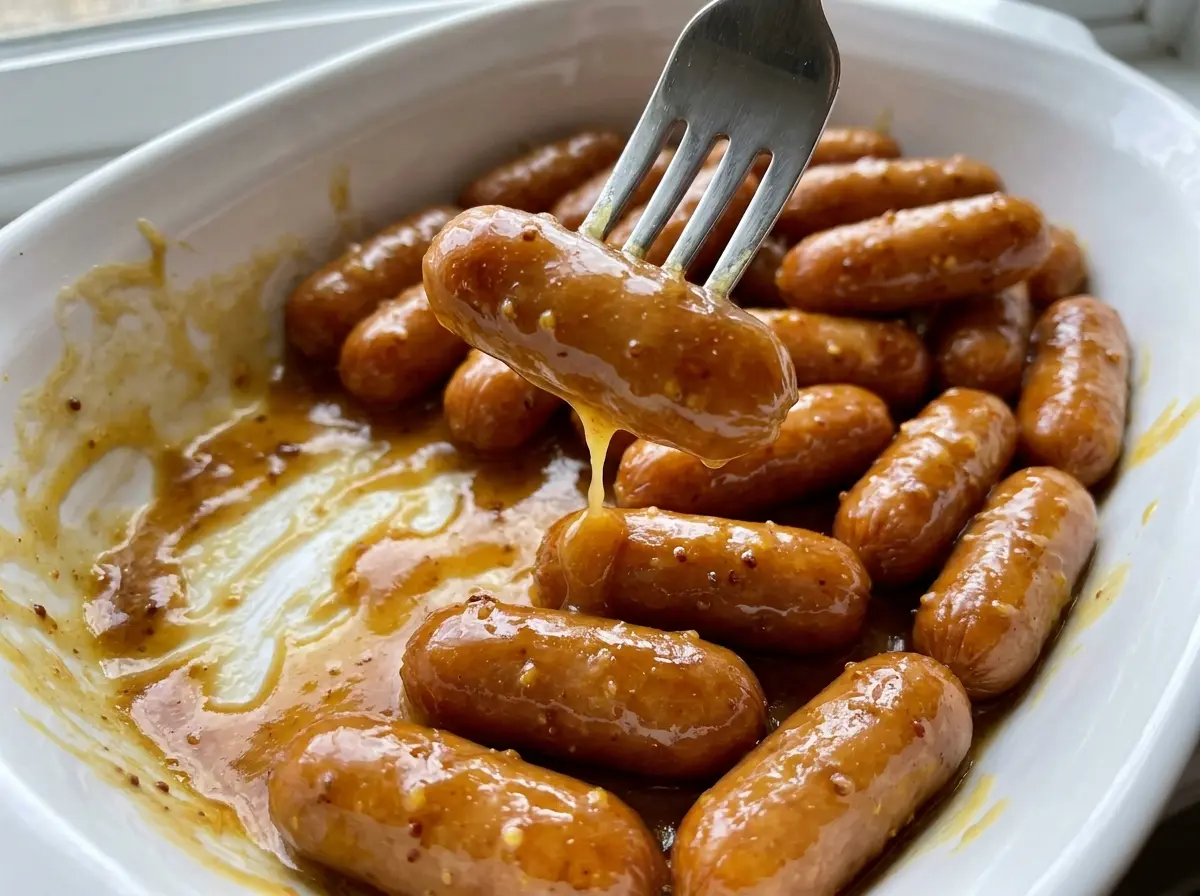
The honey loosens as it warms, then turns the mustard into a smooth, shiny glaze. I keep the heat at medium-low here; a hard boil can make a honey sauce thicken before the sausages have a chance to warm through. These honey mustard cocktail sausages come together in one 12-inch skillet, with a short simmer for the sauce and just enough time for it to cling to each bite.
The two mustards aren’t interchangeable in this combination. Dijon brings a sharper, more rounded mustard taste, while yellow mustard keeps the sauce familiar and tangy. Apple cider vinegar cuts through the honey, so the finished coating tastes balanced rather than candy-sweet. Once the sausages are stirred in, an occasional turn through the skillet is all it takes to coat them evenly in that glossy, sweet-tangy sauce.
Kitchen Note
Drain the cocktail sausages before they go into the skillet. Extra liquid from the package can thin the glaze, and it’s easier to get a glossy coating when the sausages aren’t bringing that liquid along.
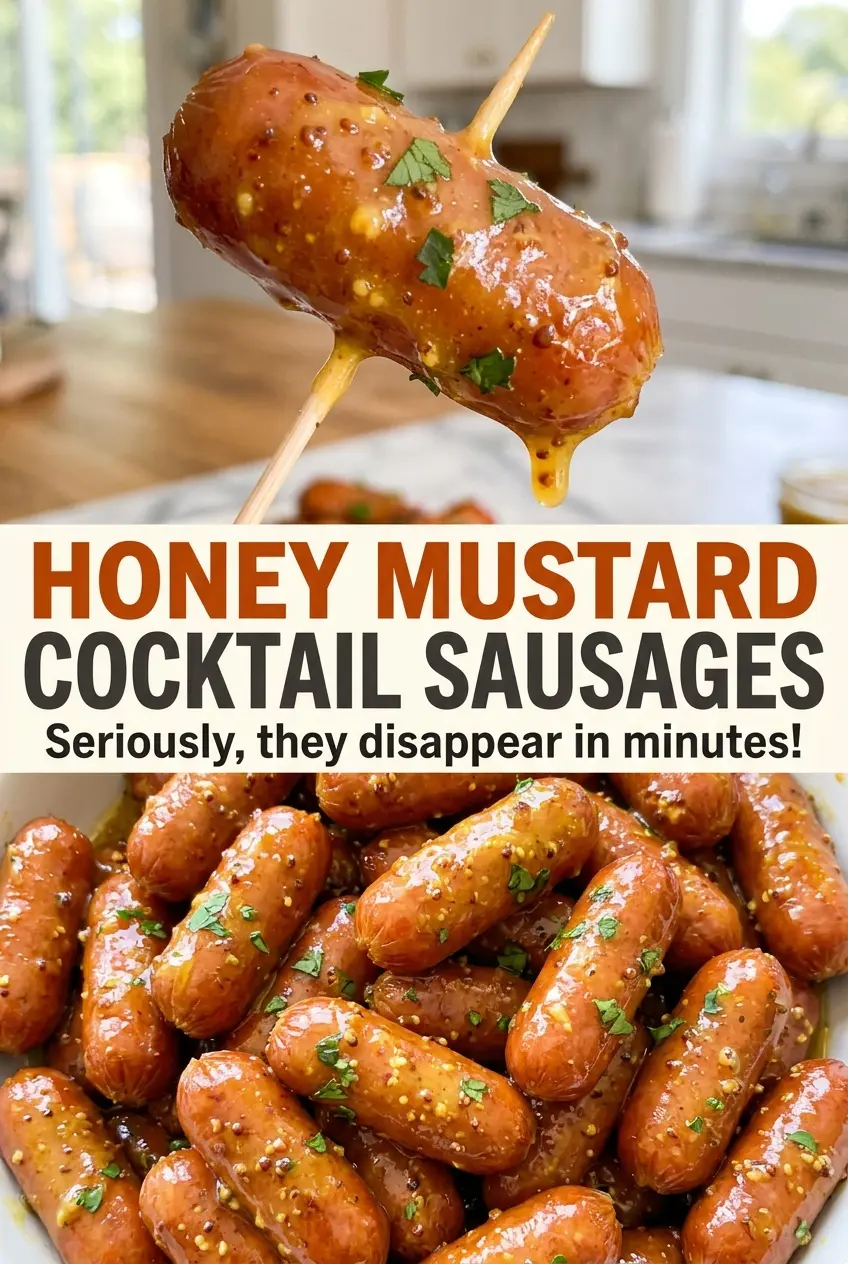
Save these honey mustard cocktail sausages for a party spread: the glossy, tangy-sweet coating comes together right in the skillet.
Why Two Mustards Make a More Balanced Cocktail Sausage Glaze
Using Dijon and yellow mustard together gives the sauce more dimension than either one brings by itself. Dijon has a sharper, more assertive character, while yellow mustard is milder and brings a familiar tang. Honey rounds both out, and the apple cider vinegar keeps that sweetness from taking over. Each part has a job, so the glaze tastes like a balanced sauce instead of honey with mustard stirred into it.
The proportion matters because the sauce has to coat small sausages, not sit beside them as a dip. Too much honey can make the coating taste sugary; too much mustard can push it into a sharper, more pungent direction. The vinegar gives the sweetness a lift without turning the whole sauce sour. Keeping all four ingredients together in the skillet lets them warm into one smooth mixture before the sausages go in.
If you’re used to choosing one mustard for a sauce, this is a good place to use both. The difference isn’t subtle, but neither mustard overwhelms the other. The result is a glaze that tastes sweet at first, then tangy and gently sharp, with enough body to cling as you stir.
What Each Part of This Four-Ingredient Glaze Contributes
- Honey — It brings the sweetness and helps give the warm sauce its glossy look. A standard mild honey is a good choice here; a strongly flavored honey will be more noticeable against the mustards. I wouldn’t replace it with a different sweetener without adjusting the balance, since honey is part of what gives this glaze its texture.
- Dijon mustard — Dijon supplies the sharper mustard note. A smooth, everyday Dijon works well; there’s no need to seek out a specialty jar. If you use only yellow mustard instead, the sauce will be milder and less complex.
- Yellow mustard — This brings a gentler tang that rounds out the Dijon. Regular prepared yellow mustard is the right fit. Swapping it entirely for Dijon makes the finished sauce more pungent, so keep both in the mix for the intended balance.
- Apple cider vinegar — Its acidity keeps the honey from making the glaze taste flat or overly sweet. Use a familiar, straightforward vinegar rather than one with an especially strong flavor. The closest kitchen alternative is another mild vinegar, but the tang may taste a little different.
- Cocktail sausages — Their small size makes them easy to coat and serve straight from the skillet. A standard package is fine; what matters here is using cocktail-size sausages and draining them before cooking so excess package liquid doesn’t water down the glaze.
How to Warm the Glaze and Coat Every Sausage Evenly
Whisk the sauce until smooth
Add the honey, Dijon mustard, yellow mustard, and apple cider vinegar to a 12-inch skillet over medium-low heat. Whisk steadily until the mixture looks even, with no streaks of mustard or thick patches of honey. The sauce will loosen as it warms, so keep the heat moderate rather than trying to hurry it along. A gentle simmer is the cue to move on, not a vigorous boil.
Let the sauce simmer briefly
Once the sauce is smooth, let it reach a gentle simmer for about 1 to 2 minutes. You’re looking for small, calm bubbles and a glossy surface. Keep whisking as needed so the honey doesn’t sit in one hot spot on the bottom of the skillet. If the sauce starts bubbling hard, lower the heat; a forceful boil can make it reduce too quickly.
Stir in the sausages and coat
Add the drained cocktail sausages and stir to cover them in the sauce. Cook for 8 to 10 minutes, stirring occasionally, until they’re heated through and the coating looks glossy. Use a gentle but thorough stir so the sausages move through the sauce without splashing it up the sides of the skillet. If the sauce gathers in one place, scrape and fold it back over the sausages as you stir.
Small Changes That Shift the Honey-Mustard Balance
Make the sauce more Dijon-forward
Use more Dijon and less yellow mustard while keeping the total amount of mustard the same. The sauce will taste sharper and more assertive, with less of the mild yellow-mustard tang. This is a simple adjustment if you prefer a stronger mustard finish.
Make the glaze more tart
For a brighter, less sweet finish, use a little less honey and a little more apple cider vinegar. Make a modest change rather than removing the honey; it provides much of the glaze’s sweetness and glossy body. The sausages will have a tangier coating that doesn’t linger as sweetly.
Make a gluten-free version
Replace the cocktail sausages with an equal-size package of gluten-free cocktail sausages and keep the sauce ingredients the same. The glaze itself uses honey, mustard, and vinegar, while the sausage replacement is what changes for this adaptation. The exact texture and seasoning will depend on the product you choose.
Storage and Reheating
- Refrigerator: Refrigerate leftovers within 2 hours and keep them in a covered container for 3 to 4 days. The sauce may lose some of its fresh gloss as it chills.
- Freezer: Freeze in an airtight container for up to 2 to 3 months. Thaw overnight in the refrigerator; the sauce may look less smooth after thawing, but stirring as it warms helps bring it back together.
- Reheating: Warm gently in a skillet over medium-low heat, stirring until the sausages reach 165°F. Avoid high heat, which can make the honey in the sauce darken or stick before the sausages warm evenly.
Questions That Come Up While the Sausages Simmer
Honey Mustard Cocktail Sausages
Ingredients
Equipment
Method
- Whisk the honey, Dijon mustard, yellow mustard, and apple cider vinegar in a 12-inch skillet over medium-low heat until smooth and gently simmering, about 1 to 2 minutes.
- Stir in the cocktail sausages and cook, stirring occasionally, until heated through and coated in the glossy sauce, 8 to 10 minutes.


