When scallion whites and fresh ginger hit the warm oil, the kitchen smells savory before there’s even broth in the pot. That quick start gives this gyoza soup a fragrant base without asking you to brown anything or fuss over a separate sauce. The shiitakes soften while the broth comes together, and the frozen dumplings cook right in the same pot.
I like this soup because the dumplings make it filling, while napa cabbage keeps each spoonful light and tender. The timing is what keeps the bowl balanced: the gyoza get their head start in the simmering broth, and the cabbage goes in later so it doesn’t spend the whole cook turning limp. A little toasted sesame oil and the scallion greens finish the pot with a fresh, nutty aroma.
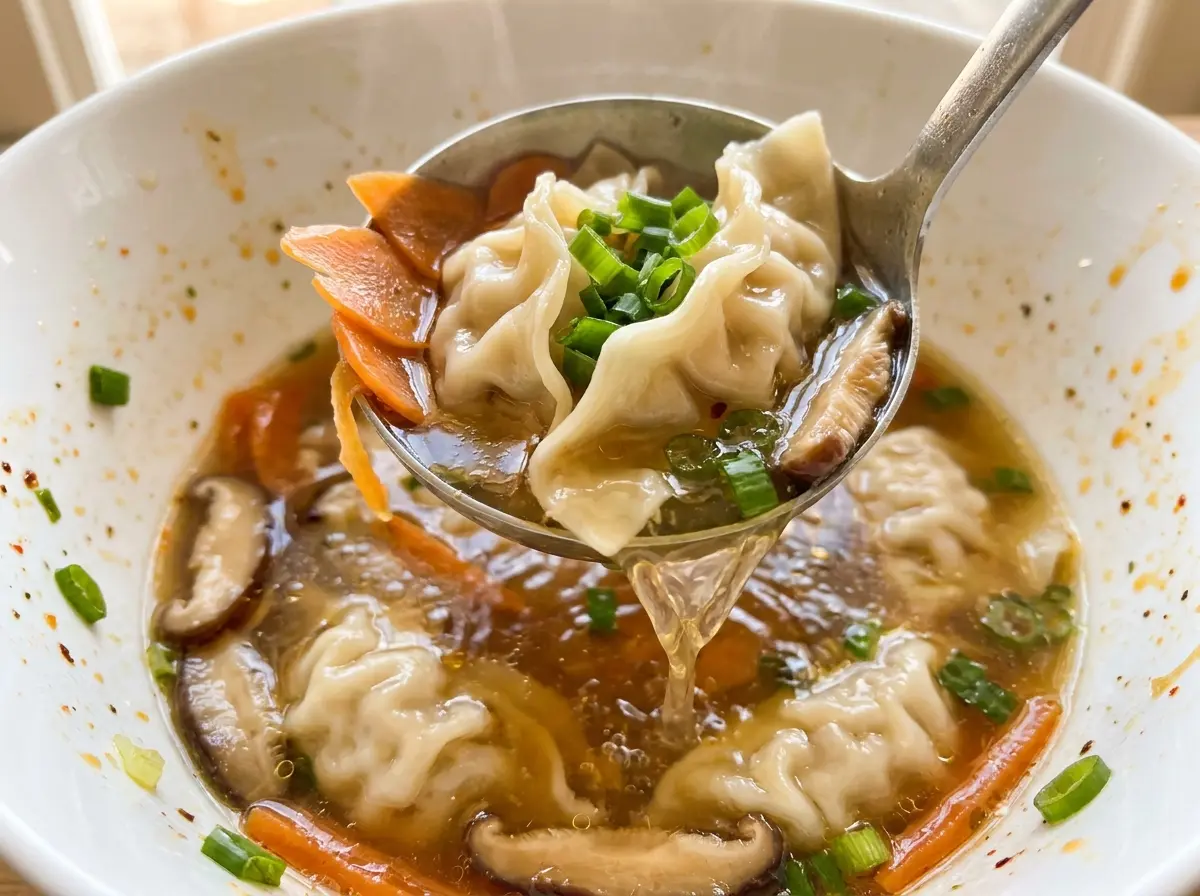
Kitchen Note
The sesame oil goes in after the pot comes off the heat. That keeps its toasted aroma distinct instead of letting it simmer away into the broth.
Save this gyoza soup for a cozy bowl of tender dumplings, shiitake mushrooms, and napa cabbage in ginger-scallion broth.
Why the Napa Cabbage Goes In After the Gyoza
The cabbage needs less time in the pot than the dumplings do. Add it with the frozen gyoza and it has to endure the entire simmer; by the time the centers are cooked, the thin leaves can lose their fresh bite and collapse into the broth. Adding it after the dumplings have had their first few minutes gives the cabbage just enough heat to soften while leaving it recognizable in the bowl.
That order also gives you a better way to judge the dumplings. Frozen gyoza vary by brand and filling, so the package timing is more useful than relying on one fixed minute count. Keep the soup at a gentle simmer while they cook, then use the package directions and check meat-filled dumplings for a fully cooked center. The broth should bubble quietly, not churn hard enough to knock the dumplings against one another. You get tender wrappers, cooked-through filling, and cabbage that still has a little shape.
What the Shiitakes, Ginger, and Frozen Gyoza Bring to the Bowl
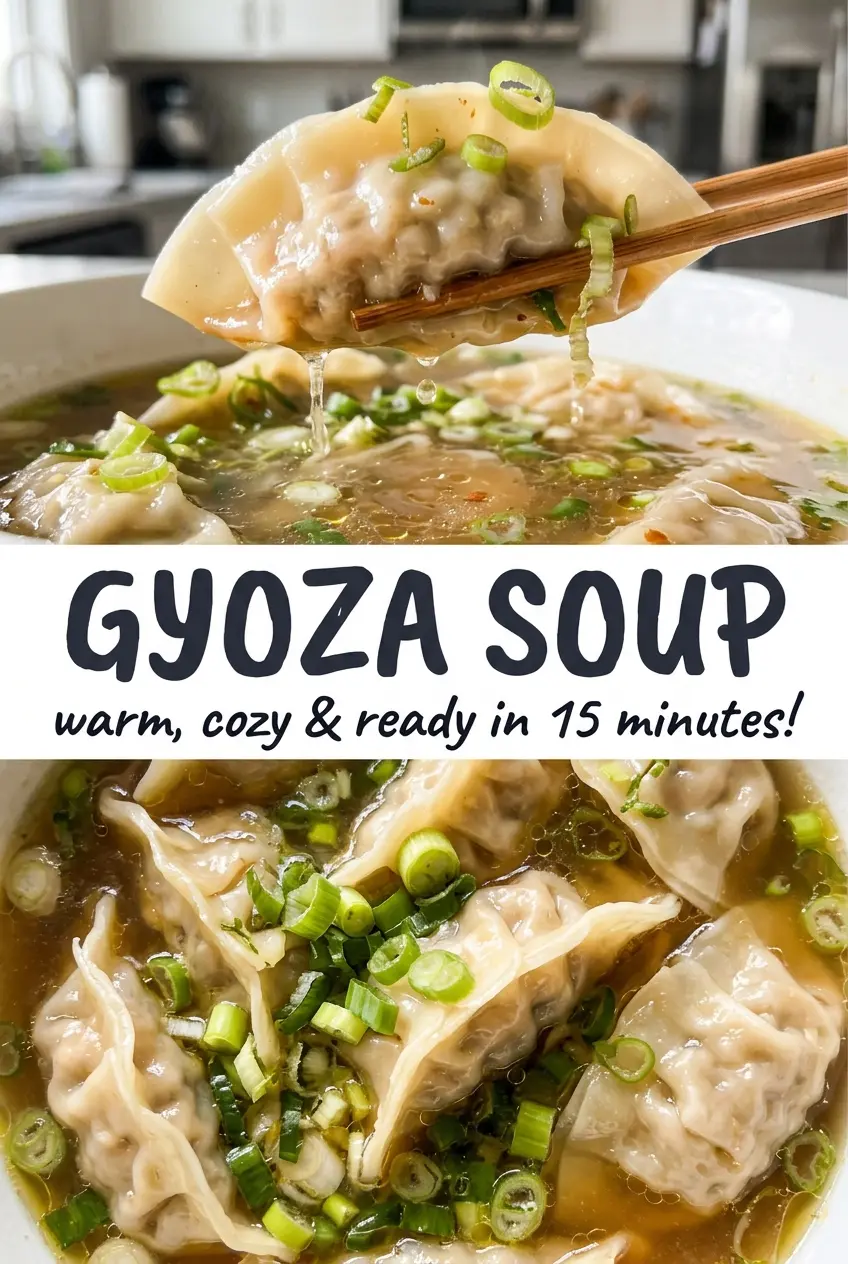
- Frozen gyoza — They make the soup substantial and cook directly in the broth, so there’s no need to thaw them first. Choose a filling you enjoy, but check the package timing because wrapper thickness and filling affect how quickly they cook. For meat-filled dumplings, the center needs to reach the safe temperature noted in the method.
- Shiitake mushrooms — Their savory, earthy flavor gives the broth depth without a long simmer. Fresh shiitakes are worth choosing here because they soften quickly and hold their shape. Stem them before slicing; if shiitakes aren’t available, sliced cremini mushrooms work, though the broth will taste milder and less distinctly earthy.
- Fresh ginger — Grated ginger disperses through the broth more evenly than large chunks and brings a clean warmth that complements the dumplings. Fresh ginger has a brighter, livelier taste than dried ginger, so I wouldn’t swap in dried here; it can make the soup taste dusty rather than fresh.
- Napa cabbage — Its tender leaves soften quickly and sit comfortably alongside the dumplings without making the broth feel heavy. Choose a firm head with crisp leaves. Thin, even slices cook at the same pace; thick pieces take longer to turn tender.
- Chicken broth, soy sauce, and mirin — Low-sodium broth leaves room for the soy sauce to season the soup without making it overly salty, while mirin rounds out the savory notes with a mild sweetness. Regular chicken broth works, but it makes the finished soup saltier. Keep the soy sauce measured rather than adding extra automatically.
- Scallions and toasted sesame oil — The sliced whites build the aromatic base, while the greens bring a fresher note to the finished soup. Toasted sesame oil is a finishing oil, not the neutral oil for sautéing; its nutty aroma is strongest when stirred in at the end.
Building Ginger-Scallion Broth Before the Dumplings Go In
Wake Up the Scallion Whites and Ginger
Heat the neutral oil in a 6-quart pot over medium heat. Add the scallion whites and grated ginger, then stir for 30 seconds. The aromatics should smell fragrant and sizzle lightly without taking on dark color. Keep them moving; grated ginger is fine and can scorch if left against the hot pot.
Soften the Shiitakes
Add the sliced shiitakes and cook, stirring occasionally, until they begin to soften, about 3 minutes. They’ll start to relax and look less firm, but they don’t need to brown deeply. Stirring now and then helps the mushrooms cook evenly in the oil. If the pot looks dry, keep the heat at medium rather than letting the ginger and scallions catch.
Bring the Seasoned Broth to a Simmer
Pour in the chicken broth, then stir in the soy sauce and mirin. Raise the heat to medium-high and bring the liquid to a simmer. Look for small, steady bubbles rather than a rolling boil. A calm simmer gives the dumplings a gentler place to cook once they go in.
Cook the Gyoza, Then Wilt the Cabbage
Add the frozen gyoza and simmer gently for 3 minutes before adding the thinly sliced napa cabbage. Continue simmering until the gyoza are cooked through, following the package timing; the usual total simmering time is 6–8 minutes. If the broth starts boiling vigorously, lower the heat so the wrappers aren’t tossed around. For meat-filled gyoza, check that the center reaches 165°F.
Finish the Pot Off the Heat
Once the dumplings are cooked, remove the pot from the heat. Stir in the toasted sesame oil and scallion greens so they disperse through the hot broth without continuing to cook. The greens should look bright, and the soup should smell nutty and fresh. Serve the soup while the dumplings and cabbage are still tender.
Three Easy Ways to Change the Gyoza Soup
Make It Vegetarian with Vegetable Gyoza
Use vegetable gyoza and replace the chicken broth with vegetable broth. The mushrooms and ginger still make a savory base, though the soup will have a lighter, less chicken-forward taste. Check that the dumplings themselves are vegetarian, since fillings vary.
Use Bok Choy Instead of Napa Cabbage
Swap the sliced napa cabbage for the same volume of thinly sliced bok choy. It gives the soup a slightly sturdier green bite. Add it at the same point as the napa cabbage so it softens after the gyoza have started cooking.
Swap Cremini Mushrooms for Shiitakes
Use sliced cremini mushrooms in place of the shiitakes. They soften well in the broth, but their flavor is gentler, so the soup loses some of the shiitakes’ deep, earthy character. Keep the slices fairly even so they soften together.
Storage and Reheating
- Refrigerator: Refrigerate leftovers in an airtight container for 3–4 days. The gyoza will continue to absorb broth and the wrappers will soften as they sit.
- Freezer: Freeze leftovers in airtight portions for up to 2 months. The soup is safe to freeze, but the dumpling wrappers and cabbage will soften further and may split as they thaw.
- Reheating: Warm gently on the stovetop until the broth is steaming and the dumplings are hot through, stirring carefully. Avoid a hard boil, which can break the softened wrappers.
Questions That Come Up When Cooking Gyoza Soup
Gyoza Soup
Ingredients
Method
- Heat the neutral oil in a 6-quart pot over medium heat.
- Add the scallion whites and ginger, then cook, stirring, for 30 seconds.
- Add the shiitake mushrooms and cook, stirring occasionally, until they begin to soften, about 3 minutes.
- Add the chicken broth, soy sauce, and mirin, and bring to a simmer over medium-high heat.
- Add the frozen gyoza and simmer gently for 3 minutes.
- Add the napa cabbage and continue simmering until the gyoza are cooked through, following the package timing, usually 6–8 minutes total.
- If using meat-filled gyoza, check that the center reaches 165°F.
- Remove the pot from the heat.
- Stir in the sesame oil and scallion greens.


