At the halfway point, the potatoes are sitting in a pool of lemony broth, and their edges are only starting to soften. That’s exactly what I want to see. These Greek feta roast potatoes need that liquid to cook through before the uncovered roast turns the edges golden.
I toss everything together in the baking dish, so there’s no pot to wash and no separate sauce to make. The broth and lemon juice cook down around the Yukon Gold wedges while the olive oil helps them brown. Turning the potatoes once gives the less-exposed sides a chance to meet the hot pan and the flavorful liquid.
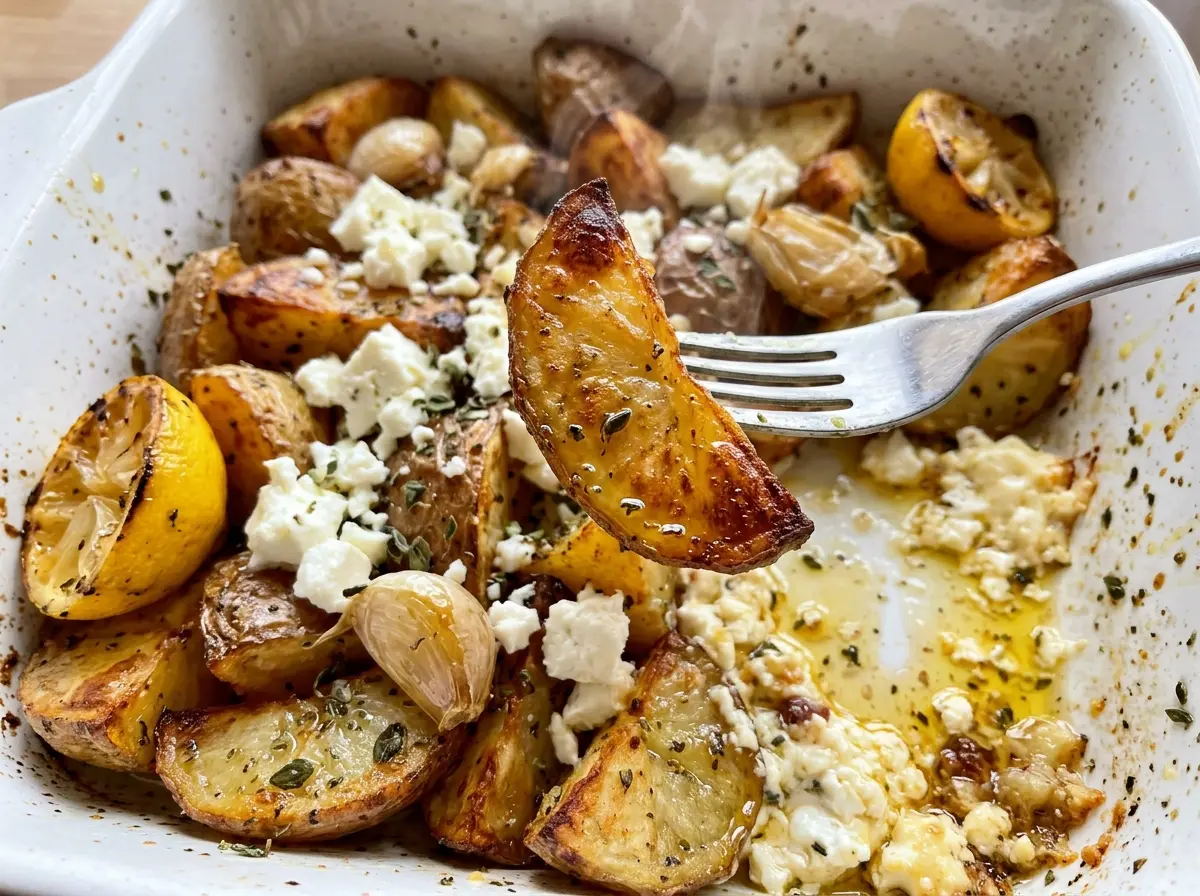
Feta goes on only after the potatoes are tender and browned. It softens and takes on a little color without disappearing into the pan. The finished wedges are savory, bright with lemon, and dotted with warm, creamy feta.
Kitchen Note
Crumble the feta into fairly even pieces before it goes over the potatoes. Small, consistent crumbles soften and color more evenly than a few large chunks.
Save Greek Feta Roast Potatoes for their browned edges, lemony pan juices, and feta-softened finish.
Why These Potatoes Roast in Liquid Instead of Turning Soggy
These aren’t dry, crisp-edged potatoes that get tossed in oil and left to roast on a sheet pan. The broth and lemon juice create a moist cooking environment in the baking dish first, helping thick wedges become tender all the way through. Since the dish stays uncovered, that liquid can gradually cook down rather than being trapped under a lid.
The timing is what makes the two textures meet. Early in the roast, the wedges take on the savory, citrusy mixture; later, with much of the liquid absorbed, their surfaces have time to brown. The olive oil remains in the pan as the broth reduces, helping the exposed edges color. Expect browned, tender potatoes with a little richness from the pan—not a dry, crackly crust all over.
Draining the liquid would work against the method. It’s part of how the potatoes cook, not an accidental puddle to pour away. By the time the feta goes on, the wedges should be fork-tender and browned, with most of that liquid absorbed.
What the Lemon-Broth Mixture Does Before the Feta Goes On

- Yukon Gold potatoes — Their creamy centers hold together well in thick wedges as they roast in liquid. Peel them and cut the wedges to a consistent thickness so they cook at a similar pace; very uneven pieces can leave you with tender small wedges and firm large ones.
- Low-sodium chicken broth — It gives the potatoes a savory base without adding as much salt as regular broth, which matters once the feta is sprinkled on. A basic, affordable broth works well here; its job is to season the cooking liquid, not take over the lemon and oregano.
- Fresh lemon juice — Freshly squeezed juice gives the pan a clean, bright acidity that cuts through the olive oil and salty cheese. Bottled juice is convenient, but its flavor can taste flatter after roasting; there’s a substitution note below if that’s what you have.
- Olive oil — It adds richness and helps the wedges brown as the broth cooks down. A mild everyday olive oil is a good fit; an aggressively bitter oil can become more noticeable as the liquid reduces.
- Freshly minced garlic and dried oregano — Minced garlic spreads through the liquid and seasons more evenly than large chunks, while dried oregano holds its herbal character during the longer roast. Choose oregano that still smells fragrant when you rub a little between your fingers.
- Feta cheese — Its salty, tangy flavor is the contrast that makes the final few minutes worthwhile. Feta sold in a block and crumbled at home tends to stay moister than pre-crumbled feta, though either can be used.
How to Roast the Wedges Tender, Browned, and Ready for Feta
Coat the Potatoes in the Baking Dish
Heat the oven to 425°F. In a 9×13-inch baking dish, toss the peeled, 1-inch-thick Yukon Gold wedges with the chicken broth, lemon juice, olive oil, minced garlic, dried oregano, kosher salt, and black pepper. Spread them into an even layer so the pieces have room to cook rather than sitting in a heap. The dish will look quite wet at this stage; don’t drain the liquid.
Roast for 30 Minutes, Then Turn
Roast uncovered for 30 minutes, then turn the potatoes. The wedges will have started to soften, but they won’t be fully browned or tender yet. Use a spatula to turn them gently rather than stirring them around, which can break up the softened edges. If a few pieces cling to the pan, ease them loose before turning.
Let the Liquid Cook Down
Return the dish to the oven for 25 to 35 minutes. Look for potatoes that are fork-tender and browned, with most of the liquid absorbed. The timing varies within that range, so check the largest wedge with a fork instead of relying on color alone. If the centers are still firm, give them more time in the oven.
Soften the Feta and Rest
Sprinkle the crumbled feta evenly over the potatoes and bake for 8 to 10 minutes, until the cheese is softened and lightly golden. It should look warm and settled into the gaps, not melted into a uniform sauce. Take the dish out and let it rest for 5 minutes before serving. That short pause lets the hot pan settle and makes the wedges easier to lift.
Simple Swaps That Keep the Potatoes in Balance
Make the Pan Vegetarian with Vegetable Broth
Replace the chicken broth with the same amount of vegetable broth. The potatoes will still cook in the lemony liquid, though the savory base will taste a little different; keep the feta if you want the same salty finish.
Use Fresh Oregano for a Brighter Herbal Note
Swap the dried oregano for 2 tablespoons of chopped fresh oregano and toss it in with the other ingredients. Its flavor is greener and gentler after the full roast, so the potatoes will taste less earthy than they do with dried oregano.
Storage and Reheating
- Refrigerator: Store leftovers in an airtight container for 3 to 4 days. The potatoes will soften in the fridge, and the feta will become firmer.
- Freezer: Freezing isn’t recommended. The cooked potatoes tend to turn grainy and watery after thawing, and the feta loses its creamy texture.
- Reheating: Warm the potatoes in a 350°F oven until hot throughout, reaching 165°F. The edges won’t be as freshly browned; avoid overheating them, which can dry the potato centers and toughen the feta.
Questions That Come Up When Roasting Potatoes with Feta
Greek Feta Roast Potatoes
Ingredients
Equipment
Method
- Preheat the oven to 425°F.
- In a 9x13-inch baking dish, toss the potatoes with the broth, lemon juice, olive oil, garlic, oregano, salt, and pepper, then arrange in an even layer.
- Roast uncovered for 30 minutes.
- Turn the potatoes.
- Roast for 25 to 35 minutes longer, until the potatoes are fork-tender and browned and most of the liquid has been absorbed.
- Sprinkle the feta evenly over the potatoes.
- Bake for 8 to 10 minutes, until softened and lightly golden.
- Rest for 5 minutes before serving.


