Gluten-free chicken noodle soup should still taste like the bowl you remember: savory broth, tender chicken, soft vegetables, and noodles that hold their shape without turning to mush. The version worth making stays clear and comforting, with enough body from the chicken and vegetables to feel satisfying instead of watery. When it’s done right, nobody at the table is asking whether it’s gluten-free until after they’ve cleaned the bowl.
The trick is using a broth you’d drink on its own and keeping the noodles out of the pot until the very end. Gluten-free pasta can go from pleasantly tender to bloated fast, especially if it sits in hot broth too long. Shredding the chicken after it cooks gives the soup a better texture than cubing it raw, and a short simmer builds flavor without drying out the meat.
Below, I’ll walk through the part that matters most: how to keep the noodles from falling apart and how to get a broth that tastes full and balanced even without flour or cream. There’s also a few smart swaps if you need to use what’s in the pantry.
The broth stayed clear, the chicken shredded beautifully, and the rice noodles held up better than I expected. I added the noodles at the end like you said and they were perfect even after a second bowl.
Save this gluten-free chicken noodle soup for the nights when you want classic comfort with noodles that stay tender, not soggy.
The Part That Keeps Gluten-Free Noodles From Going Mushy
Most gluten-free chicken noodle soup goes wrong at the end, not the beginning. The broth can be great, the chicken can be tender, and then the noodles sit in the pot long enough to swell, break, and steal all the liquid. That’s why the noodles go in after the chicken is cooked and shredded, with the heat still controlled so they finish at the last possible minute.
Brown rice noodles and gluten-free egg noodles behave better than many corn-based pastas because they hold their shape a little longer, but none of them should be left to simmer away unattended. Check them early and pull the pot as soon as they’re just tender. If you want leftovers that still eat well the next day, cook the noodles separately and add them to each bowl before serving.
What Each Ingredient Is Actually Doing in the Bowl
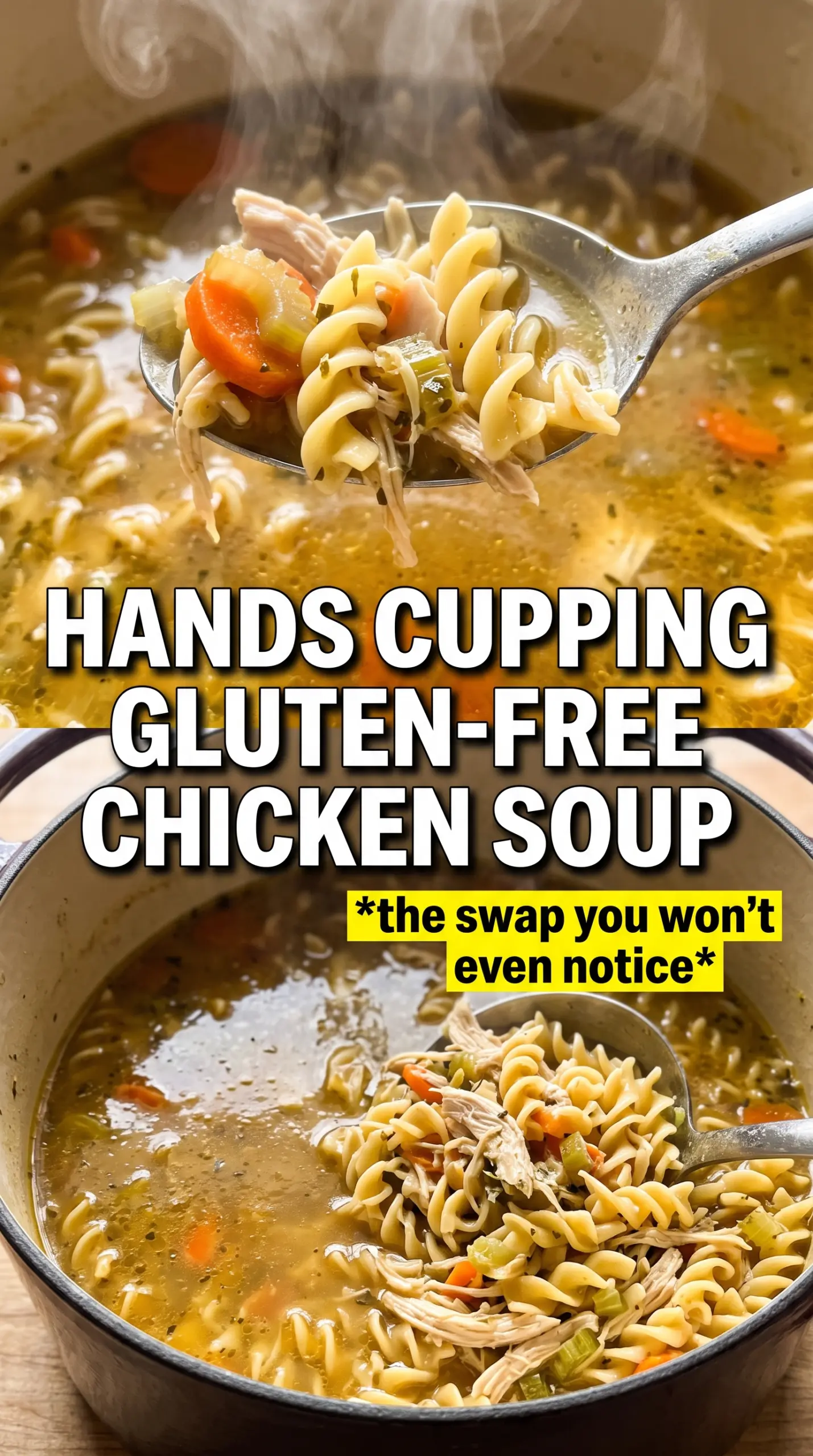
- Chicken breast — This gives the soup clean, lean chicken flavor and shreds into light pieces that soak up the broth. Thighs work too if you want a richer result, but breast stays truer to the classic chicken noodle soup feel.
- Certified gluten-free chicken broth — This is the base of the whole soup, so the quality matters. If your broth tastes flat on its own, the finished soup will taste flat too, which is why a well-seasoned boxed broth or homemade stock makes a noticeable difference.
- Carrots, celery, and onion — This trio builds the savory backbone before the broth even goes in. Dice the onion small enough that it melts into the soup instead of floating around in sharp pieces.
- Gluten-free pasta — The shape matters less than the cooking behavior. Rice noodles, brown rice rotini, and GF egg noodles all work, but the package timing is only a starting point; taste early and stop when the noodle still has a little chew.
- Thyme, parsley, and garlic powder — These keep the soup tasting like chicken noodle soup instead of plain broth with vegetables. Dried herbs are fine here because they simmer long enough to open up, but don’t let the garlic powder replace fresh garlic; both are doing different jobs.
How to Build the Soup Without Breaking the Broth
Softening the Vegetables First
Warm the olive oil in a large pot and cook the onion, carrots, and celery until the onion turns translucent and the carrots start to lose their raw edge. That five-minute head start matters because it gives the soup a deeper base before the broth goes in. If the vegetables stay hard at this stage, they’ll still taste raw at the end even if the noodles are perfect.
Simmering the Chicken in the Broth
Add the garlic, broth, herbs, and chicken, then bring everything up to a boil before lowering it to a steady simmer. A hard boil can make the chicken tough around the edges, while a quiet simmer keeps the meat tender and lets the broth pick up flavor. The chicken is ready when it’s opaque all the way through and shreds without resistance.
Shredding and Returning the Meat
Pull the chicken out onto a plate and shred it with two forks before returning it to the pot. Smaller shreds distribute better through the soup and make every spoonful taste balanced. If the chicken looks dry, it usually just needed a minute less simmering, so don’t leave it in the pot while you prepare the noodles.
Cooking the Noodles at the End
Add the gluten-free pasta last and cook it only until just tender, stirring often so nothing sticks. This is the stage that decides whether the soup feels fresh or gummy. Turn off the heat as soon as the noodles are done, because residual heat keeps softening them even after the burner is off.
How to Adapt This for What’s in Your Kitchen
Make it dairy-free and naturally gluten-free
This soup is already dairy-free as written, so the main job is keeping the broth and pasta certified gluten-free. That means checking the broth label and using noodles that are specifically marked GF, not just one that happens to be made from rice or corn.
Swap the chicken breast for thighs
Chicken thighs bring a slightly richer, more savory broth and stay juicy even if they cook a minute long. The soup will taste a little fuller and less lean, which is a good trade if you want something closer to a slow-simmered pot.
Use cooked chicken from another meal
Stir in about 3 cups of cooked shredded chicken after the broth and vegetables have simmered and heat it just long enough to warm through. This is the fastest version, but the broth needs a little extra salt and herb seasoning because you’re skipping the flavor that raw chicken usually gives the pot.
Use rice noodles for a softer finish
Rice noodles cook quickly and give the soup a softer, silkier bite than rotini or GF egg noodles. They’re the easiest to overcook, though, so add them only when everything else is ready and serve right away.
Storage and Reheating
- Refrigerator: Store for 3 to 4 days. The noodles will continue to soften, so expect a thicker soup by day two.
- Freezer: Freeze the broth, chicken, and vegetables without the noodles for best results. Gluten-free pasta gets soft and grainy after freezing, so cook fresh noodles when you reheat.
- Reheating: Warm gently on the stove over medium-low heat until steaming. If the soup has thickened, add a splash of broth or water before serving instead of boiling it hard, which can break the chicken apart and overcook the noodles.
Answers to the Questions Worth Asking
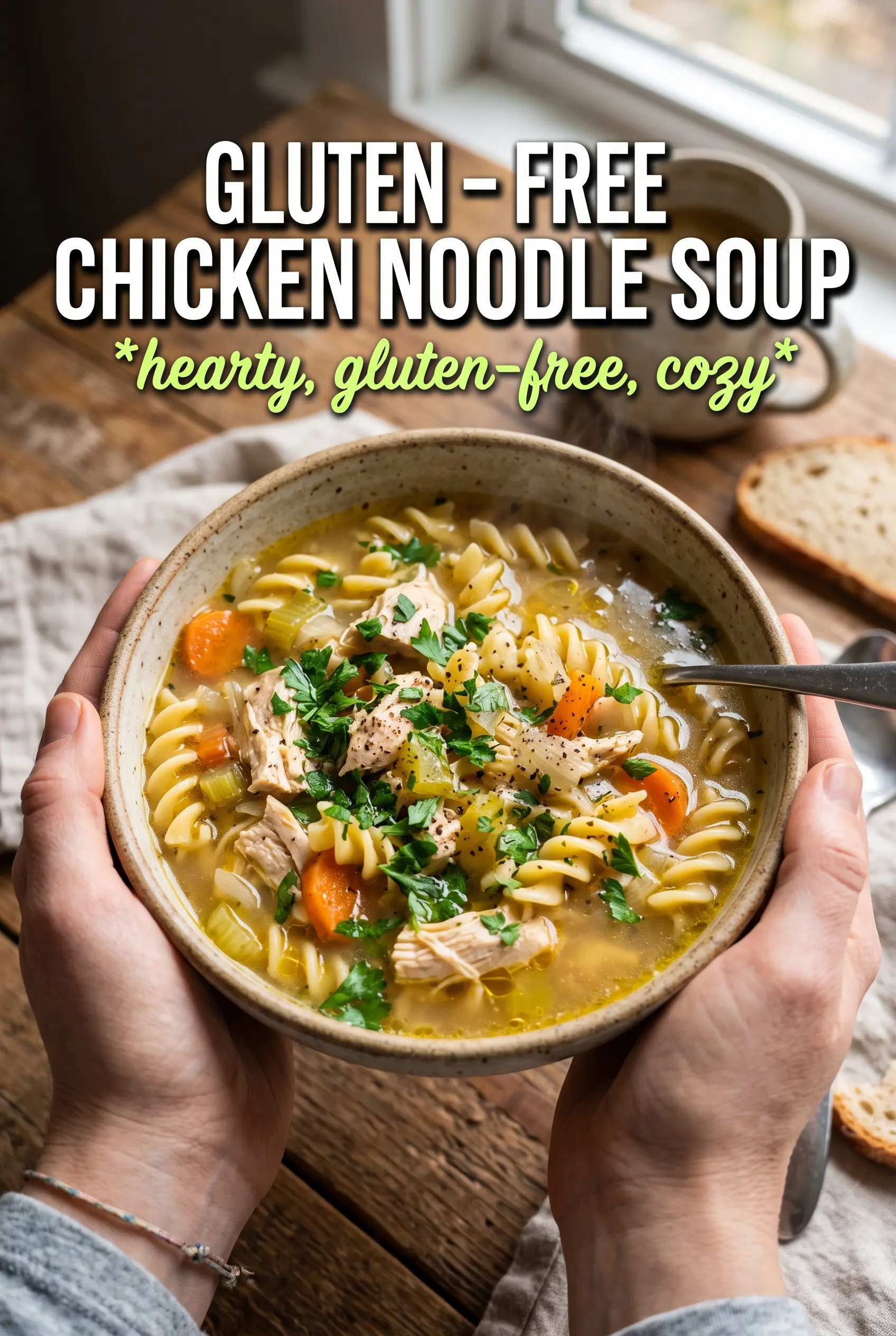
Gluten-Free Chicken Noodle Soup
Ingredients
Equipment
Method
- Heat the olive oil in a large pot over medium heat, then sauté the onion, carrots, and celery for 5 minutes until slightly softened.
- Add the garlic and cook for 1 minute, stirring, until fragrant.
- Pour in the certified GF chicken broth, then add dried thyme, dried parsley, garlic powder, and the chicken.
- Bring the mixture to a boil, then simmer for 18-20 minutes until the chicken is cooked through; skim any foam if needed.
- Remove the chicken from the pot and shred it, then return the shredded chicken to the soup.
- Add the gluten-free pasta to the pot and cook according to the package instructions over a gentle simmer, checking frequently because GF pasta can overcook.
- Season generously with salt and pepper to taste, then garnish with fresh parsley before serving.