Silky coconut broth, tender chicken, and slippery rice noodles make Thai chicken noodle soup the kind of bowl that disappears fast. The broth lands somewhere between cozy and bright: rich from coconut milk, punchy from red curry paste, and sharpened at the end with lime so it never tastes heavy. Every spoonful has a little chew from the noodles and a fresh hit of herbs and sprouts on top.
What makes this version work is the way the aromatics are handled. The curry paste gets cooked first so it blooms in the oil and loses that raw edge, then the coconut milk and broth go in together to build a soup that feels full-bodied without getting greasy. Lemongrass and galangal add that unmistakable Thai fragrance, but they’re only there long enough to season the broth, then they come out before serving so the texture stays clean.
Below, I’m walking through the small details that keep the chicken tender and the noodles from turning mushy. The variations section also covers the easiest swaps if you need to work with what’s already in the pantry.
The broth had that deep curry-coconut flavor, and the noodles stayed springy instead of bloated even after sitting for a few minutes. I loved the lime at the end because it kept the soup from tasting heavy.
Save this Thai chicken noodle soup for a brothy, coconut-rich dinner with rice noodles and fresh herbs.
The Trick to Keeping the Broth Bright, Not Flat
The biggest mistake in Thai chicken noodle soup is treating the broth like plain chicken soup with curry paste stirred in at the end. That leaves you with a broth that tastes dusty, one-note, or harsh. The paste needs a minute in the hot oil first so the aromatics wake up and the spices deepen before the liquid goes in.
From there, the balance matters more than the ingredient count. Coconut milk softens the curry paste, fish sauce brings salt and depth, brown sugar rounds out the edges, and lime juice keeps the soup from tasting heavy. If the soup tastes dull, it usually needs acidity, not more salt. If it tastes too sharp, it needs a little more coconut milk or a few more minutes of simmering.
What Each Ingredient Is Doing in This Bowl
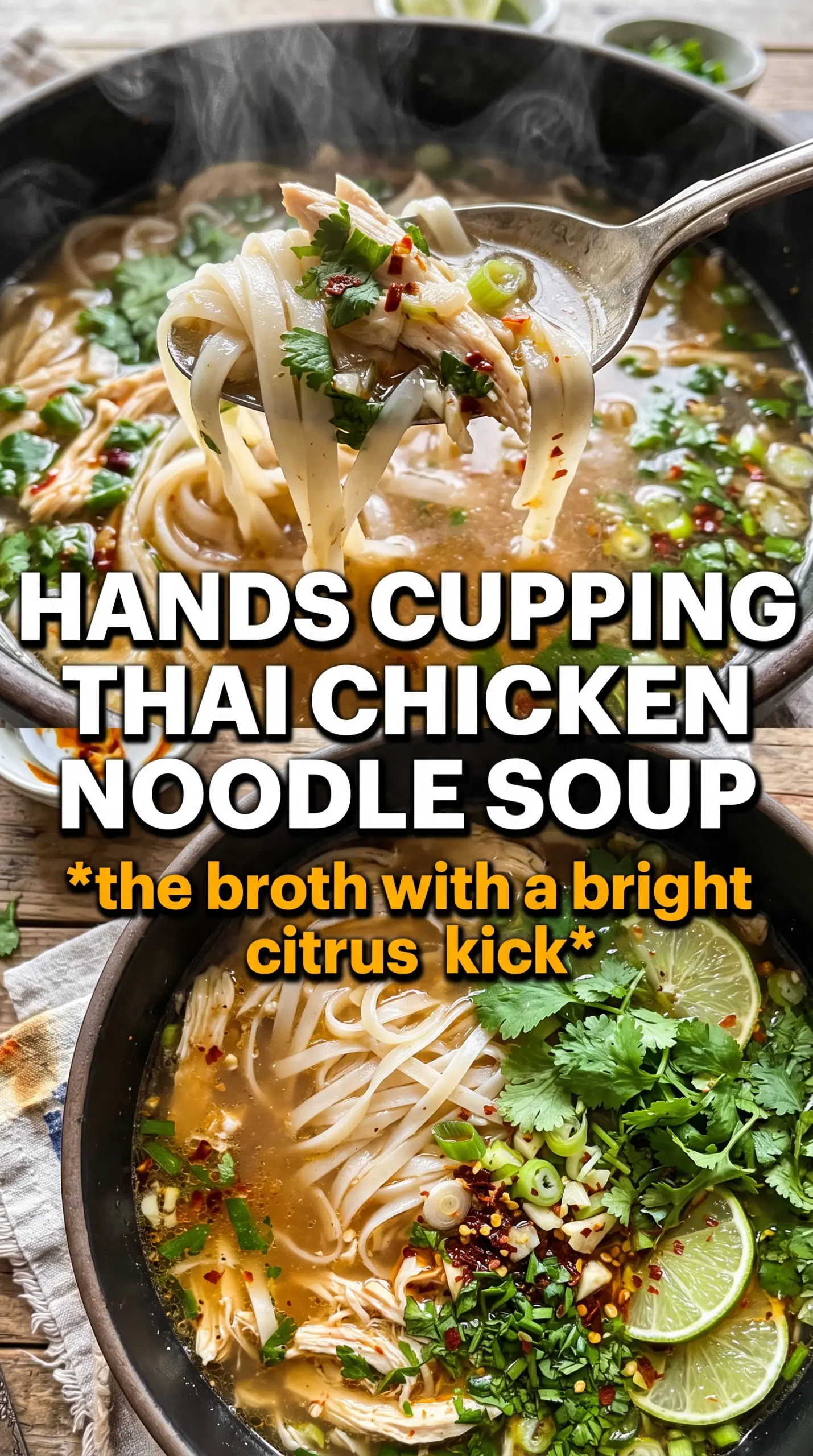
- Red curry paste — This is the backbone of the soup. It gives you heat, color, and layered spice in one spoonful, and blooming it in oil is what keeps the flavor from tasting raw. If yours is mild, use a little more; if it’s especially salty, ease up on the fish sauce.
- Coconut milk — Full-fat coconut milk makes the broth lush and round. Light coconut milk will work, but the soup will be thinner and less silky. Shake the can before opening, and stir it in well so the broth stays smooth.
- Lemongrass and galangal — These give the soup its clean, citrusy Thai aroma. Fresh is worth using here if you can get it, but ginger can stand in for galangal when that’s what’s available. Bruise the lemongrass before simmering so the broth can pull flavor from it.
- Rice noodles — These soak up broth fast, which is why they get added near the end. If they sit in the pot too long, they turn soft and cloudy. Soak them first, then heat them through only until they loosen and become tender.
- Chicken breast or thighs — Thighs stay juicier, but thinly sliced breast cooks fast and works well in this soup. The key is slicing it thin so it cooks gently in the simmering broth instead of tightening up. Don’t boil it hard or it can turn stringy.
Building the Broth Without Overcooking the Noodles
Blooming the Curry Paste
Heat the oil first, then cook the red curry paste until it smells fragrant and the color deepens a shade or two. You’re not trying to brown it; you’re waking it up. If the paste sticks or starts to scorch, the heat is too high and the broth will taste bitter, so keep the flame at medium and stir often.
Layering the Aromatics
Add the garlic, lemongrass, and galangal after the paste has bloomed. Cook just until the garlic loses its raw smell, about a minute, and don’t walk away here because garlic can turn sharp fast. This short step builds the base flavor that carries through the whole bowl.
Simmering the Chicken Gently
Pour in the coconut milk and broth, then add the fish sauce, lime juice, and brown sugar before the chicken goes in. Let that come to a gentle simmer, not a rolling boil, then slide in the sliced chicken and cook until it’s opaque and just done. If the soup boils hard, the chicken tightens and the coconut milk can separate a little, so keep the surface barely moving.
Finishing with the Noodles
Pull out the lemongrass and galangal before adding the noodles. Stir in the drained rice noodles and heat just until they’re tender and glossy. This is the point where people overcook the soup by thinking the noodles need a long simmer; they don’t, and they’ll keep softening in the hot broth after the pot comes off the stove.
How to Adapt This Bowl for Different Kitchens
Gluten-Free Version
This soup is already close to gluten-free if your curry paste and fish sauce are certified gluten-free. Check both labels, because some brands use additives that sneak gluten back in. The texture and flavor stay the same, so this is an easy win.
Vegetarian Curry Noodle Soup
Swap the chicken broth for vegetable broth and replace the chicken with tofu or mushrooms. Extra-firm tofu gives you a softer, gentler bowl, while mushrooms bring a deeper, meatier bite. Use soy sauce or tamari in place of fish sauce so the broth still has enough salt and umami.
Make It Milder
Start with less curry paste and taste the broth after it simmers for a few minutes. You can always add more heat, but you can’t pull it back once it’s in the pot. A little extra coconut milk at the end also softens the spice without flattening the soup.
Storage and Reheating
- Refrigerator: Keep for up to 3 days. The noodles will continue to soften as they sit, so the soup tastes best sooner rather than later.
- Freezer: The broth and chicken freeze well, but the noodles don’t. If you plan to freeze it, leave the noodles out and add fresh ones when you reheat.
- Reheating: Warm gently on the stove over low heat until just hot. If the soup was stored with noodles, add a splash of broth or water first so they loosen instead of soaking up all the liquid.
Questions I Get Asked About This Recipe
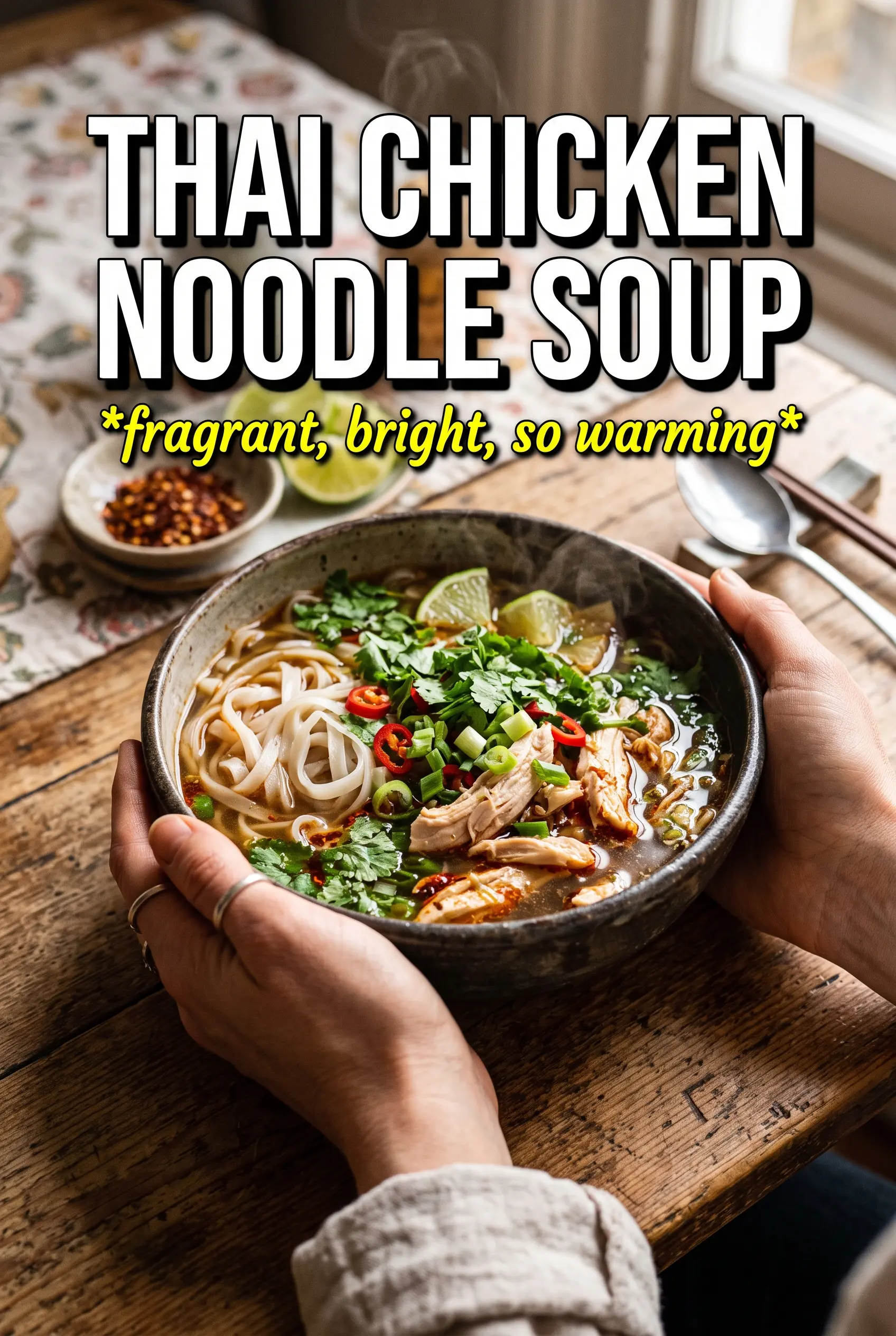
Thai Chicken Noodle Soup
Ingredients
Equipment
Method
- Soak the rice noodles in warm water for 15 minutes, then drain and set aside.
- Heat 1 tablespoon oil in a large pot over medium heat and cook the red curry paste for 1-2 minutes until fragrant.
- Add the garlic, lemongrass, and galangal, then cook for 1 minute.
- Pour in the coconut milk and chicken broth, then stir in the fish sauce, lime juice, and brown sugar.
- Simmer the broth for 10 minutes.
- Add the sliced chicken and cook for 8-10 minutes until cooked through.
- Remove the lemongrass and galangal from the pot.
- Add the drained rice noodles and heat through for 2-3 minutes.
- Ladle the soup into bowls and top with bean sprouts and green onions.
- Finish each bowl with fresh Thai basil, cilantro, lime wedges, and sliced red chili.