Chicken noodle soup gets its best version when the broth tastes clean, the vegetables stay tender, and the chicken holds its shape instead of disappearing into threads. This copycat version has the same simple comfort people expect from the restaurant bowl: clear golden broth, tiny noodles, sweet corn, and little dice of chicken in every spoonful. It eats like a fast lunch, but it lands like something you’d happily make at home again.
The trick here is keeping the pieces small and even. Fine dice on the chicken gives the soup that Chick-fil-A-style bite, where every spoonful has a little of everything without turning thick or heavy. The broth stays light because the vegetables simmer just long enough to soften, not long enough to fall apart, and the noodles go in at the end so they don’t soak up too much liquid before serving.
Below you’ll find the part that matters most: how to keep the broth clear, when to add the noodles, and the easy swaps that still preserve the clean, simple character of the soup.
The broth stayed clear and the tiny diced chicken was exactly like the restaurant version. I added the noodles at the end and they held their texture even after a second bowl.
Save this Chick-fil-A chicken noodle soup for the days when you want a clear broth, tender vegetables, and that signature tiny-dice chicken bite.
The Small Dice That Keeps This Soup Light
The biggest mistake in chicken noodle soup is letting the chicken take over. Big chunks make the soup feel dense, and shredded chicken turns the broth cloudy fast. Finely diced cooked chicken gives you a cleaner spoonful and keeps the texture close to the restaurant version, where the chicken sits in the broth instead of muddying it.
The vegetables matter too, but not because they need to dominate. They’re there to sweeten the broth and add structure. Dice them small and even so they soften in the same amount of time; if the pieces are too large, the noodles finish before the carrots and celery do, and the soup loses that balanced, tidy finish.
What Each Ingredient Is Actually Doing In This Bowl
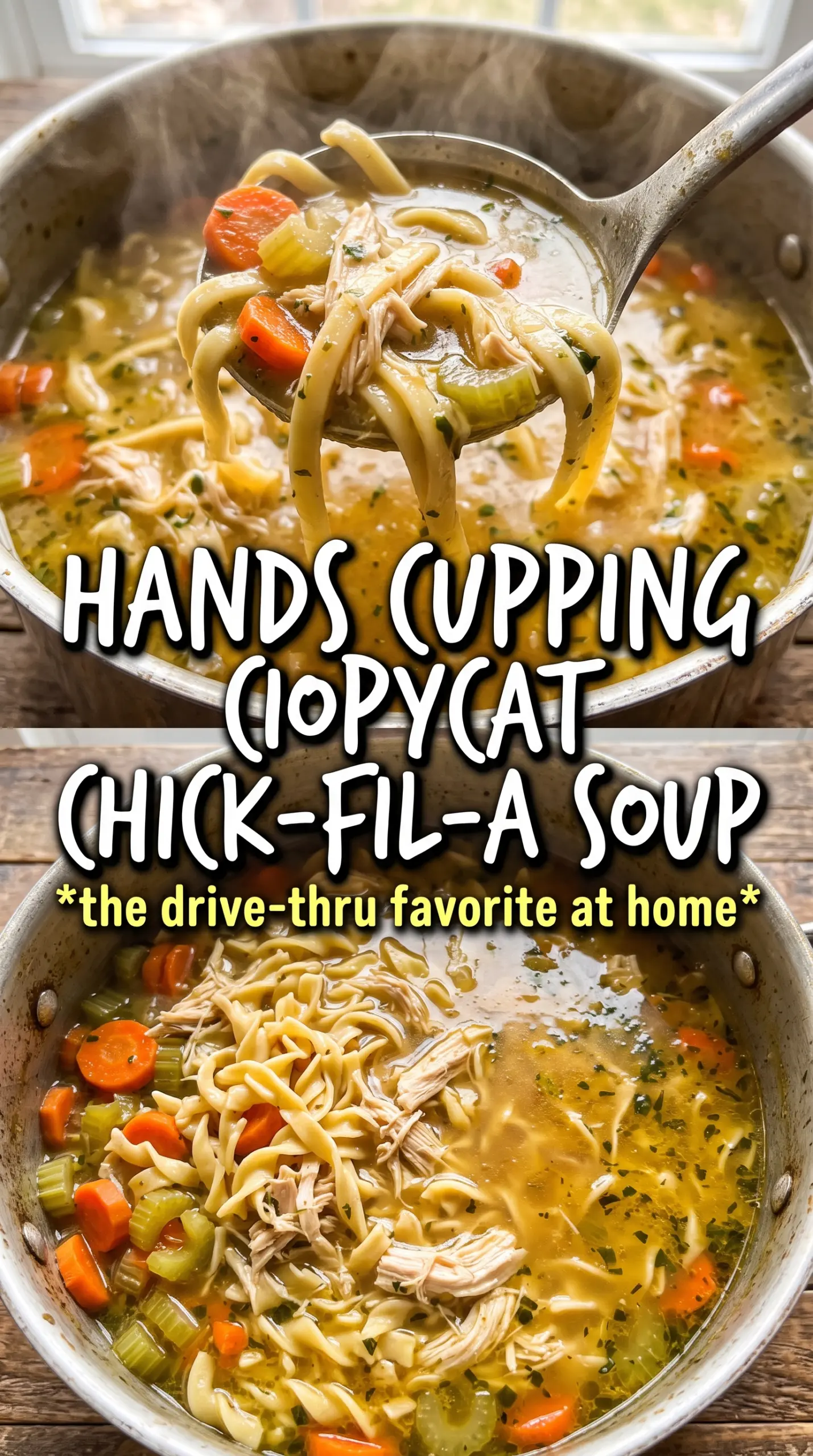
- Cooked chicken breast — Use breast here for the cleanest copycat result. Finely dicing it keeps the soup from feeling heavy. Rotisserie chicken works in a pinch, but it’s usually saltier and a little richer, so the broth won’t taste quite as light.
- Chicken broth + water — The water softens the broth so it doesn’t taste too concentrated after the noodles cook. If you use only broth, the soup can turn a little salty and flat at the same time. A low-sodium broth is the easiest way to control the final seasoning.
- Carrots, celery, onion, and garlic — This is the base that gives the soup its backbone. Keep the dice small so the vegetables cook at the same pace and blend into the spoonful without breaking down into mush.
- Egg noodles — These cook fast and give the soup that familiar diner-style comfort. Small pasta works too, but don’t use a shape that needs a long boil or the vegetables will overcook before the pasta is done.
- Corn — This adds little sweet pops that make the broth taste fuller without making it creamy. Frozen corn is fine and usually better than canned because it keeps the broth cleaner.
Building The Soup In The Right Order
Starting With The Broth And Vegetables
Bring the broth and water to a boil first, then add the carrots, celery, onion, garlic, parsley, thyme, and garlic powder. Drop the heat to a steady simmer so the vegetables soften without smashing apart. After about 10 minutes, they should be just tender and still hold their shape. If the pot is boiling hard, the onion can turn ragged and the broth will lose that clear look.
Adding The Chicken And Corn
Stir in the diced chicken and corn once the vegetables are ready. The chicken is already cooked, so it only needs time to warm through and soak up the broth, not long enough to dry out. Five minutes is enough. If you simmer it too long, the chicken gets stringy and the corn starts tasting dull.
Cooking The Noodles At The End
Add the egg noodles last and cook until just tender, usually 6 to 8 minutes depending on the brand. This is where a lot of soups go wrong: the noodles keep drinking broth even after the burner is off, so the soup thickens as it sits. If you want leftovers that still look brothy, pull the pot as soon as the noodles are done and serve right away.
Final Seasoning
Season with salt and pepper at the end, after the noodles have cooked. Broth brands vary a lot, and the soup can taste underseasoned right before it suddenly tastes perfect once the noodles and chicken absorb the salt. Taste a spoonful with a little of everything in it, not just the broth.
How To Adapt This Soup Without Losing Its Clean, Simple Character
Gluten-Free Version With The Same Brothy Finish
Swap the egg noodles for a gluten-free small pasta that holds its shape well. Cook it just until tender and expect the broth to thicken a little faster as it sits, since some gluten-free pastas release more starch. If you want the cleanest texture, cook the pasta separately and add it to each bowl.
Using Rotisserie Chicken
Rotisserie chicken saves time and still works well, but shred it only if you’re okay with a looser texture than the original. For a closer copycat result, dice the meat into small pieces instead. Start with a lighter hand on the salt because rotisserie chicken is usually seasoned already.
Dairy-Free By Default
This soup is already dairy-free, so there’s nothing to remove. Keep the broth simple and don’t add cream or milk if you want it to stay close to the Chick-fil-A style. The clean broth is the point here.
Make It Ahead Without Losing The Noodle Texture
Cook the soup base through the chicken and vegetables, then stop before adding the noodles. When you’re ready to serve, bring the soup back to a simmer and cook the noodles fresh. That keeps them from absorbing too much broth and turning soft.
Storage and Reheating
- Refrigerator: Store for up to 4 days. The noodles will keep absorbing broth, so the soup gets thicker by day two.
- Freezer: Freeze the soup without the noodles for the best texture. Noodles turn mushy after thawing, so add fresh pasta when you reheat.
- Reheating: Warm it gently on the stovetop over medium-low heat. Add a splash of broth or water if needed, and don’t boil it hard or the chicken tightens up and the noodles break apart.
Answers To The Questions Worth Asking
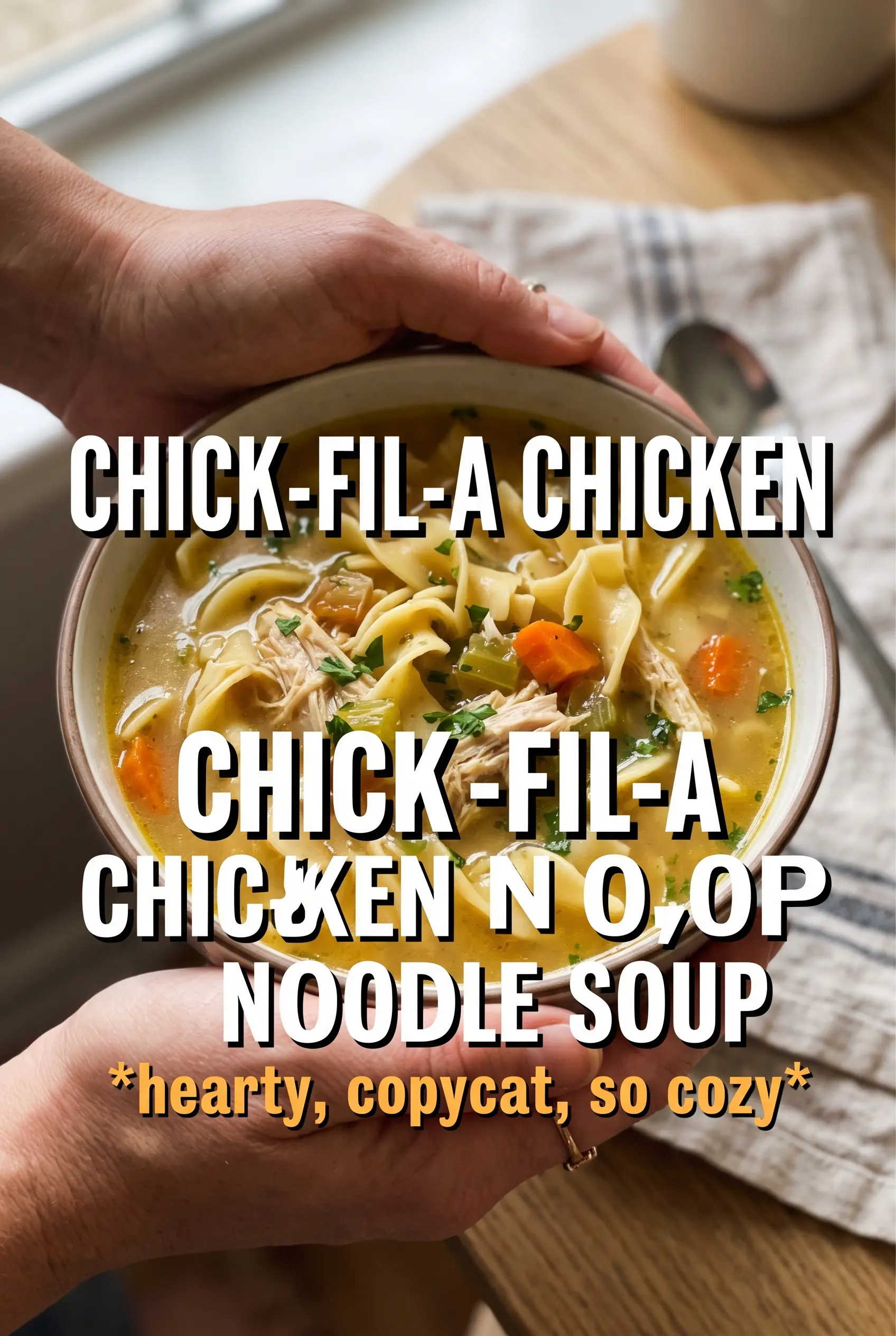
Chick-Fil-A Chicken Noodle Soup (Copycat)
Ingredients
Equipment
Method
- Bring the chicken broth and water to a boil in a large pot over high heat, stirring once to combine. Keep it at a steady boil before adding vegetables, and watch for active bubbling across the surface.
- Add the carrots, celery, onion, garlic, dried parsley, dried thyme, and garlic powder. Reduce to a simmer and cook for 10 minutes until the vegetables are just tender.
- Add the finely diced chicken and corn, then return to a simmer. Cook for 5 minutes, keeping the broth gently bubbling around the chicken pieces.
- Add the egg noodles (or small pasta) and cook for 6–8 minutes until tender. Stir occasionally so the noodles don’t stick, and keep the simmer consistent.
- Season with salt and pepper to taste. Taste after the noodles are tender, then adjust so the broth stays clean and flavorful.