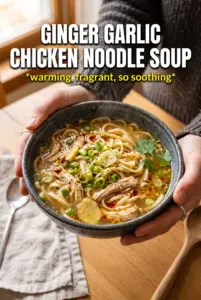
Ginger garlic chicken noodle soup lands in the bowl with a clear, golden broth that tastes clean but still feels comforting. The ginger gives it lift, the garlic adds depth, and the sesame oil at the end rounds everything out without making the soup heavy. It’s the kind of pot you make once and then keep thinking about all week.
What makes this version work is the order. The vegetables soften first, so the broth picks up a gentle sweetness before the garlic and ginger go in. They only need a short cook to turn fragrant; leave them on the heat too long and they get harsh. The chicken simmers right in the broth, which keeps the meat juicy and builds more flavor into the soup without extra steps.
Below you’ll find the little details that matter most: how to keep the broth clear, when to add the noodles so they stay tender, and which swaps still give you that same warming, savory bowl.
The broth stayed clear and the ginger-garlic flavor came through without getting bitter. I used thighs and the chicken shredded so easily after the simmer.
Save this ginger garlic chicken noodle soup for the nights when you want a clear, savory broth and tender noodles in under an hour.
The Step That Keeps the Broth Clear Instead of Muddy
Most chicken noodle soups go flat when everything gets crowded into the pot too fast. Here, the vegetables cook first in a little oil, which gives the onions time to soften and the carrots and celery a chance to sweeten before the broth goes in. That small head start keeps the broth tasting layered instead of raw and watery.
The other place people lose the soup is the simmer. Once the chicken goes in, keep it at a gentle bubble, not a hard boil. A rolling boil makes the broth cloudy and can turn the chicken stringy before it’s fully cooked through.
- Onion, carrots, and celery — This trio builds the base. The onion gives savoriness, the carrots bring a little sweetness, and the celery keeps the soup tasting bright.
- Fresh ginger and garlic — Fresh matters here. Ground ginger won’t give you the same warm, sharp lift, and jarred garlic can taste dull in a broth this simple.
- Chicken thighs or breasts — Thighs stay juicier if you want extra insurance against overcooking. Breasts work fine too, especially if you pull them as soon as they’re cooked and shred them right away.
- Sesame oil and rice vinegar — These go in at the end for a reason. Sesame oil loses its pop if it cooks too long, and rice vinegar wakes up the broth without making it taste sour.
What Each Ingredient Is Doing in the Bowl

- Chicken broth — Use a broth you’d actually drink. If yours is very salty, hold back on the soy sauce until the end so the soup doesn’t get aggressive.
- Soy sauce — This adds salt and a little deep umami. Tamari works if you need gluten-free, and coconut aminos can work in a pinch, though the broth will taste a little sweeter and less savory.
- Ramen noodles or egg noodles — Ramen gives you a springier bite; egg noodles turn softer and more classic-soup-like. Cook them just until tender because they keep absorbing broth after the heat is off.
- Green onions, cilantro, and sesame seeds — These finish the soup with freshness and texture. Don’t skip the garnish if you want the bowl to taste lively instead of just warm.
Building the Soup So the Noodles Stay Tender
Softening the Vegetables
Start with the onion, carrots, and celery in hot oil and let them cook until the onion looks translucent at the edges. You’re not trying to brown them hard; you’re giving the broth a sweeter base. If the pot looks dry, lower the heat slightly instead of adding more oil, because burnt garlic later will carry through the whole soup.
Waking Up the Ginger and Garlic
Add the garlic and ginger after the vegetables soften and stir constantly for about two minutes. The mixture should smell fragrant and sharp, not dark or toasted. If the garlic starts to take on color before the broth goes in, lower the heat immediately; browned garlic tastes bitter in a clear soup like this.
Simmering the Chicken
Pour in the broth, soy sauce, and chicken, then bring it just to a boil before dropping it to a steady simmer. The chicken should cook through in about 20 minutes, depending on thickness, and the broth should barely tremble. Pull the chicken out as soon as it’s done and shred it while it’s still warm, since cold chicken gets harder to pull apart cleanly.
Adding the Noodles at the End
Return the shredded chicken to the pot, then add the noodles and cook until they’re tender but still have a little bite. This is the point where overcooking happens fast. If you let the noodles go soft in the pot, they’ll keep swelling and turn mushy in the bowl, so taste them a minute before the package time says they’re done.
Finishing for Brightness
Stir in the sesame oil and rice vinegar off the heat, then taste and season with salt and pepper. The vinegar should taste like lift, not tang, and the sesame oil should smell warm the second it hits the soup. Top with green onions, cilantro, and sesame seeds right before serving so they stay fresh and don’t wilt into the broth.
How to Adapt This Soup Without Losing the Good Part
Gluten-Free Bowl
Use tamari instead of soy sauce and choose rice noodles or certified gluten-free ramen. The broth stays just as savory, but you’ll want to watch the noodles closely because gluten-free noodles can go soft faster than wheat noodles.
Using Thighs for Extra Tender Chicken
Chicken thighs bring a richer flavor and stay juicy even if the soup simmers a little longer than planned. They’re the better pick if you want the least chance of dry chicken, and they shred into softer strands that hold onto the broth nicely.
Vegetable-Heavy Version
Add sliced mushrooms, bok choy, or snow peas during the last few minutes of cooking. Mushrooms deepen the broth, bok choy stays crisp-tender, and snow peas bring a fresh snap that works well with the ginger and sesame.
Storage and Reheating
- Refrigerator: Store for up to 4 days. The noodles will keep soaking up broth, so the soup gets thicker as it sits.
- Freezer: Freeze the broth, chicken, and vegetables without the noodles for best texture. Cook fresh noodles when you reheat.
- Reheating: Warm it gently on the stove over medium-low heat until hot. If the soup seems too thick, add a splash of broth or water before heating; boiling it hard can turn the chicken dry and the noodles bloated.
Answers to the Questions Worth Asking
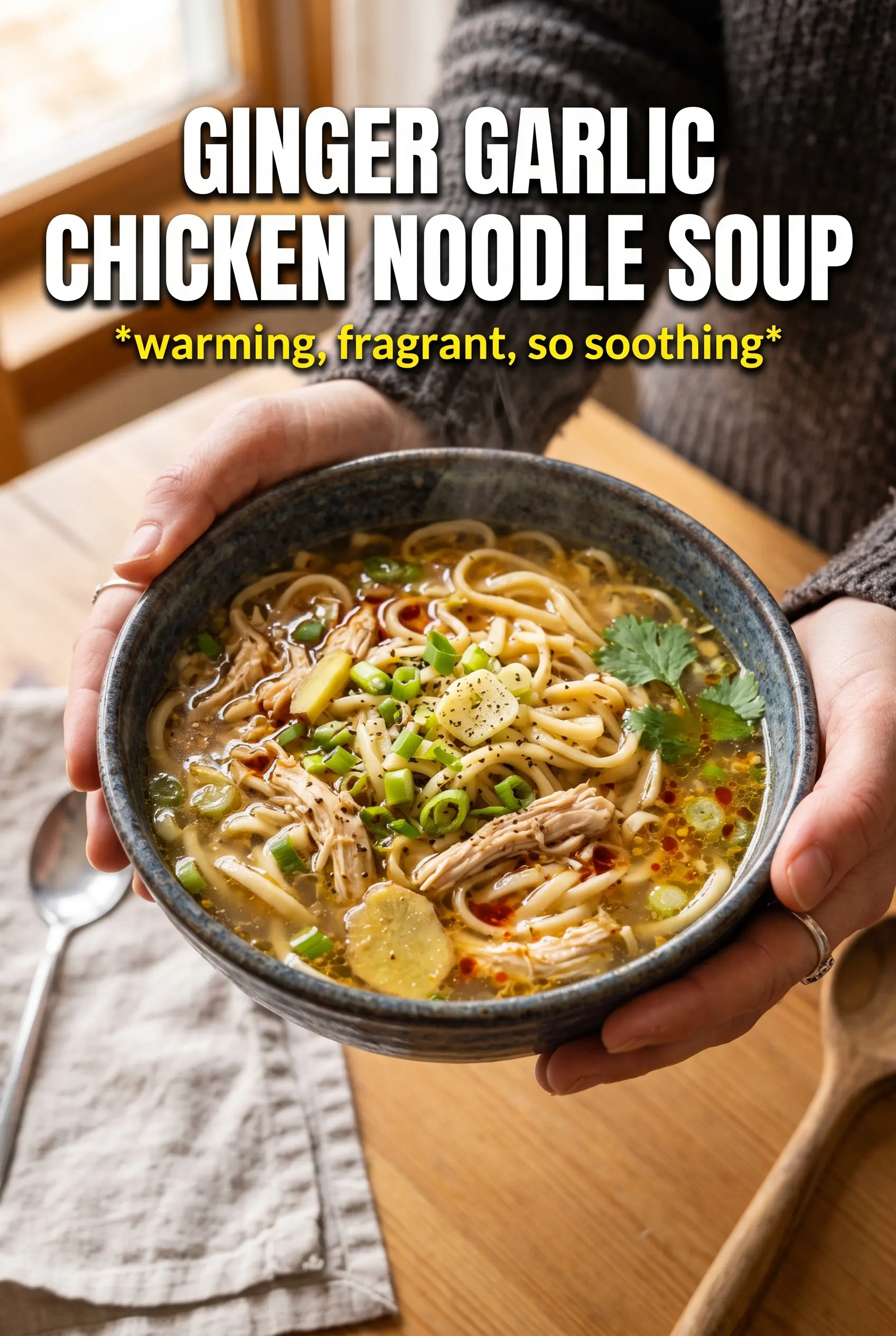
Ginger Garlic Chicken Noodle Soup
Ingredients
Equipment
Method
- Heat 1 tablespoon sesame oil in a large pot over medium-high heat, then sauté onion, carrots, and celery for 4 minutes until slightly softened and glossy.
- Add garlic and grated fresh ginger, and cook for 2 minutes until very fragrant, stirring so the garlic doesn’t brown.
- Add chicken broth, soy sauce, and chicken to the pot, bring to a boil, then simmer for 20 minutes until the chicken is cooked through and no longer pink.
- Remove the chicken from the pot, shred it, and return the shredded chicken to the broth so it disperses evenly.
- Add ramen noodles or egg noodles and cook for 3-5 minutes until tender, watching for the noodles to soften.
- Stir in 1 tablespoon sesame oil and rice vinegar, then season with salt and black pepper to taste, adjusting until the broth tastes balanced.
- Top the soup with green onions, cilantro, and sesame seeds for garnish, and serve hot.