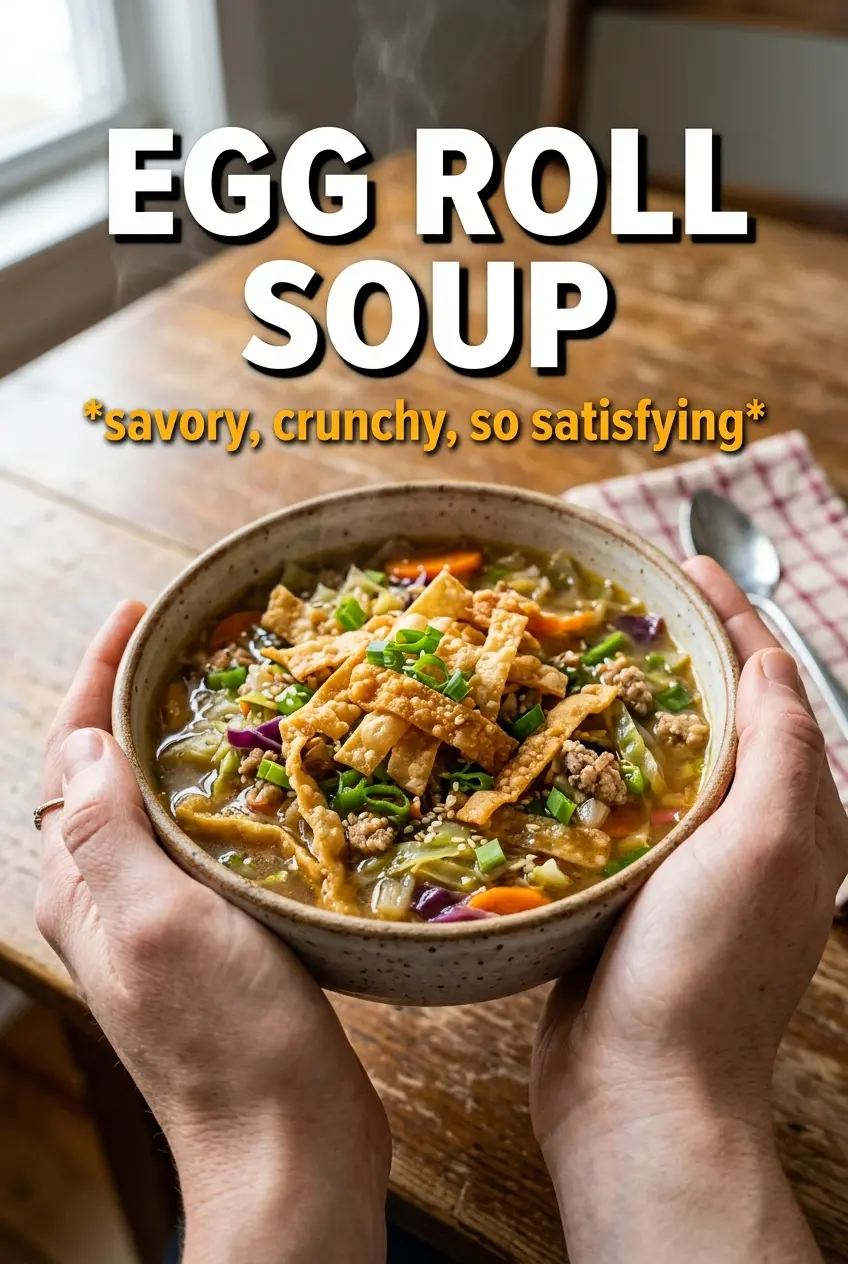
Egg roll soup gives you all the savory, gingery, soy-slick comfort of the filling you’d find inside a great egg roll, but in a bowl that’s lighter, faster, and easier to get on the table. The broth stays clean and punchy, the cabbage turns tender without going limp, and the pork adds enough richness to make each spoonful feel complete. Crispy wonton strips on top finish it with that familiar crunch you’d miss if they weren’t there.
What makes this version work is the order of things. The pork browns first so you get real depth before any liquid goes in, and the garlic and ginger only need a short cook to stay fragrant instead of bitter. The broth is seasoned boldly, then the cabbage and carrots simmer just long enough to soften while keeping a little bite. That balance matters, because overcooked cabbage is the fastest way to make this soup taste flat.
Below, I’ve included the ingredient choices that matter most, the exact cues I watch for at each stage, and a few smart swaps for making it work with what you’ve got in the kitchen.
The broth had that takeout-style egg roll flavor, and the cabbage stayed tender with just enough bite. I added the wonton strips right before serving and they stayed crunchy long enough for seconds.
Save this egg roll soup for the nights when you want takeout-style flavor, tender cabbage, and crunchy wonton topping in one bowl.
The Broth Tastes Flat When You Skip the Pork Browning
The biggest mistake with egg roll soup is treating it like a dump-and-simmer recipe. If the pork goes in and never gets a chance to brown, the soup tastes boiled instead of savory. Those browned bits at the bottom of the pot are what give the broth its backbone, and they dissolve once the liquid goes in.
Ginger and garlic also need a brief stop in the hot pot before the broth. That short cook wakes them up without letting them scorch, which is important because burned garlic will take the whole pot with it. After that, the soup needs only a gentle simmer. A hard boil turns the cabbage mushy and pulls the clean edge out of the broth.
What Each Ingredient Is Actually Doing in the Bowl
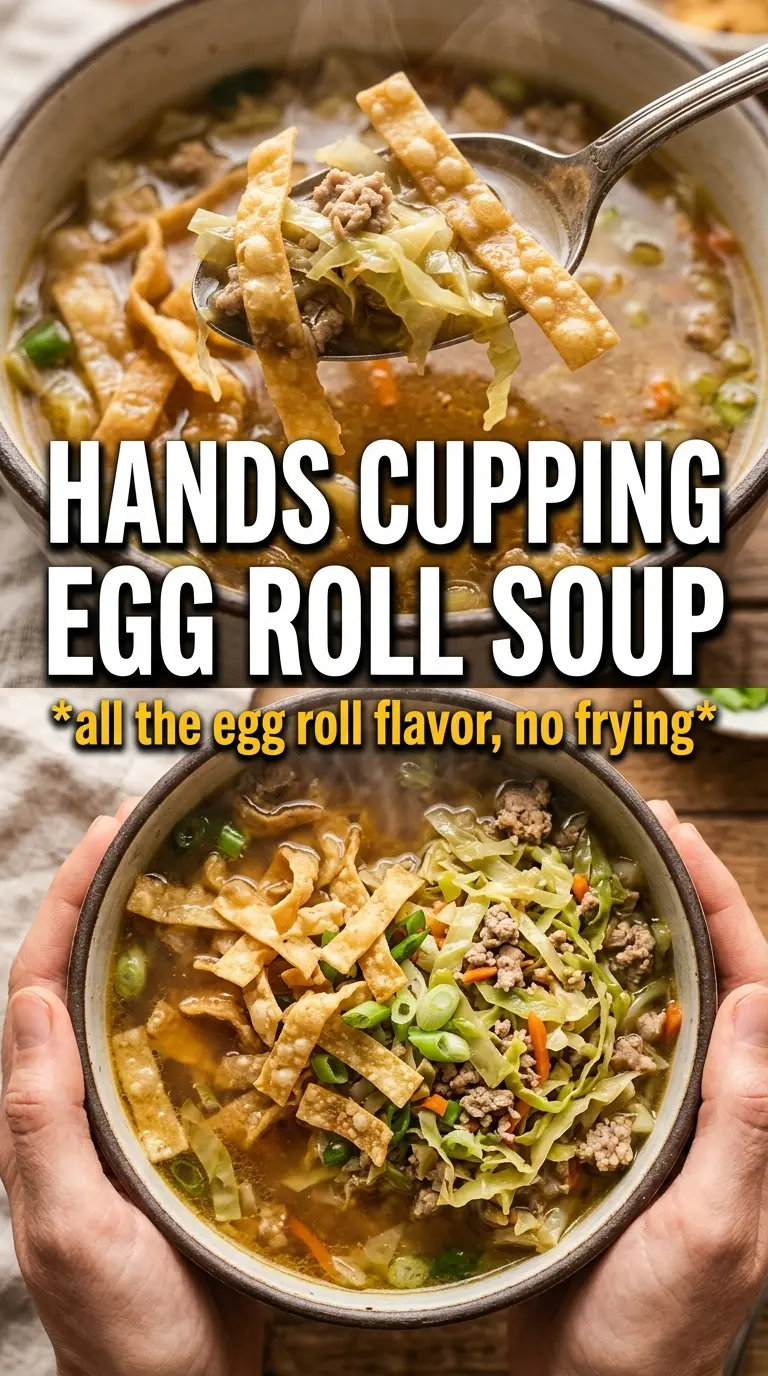
- Ground pork — This gives the soup the classic egg-roll filling flavor. Pork has more richness than chicken, but ground chicken works well if you want a lighter bowl. If you use chicken, keep the sesame oil in place so the soup still tastes complete.
- Cabbage — This is the heart of the soup. Thin shreds soften quickly and soak up the broth without falling apart. Green cabbage is the best all-around choice, but Napa cabbage cooks faster and gives you a softer texture.
- Fresh ginger and garlic — These are non-negotiable for the right flavor. Fresh ginger tastes bright and peppery in a way ground ginger can’t match here, and pre-minced garlic is fine in a pinch, though it won’t taste as vivid.
- Sesame oil, soy sauce, and rice vinegar — This trio builds the actual egg-roll flavor. Sesame oil adds nutty depth, soy sauce handles salt and umami, and rice vinegar keeps the broth from tasting heavy. Don’t swap the vinegar for regular distilled vinegar unless you dilute it; it’s harsher and can take over.
- Crispy wonton strips — These are the crunch that makes the bowl feel finished. Add them at the table, not to the pot, or they’ll go soft almost immediately.
Building the Soup in the Right Order
Brown the Meat First
Set the pot over medium-high heat and cook the pork until it’s no longer pink and you see some browned edges. Break it up as it cooks, but don’t stir so often that it steams. If you drain off excess fat, leave a little behind for flavor; the pot shouldn’t be greasy, just coated. This is where the soup gets its depth, so don’t rush straight to the broth.
Wake Up the Aromatics
Add the garlic and ginger after the meat is browned, then stir for 1 to 2 minutes until they smell sharp and fragrant. The pan should smell warm and savory, not raw or burnt. If the heat is too high, the garlic can go bitter fast, so pull the pot back to medium if it starts to color too quickly.
Simmer the Vegetables Until Just Tender
Pour in the broth, soy sauce, sesame oil, rice vinegar, and sriracha, then bring everything to a boil before adding the cabbage and carrots. Once the vegetables are in, reduce the heat to a steady simmer and cook until the cabbage is tender but still has some shape. That usually takes 8 to 10 minutes, depending on how thinly you cut everything. When the cabbage looks silky at the edges but isn’t collapsing, it’s ready.
Finish With Freshness and Crunch
Stir in the green onions at the very end so they stay bright instead of dulling in the heat. Taste the broth before serving and add salt and pepper only if it needs it, because soy sauce already brings saltiness. Ladle the soup into bowls and top each one with wonton strips and sesame seeds right before eating. That last-minute garnish is what keeps the texture contrast alive.
How to Adapt This When You Need a Different Protein or a Lighter Bowl
Ground chicken instead of pork
Use ground chicken for a lighter version, but don’t expect the same richness. Chicken gives you a cleaner broth, so keep the sesame oil and green onions in place to replace some of the missing depth. If the pot looks dry while browning, add a teaspoon of oil so the meat doesn’t stick before it has a chance to color.
Gluten-free bowl
Use a gluten-free tamari instead of regular soy sauce and check the wonton strips, since many store-bought versions contain wheat. The soup itself stays just as satisfying, and the flavor stays balanced as long as the tamari is the same strength as your soy sauce. Taste before salting because some gluten-free sauces run saltier than others.
Low-carb topping swap
Skip the wonton strips and top the soup with toasted sesame seeds, sliced green onions, and a little extra sriracha. You lose the fried crunch, but the bowl stays firmly in low-carb territory and still tastes complete. A handful of crushed roasted peanuts also works if you want more texture.
Storage and Reheating
- Refrigerator: Store the soup for up to 4 days. The cabbage softens a little more each day, but the flavor stays strong.
- Freezer: It freezes well, though the cabbage will be softer after thawing. Cool it completely, freeze in airtight containers, and leave off the wonton strips until serving.
- Reheating: Warm it gently on the stove over medium-low heat until hot. A hard boil will make the vegetables fall apart and can make the broth taste dull. Add fresh green onions and crunchy toppings after reheating.
Answers to the Questions Worth Asking
Egg Roll Soup
Ingredients
Equipment
Method
- Heat 2 tablespoons vegetable oil in a large pot over medium-high heat and add the ground pork, breaking it up as it browns until no longer pink. Drain excess fat for a cleaner, less greasy soup.
- Add minced garlic and grated ginger to the pot and cook for 1-2 minutes, stirring, until fragrant and lightly sizzling.
- Pour in chicken broth, soy sauce, sesame oil, rice vinegar, and sriracha, then bring the mixture to a boil. Boil briefly, then keep the heat steady for the next step.
- Add shredded cabbage and carrots, then simmer for 8-10 minutes until the vegetables are tender but not mushy. Stir once or twice to distribute the broth and seasonings.
- Stir in the sliced green onions and season with salt and black pepper to taste. Serve immediately topped with crispy wonton strips, sesame seeds, and extra green onions if desired.


