Candied pecans earn their place fast when the coating bakes into a crisp, glossy shell and the nuts stay toasty instead of burnt. The best version has that snap when you bite in, then a warm cinnamon-sugar finish that clings without feeling sticky. It’s the kind of snack that disappears off the pan before it ever makes it to a serving bowl.
The trick is using the oven low and slow. At 250°F, the sugar has time to dry into a crackly coating while the pecans toast underneath, and the egg white gives the sugar something to grab onto without making the nuts heavy. Stirring every 15 minutes matters here because it keeps the coating even and prevents the edges from overbrowning before the center has a chance to set.
Below, I’ll walk you through the part that matters most: how to get the coating crunchy instead of grainy, plus a few ways to change the flavor without losing that classic candied-pecan texture.
The coating dried out perfectly and turned crisp after cooling, not sticky. I brought a jar to a party and people kept asking what made them taste so clean and cinnamon-y instead of just sugary.
Love the crackly cinnamon coating on these candied pecans? Save this batch method for the snack jar, salad toppers, and holiday gifting.
The Part That Keeps Candied Pecans Crisp Instead of Sticky
The mistake most people make is rushing the bake or turning the heat up to speed things along. That gives you nuts that look done on the outside but still feel tacky after they cool. The low oven does two jobs at once: it toasts the pecans gently and dries the sugar coating so it hardens into that thin, crackly shell.
The other thing that matters is cooling them on the pan until they’re completely room temperature. If you move them early, the sugar coating hasn’t finished setting and the whole batch can clump into a chewy mass. Stirring during baking breaks up hot spots and keeps the pieces separate enough to cool into individual candied pecans instead of one sticky sheet.
What Each Ingredient Is Actually Doing in This Batch
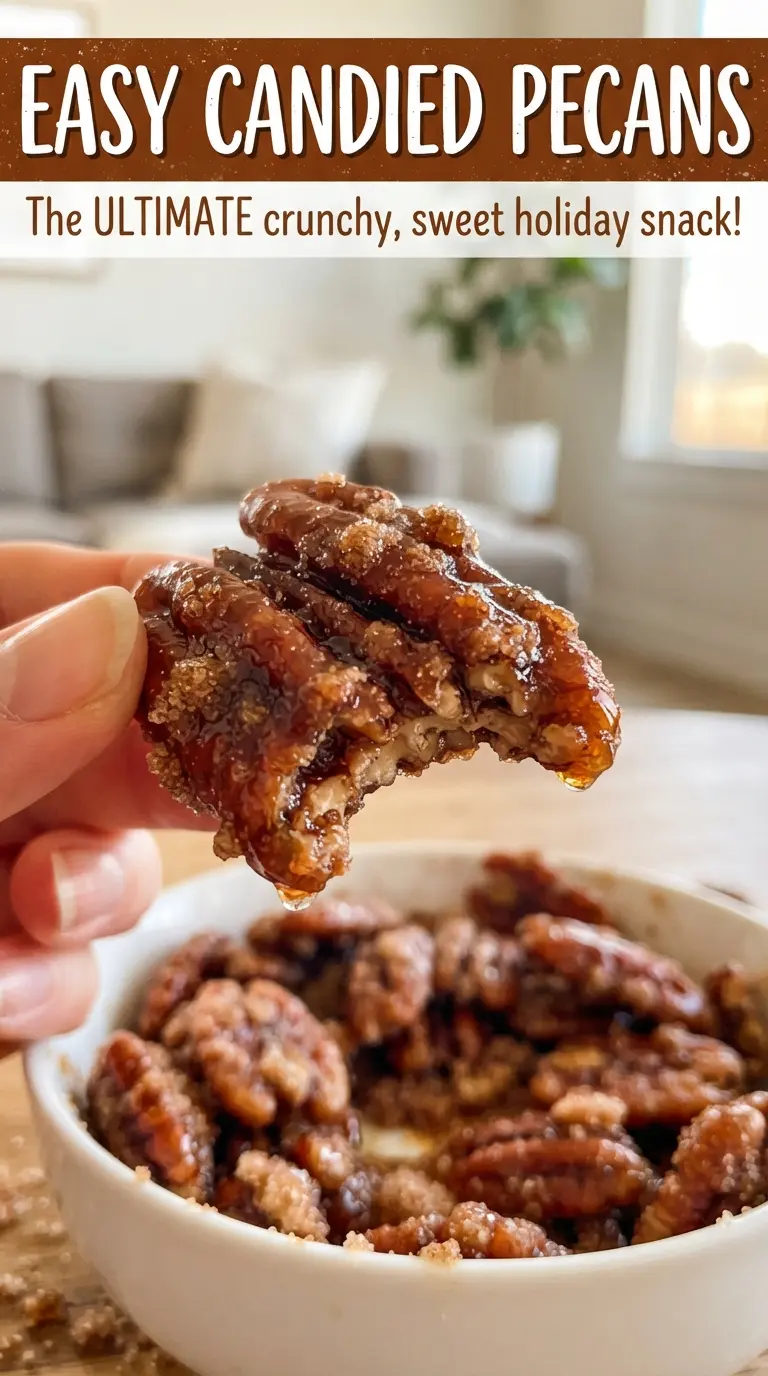
- Pecan halves — Halves toast more evenly than pieces and give you a better crunch. Fresh pecans matter here; if they taste stale on their own, the finished batch will taste flat.
- Egg white — This is what makes the sugar cling in a thin even layer. Whisk it until frothy, not stiff, so it coats without turning meringue-like.
- Vanilla — It rounds out the sugar and cinnamon and makes the nuts taste deeper, not just sweeter. Use the real stuff here if you have it, since the flavor carries through the whole pan.
- Cinnamon, sugar, and salt — The sugar builds the shell, the cinnamon gives the signature warmth, and the salt keeps the batch from tasting one-note. Don’t skip the salt; it sharpens the sweetness and makes the pecans taste more roasted.
Getting the Coating On Before the Oven Takes Over
Frothing the Binder
Whisk the egg white, water, and vanilla until the mixture looks foamy and loose, with no slippery streaks left at the bottom of the bowl. That froth is what helps the sugar cling in a thin layer. If the egg white isn’t fully loosened, you’ll get patches of coating instead of an even shell.
Coating the Pecans
Add the pecans and toss until every surface looks damp and glossy. Then add the sugar mixture and keep tossing until the nuts look sandy and evenly covered. If you see dry nuts at this stage, they’ll bake up bare in those spots, so scrape the bowl well and keep working the coating across the whole batch.
Slow-Baking to a Crackly Finish
Spread the nuts in a single layer on parchment and bake for a full hour, stirring every 15 minutes. You’re looking for a dry-looking coating that no longer glistens in wet patches. If the pan starts smelling aggressively burnt before the hour is up, your oven runs hot; pull it out and check after the next stir rather than letting the sugar scorch.
Cooling for the Crunch
Leave the pecans on the pan until they’re completely cool. They’ll feel a little soft when they first come out of the oven, and that’s normal. The crunch sets as the sugar hardens, so don’t judge the texture early or break them apart too soon.
Three Good Ways to Change These Candied Pecans Without Losing the Crunch
Maple Cinnamon Pecans
Swap 2 tablespoons of the sugar for maple sugar, or add a teaspoon of maple extract if you want a deeper, more autumn-leaning flavor. Keep the baking time the same. The result is a little less sharp and a little more mellow, but still crisp if you cool them fully.
Gluten-Free and Naturally Flourless
This recipe is already gluten-free as written, which is one reason it’s such a handy snack to keep around. Just check that your vanilla is labeled gluten-free if cross-contact matters in your kitchen. The texture stays the same because the crunch comes from the sugar shell, not any flour coating.
Spiced Party Mix Style
Add a pinch of cayenne or a little black pepper to the sugar mixture if you want a sweet-and-savory edge. The heat stays in the background and makes the cinnamon taste brighter. Don’t overdo it or you’ll cover up the nutty flavor that makes these worth making.
Storage and Reheating
- Refrigerator: Store in an airtight container at room temperature for up to 2 weeks. The coating stays crisp if the container is sealed well and the nuts are fully cooled before packing.
- Freezer: Freeze in a zip-top bag or airtight container for up to 3 months. Let them thaw uncovered at room temperature so condensation doesn’t soften the sugar shell.
- Reheating: These don’t need reheating. If they lose a little crunch, spread them on a sheet pan and warm at 250°F for 5 to 8 minutes, then cool completely again before storing.
Answers to the Questions Worth Asking
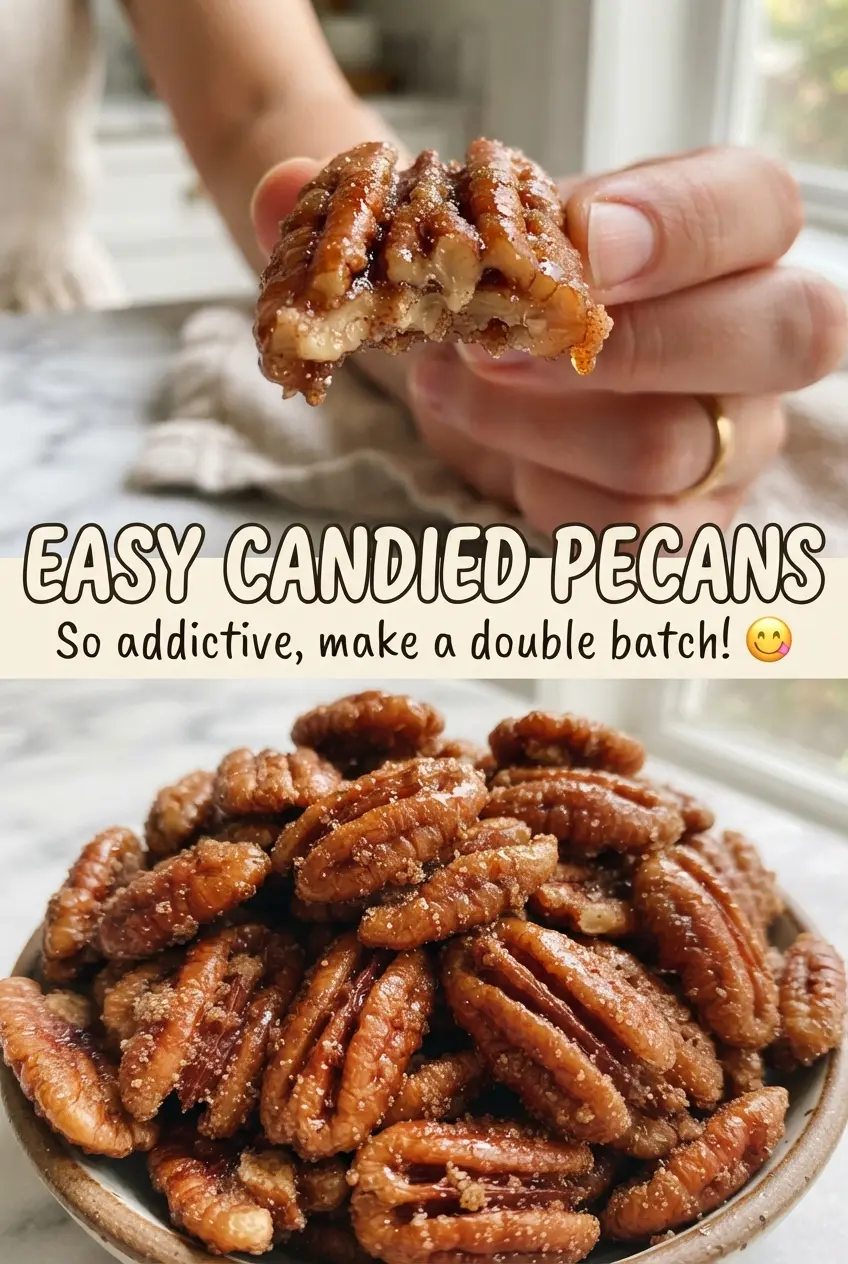
Easy Candied Pecans
Ingredients
Equipment
Method
- Preheat oven to 250F and line a sheet pan with parchment for a nonstick surface.
- Whisk egg white, water, and vanilla extract until frothy so the coating clings well.
- Toss pecan halves in the egg white mixture until evenly coated with a glossy layer.
- Mix sugar, ground cinnamon, and salt, then toss the pecans to coat every piece evenly.
- Spread the coated pecans in a single layer on the parchment so they bake uniformly.
- Bake at 250F for 1 hour, stirring every 15 minutes to prevent sticking and promote even caramelization.
- Cool completely on the pan until crunchy, then break apart and store airtight.


