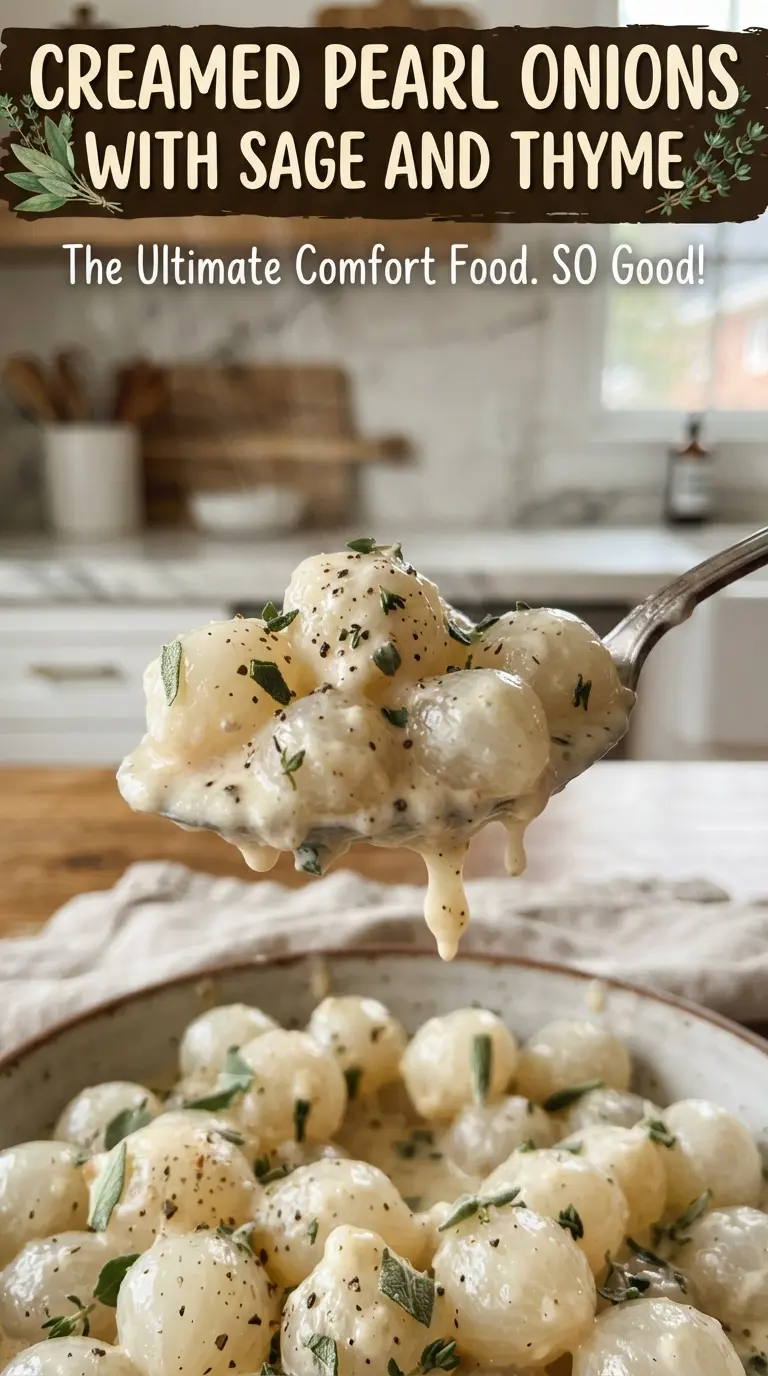
Creamed pearl onions turn into the kind of side dish people remember: soft little onions wrapped in a velvety sauce that clings instead of puddling, with sage and thyme giving it just enough edge to keep every bite interesting. The onions stay intact and tender, the cream sauce stays glossy, and the whole dish feels rich without turning heavy or stodgy on the plate.
The trick is giving the onions a little color before the flour goes in. That quick sauté builds sweetness and keeps the final sauce from tasting flat. Frying the sage leaves in the butter first does double duty: you get a crisp garnish, and the butter takes on that earthy aroma right away, which carries through the whole pan.
Below, I’ve included the part that matters most if you’ve ever ended up with watery cream sauce or onions that tasted boiled instead of cooked. There’s also a note on the one swap that works when you don’t have frozen pearl onions on hand.
The sauce thickened up beautifully and the pearl onions stayed tender without falling apart. I made it for Sunday dinner and the crispy sage on top was the part everyone kept asking about.
Save these creamed pearl onions with sage and thyme for the dinner table when you want a glossy, make-ahead-worthy side with crisp sage on top.
The Step That Keeps the Sauce Silky, Not Thin
The biggest failure point in creamed pearl onions is rushing the liquid. If the flour cooks only briefly or the broth and cream go in before the onions have taken on a little color, the sauce tastes raw and can stay loose longer than it should. The onions also release moisture as they heat, so the pan needs enough time over steady heat for that extra liquid to cook off before the Parmesan goes in.
Fried sage solves a second problem at the same time. Fresh sage can taste blunt if it just gets stirred into cream, but crisping a few leaves in the butter wakes it up and gives you a brittle, fragrant garnish that breaks over the top of the finished dish. The chopped sage and thyme simmer in the sauce, while the whole leaves bring the last burst of texture.
- Frozen pearl onions — These are the smart shortcut here. Thaw them first so they don’t dump extra water into the pan and stretch the sauce.
- Fresh sage — Dried sage won’t give the same crisp garnish or the same rounded, woodsy flavor in the butter. If you have to use dried, use a small pinch in the sauce and skip the fried leaves.
- Heavy cream — This is what gives the dish its body and shine. Half-and-half works in a pinch, but the sauce will be lighter and more likely to thin out as it sits.
- Parmesan — Grate it finely so it melts into the cream without clumping. Pre-shredded cheese usually carries anti-caking agents that can make the sauce grainy.
What Each Ingredient Is Actually Doing in This Recipe
- Primary ingredient (the star) — Quality matters most. Choose the best you can find.
- Cooking medium (oil, butter, or broth) — This carries flavors and prevents dryness.
- Seasonings (salt, pepper, spices, herbs) — Layer flavors so nothing overpowers. Build depth gradually.
- Aromatics (garlic, onion, herbs) — Cook with fat to bloom flavors. Become the foundation.
- Supporting ingredients — Complement the main ingredient without overpowering it.
- Sauce or liquid (if applicable) — Brings flavors together. Balance richness with acid.
- Acid (lemon, vinegar, wine, or other) — Brightens and prevents flat-tasting results.
- Final finish (garnish, glaze, or sauce) — Prevents one-dimensional taste and adds visual appeal.
Building the Onions and Sauce in the Right Order
Frying the Sage First
Start with the butter in a large skillet over medium heat, then drop in a few whole sage leaves. They should sizzle immediately and turn crisp in about 30 seconds, not dark and bitter. Lift them out as soon as they look slightly darker and feel brittle, because they’ll keep crisping on the plate. If the butter starts browning too fast, lower the heat before you add anything else.
Giving the Onions Some Color
Add the thawed pearl onions and cook them until they pick up light golden spots, about 8 to 10 minutes. Stir them often enough to keep them moving, but don’t keep the pan crowded with moisture; if the onions start steaming instead of browning, the heat is too low. This step builds sweetness and keeps the final dish from tasting like plain cream with onions dropped in at the end.
Cooking Out the Flour
Stir in the chopped sage, thyme, and flour, then cook for a full minute. That short cook matters because raw flour tastes pasty and can make the sauce feel chalky instead of smooth. By the end of the minute, the flour should look like a thin coating on the onions and the pan should smell nutty and herbaceous.
Finishing the Cream Sauce
Whisk in the broth and cream gradually, scraping the bottom of the skillet as you go. Let the mixture simmer, not boil, for 6 to 8 minutes until it thickens enough to coat the back of a spoon and the onions are tender through the center. Stir in the Parmesan, salt, white pepper, and nutmeg off the hottest part of the burner if the sauce seems close to splitting, then spoon it into a serving dish and top with the fried sage leaves.
How to Adjust This for What’s in Your Kitchen
Make It Vegetarian Without Losing Body
Swap the chicken broth for a good vegetable broth. Use one with enough savoriness to stand up to the cream, because a thin broth makes the sauce taste flat. The rest of the method stays the same, and the Parmesan still gives the dish its backbone.
Lighter Version With Half-and-Half
You can use half-and-half instead of heavy cream, but expect a looser sauce and a slightly less luxurious finish. Keep the simmer gentle and give it a little extra time to thicken before adding the cheese. This works best if you’re serving right away.
When Fresh Pearl Onions Aren’t Available
Frozen pearl onions are the easiest and most reliable option here, but you can use fresh pearl onions if you don’t mind the peeling time. Blanch them first and slip off the skins before cooking, then proceed with the recipe. The texture is a touch firmer and the flavor a little sweeter.
Storage and Reheating
- Refrigerator: Store in an airtight container for up to 3 days. The sauce will thicken as it chills.
- Freezer: I don’t recommend freezing this dish. Cream sauces tend to separate after thawing, and the onions can turn watery.
- Reheating: Warm gently over low heat with a splash of broth or cream, stirring often. High heat is the fastest way to break the sauce.
Answers to the Questions Worth Asking

Creamed Pearl Onions with Sage and Thyme
Ingredients
Equipment
Method
- Melt the butter in a large skillet over medium heat and fry a few whole sage leaves for 30 seconds until crisp, then set aside.
- Add the thawed pearl onions and cook for 8-10 minutes, stirring occasionally, until lightly golden.
- Stir in the chopped sage, thyme, and all-purpose flour, and cook for 1 minute to remove the raw flour taste.
- Whisk in the chicken broth and heavy cream, then simmer for 6-8 minutes until thick and the onions are tender.
- Stir in the grated Parmesan, salt, white pepper, and nutmeg until the sauce is smooth and well coated.
- Top with the crispy sage leaves and serve warm.


