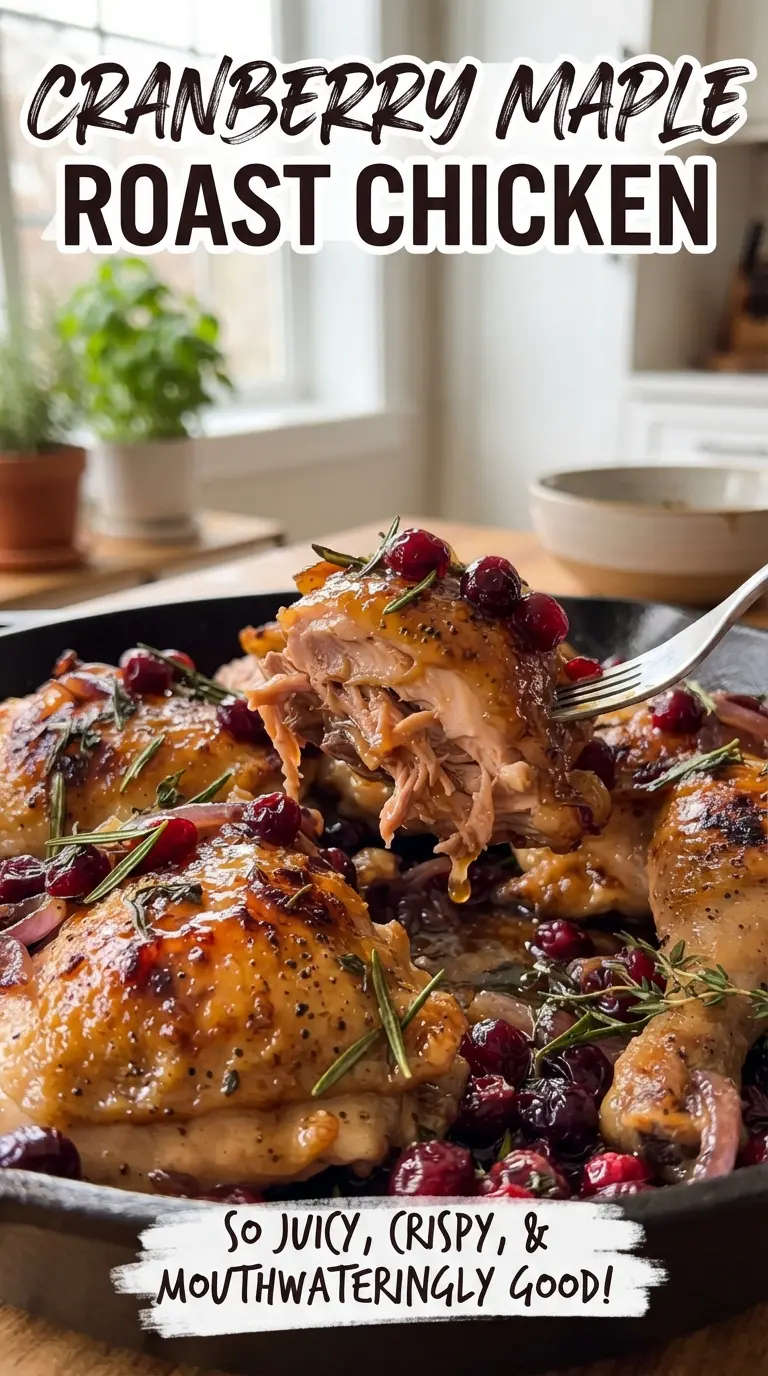
Roast chicken gets a lot more interesting when the skin turns lacquered with maple glaze and the pan fills with burst cranberries, sweet onion, and rosemary. This version lands in that sweet-savory middle where the chicken stays juicy, the skin picks up color fast, and the pan sauce tastes like it was built with a lot more work than it actually takes.
The trick is starting hot enough to set the skin before the glaze goes on, then finishing with maple and Dijon only after the bird has already begun to roast. That keeps the sugars from burning and gives the cranberries time to soften into the broth instead of drying out. Butter under the skin helps protect the breast meat, and the orange and garlic in the cavity perfume the chicken from the inside while it cooks.
Below, I’ll walk through the part that matters most: when to glaze, how to keep the skin glossy instead of sticky, and what to do if your cranberries burst early or the pan sauce looks thin at first. Those little details are what turn a good roast chicken into the one people remember.
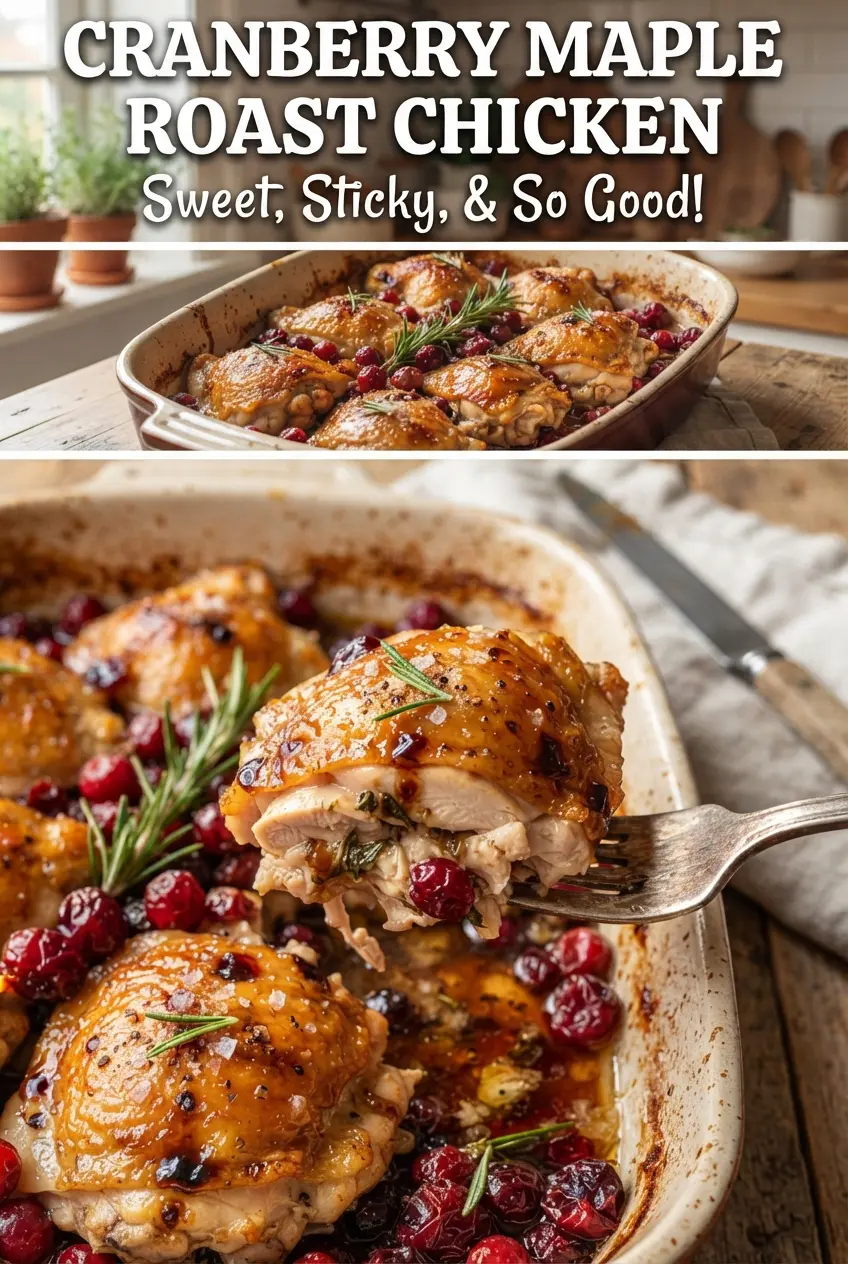
The skin turned out glossy and crisp, and the cranberry pan sauce thickened just enough to spoon over the carved chicken without running all over the plate. Even the leftover onions were incredible the next day.
Cranberry Maple Roast Chicken is the kind of roast that gives you glossy skin, juicy meat, and a cranberry pan sauce worth spooning over everything.
The Part That Stops the Glaze From Burning
The biggest mistake with maple-glazed roast chicken is brushing on the sweet stuff too early. Maple syrup darkens fast, and if it sits under full heat for the entire roast, you get bitter edges before the meat is anywhere near done. Starting the chicken plain lets the skin render a little fat and take on color, then the glaze finishes the job in the last stretch when it can cling instead of scorch.
The second thing that matters is the pan environment. Cranberries need heat plus a little moisture before they burst and turn jammy; without broth, they dry out and stay shriveled. Onion wedges and the chicken drippings do a lot of the heavy lifting here, building a sauce that tastes rounded instead of one-note sweet.
What Each Ingredient Is Actually Doing In This Dish
- Whole chicken — A 5-pound bird cooks evenly enough for this timing and gives you enough drippings for the pan sauce. Smaller chickens roast faster, so check early; much bigger ones need more time before the glaze goes on.
- Butter and rosemary — The butter helps the skin brown and keeps the breast from drying out, while the rosemary perfumes the meat under the skin where it counts. Softened butter matters because it spreads cleanly; melted butter slides off before it can do much.
- Orange and garlic — These go inside the cavity, not in the pan, so their aroma rises through the bird as it roasts. The orange adds brightness that cuts the maple, and the garlic turns sweet and soft instead of sharp.
- Cranberries, maple syrup, and Dijon — This is the glaze-and-sauce team. The cranberries burst into the broth, the maple gives shine and body, and the Dijon keeps the sweetness in check while helping the glaze cling to the skin.
- Chicken broth — Don’t skip it. It keeps the cranberries from scorching on the pan bottom and gives you enough liquid to spoon over the carved chicken at the end.
How to Roast It So the Skin Stays Crisp and the Pan Sauce Works
Seasoning and Buttering the Bird
Pat the chicken dry first. If the skin is damp, it steams before it browns. Season inside and out, then rub the rosemary butter under the skin over the breast and back where you can get to it. If the skin tears a little, that’s fine; the butter will still do its job and the bird will roast evenly.
Building the First Roast
Set the chicken in a roasting pan with the onion wedges tucked around it and the orange and garlic in the cavity. Roast it plain for the first 50 minutes so the skin can start rendering and picking up color. If the pan looks dry at this stage, don’t add extra liquid yet; the chicken itself will release enough fat and juices once the heat gets to work.
Brushing on the Glaze
Whisk the maple syrup and Dijon together until smooth, then brush on half after the first roast. Add the cranberries and broth at the same time so the fruit has a chance to soften during the final cook. If you brush too aggressively, you’ll pull the skin loose in patches, so use a light hand and let the glaze settle between strokes.
Finishing to Temperature and Resting
Return the pan to the oven for 25 to 30 minutes, brushing on the rest of the glaze near the end. The chicken is done when the thigh reaches 165F and the juices run clear at the joint. Rest it for 15 minutes before carving; if you cut too soon, the juices run onto the board instead of staying in the meat, and the pan sauce won’t have time to settle into something spoonable.
How to Adapt This for Smaller Crowds, Dietary Swaps, and Leftovers
Use boneless chicken thighs instead of a whole bird
Thighs work when you want the same sweet-tart glaze without carving a whole chicken. They cook much faster, so start checking around 25 minutes and brush the glaze on during the last 10 minutes. You’ll lose the built-in pan drippings from a whole bird, but you’ll gain more caramelized surface area.
Make it dairy-free
Swap the butter for olive oil or dairy-free butter and rub it under the skin the same way. You’ll still get browned skin and good moisture, though the flavor will be a little less rich and more direct. Olive oil keeps the seasoning clean; dairy-free butter gives you a closer match to the original taste.
Use dried rosemary when fresh isn’t around
Use 1 teaspoon dried rosemary instead of the tablespoon of fresh. Dried rosemary is stronger and a little woodier, so you want less of it. Crush it between your fingers before mixing it into the butter so it releases its oils.
Storage and Reheating
- Refrigerator: Store leftovers for up to 4 days. The skin softens, but the meat stays juicy if you keep it covered with some of the pan sauce.
- Freezer: Freeze carved chicken with the sauce for up to 2 months. The cranberries and glaze hold up better than plain roast chicken because the sauce protects the meat from drying out.
- Reheating: Reheat covered in a 300F oven with a spoonful of sauce or broth until warmed through. The common mistake is blasting it in the microwave, which tightens the breast meat and ruins the skin completely.
Answers to the Questions Worth Asking
Cranberry Maple Roast Chicken
Ingredients
Equipment
Method
- Preheat the oven to 425F. Pat the whole chicken (5 pounds) dry so the skin can crisp.
- Season the chicken inside and out with salt and black pepper. Rub the softened butter mixed with chopped fresh rosemary under and over the skin.
- Stuff the cavity with orange halves and halved garlic. Place the chicken in a roasting pan with the red onion wedges around it.
- Roast for 50 minutes at 425F. Stop when the skin looks starting to brown and the chicken is cooking through.
- Whisk maple syrup and Dijon mustard. Brush half of the glaze over the chicken to start the lacquer.
- Add the fresh cranberries and chicken broth to the pan. The liquid should pool around the onions for a saucy finish.
- Roast 25 to 30 minutes more at 425F, brushing with the remaining glaze. Cook until the thigh reaches 165F and the cranberries burst.
- Rest the chicken 15 minutes. This lets juices settle so the sliced meat stays moist.
- Carve and spoon the cranberry pan sauce over the top. Serve immediately with the onions and cranberries from the pan.