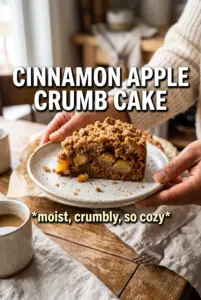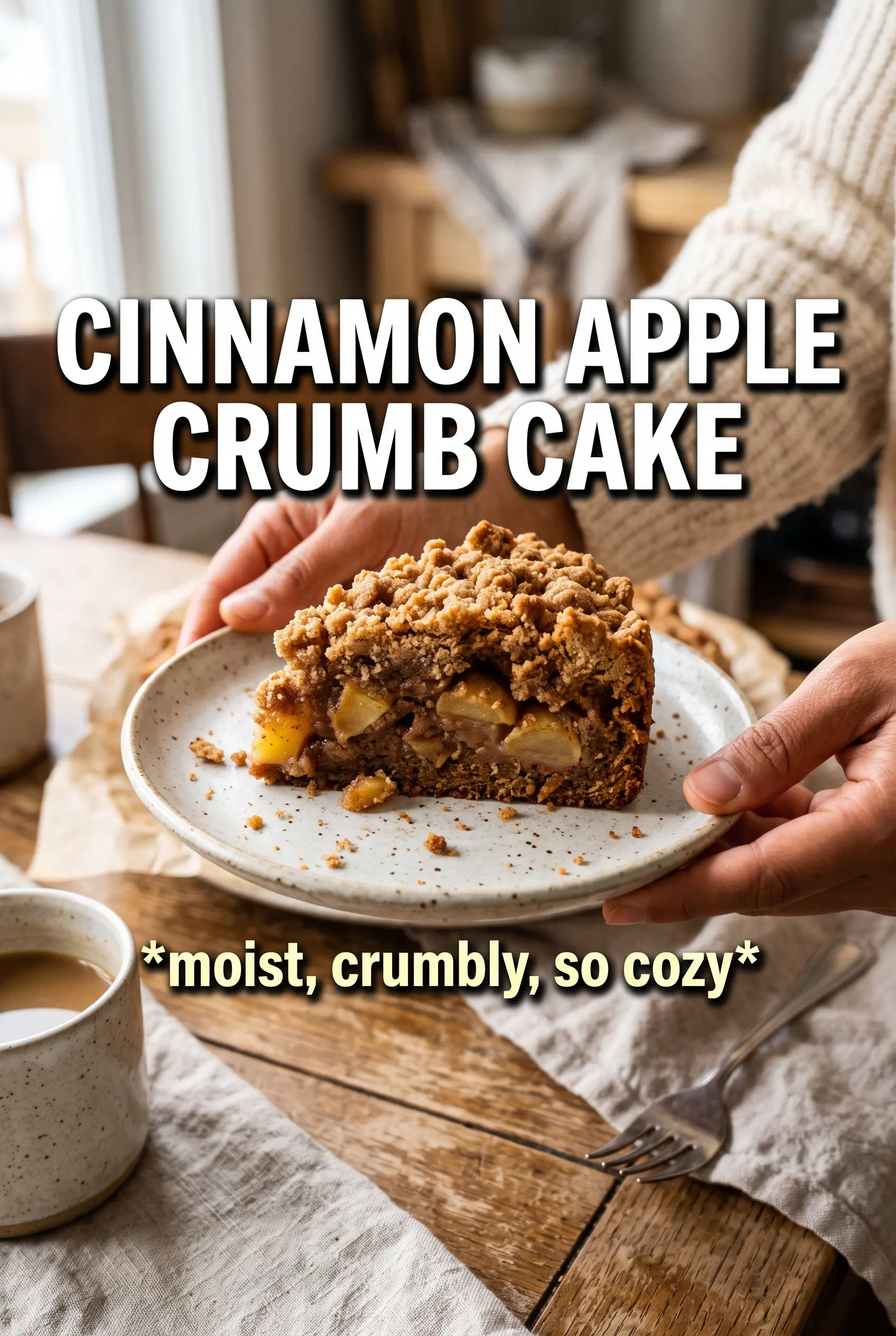
Cinnamon apple crumb cake bakes up with a tender, sour cream-rich crumb, soft pockets of apple, and a thick cinnamon streusel that turns crisp on top while staying buttery underneath. It cuts into generous squares that hold their shape, but the center stays moist enough to eat warm without crumbling apart. That balance is what keeps this one in the breakfast rotation.
The sour cream does the heavy lifting in the cake batter. It keeps the crumb plush and helps the cake stay soft for days, while the melted butter in the topping gives you those big, irregular crumbs instead of a sandy layer that disappears into the batter. Finely diced apples matter here too because they melt into the cake instead of sitting in hard chunks that throw off the texture.
Below you’ll find the trick to getting a crumb topping that actually stays crumbly, plus a few ways to adapt the cake if you want to switch up the apples or make it ahead for the morning.
The crumb topping baked up thick and crisp instead of sinking, and the cake stayed moist even after sitting overnight. I used tart apples and the cinnamon flavor was spot on.
Like this cinnamon apple crumb cake? Save it to Pinterest for a thick streusel-topped breakfast cake with soft apple bites and a tender sour cream crumb.
The Reason the Crumb Stays Tall Instead of Melting In
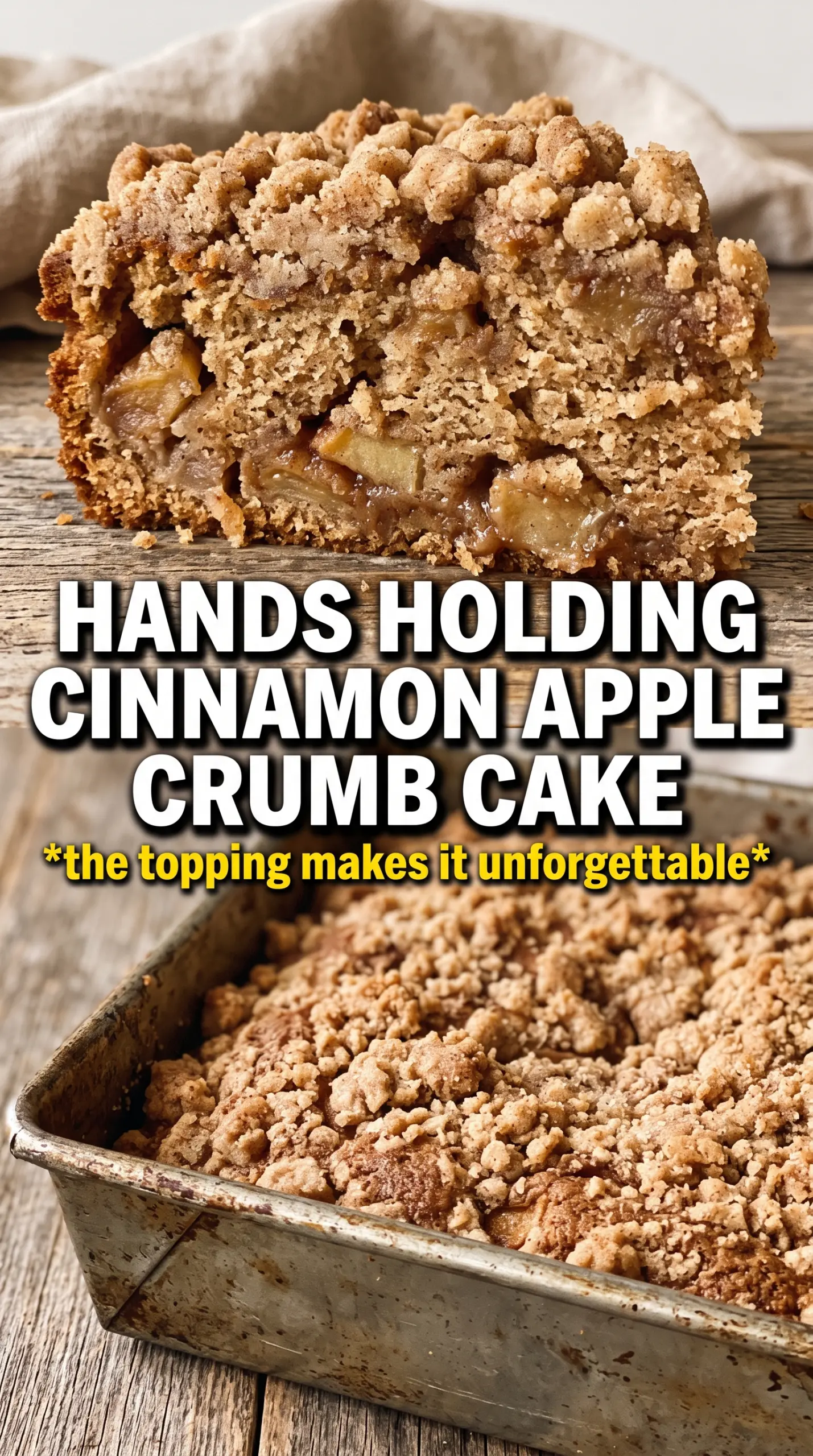
The topping on this cake works because the butter goes in melted, not softened. That sounds backward if you think of classic streusel, but melted butter coats the flour and sugar fast, then chills into clumps instead of forming a paste. Refrigerating it before baking gives those crumbs time to firm up, and that’s what keeps them sitting on top of the batter instead of disappearing into it.
The other thing that matters is the balance of moisture in the cake. Sour cream brings enough richness to keep the batter tender, but not so much liquid that the apples turn the center gummy. If your crumb topping looks too fine after mixing, it needs a few more fork tosses, not more butter. You want pieces in different sizes so the top bakes into a crisp, craggy layer.
What Each Ingredient Is Actually Doing in This Cake
- All-purpose flour — This is the backbone of both the cake and the topping. Standard all-purpose flour gives you enough structure to hold the apples and crumb layer without making the cake dense.
- Brown sugar — This belongs in the crumb topping because its molasses flavor deepens the cinnamon and helps the streusel bake into a caramel-like crust. Light or dark brown sugar both work; dark will taste a little richer.
- Unsalted butter — Melted butter in the topping gives you those chunky crumbs, while softened butter in the cake creates a lighter base when beaten with sugar. Use unsalted if you can so you control the salt in both parts of the recipe.
- Sour cream — This is what keeps the cake soft and moist without making it wet. Plain full-fat Greek yogurt can stand in, but the crumb will be a little tighter and tangier.
- Apples — Peel them and dice them finely so they soften into the batter and don’t leave big raw chunks behind. Tart baking apples hold their shape best, but any firm apple will work if that’s what you have.
Building the Batter Without Crushing the Apples
Mix the crumb first and chill it
Stir the flour, brown sugar, cinnamon, and salt together, then drizzle in the melted butter and toss until the mixture forms clumps. Stop as soon as you have pieces ranging from pea-sized to walnut-sized. If you overmix, you’ll get a wet paste that bakes flat, so the fork should be doing the work, not your hands.
Whip the cake base until it looks pale
Beat the softened butter and sugar until the mixture looks fluffy and lighter in color. That step traps air and gives the cake a softer crumb, which matters because the apples add weight. Add the eggs one at a time, then the vanilla, then the sour cream; if the mixture looks a little curdled at this stage, it will smooth out once the flour goes in.
Fold just enough to keep the crumb tender
Add the dry ingredients and stir only until the flour disappears, then fold in the diced apples. Overmixing here tightens the cake and makes it bake up heavy, especially once the apple pieces release moisture. Spread the batter into the pan, then scatter the chilled crumb topping all the way to the edges so every slice gets that crisp top.
Bake until the center is set, not dry
Bake at 350°F until a toothpick comes out clean or with just a few moist crumbs, usually 45 to 50 minutes. If the top is browning fast but the center still looks soft, tent it loosely with foil for the last stretch. Let the cake cool a bit before dusting with powdered sugar so the sugar doesn’t melt into the topping.
How to Adapt This Cinnamon Apple Crumb Cake for Different Mornings
Make it gluten-free
Use a good 1:1 gluten-free baking flour in both the cake and crumb topping. The texture will be a little more delicate, but the sour cream keeps it from turning dry. Let the baked cake cool before slicing so it has time to set cleanly.
Use Greek yogurt instead of sour cream
Full-fat Greek yogurt works well if that’s what’s in the fridge. The cake bakes up slightly tangier and a touch less rich, but the structure stays strong. Use the same amount and stir it in just like the sour cream.
Swap the apples for pears
Firm pears can replace the apples one-for-one, but they soften faster, so keep the dice small and use fruit that’s still slightly firm. The cake will taste a little more floral and less tart, which works well if you want a milder breakfast cake.
Storage and Reheating
- Refrigerator: Store covered for up to 4 days. The crumb softens a bit over time, but the cake stays moist.
- Freezer: Freeze individual squares wrapped tightly for up to 2 months. Thaw overnight in the fridge so the crumb topping doesn’t turn soggy from condensation.
- Reheating: Warm slices in a 300°F oven for 8 to 10 minutes or until just heated through. The microwave works in a pinch, but it softens the topping fast, so use short bursts if that’s the only option.