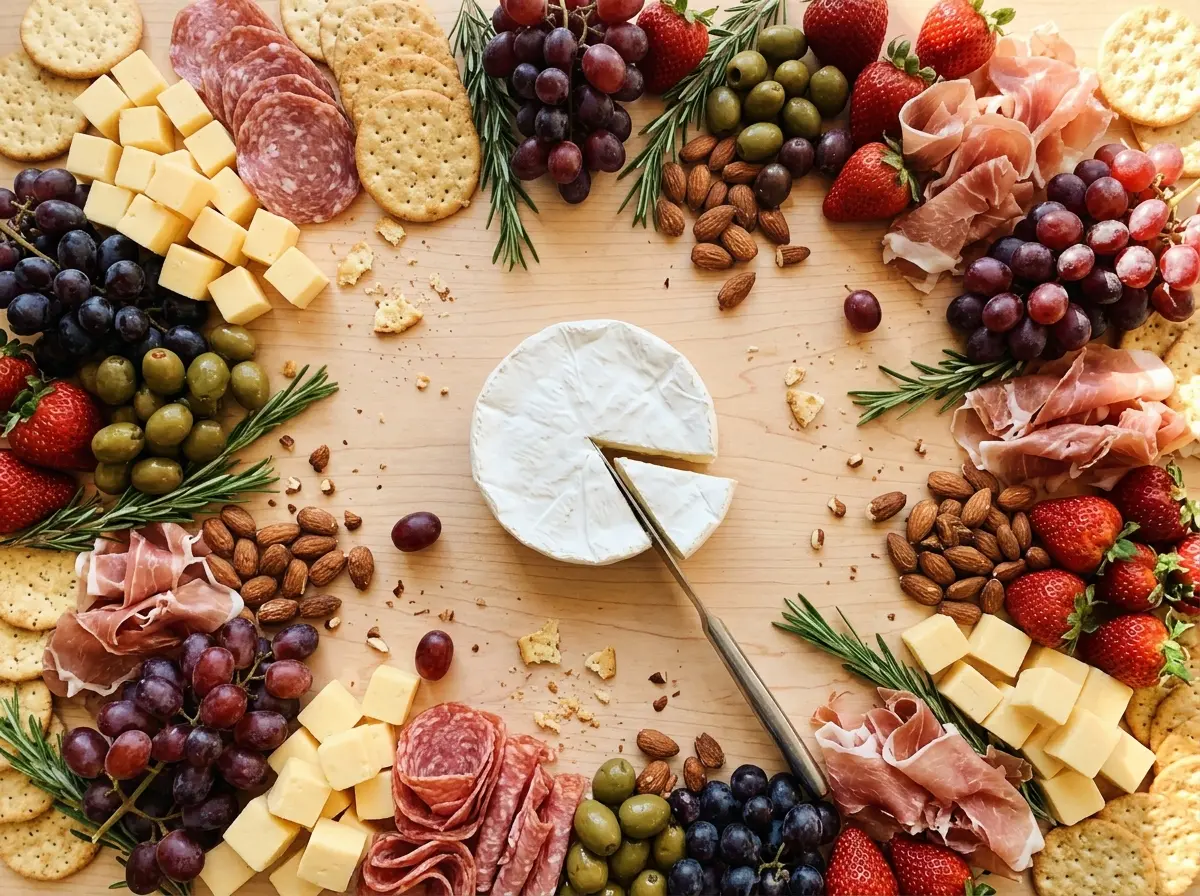
The board starts to look inviting before every space is filled: a few cheese clusters, folds of salami, and bright fruit already give the eye somewhere to land. I like that this Christmas Grazing Table serves 12 without asking anyone to sit down for a formal meal; guests can choose a little of what they like and come back for more.
For this spread, the mix matters more than complicated prep. Creamy brie, sharp cheddar, and gouda give the savory pieces a different feel from the juicy grapes and strawberries, while cucumbers and bell pepper add a crisp, cool bite. I keep the ingredients in distinct groups rather than blending everything together. It makes the board easier to browse, and the colors do the decorating for you.
Kitchen Note
Rinse and dry the rosemary before it goes anywhere near the board. Damp sprigs look limp and leave little droplets behind, so I tuck them in only once they’re completely dry.
Save this Christmas Grazing Table for a colorful holiday spread with brie, sharp cheddar, fresh fruit, and savory bites.
Why This Grazing Table Works Better in Distinct Clusters
A grazing table can feel messy when everything is scattered evenly across the surface. Grouping similar foods gives the spread a rhythm: guests can spot the cheeses, meats, fruit, and crisp bites at a glance, then build a combination without rummaging through the whole board. That little bit of order also keeps the colors from blending into one another.
The mix here gives people more than one way to make a bite. Salami or prosciutto can go with cheese; grapes and strawberries bring a fresh contrast; hummus and cranberry chutney offer two different dips for the crackers and vegetables. You don’t need to preassemble bites or decorate every inch. Leave some breathing room between the main groups, then use the smaller accompaniments to make the spread feel finished. That balance is what makes the table look generous and stay easy to serve.
The Ingredients That Give This Christmas Spread Its Range
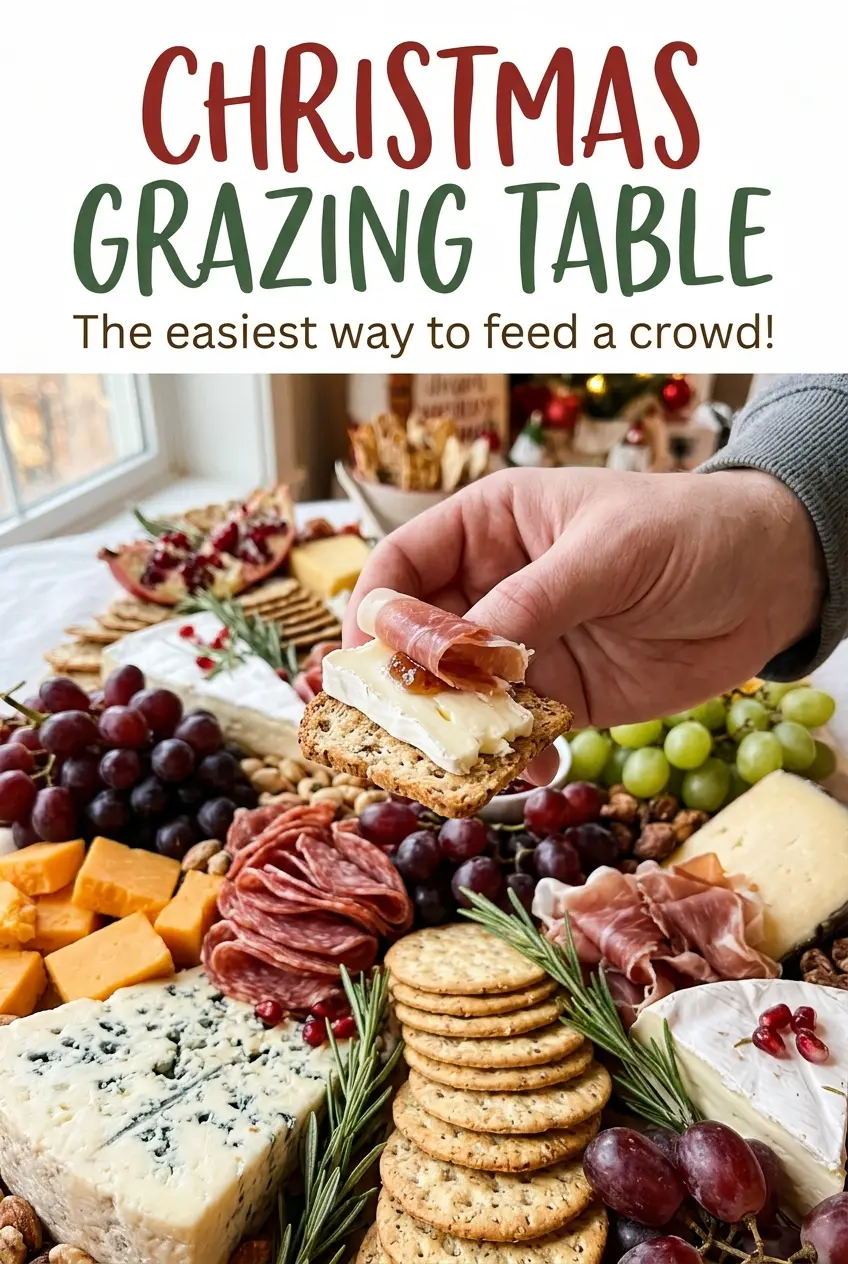
- Brie, sharp cheddar, and gouda — The brie brings a soft, creamy center, while cheddar adds a sharper, firmer bite and gouda gives the cheese section a milder contrast. Choose cheese that looks fresh and is easy to slice or portion; there’s no need to seek out a specialty brand. If one of the cheeses is unavailable, use more of one of the other cheeses already on the board, knowing the overall mix will be less varied.
- Salami and prosciutto — These bring salty, savory bites that balance the fruit and creamy cheese. Thinly sliced prosciutto folds easily, and sliced salami is simple to arrange in loose rolls. Buy slices that look fresh rather than dried at the edges; either meat can be left off for a meat-free spread.
- Grapes and strawberries — Their fresh sweetness brightens the richer foods and brings strong color to the display. Choose firm grapes and strawberries without soft or bruised spots. The grapes need to be washed and dried; hull the strawberries before arranging them.
- Cucumbers and red bell pepper — These add a crisp, mild option that works well with hummus. Pick cucumbers that feel firm and a bell pepper with smooth, unwrinkled skin. Slice the cucumbers and cut the pepper into strips so they’re ready to pick up.
- Assorted crackers — A mix gives guests different shapes and textures for the cheeses, hummus, and chutney. Standard grocery-store crackers work well here; keeping some in their boxes makes it easy to bring out more without crowding the board all at once.
- Hummus, cranberry chutney, olives, almonds, and rosemary — The hummus is creamy, the chutney adds a tart-sweet note, and olives and roasted almonds contribute salty, crunchy bites. Drain the olives before serving so their brine doesn’t puddle. Rosemary is a fragrant finishing accent, not a substitute for any of the food on the board.
Build the Board Without Crowding the Serving Surface
Start with a clean, generously sized surface
Set out a clean 24-by-18-inch serving board, or cover a similarly sized area of the table with food-safe parchment paper. Give yourself enough room to place the foods in groups rather than stacking them tightly. A surface that’s too small makes it harder to reach the fruit and crackers without brushing against the other food. Keep small serving bowls nearby before you begin arranging.
Give the cheeses their own landing spots
Place the brie, cheddar, and gouda in separate clusters across the board, leaving room around each one. The cheddar should be cut into cubes and the gouda sliced, while the brie stays as a wheel. Spread the cheese groups apart instead of lining them up in a row; that leaves useful pockets for the other foods. If the board starts to feel crowded, pause before adding anything else.
Make loose, colorful groups around the cheese
Fold or loosely roll the salami and prosciutto, then set them in clusters near the cheeses. Add the grapes, strawberries, cucumber slices, and bell pepper strips in colorful groups around the meats and cheeses. Keep the groups distinct enough that guests can tell what they’re reaching for. Tuck the rosemary sprigs in as a festive accent, rather than scattering them across the food.
Fill the gaps and set out the accompaniments
Use crackers to fill the remaining spaces, but leave some in their boxes so you can replenish the board as needed. Put the hummus, cranberry chutney, drained olives, and almonds in small serving bowls around the spread. Keep the hummus chilled until just before serving. Once everything is in place, serve promptly so the fresh produce and other perishable foods don’t sit out longer than they should.
Easy Ways to Adapt the Grazing Table
Make it a meat-free cheese board
Leave off the salami and prosciutto and keep the cheeses, produce, crackers, hummus, chutney, olives, and almonds. It becomes a vegetarian-friendly spread with a little less savory richness and more room for the fresh, crunchy bites.
Split the spread across two smaller boards
Divide the same components between two serving boards and set them in separate spots. Guests won’t have to reach across one crowded surface, and each board can still offer a mix of cheese, meat, produce, crackers, and accompaniments.
Make a cracker-light version
Use fewer crackers and give more of the surface to the cheeses, meats, and produce. The board will feel less like a cracker-and-dip spread and more like a selection of small bites; keep the crackers available separately for anyone who wants them.
Keeping the Grazing Table Fresh
- Refrigerator: Put leftovers into separate airtight containers and refrigerate them promptly. For best quality, use them within 3 to 4 days.
- Freezer: The assembled spread doesn’t freeze well. Fresh fruit and vegetables lose their texture, and the dips and cheese won’t have the same consistency after thawing.
- Serving window: Plan to return perishable foods to the refrigerator within 2 hours at room temperature, or within 1 hour when the temperature is above 90°F.
Questions About Setting Up a Christmas Grazing Table
Christmas Grazing Table
Ingredients
Equipment
Method
- Set out a clean 24-by-18-inch serving board or cover a similarly sized table area with food-safe parchment paper.
- Place the brie, cheddar, and gouda in separate clusters across the board, leaving room between them for the other foods.
- Fold or loosely roll the salami and prosciutto, then arrange them in clusters near the cheeses.
- Add the grapes, strawberries, cucumbers, and bell pepper in colorful clusters around the cheeses and meats, then tuck in the rosemary sprigs for a festive accent.
- Fill the remaining spaces with the crackers, keeping some in their boxes or replenishing them as needed.
- Set the hummus, cranberry chutney, olives, and almonds in small serving bowls around the board, keeping the hummus chilled until just before serving.
- Serve promptly.
- Refrigerate perishable foods if they have been at room temperature for 2 hours, or 1 hour if the temperature is above 90°F.


