Homemade chicken noodle soup tastes like the broth has a memory. It’s deeper, cleaner, and more savory than anything that comes out of a box, and the noodles soak up just enough of that golden flavor without turning the bowl heavy. The broth carries the whole dish here, so every spoonful tastes built, not assembled.
The difference comes from starting with chicken pieces that still have bones and plenty of connective tissue, then giving them time with cold water, vegetables, and a little apple cider vinegar. That slow simmer pulls out body and collagen, which is what gives the broth that rich, almost silky finish. I also like to season the broth after straining, not before, because the flavor concentrates as it cooks and it’s much easier to land on the right salt level at the end.
Below, I’ll show you the small details that keep the broth clear, the noodles from going mushy, and the chicken tasting like part of the soup instead of an afterthought.
The broth turned out rich and golden, and the egg noodles stayed tender instead of falling apart. I loved that the vinegar and slow simmer gave it that homemade depth without tasting sour at all.
Save this chicken noodle soup with homemade broth for the kind of bowl that tastes deeply savory, clear, and full-bodied.
The Broth Needs Time to Pull Flavor From the Bones
The biggest mistake with chicken noodle soup is rushing the broth and expecting the finished soup to taste deep. Bones, skin, and connective tissue need time in cold water before the simmer gets going, because that gradual heat helps extract collagen and keeps the broth from tasting thin. The apple cider vinegar doesn’t make it sour; it gives the pot a nudge that helps loosen what the bones are holding onto.
If the broth looks cloudy, that usually means it was boiled too hard after the first bring-up. You want a gentle simmer with small bubbles breaking the surface, not a rolling boil. Skim the foam early, and the broth stays cleaner and sweeter.
What the Chicken, Noodles, and Aromatics Are Doing Here
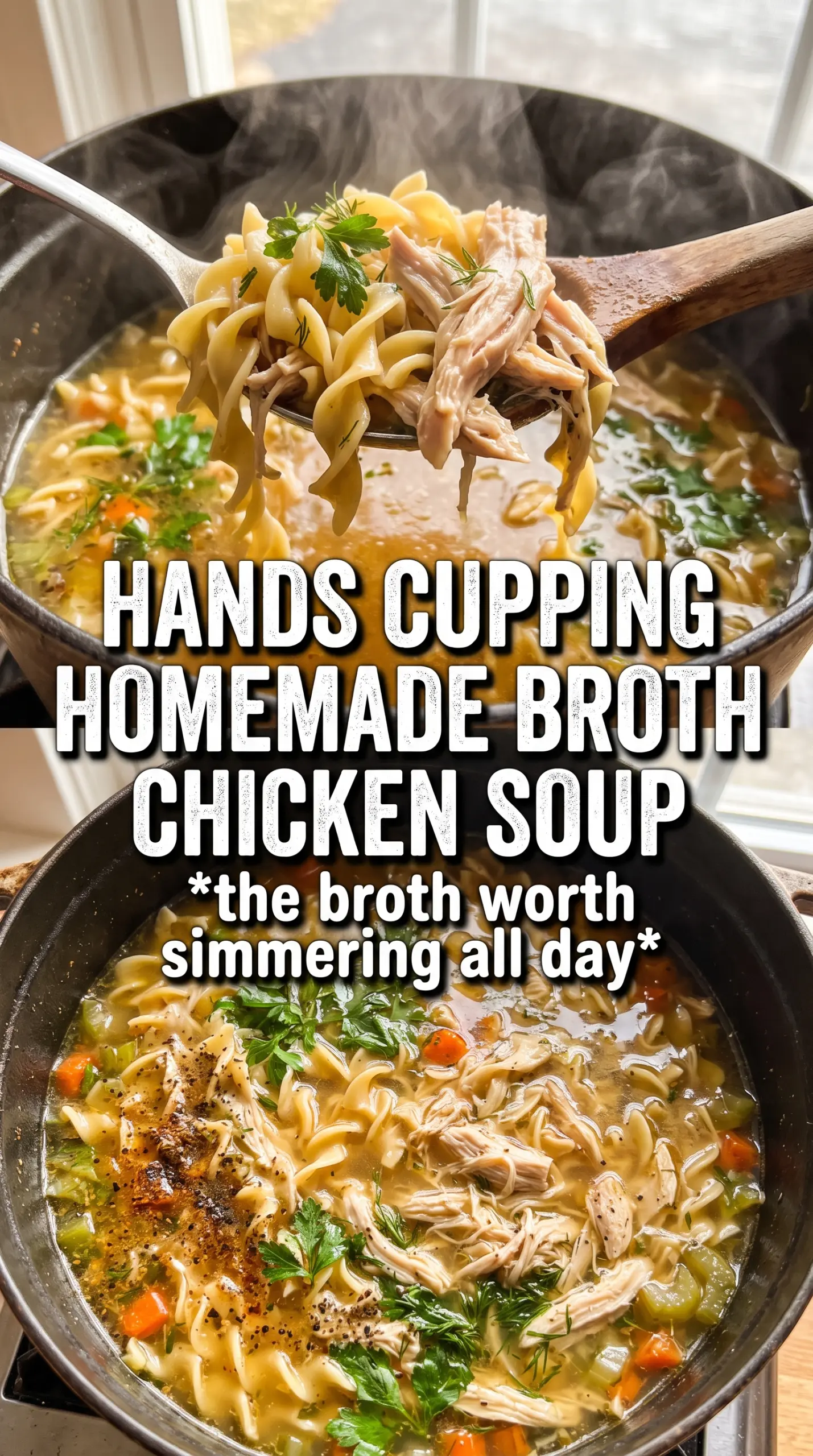
- Chicken pieces with bones — Backs, necks, or a whole chicken give the broth body that boneless meat can’t match. If you only have bone-in thighs or drumsticks, use them, but the stock will be a little lighter. The meat from the broth can be shredded back into the soup, which keeps the dish from feeling one-note.
- Apple cider vinegar — This is doing quiet work in the background. You won’t taste it in the finished broth, but it helps draw out more from the bones during the simmer. Don’t skip it if you want a fuller broth.
- Wide egg noodles — They hold onto the broth better than thin noodles and give the soup the soft, hearty texture people expect. Fresh or extra-wide dried noodles both work, but watch the timing closely because overcooked egg noodles turn heavy fast.
- Fresh parsley — Add it at the end for brightness. Dried parsley won’t give the same lift, and if you add the fresh herbs too early, they lose their clean flavor and fade into the broth.
Building the Soup So the Noodles Stay Tender
Making the Broth Base
Combine the chicken pieces, rough-cut vegetables, garlic, bay leaves, vinegar, and cold water in a large pot, then bring it up to a boil before dropping it to a simmer. That first boil is for getting the pot moving; the rest of the cook should stay calm. If the heat stays too high, the broth gets greasy and muddled instead of rich and clear. Skim off the foam in the first few minutes so the finished soup tastes cleaner.
Straining and Seasoning
Once the broth has simmered long enough, strain it and season it with salt. This is the point where the flavor becomes readable, so taste it before adding anything else. If it tastes flat, it usually needs more salt, not more cooking. Reserve any tender chicken you can pull from the bones now so it’s ready to go back into the soup later.
Cooking the Vegetables and Noodles
Bring the strained broth back to a simmer in the same pot, then add the sliced carrots, celery, and onion. They need about ten minutes to soften without collapsing. Add the egg noodles next and cook them just until tender, because they keep absorbing broth even after the heat goes off. If you cook them until they’re fully soft in the pot, they’ll turn swollen and dull by the time you serve.
Finishing the Bowl
Stir in the shredded chicken and parsley at the end, then season generously with salt and pepper. The chicken only needs long enough to warm through. This last seasoning pass matters because broth can taste nicely seasoned on its own but still need a little edge once the noodles are in the bowl. Serve it hot while the broth is still clear and fragrant.
How to Make This Soup Fit Your Kitchen
Use a Rotisserie Chicken for a Faster Version
Skip the homemade broth and start with a good store-bought stock if you need speed, then add shredded rotisserie chicken at the end. You’ll lose some depth, but you’ll keep the soup’s comfort and texture. A splash of vinegar or lemon at the end can help wake up a broth that tastes flat.
Make It Gluten-Free
Use a gluten-free egg noodle or a short gluten-free pasta shape that holds up in broth. Cook it separately if the brand tends to cloud the soup or break apart, then add it to each bowl just before serving. That keeps the broth cleaner and the texture much better.
Add More Vegetables Without Diluting the Broth
Mushrooms, peas, or chopped spinach all work, but add them near the end so they don’t steal the broth’s clarity. Hearty vegetables like mushrooms can go in with the carrots and celery; delicate greens only need a minute or two. Keep the additions modest if you still want the chicken broth to stay in the spotlight.
Storage and Reheating
- Refrigerator: Store for up to 4 days. The noodles will keep soaking up broth, so the soup thickens as it sits.
- Freezer: Freeze the broth and chicken without the noodles for the best texture. Noodles get soft and bloated after thawing.
- Reheating: Warm gently over medium-low heat until hot, adding a splash of water or extra broth if needed. Hard boiling at this stage makes the noodles break down and clouds the broth.
Questions I Get Asked About This Recipe

Chicken Noodle Soup With Homemade Broth
Ingredients
Equipment
Method
- Combine chicken pieces, carrots, celery stalks, onion, garlic, bay leaves, apple cider vinegar, and cold water in a large pot. Bring to a boil over high heat, then skim off foam as it rises.
- Reduce heat to a gentle simmer and cook for 1.5-2 hours, keeping the surface just moving. You should see the broth deepen in color to a rich, golden tone.
- Strain the broth into the same pot, then season with salt. Reserve any shredded chicken from the broth bones.
- Bring the strained broth to a simmer in the same pot. Add fresh sliced carrots, celery, and onion and cook until they begin to soften.
- Cook for 10 minutes. Keep the simmer steady so the vegetables cook through without boiling hard.
- Add wide egg noodles and cook for 6-8 minutes. They should turn tender while the broth stays hot and actively steams.
- Stir in shredded chicken and fresh parsley, then season generously with salt and pepper. Cook just until warmed through and aromatic, then serve.