Chicken noodle soup earns its place in the rotation when the broth tastes rich, the noodles stay tender instead of bloated, and the chicken falls apart in soft shreds. The best bowls don’t taste thin or sleepy. They taste like the vegetables had time to soften into the broth, the herbs had time to bloom, and the noodles were cooked just long enough to soak up flavor without turning mushy.
This version leans on bone-in chicken, which gives the broth more body than boneless meat alone. A short sauté of onion, carrots, and celery builds the base before the liquid goes in, and that extra step matters. The bay leaves and thyme do their work quietly in the background, while the chicken simmers in the broth so every part of the pot tastes connected instead of separate.
Below, I’ve included the timing that keeps the noodles from overcooking, plus a few simple swaps if you need to work with what’s already in your kitchen. There’s also a storage note, because chicken noodle soup is one of those dishes that’s even better when you know how to reheat it the right way.
The broth was rich and the noodles stayed perfectly tender even after reheating the next day. Shredding the chicken at the end kept it from drying out, and the whole pot tasted like it had simmered longer than it actually did.
Love the rich broth and tender noodles? Save this chicken noodle soup for the nights when you want a one-pot dinner that tastes slow-simmered.
The Part That Makes the Broth Taste Like It Simmered All Day
Bone-in chicken is the difference between broth that tastes flat and broth that tastes rounded. The bones bring more body to the pot, and the meat stays juicier because it cooks gently in the liquid instead of drying out on its own. If you only have boneless chicken, the soup will still work, but it won’t have the same depth unless you use a very good broth.
The sautéed vegetables matter more than people think. Onion, carrot, and celery need a few minutes in the oil before the broth goes in so their sweetness can start to come forward. If you rush that step, the soup still tastes fine, but it misses the soft, savory backbone that makes a bowl feel complete.
What Each Ingredient Is Actually Doing in the Pot

- Bone-in chicken breasts or thighs — This is the ingredient that gives you both tender meat and a broth with more presence. Thighs stay a little more forgiving, while breasts are leaner and shred nicely. If you use boneless chicken, cut the simmering time and lean on a better broth.
- Chicken broth — Use one you’d actually drink. Broth does most of the heavy lifting here, so a weak one makes the soup taste thin no matter how well you season it. If your broth is low-sodium, that’s fine; it gives you room to season properly at the end.
- Egg noodles — These cook quickly and give the soup its classic texture. Don’t add them until the chicken is cooked and shredded, or they’ll absorb too much liquid and go soft. If you want to make the soup ahead, cook the noodles separately and add them to each bowl.
- Carrots, celery, onion, and garlic — This is the base flavor. The carrots bring sweetness, the celery adds a clean savory note, the onion rounds everything out, and the garlic should be cooked just long enough to lose its raw edge. Garlic burns fast, so it goes in after the vegetables have softened.
- Thyme, parsley, and bay leaves — Thyme and bay leaves give the soup that familiar slow-cooked taste, even in a shorter simmer. Dried herbs work well here because they’re going into liquid and have time to open up. Fresh parsley is best saved for garnish so it stays bright.
Building the Soup in the Right Order
Softening the Vegetables First
Start with the olive oil over medium heat, then cook the onion, carrots, and celery until the onion turns translucent and the vegetables begin to soften at the edges. You’re not trying to brown them hard. If the pan gets too hot, the carrots can catch before the onion gives up enough moisture, and the base tastes sharp instead of mellow.
Simmering the Chicken in the Broth
Once the garlic goes in for just a minute, add the broth, water, herbs, bay leaves, and chicken. Bring it up to a boil only long enough to get the pot moving, then lower it to a gentle simmer. A hard boil makes the chicken tough and can muddy the broth; gentle bubbles are what you want.
Shredding and Returning the Meat
Pull the chicken out when it’s cooked through and shred it with two forks while it’s still warm enough to come apart easily. Remove the bay leaves before the chicken goes back in. This is the moment to taste the broth, because the chicken brings some seasoning back into the pot, and you’ll know whether it needs salt before the noodles go in.
Cooking the Noodles at the End
Add the egg noodles only after the chicken is back in the pot and the broth is simmering again. They usually need just 6 to 8 minutes, and that window matters. If they sit too long, they soak up broth and go soft, which changes the whole bowl from cozy to heavy.
Three Ways to Adjust the Soup Without Losing What Makes It Good
Gluten-Free Version
Swap the egg noodles for a gluten-free noodle that holds its shape well, or use rice noodles if that’s what you keep on hand. Cook them separately if possible, because gluten-free noodles can break down faster in broth and turn starchy. The soup still tastes like classic chicken noodle soup, but the texture is lighter and more delicate.
Use What Chicken You Have
Bone-in thighs bring the richest flavor and stay tender the longest, while bone-in breasts give you a leaner soup with a cleaner taste. Boneless chicken works in a pinch, but shorten the simmering time so it doesn’t dry out. If you use leftover cooked chicken, add it near the end just long enough to warm through.
Make-It-Ahead Lunch Soup
For meal prep, cook the soup base without the noodles and store them separately. Noodles left in the broth overnight keep drinking up liquid, which makes the soup thick and soft by day two. Add freshly cooked noodles to each serving when you reheat, and the texture stays much closer to what you want.
Storage and Reheating
- Refrigerator: 3 to 4 days. The noodles will soften as they sit, so expect the soup to thicken a little.
- Freezer: Freeze the soup without noodles for the best texture. The broth and chicken freeze well for up to 3 months, but noodles turn mushy after thawing.
- Reheating: Warm it slowly on the stovetop over medium-low heat until just steaming. A hard boil will overcook the noodles and can make the chicken stringy, so keep the heat gentle.
Answers to the Questions Worth Asking
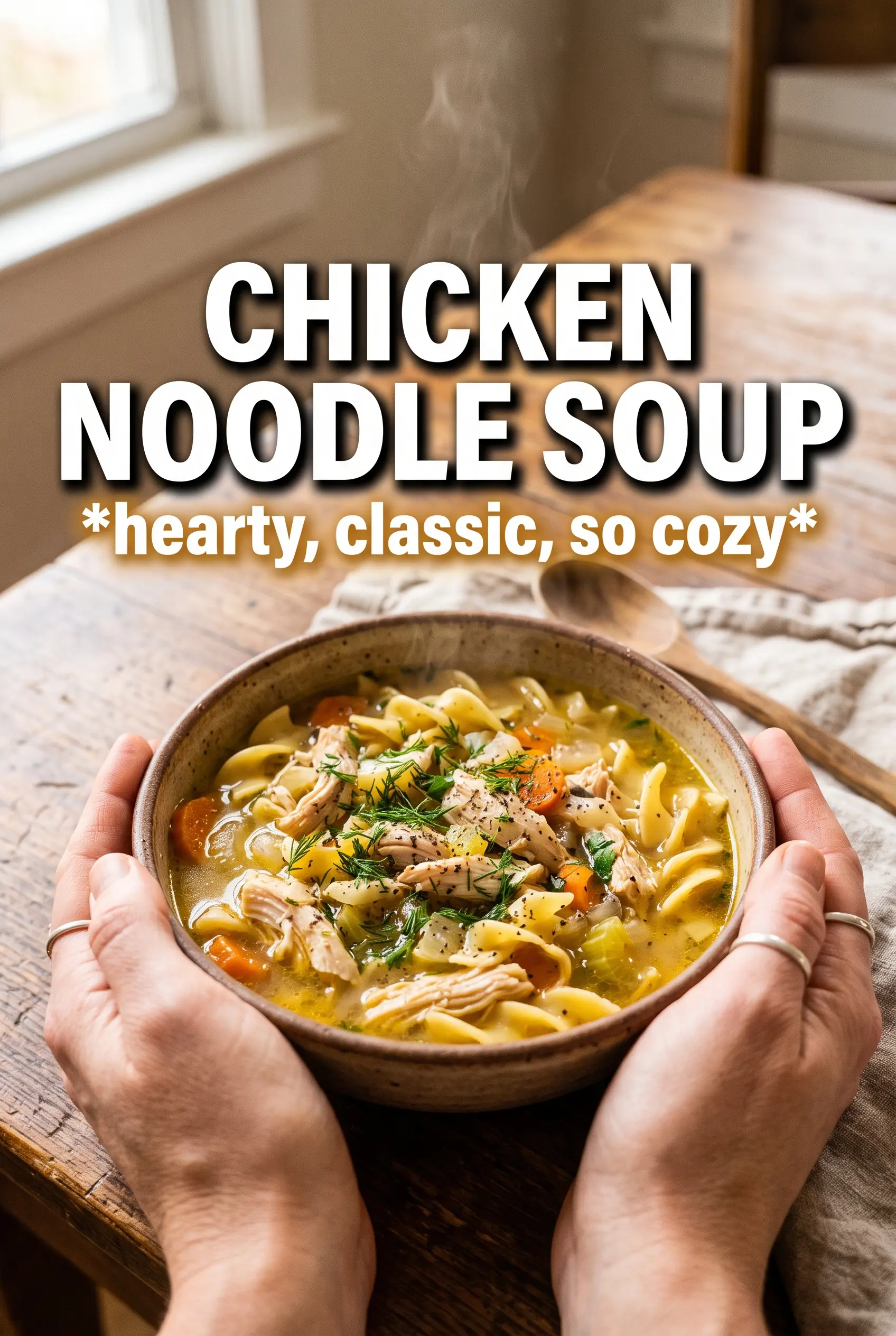
Chicken Noodle Soup
Ingredients
Equipment
Method
- Heat olive oil in a large Dutch oven over medium heat, then add onion, carrots, and celery and sauté for 5 minutes. The vegetables should begin to soften and smell fragrant.
- Add garlic to the pot and cook for 1 minute, stirring until fragrant. Keep the heat at a steady simmer-ready level, not browning the garlic.
- Add chicken broth, water, dried thyme, dried parsley, bay leaves, and chicken, then bring the pot to a boil. Once boiling, reduce the heat to maintain a gentle simmer.
- Simmer for 20-25 minutes until the chicken is cooked through. The chicken should be fully opaque and the broth should taste seasoned.
- Remove the chicken to a plate and shred with two forks, then remove bay leaves from the pot. Return any juices from the chicken back into the shredded meat if present.
- Return shredded chicken to the pot and bring the soup back to a simmer. Let it simmer briefly to rewarm the chicken.
- Add egg noodles and cook for 6-8 minutes until tender. Stir occasionally so the noodles don’t clump.
- Season generously with salt and black pepper, tasting until the flavors pop. Then garnish with fresh parsley for a bright finish.