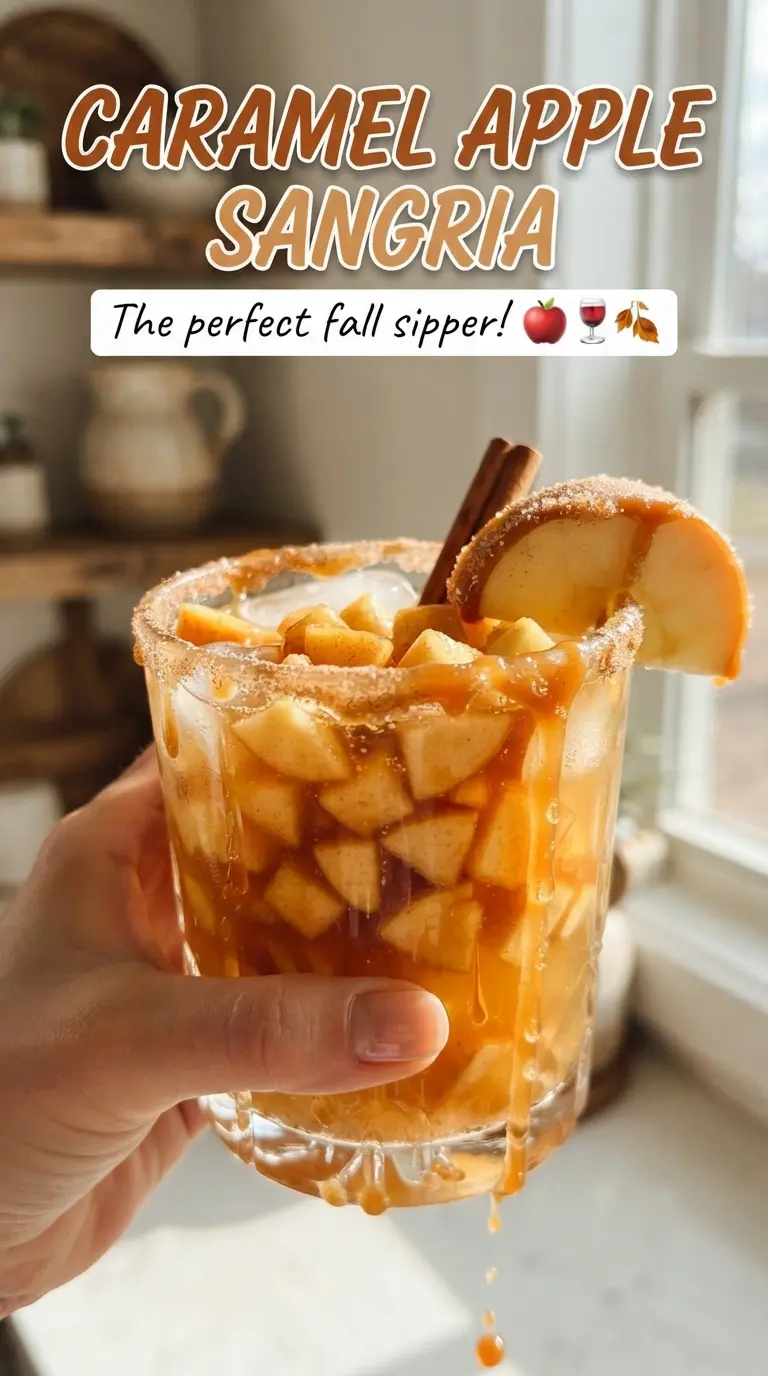
Caramel apple sangria lands somewhere between a fall punch and a dessert cocktail, and that’s exactly why it disappears fast. The wine stays light, the cider brings the apple backbone, and the caramel adds just enough roundness to make the whole pitcher taste plush without turning syrupy. When it’s chilled properly, the fruit takes on the flavor of the sangria instead of just floating around in it.
The trick is balancing sweetness and sparkle. Pinot grigio gives you a clean base that won’t fight the cider, and the ginger ale goes in at the end so the drink still has lift when it reaches the glass. If you use caramel sauce instead of caramel vodka, whisk it in well at the start so it doesn’t sit in ribbons at the bottom of the pitcher.
Below, I’ve included the one step people skip that makes the biggest difference, plus a few easy ways to adjust the sweetness, the fruit, or the garnish depending on who you’re serving.
I let it chill for a couple of hours like you said, and the apples picked up the caramel-cider flavor beautifully. The ginger ale on top kept it from feeling heavy, and the sugar rim made it taste like a dessert drink.
Save this caramel apple sangria for the next time you want a chilled pitcher drink with caramel-rimmed glasses and crisp fall fruit flavor.
The Part That Makes This Sangria Taste Balanced Instead of Cloying
The mistake with fruit sangria is pushing the sweetness too far before you’ve tasted the finished drink. Apple cider, caramel vodka, and ripe fruit can stack up fast, and if all of that gets served flat, the whole pitcher can start tasting heavy. The fix is simple: build the base first, let the fruit steep, then add the ginger ale right before serving so the drink still tastes bright.
That rest time matters more than people think. The apples and pear soften just enough to perfume the pitcher, and the cinnamon sticks give the cider a warmer edge without making it taste like spiced wine. If your fruit is bland, the sangria will be bland too, so use apples with good crunch and a pear that’s ripe but not mushy.
- Pinot grigio — This is the clean, crisp base that keeps the sangria from tasting sticky. A dry white wine works best; anything too sweet will make the caramel feel heavier than it needs to be.
- Apple cider — Use chilled cider with real apple flavor, not apple juice if you can help it. Cider has more body and a deeper orchard taste, which is what gives the drink its autumn feel.
- Caramel vodka or caramel sauce — Vodka gives you an easier, smoother mix. If you use caramel sauce, whisk it hard into the wine and cider before adding fruit or it’ll sink and leave the pitcher unevenly sweet.
- Apples and pear — These aren’t just garnish. Thin slices expose more surface area, which helps the fruit absorb flavor during the chill time and also makes the pitcher look full and generous.
What Each Ingredient Is Actually Doing in This Recipe
- Primary ingredient (the star) — Quality matters most. Choose the best you can find.
- Cooking medium (oil, butter, or broth) — This carries flavors and prevents dryness.
- Seasonings (salt, pepper, spices, herbs) — Layer flavors so nothing overpowers. Build depth gradually.
- Aromatics (garlic, onion, herbs) — Cook with fat to bloom flavors. Become the foundation.
- Supporting ingredients — Complement the main ingredient without overpowering it.
- Sauce or liquid (if applicable) — Brings flavors together. Balance richness with acid.
- Acid (lemon, vinegar, wine, or other) — Brightens and prevents flat-tasting results.
- Final finish (garnish, glaze, or sauce) — Prevents one-dimensional taste and adds visual appeal.
Building the Pitcher So the Flavor Stays Fresh
Mix the Base Until It Looks Even
Pour the wine, cider, and caramel vodka into a large pitcher and stir well. If you’re using caramel sauce, whisk until you don’t see streaks clinging to the sides of the pitcher. This is the point where a lot of drinks go wrong: unmixed caramel settles at the bottom, and the last glass ends up much sweeter than the first.
Let the Fruit Steep Before the Bubbles Go In
Add the apple slices, pear slices, and cinnamon sticks, then chill the pitcher for at least 2 hours. That resting time lets the fruit flavor the liquid and takes the edge off the raw cider. Don’t add the ginger ale yet, because carbonation fades quickly and you want that lift to still be there when you pour.
Finish with the Sparkle and the Rim
Right before serving, dip the glass rims in caramel and then in coarse sugar. Add the ginger ale to the pitcher last and give it one gentle stir so you don’t knock out all the bubbles. Pour over ice with some fruit in each glass, and keep an eye on the pitcher if it sits out for a while — the carbonation is best in the first round.
How to Adjust the Sweetness, Spice, and Bubbles Without Losing the Point
Lower-Sugar Version
Use club soda instead of ginger ale and stick with a dry pinot grigio. You’ll lose some sweetness, but the cider, fruit, and caramel still carry the drink, and the finish stays lighter and sharper.
Nonalcoholic Pitcher
Swap the wine for more apple cider and add a splash of white grape juice for body. You’ll still get the caramel-apple character, and the cinnamon and sparkling finish keep it from tasting like plain cider.
Dairy-Free and Vegan Friendly
This drink is already dairy-free if you use caramel vodka, but check the caramel sauce if you’re using it for the rim. Some brands use dairy ingredients, so choose a vegan caramel sauce if that matters for your group.
Make-Ahead for a Crowd
Mix the wine, cider, caramel vodka, fruit, and cinnamon up to a day ahead, but hold back the ginger ale and ice until the last minute. That keeps the pitcher lively instead of flat and watery, which is the main thing that ruins a big-batch sangria.
Storage and Serving Notes
- Refrigerator: Store the base, without ginger ale, for up to 24 hours. The fruit softens more as it sits, which is good at first but can make the slices a little tired after a full day.
- Freezer: Don’t freeze the finished sangria. The wine and cider won’t thaw back with the same texture, and the fruit turns mushy.
- Reheating: Not applicable. Keep it cold and top each round with fresh ginger ale just before serving so the drink stays crisp and fizzy.
Questions I Get Asked About This Recipe
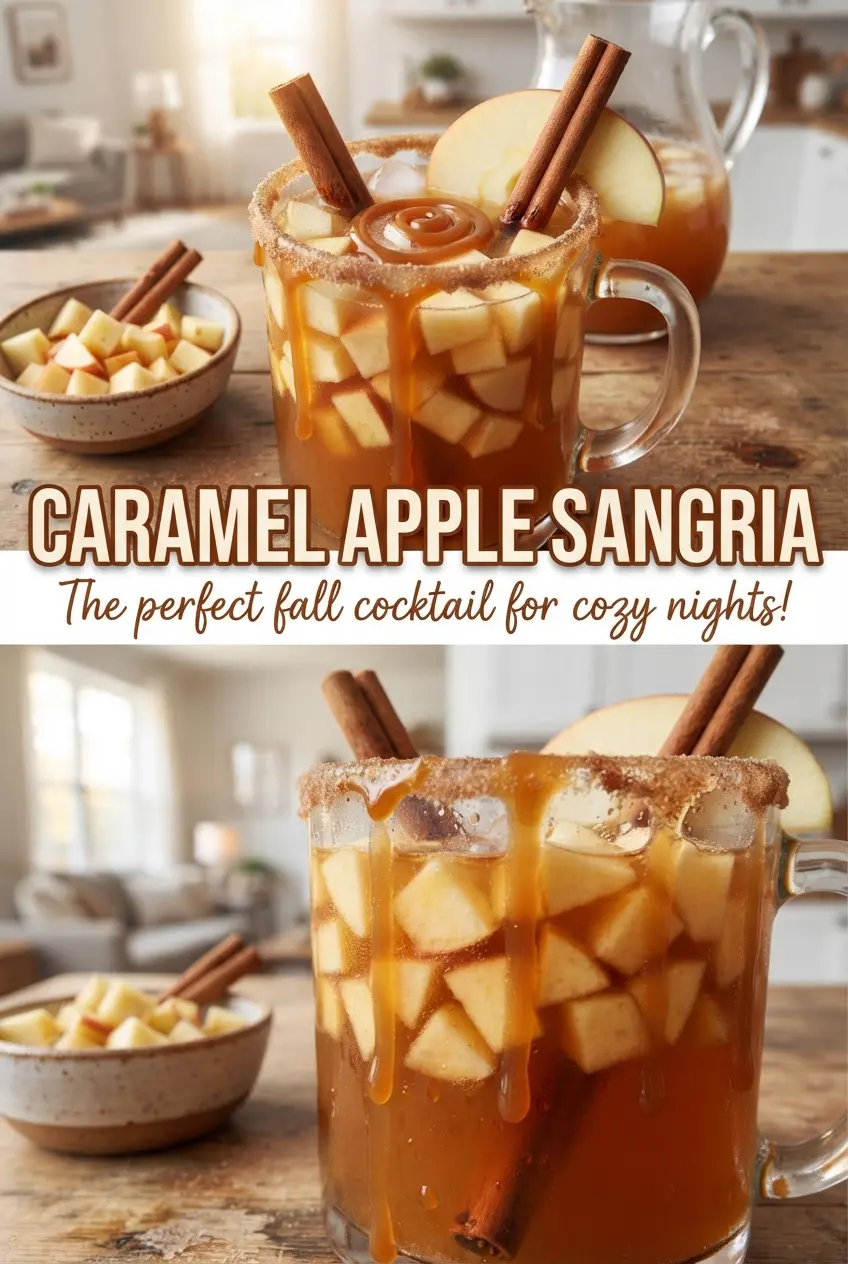
Caramel Apple Sangria
Ingredients
Method
- Combine the pinot grigio, apple cider, and caramel vodka in a large pitcher, whisking well if using caramel sauce.
- Add the thinly sliced apples, pear slices, and cinnamon sticks to the pitcher.
- Chill the sangria for 2 hours so the fruit soaks up the flavor and the spices mellow.
- Dip the glass rims in caramel sauce, then coat in coarse sugar for a caramel edge.
- Top the pitcher with ginger ale just before serving, then pour over ice with some fruit in each glass.