Glossy cranberry sauce canned in half-pint jars gives you that tart-sweet pop of fruit all year long, and the texture is what makes it worth putting up. The berries stay whole enough to look beautiful on the shelf, but they soften into a thick, spoonable sauce that sets up as it cools. It’s bright, clean, and a little nostalgic in the best way.
This version leans on orange juice for depth and bottled lemon juice for safe canning acidity, which matters more than a lot of people realize. Fresh lemon juice can vary too much for tested canning recipes, but bottled juice is consistent. The orange zest goes in at the end so it stays fragrant instead of cooking flat in the pot.
Below, I’ve included the small details that keep the jars sealing cleanly and the sauce from turning jammy instead of glossy. If you’ve ever had cranberry sauce scorch on the bottom or end up too loose in the jar, the process notes here will help.
The sauce set up beautifully and the orange zest made the whole kitchen smell incredible. I got clean seals on all my jars, and the berries stayed whole instead of turning to mush.
Love the glossy whole berry texture and bright orange finish? Save this canned cranberry sauce for the holiday shelf and pantry gifts.
The Part That Keeps Cranberry Sauce From Turning Jammy in the Jar
The biggest mistake with canned cranberry sauce is cooking it down too far before it ever reaches the jars. Cranberries keep thickening as they cool, and if you chase a heavy spoon-coating texture in the pot, you usually end up with something closer to paste after processing. Stop when the berries have burst and the sauce looks slightly looser than you want in the finished jar.
The other thing that matters is headspace. Cranberry sauce expands a little in the canner, and leaving 1/4 inch gives the lid room to form a clean seal without pushing sauce under the rim. If the rims aren’t wiped perfectly clean, even a tiny smear can keep a jar from sealing.
What Each Ingredient Is Doing in This Batch
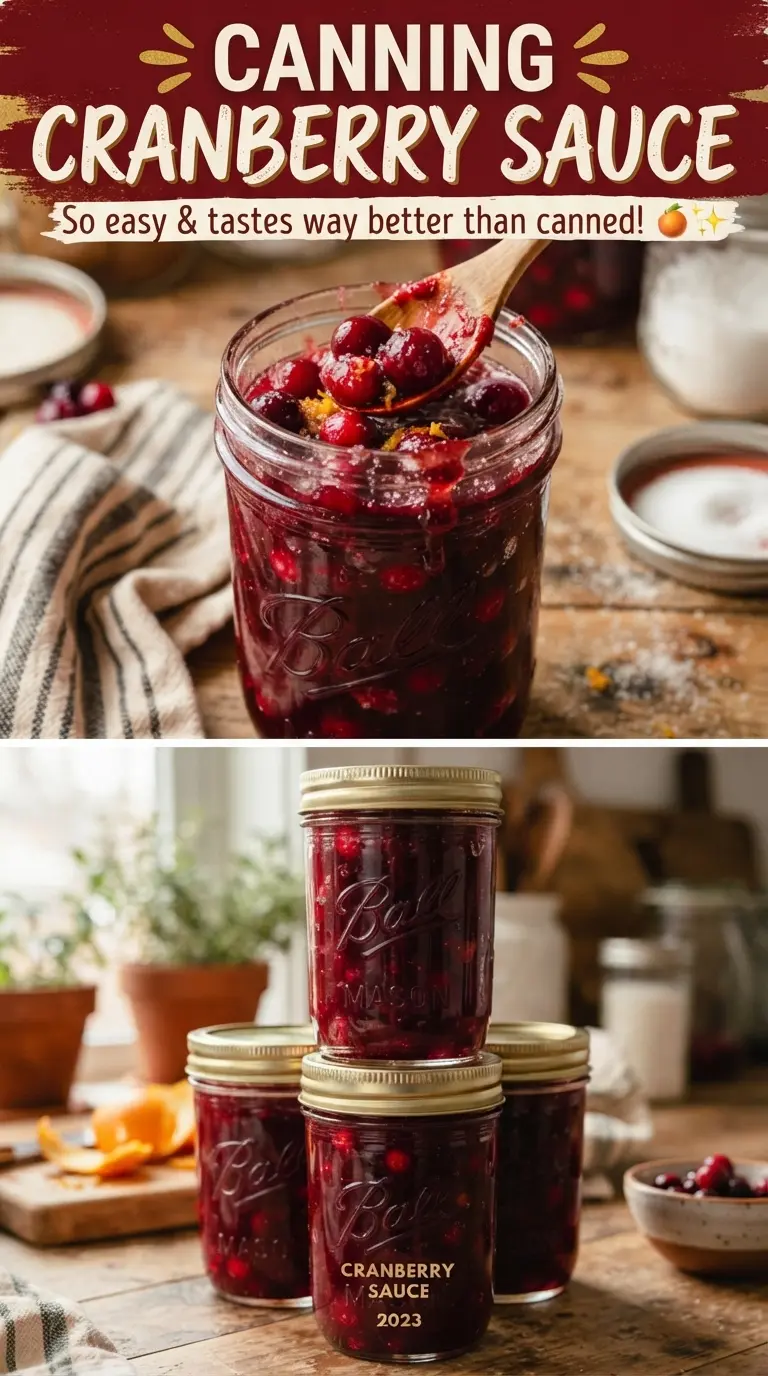
- Fresh cranberries — These bring the sharp tartness and the signature whole-berry texture. Frozen cranberries also work well if you thaw them first and include any juices that collect in the bowl.
- Sugar — This balances the tart fruit and helps the sauce set with a shiny finish. Don’t cut it drastically; cranberry sauce that’s low on sugar tastes thin and can seem harsh after canning.
- Water and orange juice — These form the cooking liquid and keep the berries from scorching before they burst. The orange juice adds a rounder fruit note, and fresh-squeezed or bottled both work here.
- Bottled lemon juice — This is here for tested acidity, not just flavor. Use bottled lemon juice exactly as written because the acidity is reliable for canning; fresh lemon juice isn’t a safe swap in a preserved recipe.
- Orange zest — Stir it in at the end so the oils stay bright and fragrant. If you add it too early, the aroma cooks off and you lose the sharp citrus finish.
Getting the Jars Sealed Without Breaking the Sauce
Heating the jars first
Keep the jars hot in simmering water while the sauce cooks. Hot jars hit hot sauce better, which lowers the chance of breakage and helps the processing time stay accurate. Cold jars plus boiling sauce is a bad combination; the glass can crack at the worst possible moment.
Cooking the cranberry base
Bring the sugar, water, and orange juice to a full boil first so the sugar dissolves completely before the berries go in. Once the cranberries and lemon juice are added, let the mixture boil gently until the berries burst and the liquid turns glossy and slightly thickened. If the heat is too high, the bottom can scorch before the berries soften.
Finishing, filling, and processing
Stir in the orange zest after the heat comes down from the main cook time. Ladle the sauce into hot jars with 1/4 inch of headspace, then wipe the rims with a clean damp cloth before applying the lids fingertip tight. Process the jars for 15 minutes in a boiling water bath, rest them in the canner for 5 minutes, then lift them out and leave them alone for 24 hours. If you move the jars too soon, the seal can fail even when everything else was done right.
How to Adjust This Recipe Without Losing the Seal
Using frozen cranberries
Frozen cranberries work fine here, and you don’t need to thaw them fully before cooking. They’ll break down a little faster, so watch the pot closely once the mixture comes back to a boil. The texture ends up essentially the same, with maybe a slightly softer berry.
Making it less sweet
You can reduce the sugar a little for a sharper sauce, but don’t slash it hard if you want a nice canned texture. Sugar supports both flavor and body in cranberry sauce, so cutting it too much leaves the sauce loose and aggressive. A modest reduction changes the finish; a big one changes the whole recipe.
Orange-forward version
If you want a stronger citrus note, add a little more zest, not more juice. Extra juice can throw off the balance and thin the sauce, while zest gives a brighter aroma without changing the acidity or texture nearly as much.
Storage and Reheating
- Refrigerator: Opened jars keep for about 2 weeks in the fridge, and the sauce may thicken a bit more as it chills.
- Freezer: This sauce freezes well if you transfer it to freezer-safe containers and leave headspace. Don’t freeze sealed jars.
- Reheating: Warm only the amount you plan to use over low heat or in short microwave bursts. High heat can make it boil hard and separate the texture.
Answers to the Questions Worth Asking
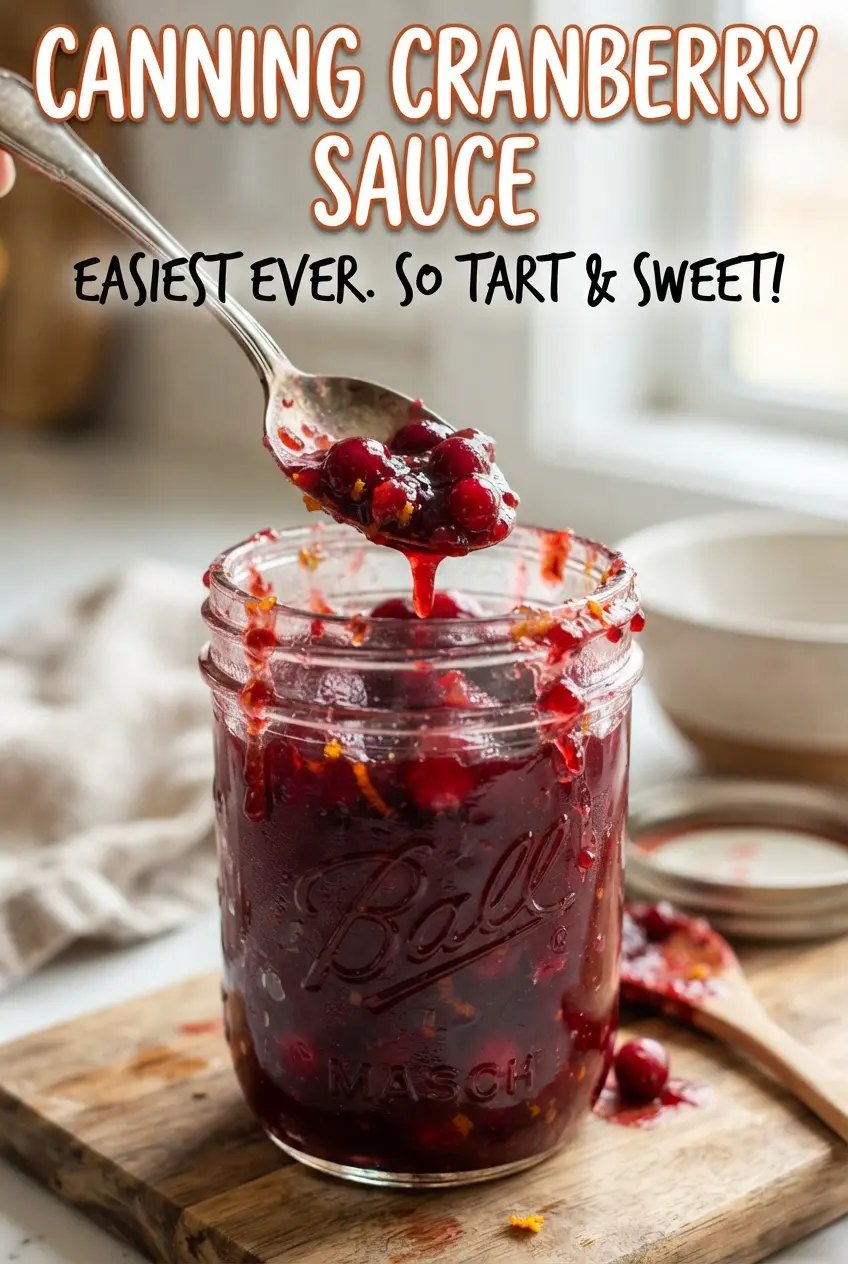
Canning Cranberry Sauce
Ingredients
Equipment
Method
- Wash 12 half-pint jars, lids, and bands, then keep the jars hot in simmering water until ready to fill.
- Maintain a steady simmer in the water used to hold the jars so they stay hot while you cook the sauce.
- Bring sugar, water, and orange juice to a boil in a large pot, stirring until the sugar dissolves.
- Add cranberries and bottled lemon juice, then boil gently for 10-12 minutes until the berries burst and the sauce thickens, stirring occasionally.
- Stir in orange zest and keep the mixture hot while you prepare to fill the jars.
- Ladle the hot sauce into the hot jars, leaving 1/4-inch headspace, then wipe the jar rims clean.
- Apply lids and bands fingertip tight to each jar.
- Process the jars in a boiling water bath canner for 15 minutes, adjusting the time for altitude.
- Turn off the heat and rest the jars in the canner for 5 minutes before lifting them out.
- Cool the jars undisturbed for 24 hours.
- Check seals, then store sealed jars in a cool dark place up to 1 year.


