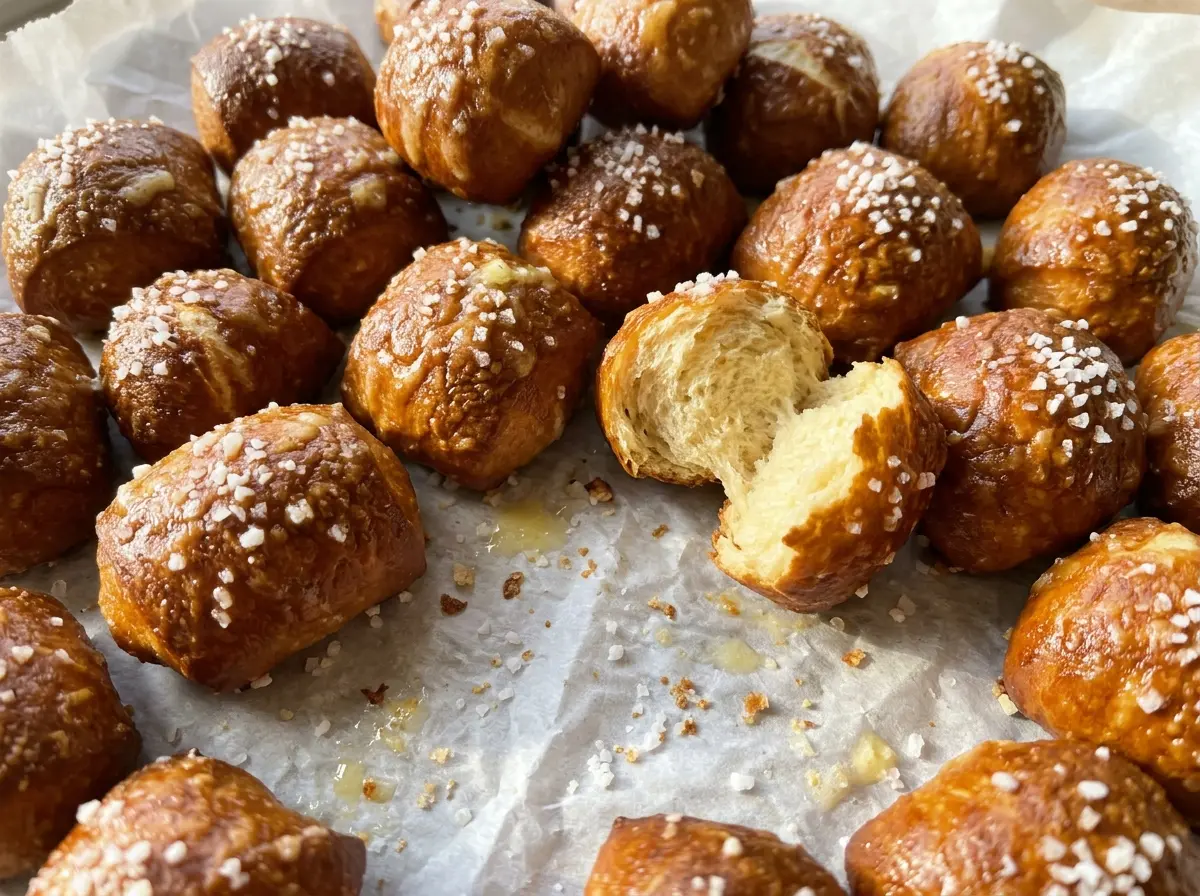
The dough pieces puff slightly as they hit the baking soda bath, and that quick dip is what gives these bites their pretzel-like finish instead of the crust of an ordinary dinner roll. I like this size because each piece gets plenty of browned edge, with a soft middle that’s easy to pull apart while it’s still warm.
Give the dough time to rise until it has doubled, then knead it until it feels smooth and elastic before shaping. Those cues matter more than rushing through the clock: dough that hasn’t risen enough feels tight, while a well-kneaded dough rolls into ropes without crumbling at the edges.
After baking, a brush of melted butter settles over the deep golden tops. Let the bites rest for five minutes, then serve them warm and buttery.
Kitchen Note
Watch for foam on the yeast mixture after it rests for 5–10 minutes. That foamy surface is a useful sign that the active dry yeast has woken up before you build the dough.
Save these buttery soft pretzel bites for your next snack spread: pillowy centers, golden edges, and a warm butter finish.
Why These Don’t Turn Into Plain Dinner Rolls
The baking soda bath changes the outside of the dough before it ever reaches the oven. That alkaline surface browns quickly and develops the distinct pretzel character you wouldn’t get by baking the same dough pieces straight on a pan. It’s a small step with a big effect on the finished bite.
The bath works alongside the egg wash, not in place of it. The bath prepares the surface; the beaten egg brushed over the bites gives the salt a place to cling and helps the tops brown evenly. Then the oven finishes the job, turning each little piece deep golden while the center stays tender.
Skipping the bath would still give you baked pieces of yeast dough, but they wouldn’t have the same pretzel-style exterior. Use a large pot and add the baking soda carefully after the water reaches a boil; once it’s stirred in, bring the liquid down to a simmer before dipping the dough in batches. That controlled setup keeps the bath manageable and gives you room to lift the pieces out with a slotted spoon.
What Gives These Bites Their Pretzel Texture and Buttery Finish

- Active dry yeast — This yeast gives the dough its rise, and the foam on the warm water mixture is a handy visual check before you add the flour. Keep the water in the stated warm range; water that’s too hot can damage the yeast. Active dry yeast is the right choice for this method because it gets a short head start in the liquid.
- All-purpose flour — It makes a dough that’s sturdy enough to roll into ropes but still soft after baking. A standard store-brand bag works well here; there’s no need to buy specialty flour. Bread flour can be used instead for a chewier bite, though the dough may feel a little firmer.
- Unsalted butter — Melted butter enriches the dough, then another brush of it gives the baked bites their buttery finish. Unsalted butter lets the coarse salt on top stand out without making the dough taste overly salty. For a dairy-free batch, use dairy-free butter in both places.
- Baking soda and pretzel salt — Baking soda is what makes the bath different from plain boiling water, so baking powder isn’t an equal substitute. Coarse pretzel salt gives the tops their crisp little bursts of salt; its larger crystals also stay distinct against the egg-brushed surface.
- Egg — The egg beaten with water creates a thin wash that helps the tops brown and helps the salt adhere. If you’re avoiding egg, brush with water instead; the bites will have less sheen, but the dough will still bake.
From Foamy Yeast to Deep Golden Pretzel Bites
Build a Smooth, Elastic Dough
Stir the warm water, active dry yeast, and packed light brown sugar together in a large bowl, then let the mixture stand for 5–10 minutes. Stir in the melted butter and kosher salt, followed by the flour, until a shaggy dough forms. Knead it on a clean counter for 6–8 minutes, stopping when it feels smooth and elastic rather than rough and crumbly. If flour remains in dry patches, keep working the dough until it comes together.
Let the Dough Rise Until Doubled
Rub the neutral oil around the inside of the bowl, set the dough in it, and cover the bowl. Leave it to rise for 60–90 minutes, until it has doubled in size. The dough should look fuller and feel airy when you press it gently. Don’t start shaping just because the shorter time has passed if it hasn’t doubled yet.
Roll and Cut Even Pieces
Heat the oven to 425°F and line two 18×13-inch half-sheet pans with parchment paper. Divide the risen dough into 8 pieces, roll each piece into a 12-inch rope, and cut each rope into 1-inch bites. Keeping the pieces close in size helps them bake at the same pace, so take a moment to straighten any especially long or short cuts before moving on.
Dip the Bites in the Soda Bath
Bring the water to a boil in a 6-quart pot, carefully stir in the baking soda, and reduce the heat to a simmer. Work in batches, boiling the dough pieces for 20–30 seconds at a time. Lift each batch out with a slotted spoon and arrange the bites on the parchment-lined pans. Let excess bath drain through the spoon rather than carrying a puddle of liquid onto the pan.
Brush, Bake, and Butter While Hot
Beat the egg with the water and brush the wash over the bites, then sprinkle with coarse pretzel salt. Bake both pans for 10–12 minutes, switching their positions halfway through, until the bites are deep golden brown. Brush the hot bites with melted butter as soon as they come out of the oven. Give them five minutes to rest before serving so the buttery coating can settle.
Simple Changes for Different Kitchens and Cravings
Make the Bites Dairy-Free
Use dairy-free butter in place of the butter in the dough and the finishing brush, and replace the egg wash with water. The bites will still bake up soft, though they’ll have a less glossy top and a slightly different buttery taste.
Use Bread Flour for a Chewier Bite
Swap bread flour for the all-purpose flour in the same amount. The finished bites will have a firmer, chewier crumb, and the dough may feel less supple as you roll it into ropes.
Go Lighter on the Salt
Sprinkle on less coarse pretzel salt, or leave it off entirely. You’ll keep the buttery, pretzel-style bites but lose the salty crunch on top, which can be a better fit if you’re serving them alongside a salty dip.
Storage and Reheating
- Room temperature: Store cooled bites in an airtight container for up to 2 days; they’ll soften as they sit.
- Freezer: Freeze cooled bites in an airtight freezer bag for up to 2 months. Thaw them at room temperature.
- Reheating: Warm them in the oven until heated through. Skip the microwave if you can; it tends to make soft pretzel dough chewy.
Questions That Come Up While Making Pretzel Bites
Buttery Soft Pretzel Bites
Ingredients
Equipment
Method
- Combine the warm water (105–110°F), yeast, and brown sugar in a large bowl and let stand for 5–10 minutes, until foamy.
- Stir in the melted butter and kosher salt.
- Mix in the flour until a shaggy dough forms.
- Knead the dough on a clean counter for 6–8 minutes, until smooth and elastic.
- Rub the oil inside the bowl and add the dough.
- Cover the dough and let rise for 60–90 minutes, until doubled in size.
- Heat the oven to 425°F.
- Line two 18x13-inch half-sheet pans with parchment paper.
- Divide the dough into 8 pieces.
- Roll each piece into a 12-inch rope.
- Cut each rope into 1-inch pieces.
- Bring the 10 cups water to a boil in a 6-quart pot.
- Carefully stir in the baking soda and reduce to a simmer.
- Boil the dough pieces in batches for 20–30 seconds.
- Lift the dough pieces out with a slotted spoon and arrange them on the prepared pans.
- Beat the egg with the tablespoon of water.
- Brush the egg mixture over the bites.
- Sprinkle the bites with the pretzel salt.
- Bake both pans for 10–12 minutes, switching their oven positions halfway through, until the bites are deep golden brown.
- Brush the hot bites with the melted butter.
- Let the bites rest for 5 minutes before serving.


