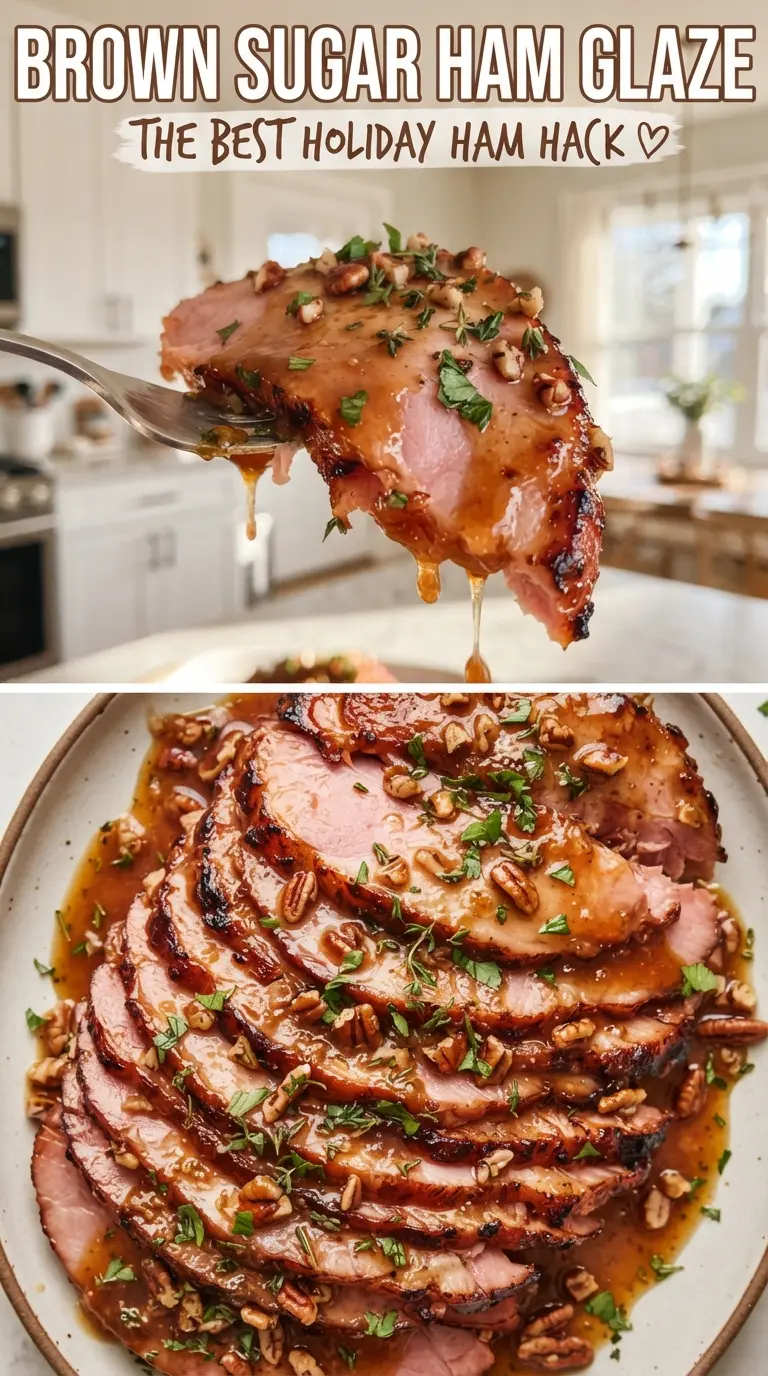
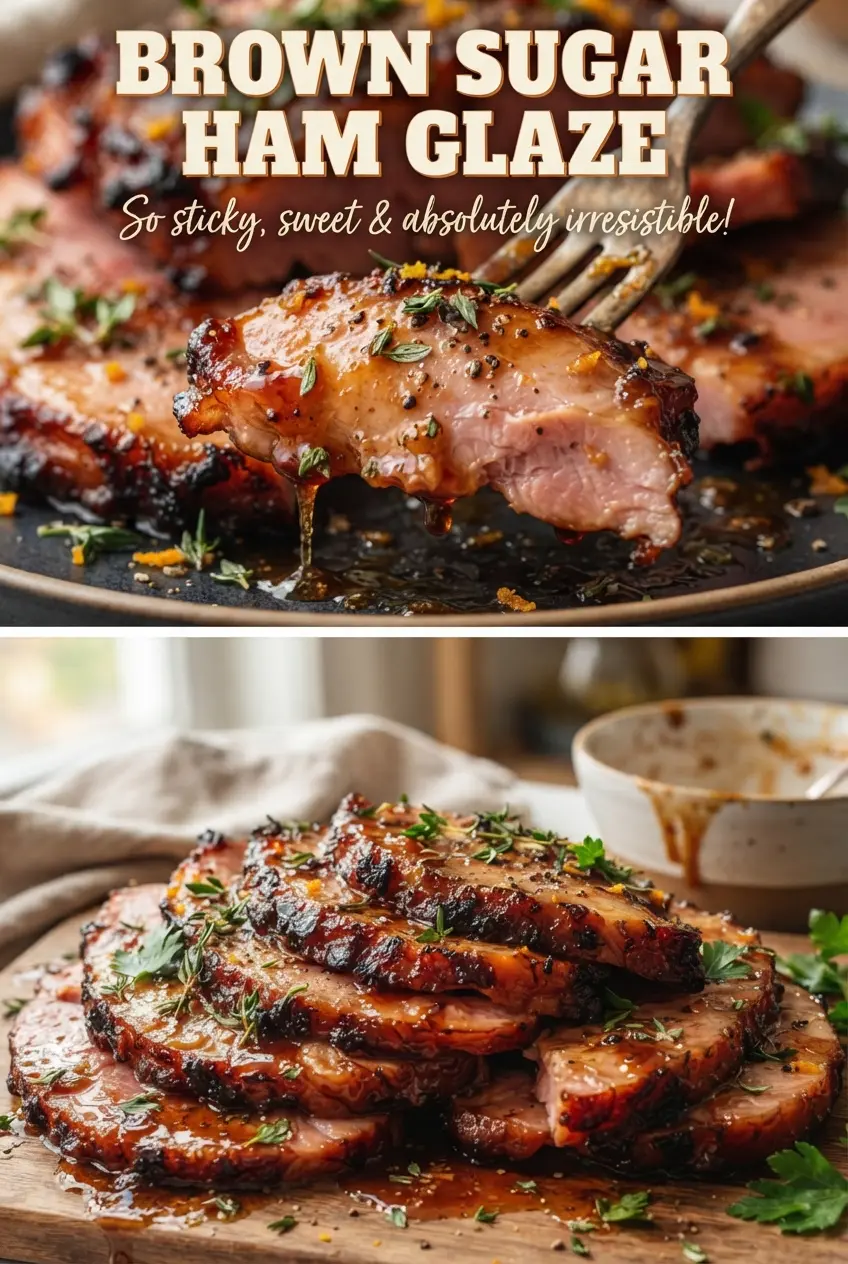
Brown sugar ham glaze is the kind of finish that turns a plain baked ham into the centerpiece everybody leans toward first. It clings in a glossy amber layer, settles into the scored edges, and gives each slice that sticky-sweet, lightly spiced bite people remember after the meal is over.
The trick is balance. Brown sugar and honey bring the caramel note, but Dijon and apple cider vinegar keep the glaze from turning one-dimensional or cloying. A little butter smooths it out and helps it brush on in an even coat, while pineapple or orange juice adds just enough brightness to keep the whole thing lifted.
Below, I’m breaking down the part that matters most: how to cook the glaze so it thickens without turning grainy, and how to brush it on so it actually stays on the ham instead of sliding off the pan.
The glaze thickened up beautifully and brushed on in a smooth layer instead of pooling at the bottom. The little bit of mustard and vinegar kept it from tasting like straight sugar, and my ham came out with that shiny caramel crust I was hoping for.
Save this brown sugar ham glaze for a glossy, sweet-tangy finish that clings to every slice.
The Secret to a Glaze That Sticks Instead of Sliding Off
A good ham glaze needs enough sugar to caramelize, but not so much that it turns into hard candy on the surface. The brown sugar and honey need time on the stove to dissolve fully, and that short simmer is what gives you a glossy glaze instead of a gritty one. If you rush that part, the sugar crystals stay behind and the finished ham can look patchy instead of lacquered.
The other trap is putting the glaze on too early or too heavily. Ham already gives off some moisture as it finishes baking, so you want to brush on thin layers during the last 30 minutes. That gives each coat time to set before the next one goes on, which is how you get that shiny, layered finish that actually clings to the scored cuts.
- Brown sugar — This is the backbone of the glaze. Packed brown sugar brings molasses depth and the kind of caramel color that looks right on ham. Light or dark brown sugar both work; dark brown sugar gives a deeper, more intense finish.
- Honey — Honey helps the glaze stay smooth and gives it a softer shine than sugar alone. If you swap in maple syrup, the flavor shifts earthier and less classic, but it still works well.
- Pineapple or orange juice — This is the acid and liquid that keeps the glaze from tasting heavy. Orange juice gives a brighter citrus edge, while pineapple reads a little more old-school and tropical. Use real juice, not cocktail blend, for the cleanest flavor.
- Dijon mustard — Dijon doesn’t make the glaze taste mustardy. It sharpens the sweetness and helps the glaze taste layered instead of flat. Yellow mustard will work in a pinch, but the flavor is more blunt and less polished.
- Butter — Butter gives the glaze body and helps it brush on smoothly. If you need a dairy-free version, use a neutral vegan butter or skip it and accept a slightly thinner finish.
- Apple cider vinegar — A small amount wakes everything up. Don’t leave it out; without that bite, the glaze can land as sweet and heavy instead of balanced.
- Cinnamon and cloves — These warm spices are subtle, but they matter. They round out the brown sugar and honey without turning the glaze into pumpkin-spice territory. Keep the cloves light; too much quickly takes over.
What Each Ingredient Is Actually Doing in This Recipe
- Primary ingredient (the star) — Quality matters most. Choose the best you can find.
- Cooking medium (oil, butter, or broth) — This carries flavors and prevents dryness.
- Seasonings (salt, pepper, spices, herbs) — Layer flavors so nothing overpowers. Build depth gradually.
- Aromatics (garlic, onion, herbs) — Cook with fat to bloom flavors. Become the foundation.
- Supporting ingredients — Complement the main ingredient without overpowering it.
- Sauce or liquid (if applicable) — Brings flavors together. Balance richness with acid.
- Acid (lemon, vinegar, wine, or other) — Brightens and prevents flat-tasting results.
- Final finish (garnish, glaze, or sauce) — Prevents one-dimensional taste and adds visual appeal.
Cooking the Glaze Until It Turns Glossy and Spoonable
Dissolving the Sugar Cleanly
Combine everything in a saucepan and set it over medium heat. Stir often at first, scraping the bottom and corners so the sugar melts evenly. You’re looking for the mixture to go from sandy and opaque to smooth and cohesive, with no visible sugar granules. If you leave it on high heat, the edges can scorch before the sugar is fully dissolved, and that bitterness carries straight into the glaze.
Letting It Simmer Into a Brushable Finish
Once the glaze comes to a simmer, let it bubble gently for 3 to 4 minutes. It should look thicker and more reflective, coating the back of a spoon without feeling stiff. Pull it off the heat before it becomes syrupy-hard, because it will continue to thicken as it cools. If it gets too thick, warm it with a splash of juice and whisk until it loosens.
Brushing the Ham in Layers
Brush the glaze over a fully cooked ham during the last 30 minutes of baking, then repeat every 10 minutes. Thin layers work better than one heavy coat because they set instead of running off. Aim for the scored lines and cut edges, where the glaze can pool and caramelize. If the ham goes into the oven with a thick puddle of glaze on top, most of it slides down into the pan instead of forming that shiny crust.
Serving the Extra Glaze Warm
Spoon the remaining warm glaze over sliced ham at the table. It thickens as it sits, so warm is the right temperature for serving; cool glaze gets sticky fast and stops spreading cleanly. If it seems too tight by the time dinner starts, set the pan over low heat for a minute or two and stir until it loosens again.
How to Adapt This Brown Sugar Ham Glaze for Different Hams and Tastes
Orange Glaze for a Brighter Finish
Use orange juice instead of pineapple juice if you want a fresher citrus edge. The glaze still gets sticky and glossy, but the flavor reads lighter and a little more aromatic. This version works especially well on smoked ham because the orange keeps the sweetness from feeling too heavy.
Dairy-Free Version
Swap the butter for a vegan butter or leave it out entirely. The glaze will still set and caramelize, but it won’t have quite the same rounded finish. If you skip the butter, add a teaspoon more juice so the glaze stays brushable while it simmers.
Less Sweet, More Tangy
Cut the brown sugar back to 3/4 cup and add an extra teaspoon of apple cider vinegar. The glaze will still caramelize, but the sharpness comes forward a little more and keeps each bite from leaning dessert-like. This is the move for hams that are already heavily smoked or especially salty.
Make-Ahead Storage
You can make the glaze up to 5 days ahead and keep it covered in the refrigerator. It will firm up as it chills, so warm it gently on the stove or in the microwave before brushing it onto the ham. If it seems split after chilling, whisk in a teaspoon of warm juice and it will come back together.
Answers to the Questions Worth Asking
Brown Sugar Ham Glaze
Ingredients
Equipment
Method
- Combine brown sugar, honey, pineapple or orange juice, Dijon mustard, butter, apple cider vinegar, ground cinnamon, and ground cloves in a saucepan.
- Bring to a simmer over medium heat, stirring until the sugar dissolves and the mixture looks smooth.
- Simmer 3-4 minutes over medium heat until slightly thickened and glossy, then remove from heat and keep warm for brushing.
- Brush the glaze over a fully cooked ham during the last 30 minutes of baking, covering the scored diamond pattern with a thick, even coat.
- Brush again every 10 minutes during the final 30 minutes of baking so the surface stays glossy and caramelizes as it heats.
- Spoon the remaining warm glaze over sliced ham at the table for an extra shiny finish on the hot meat.