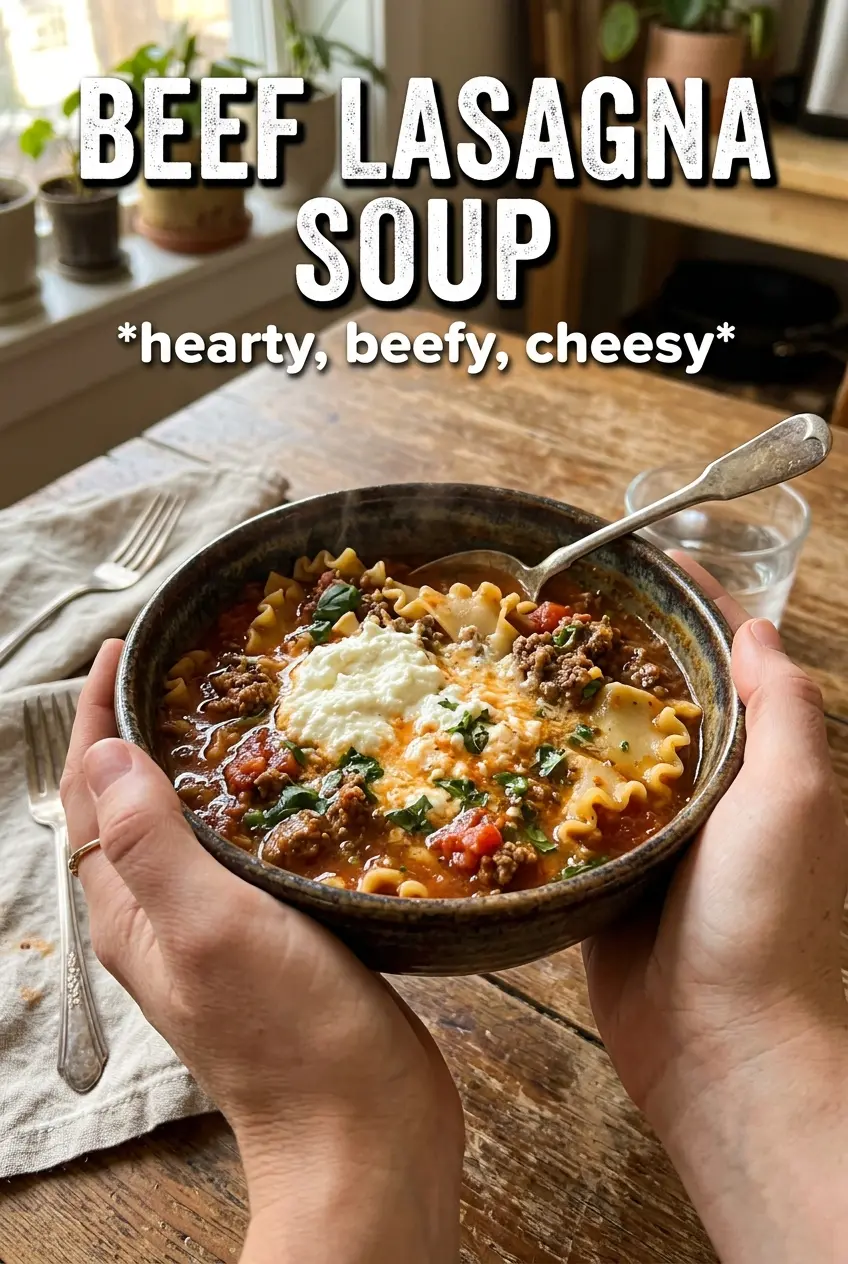
Beef lasagna soup gives you all the parts people love about lasagna in a bowl that cooks in about half an hour. The broth is rich and tomatoey, the beef adds real heft, and the broken noodles turn tender without losing that familiar lasagna bite. The best part is the cheese dollop melting into the top of each bowl, turning the broth creamy and savory with almost no extra work.
This version works because the flavor builds in layers instead of relying on one heavy ingredient to do everything. Browning the beef first gives the soup depth, then the onion, garlic, and tomato paste cook in the same pot so nothing gets wasted. The noodles go in near the end so they stay tender instead of turning soft and swollen. That keeps the soup hearty without becoming muddy or overly thick.
Below you’ll find the little details that keep the noodles from sticking, the best way to serve the cheese topping, and a few smart swaps if you want to adjust the recipe to what you have on hand.
The noodles stayed perfectly tender and the ricotta-mozzarella topping melted into the broth instead of sitting on top. My husband went back for a second bowl before I even sat down.
Save this beef lasagna soup for the nights when you want lasagna flavor without layering a casserole.
The Tomato Base Needs Enough Body Before the Noodles Go In
Lasagna soup can go thin fast if the broth is built too lightly, and that usually happens when the tomatoes and broth go in without giving the tomato paste a minute to cook first. Cooking the paste with the onion and garlic deepens the broth and takes away that raw canned taste, which matters here because the soup doesn’t have a long simmer to hide behind. Browned beef does the same thing at the bottom of the pot; those caramelized bits are part of the flavor, not a mess to scrub away.
The other thing that keeps this soup from turning gummy is timing. The noodles need just enough time to soften, but not so long that they start breaking apart and thickening the broth into something closer to stew. Keep the heat at a steady simmer once the noodles are in, and stir often enough to keep the pasta from settling on the bottom.
What Each Ingredient Is Doing in This Bowl

- Lean ground beef — This gives the soup its meaty backbone. Lean beef keeps the broth from getting greasy, but if you use regular ground beef, drain off the excess fat after browning so the tomato base stays clean and balanced.
- Tomato paste — This is the ingredient that makes the broth taste cooked instead of flat. Let it fry with the onion and garlic for a minute or two; that short step is what removes the metallic edge and makes the whole pot taste deeper.
- Crushed tomatoes plus diced tomatoes — The crushed tomatoes give the soup body, while the diced tomatoes leave little bursts of tomato throughout the bowl. If you only have one type, use it, but the mix gives better texture.
- Broken lasagna noodles — These turn the soup into lasagna soup instead of beef tomato soup. Break them into rough pieces before they go in so they cook evenly and fit on a spoon.
- Ricotta, mozzarella, parmesan, and basil — The cheese dollop is the lasagna part that pulls everything together. Ricotta gives creaminess, mozzarella melts into the broth, parmesan adds salt and nuttiness, and basil wakes up the whole bowl at the end.
Building the Soup So the Noodles Stay Tender
Browning the Beef First
Start with a hot pot and cook the beef until it has real color, not just gray crumbles. If there’s a lot of fat in the pot, drain it before moving on or the soup will taste heavy. The goal is a browned base with a little fond stuck to the pot, because that’s what seasons the broth later.
Softening the Onion and Cooking the Paste
Use the same pot for the onion so it picks up the beef flavor left behind. Cook it until it turns translucent and smells sweet, then add the garlic and tomato paste. That short cook on the paste matters; raw tomato paste tastes sharp, and once it darkens a shade, the broth tastes rounder and richer.
Simmering the Broth
Add the tomatoes, broth, and dried seasonings and bring everything to a boil before lowering it to a steady simmer. A hard boil can make the tomatoes taste harsh and reduce the liquid too fast. The broth should smell deeply savory and tomato-forward before the noodles go in.
Cooking the Noodles Without Overdoing Them
Stir in the broken lasagna noodles and keep the soup moving every minute or two so they don’t clump or stick to the bottom. Pull the pot off the heat as soon as the noodles are tender with a little bite left in the center, because they’ll keep softening in the hot broth. If you cook them until they’re fully soft in the pot, they’ll be bloated by the time you serve the soup.
Finishing With the Cheese Dollop
Mix the ricotta, mozzarella, parmesan, and basil in a bowl and spoon a generous mound into each serving. The heat from the soup softens the cheese slowly, so you get creamy streaks instead of a melted blanket. That’s the part that makes each bowl taste like lasagna instead of just tomato soup with pasta.
How to Adapt This for a Bigger Crowd, a Lighter Bowl, or No Dairy
Make it dairy-free
Skip the ricotta-mozzarella-parmesan topping and finish the bowls with olive oil and fresh basil instead. The soup still has plenty of body from the tomatoes and beef, but it loses the creamy lasagna-style finish that makes the original version stand out.
Use Italian sausage instead of beef
Swap all or half of the ground beef for mild or hot Italian sausage if you want a more seasoned, fennel-forward broth. Sausage adds extra fat, so drain well after browning or the soup will feel heavier than it should.
Gluten-free version
Use your favorite gluten-free lasagna noodles and check them a minute early, since many GF pastas soften faster than wheat noodles. Keep the simmer gentle so the noodles hold together in the broth.
Storage and Reheating
- Refrigerator: Store for up to 4 days. The noodles will keep absorbing broth, so expect the soup to thicken.
- Freezer: Freeze the broth and beef mixture without the noodles for best texture. Cook fresh noodles when you reheat it.
- Reheating: Warm it gently on the stove with a splash of broth or water. If the noodles were stored in the soup, reheat just until hot so they don’t turn mushy.
Questions I Get Asked About This Recipe
Beef Lasagna Soup
Ingredients
Equipment
Method
- Brown the lean ground beef in a large Dutch oven over medium-high heat, then drain excess fat. Keep it moving until no pink remains and the crumbles look evenly browned.
- Sauté the diced onion in the same pot for 4 minutes. Cook until softened and slightly translucent, then add minced garlic and cook for 2 minutes.
- Add the crushed tomatoes, diced tomatoes, beef broth, Italian seasoning, dried basil, dried oregano, red pepper flakes, and black pepper, then bring the mixture to a boil. Scrape up any browned bits to deepen the flavor.
- Add the broken lasagna noodles and reduce the heat to maintain a gentle simmer. Simmer for 10-12 minutes, stirring occasionally, until the noodles are tender.
- Season with salt to taste and stir occasionally to prevent the noodles from sticking. Taste and adjust right before serving.
- Mix the ricotta, shredded mozzarella, and parmesan for the cheese dollop. Stir until evenly combined and scoopable.
- Serve the soup in bowls and top each with a very generous spoonful of the cheese dollop. Add fresh basil on top so it wilts slightly from the hot soup.


