The bacon starts with a steady sizzle, then turns crisp while its fat gathers in the bottom of the Dutch oven. I use that same pot to brown the beef, so the deep, savory bits left behind become part of the sauce instead of getting washed away. That layered start is what makes this Beef Bourguignon taste slow-cooked from the first bite.
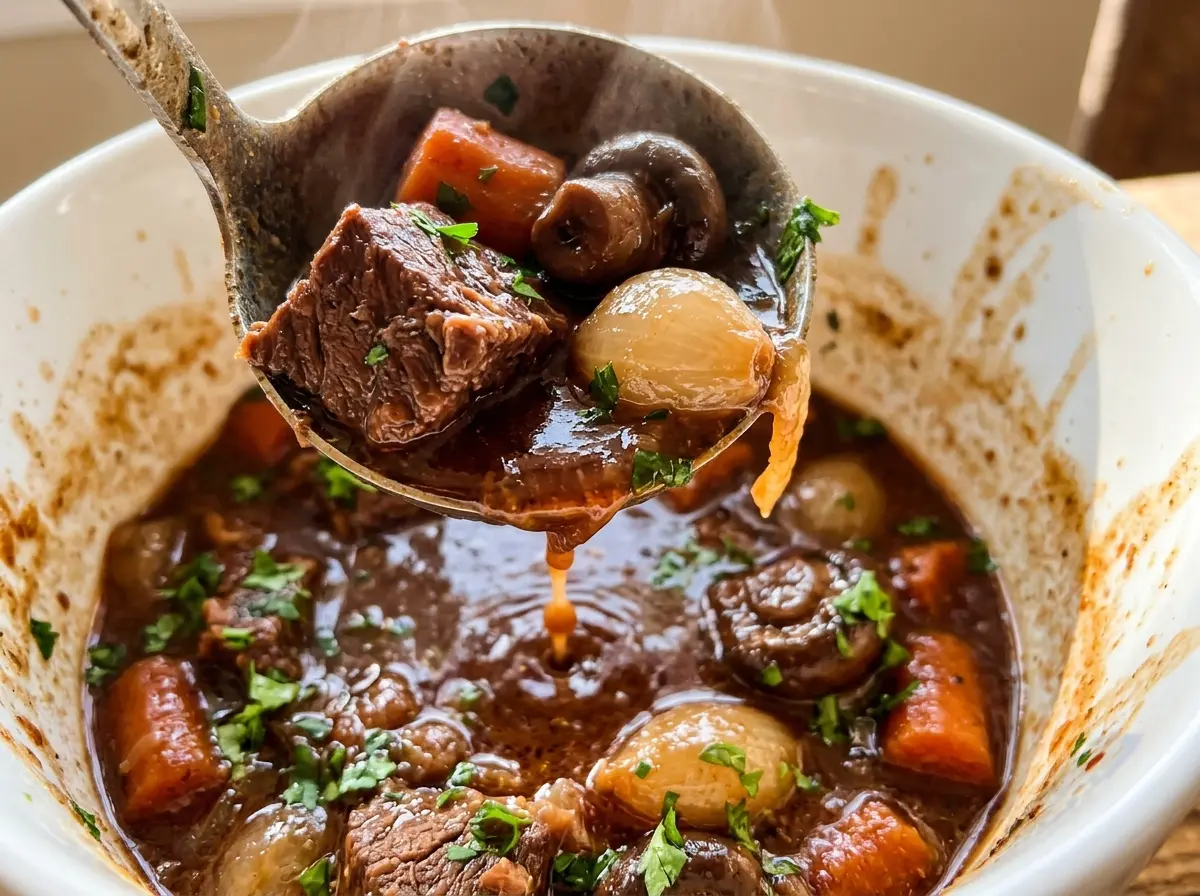
The beef takes its time in the oven, but the mushrooms and pearl onions get a separate finish in a hot skillet. They come to the table browned and distinct instead of softening away in the braise. By the time the sauce thickens slightly and the beef is fork-tender, the pot has a rich, glossy look and the whole kitchen smells of red wine and thyme.
Kitchen Note
Thaw and drain the pearl onions before they hit the skillet. Water clinging to them slows browning, so I give them time to drain while the oven does its work.
Save this Beef Bourguignon for a slow-cooked dinner with tender beef, browned mushrooms, and a red wine sauce.
Why the Flour Goes In Before the Wine
Flour does more here than thicken the finished stew. Stirring it into the vegetables and tomato paste first lets it cook briefly in the fat, which helps the sauce turn smooth and rounded instead of tasting raw or forming little floury pockets. Give it its full minute in the pot before any liquid goes in.
Pour in the wine gradually and scrape the bottom as you stir. The liquid loosens the browned bits left by the bacon and beef, and the flour disperses through it instead of clumping in a deep pool. Once the broth joins the pot, the sauce has a good start for the long oven braise: it will cling lightly to the beef without turning into a heavy paste. The brown bits are worth taking your time over; they carry the flavor built up during the browning stages.
The Ingredients That Give This Braise Its Body
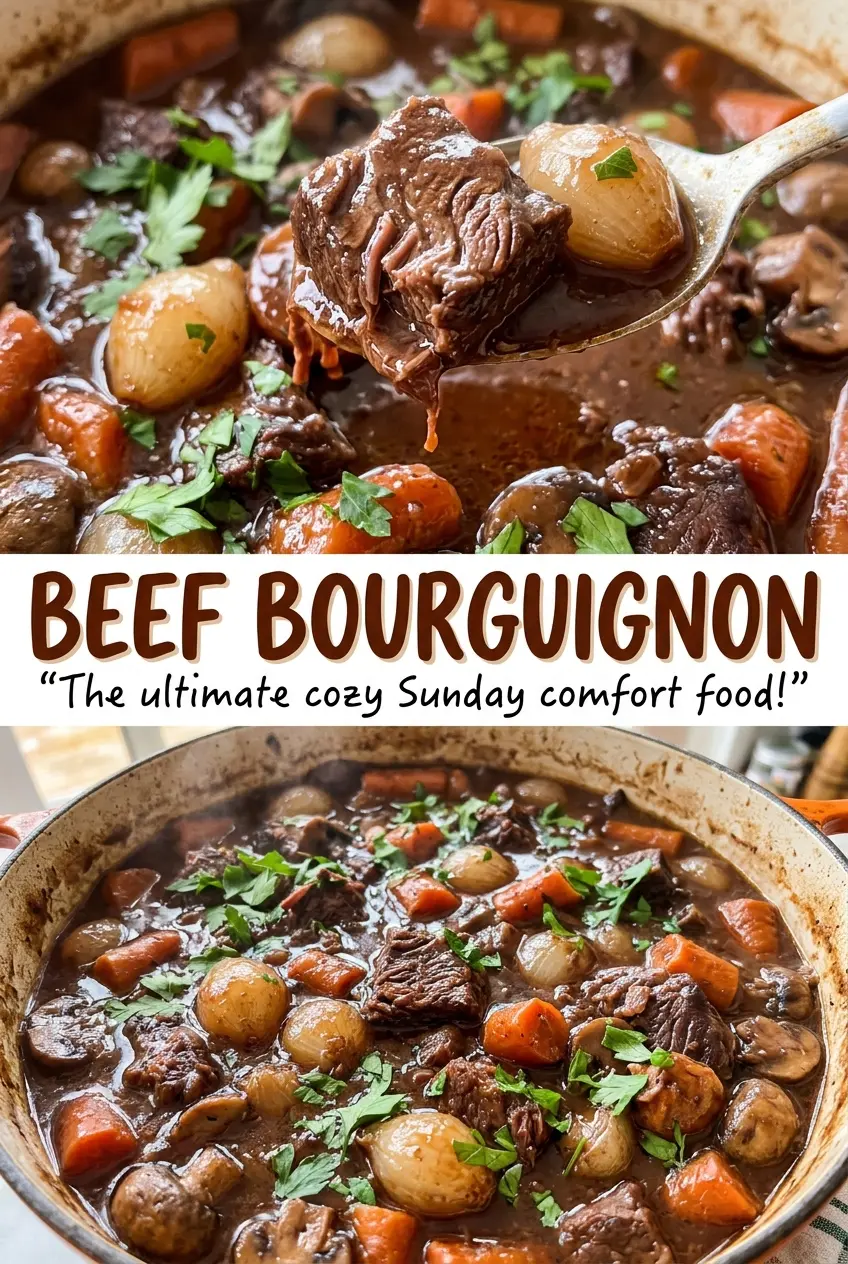
- Boneless beef chuck — Chuck has the marbling and connective tissue that soften during a long, covered braise. Cut it into even cubes so they cook at roughly the same pace, and choose chuck rather than a lean cut for the texture this stew is meant to have.
- Thick-cut bacon — The pieces render slowly and leave enough fat to start building the pot’s savory base. A regular grocery-store package is fine; the thick cut matters more than seeking out specialty bacon.
- Dry red wine — Dry wine brings a deeper, less sweet flavor to the sauce than a sweet red would. An everyday bottle is a sensible choice here; there’s no need to use a wine you’d save for sipping. For a no-wine version, replace it with the same volume of low-sodium beef broth, knowing the sauce will taste less wine-forward.
- All-purpose flour — This is the thickener that gives the sauce a light coating quality after the braise. A basic all-purpose flour works well; it doesn’t need to be a specialty brand.
- Cremini mushrooms and frozen pearl onions — Cremini hold their shape through the skillet finish, while frozen pearl onions save the work of peeling small onions. The mushrooms should be quartered so their cut surfaces can brown, and the onions need to be thawed and drained before cooking.
- Fresh thyme and bay leaves — They steep in the braising liquid and add a gentle herbal note without making the sauce taste strongly of one herb. Fresh thyme sprigs and whole bay leaves are easy to lift out before serving.
Building Beef Bourguignon in Layers
Render the Bacon, Then Brown the Chuck
Heat the oven to 325°F while the bacon cooks in a 6-quart Dutch oven over medium heat. Stir occasionally for 8–10 minutes, until the pieces are crisp and the fat has rendered, then move the bacon to a plate with a slotted spoon. Pat the beef dry, season it with salt and pepper, and add the neutral oil to the pot. Brown the beef in batches for 3–4 minutes per side, transferring each batch to the plate; crowded cubes steam instead of developing a browned surface.
Cook the Vegetables into the Sauce Base
Add the chopped yellow onion and carrots to the same pot and cook for 5 minutes, stirring occasionally. They should begin to soften, but they don’t need to brown deeply. Stir in the garlic and tomato paste and cook for 1 minute, then add the flour and stir for another minute. Gradually pour in the wine, scraping up the brown bits as the liquid loosens them, then stir in the broth, thyme, bay leaves, bacon, and beef.
Let the Covered Braise Turn Tender
Bring the liquid to a simmer before covering the Dutch oven and moving it to the oven. Bake for 2 1/2–3 hours, until the beef is fork-tender; the cubes should give easily when pierced rather than feel springy or firm in the center. Keep the lid on during the braise so the liquid stays in the pot and the beef cooks gently. The exact point of tenderness is more useful than stopping at the first time mark.
Brown the Mushrooms and Finish the Pot
During the last 15 minutes of baking, melt the butter in a 12-inch skillet over medium-high heat. Add the quartered mushrooms and pearl onions, stirring occasionally for 8–10 minutes, until the mushrooms are browned and the onions are hot. Remove the Dutch oven from the oven, discard the bay leaves and thyme stems, then stir in the skillet vegetables. Simmer uncovered over low heat for 5–10 minutes, until the sauce thickens slightly, and let the stew stand for 10 minutes before serving.
Three Changes That Keep the Pot Familiar
Make the sauce gluten-free
Leave out the all-purpose flour and skip its cooking step. The beef and vegetables still braise in the same liquid, but the finished sauce will be thinner and more broth-like rather than lightly thickened.
Leave out the bacon
Skip the bacon and use the neutral oil to brown the beef as usual. The stew will lose the bacon’s smoky, savory note, but the browned chuck, tomato paste, wine, and broth still make a full-flavored braising base.
Skip the mushroom-and-onion finish
Leave out the cremini mushrooms and pearl onions and skip their skillet step. You’ll have a simpler, more beef-focused stew, with no separate vegetable finish to prepare.
Storage and Reheating
- Refrigerator: Store in a covered container within 2 hours and use within 3–4 days. The sauce will firm up as it chills.
- Freezer: Freeze in airtight containers for up to 3 months, leaving a little room at the top for expansion. Thaw in the refrigerator before reheating.
- Reheating: Warm gently on the stovetop, stirring now and then, until the stew reaches 165°F. Avoid a hard boil, which can break up the tender beef.
Questions That Come Up Before the Dutch Oven Goes In
Beef Bourguignon
Ingredients
Equipment
Method
- Heat the oven to 325°F.
- Cook the bacon in a 6-quart Dutch oven over medium heat for 8–10 minutes, stirring occasionally, until crisp and the fat has rendered; transfer the bacon to a plate with a slotted spoon.
- Pat the beef dry and season it with the salt and pepper. Add the oil to the Dutch oven and brown the beef in batches for 3–4 minutes per side, transferring each batch to the plate with the bacon.
- Add the yellow onion and carrots to the Dutch oven and cook for 5 minutes, stirring occasionally. Add the garlic and tomato paste and cook for 1 minute.
- Stir in the flour and cook for 1 minute. Gradually pour in the wine, scraping up the browned bits, then stir in the broth, thyme, bay leaves, bacon, and beef.
- Bring the liquid to a simmer, cover the Dutch oven, and bake for 2 1/2–3 hours, until the beef is fork-tender.
- During the last 15 minutes of baking, melt the butter in a 12-inch skillet over medium-high heat. Add the mushrooms and pearl onions and cook for 8–10 minutes, stirring occasionally, until the mushrooms are browned and the onions are hot.
- Remove the Dutch oven from the oven, discard the bay leaves and thyme stems, and stir in the mushrooms and pearl onions. Simmer uncovered over low heat for 5–10 minutes, until the sauce thickens slightly.
- Let the stew stand for 10 minutes before serving.


