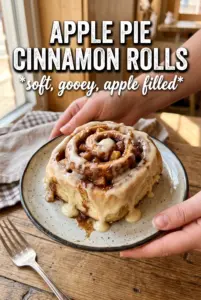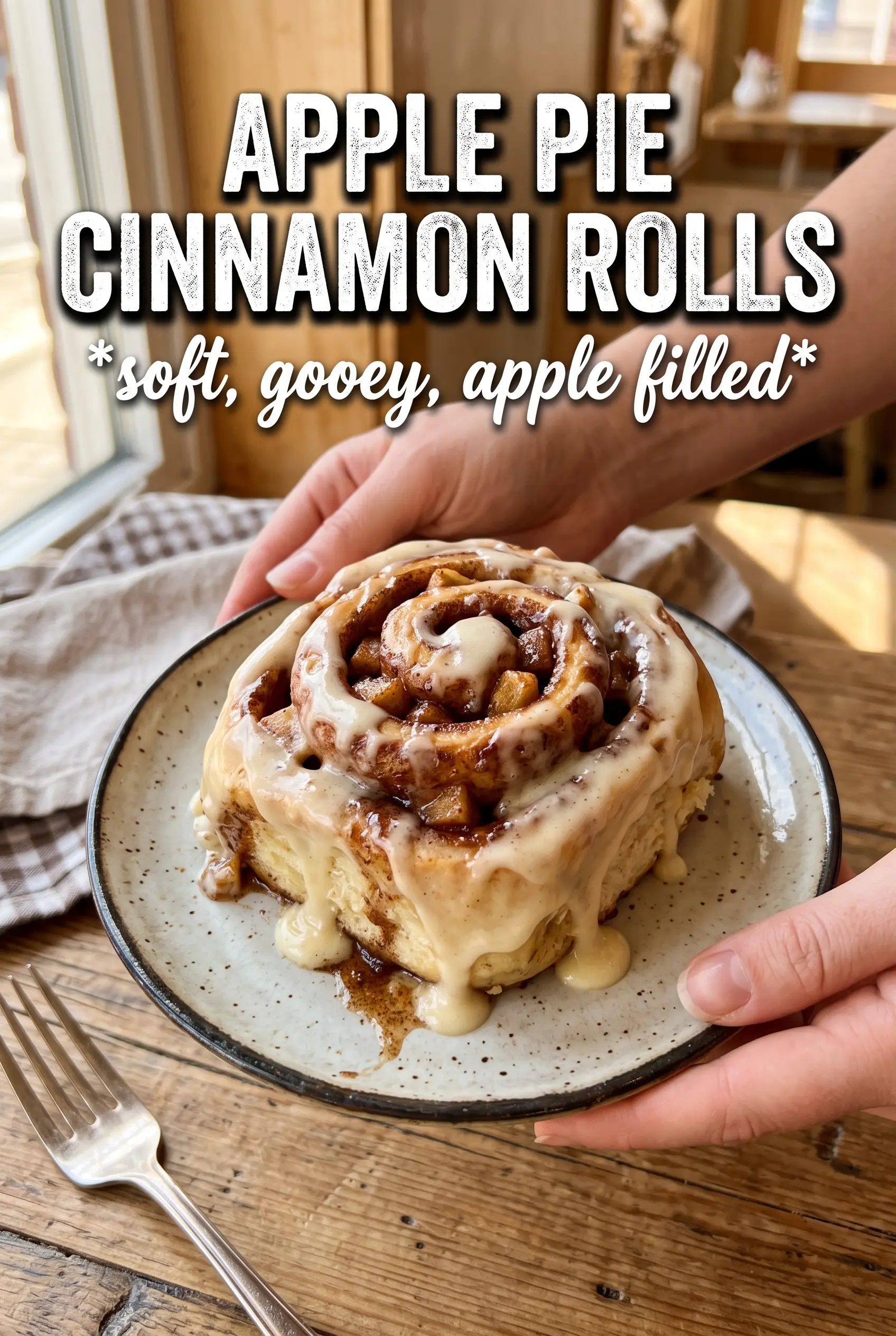
Apple pie cinnamon rolls bring the best parts of two classics into one pan: soft, pillowy dough, a thick spiced apple filling, and a glaze that melts into every swirl. The finished rolls bake up tall and tender with caramelized edges, and the apple filling stays saucy instead of turning dry or gummy. That balance is what keeps people reaching for a second roll before the first one is even finished.
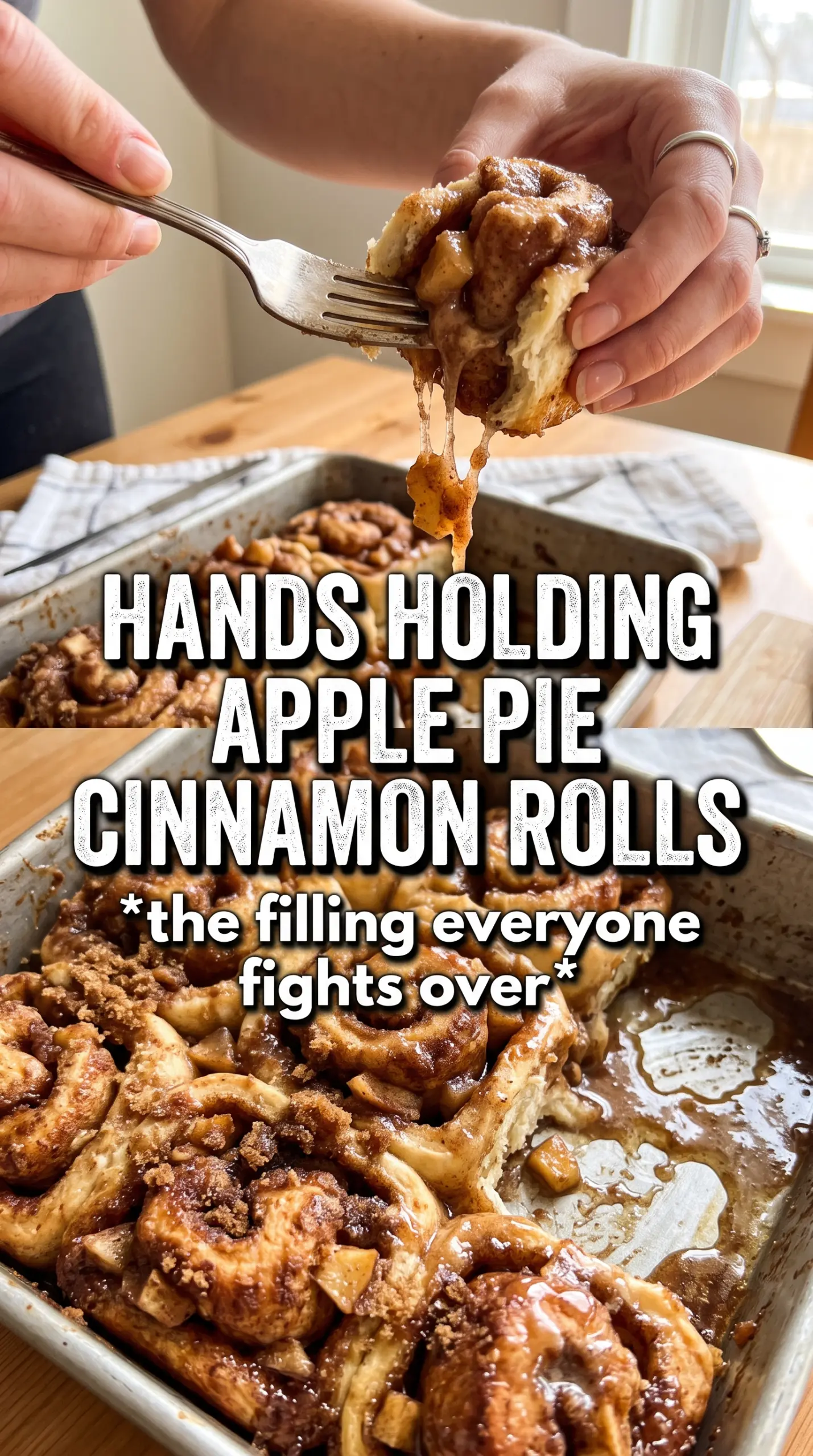
What makes this version work is the way the filling is cooked before it goes into the dough. Raw apples release too much liquid in the oven, which can leave you with soggy centers and gaps in the spiral. Cooking the apples with brown sugar, butter, and a little cornstarch gives you a thick, spreadable filling that stays put, so every slice holds its shape and tastes like actual apple pie, not just cinnamon sugar with fruit in it.
You’ll find the timing that matters most, the small cues that tell you the dough is ready, and the best way to keep the rolls soft in the center without underbaking the middle. The glaze and caramel go on at the end, where they belong, so they sink into the warm rolls instead of disappearing.
The apple filling thickened up perfectly, and the rolls baked up soft all the way through without getting soggy in the middle. My kids kept pulling apart the swirls to get more of the caramel glaze.
Save these apple pie cinnamon rolls for the morning when you want soft swirls, cooked apple filling, and a caramel drizzle that actually stays put.
The Part Most Apple Rolls Get Wrong: The Filling Has to Be Thick Before It Hits the Dough
Most apple cinnamon roll recipes fail at the same place: the apples go in raw, then dump liquid into the dough as they bake. That creates wet seams, weak spirals, and a center that tastes steamed instead of rich. Cooking the filling first solves that problem because the cornstarch can thicken the juices before the rolls ever go into the oven.
You want a filling that looks glossy and spoonable, not watery and loose. If you can drag a spatula through the pan and the filling parts for a second before settling back, it’s ready. Let it cool before spreading it over the dough or it will soften the butter in the dough and make rolling harder.
What Each Ingredient Is Doing in the Dough and Filling
- Warm milk — This wakes up the yeast and gives the dough a softer crumb than water would. It should feel warm, not hot; too much heat kills yeast and the dough won’t rise well.
- Active dry yeast — The foamy bloom after five minutes tells you it’s alive. If it never bubbles, start over instead of trying to force the dough to work.
- Melted butter — It adds richness and keeps the rolls tender. Use real butter here; neutral oil won’t give the same soft, bakery-style flavor.
- Apples — Peel and dice them small so they soften evenly and tuck into the spirals. Firm apples hold their shape better than mealy ones, which matter if you want distinct little pockets of fruit.
- Brown sugar and spices — Brown sugar brings the molasses note that makes the filling taste like pie, while cinnamon, nutmeg, and allspice build that warm apple pie character. Don’t skip the allspice if you want the filling to taste complete instead of flat.
- Cornstarch — This is what turns the apple juices into a thick sauce. Flour can work in a pinch, but cornstarch gives a cleaner, glossier filling that stays inside the roll.
- Cream cheese glaze — It cuts through the sweetness and lands between tangy and rich. Let the cream cheese soften first or you’ll fight lumps all the way through the glaze.
Building the Rolls So They Bake Tall Instead of Leaking
Blooming the yeast
Stir the warm milk, sugar, and yeast together and wait for a foamy top. That foam tells you the yeast is active and ready to lift the dough. If the mixture stays flat and dull after five minutes, the yeast is likely dead or the milk was too hot. A weak bloom leads to dense rolls no matter how long you knead them.
Mixing and kneading the dough
Add the butter, eggs, and vanilla, then work in the flour and salt until the dough comes together into a soft, slightly tacky mass. Knead until it turns smooth and elastic, about eight minutes by hand or with a dough hook. If it tears easily or feels shaggy, it needs more kneading. If it clings to everything like batter, add flour a tablespoon at a time, but stop before it turns stiff.
Cooking the apple filling
Cook the apples, brown sugar, spices, butter, and cornstarch in a skillet until the fruit softens and the mixture turns thick and glossy. The filling should mound on a spoon instead of sliding off in a thin puddle. Cool it fully before spreading. Warm filling will melt the dough’s fat and make the spiral slip when you roll it up.
Rolling, cutting, and baking
Roll the dough into a neat rectangle and spread the filling all the way to the edges, leaving only a small strip on one long side if you want the seam to seal better. Roll it tightly from the long edge so the spirals stay defined, then cut cleanly into twelve pieces. A greased 9×13 dish gives the rolls room to expand without crowding. Bake until the tops are golden and the centers look set, not shiny-wet; if the middle still looks pale and jiggly, give it a few more minutes.
Finishing with glaze and caramel
Whisk the cream cheese glaze until smooth and drizzle it over the rolls while they’re still warm so it sinks into the swirls. Add the caramel after that. If you pour the caramel over cold rolls, it just sits on top; warmth helps it weave into the glaze and settle into the crevices.
How to Adapt These Rolls Without Losing the Apple Pie Character
Dairy-Free Version
Use a rich plant milk and swap the butter for a dairy-free baking stick. The dough still rises well, and the rolls stay soft, but the glaze needs a dairy-free cream cheese that’s known to whip smooth; some brands stay grainy, so test one you trust.
Make-Ahead Overnight Rolls
Assemble the rolls in the baking dish, cover them tightly, and refrigerate after shaping. In the morning, let them sit at room temperature until puffy before baking. Cold dough straight from the fridge bakes unevenly, with browned edges and an underdone center.
Less-Sweet Finish
Skip the caramel drizzle and use a thinner layer of glaze. You’ll still get the cream cheese tang and the apple pie spice, but the rolls will taste lighter and a little more breakfast-friendly.
Storage and Reheating
- Refrigerator: Store covered for up to 4 days. The filling stays good, but the dough firms up a bit as it chills.
- Freezer: Freeze baked rolls without glaze for up to 2 months. Wrap tightly, then thaw overnight in the fridge before reheating and glazing.
- Reheating: Warm individual rolls in the microwave for 20 to 30 seconds or cover a pan of rolls with foil and heat in a 300°F oven until soft again. Don’t blast them too long or the dough turns dry while the filling gets sticky.