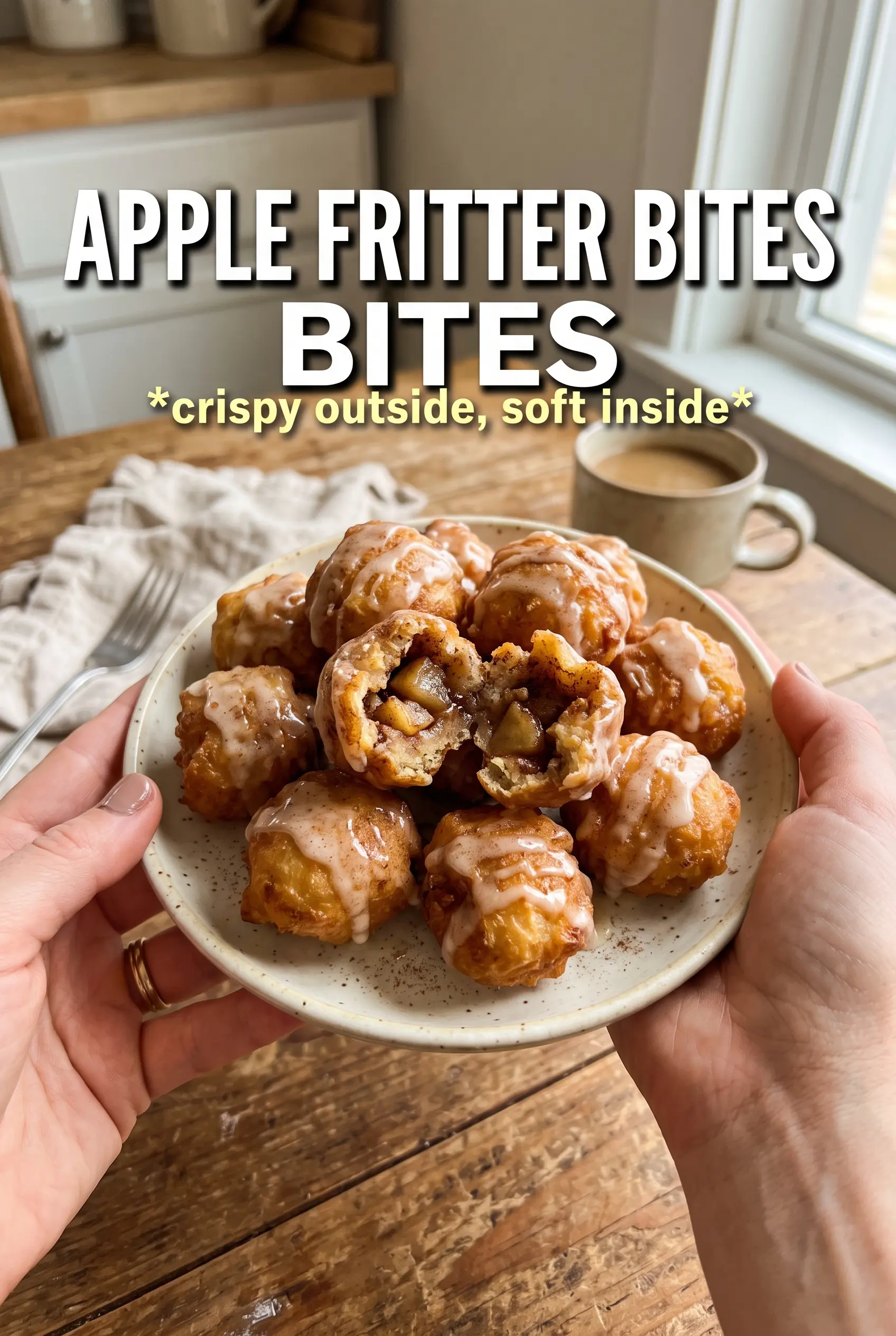
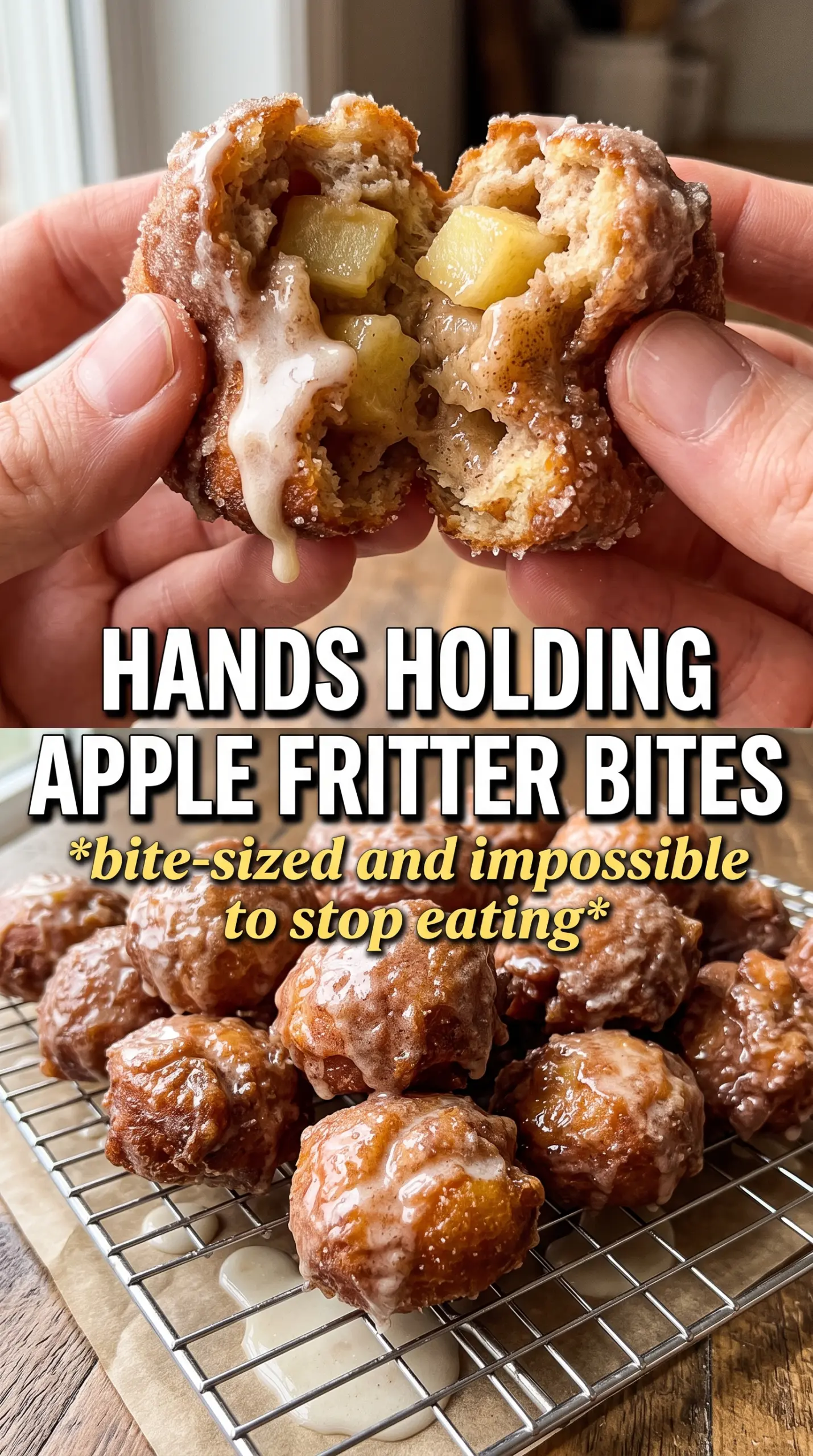
Apple fritter bites land with that same cozy bakery-style pull as a full-size fritter, but the smaller shape gives you more of the good part: crisp edges, tender centers, and little pockets of cinnamon-kissed apple in every bite. The glaze sets just enough to cling without turning the outside soggy, which is exactly why these disappear fast once they hit the table.
What makes this version work is the balance of batter and fruit. The apples are diced very fine so they cook through in the short fry time, and the batter stays just thick enough to hold them without feeling heavy. The spice mix is modest on purpose; cinnamon and nutmeg should support the apples, not bury them. Keeping the oil at 360°F matters here too. Too cool and the bites soak up grease. Too hot and the outside browns before the centers have a chance to cook.
Below, I’ve included the one texture cue I watch for when frying these, plus a few smart swaps and storage notes for the batch you won’t finish right away.
The bites fried up with crisp little ridges on the outside and stayed soft inside, and the glaze set just enough that they weren’t sticky all over the plate. I also loved that the apples cooked through without turning mushy.
Save these apple fritter bites for the morning you want crisp edges, warm cinnamon apples, and a quick vanilla glaze.
The Trick That Keeps Apple Fritter Bites Light Instead of Doughy
The biggest mistake with fritter-style batter is overmixing after the flour goes in. Stir just until the dry bits disappear, then stop. A few streaks are fine. The batter should look thick and a little rough, because that roughness gives you a craggy exterior that fries up crisp instead of bready.
The other thing that matters is the apple cut. Tiny dice cook faster and release enough moisture to soften the centers without flooding the batter. Bigger chunks sound appealing, but they create pockets that can stay undercooked while the outside is already deep golden. If your batter looks loose after the apples go in, the fruit pieces were too large or too wet.
- Fine-diced apples — This is the difference between a fritter bite that cooks through in minutes and one with raw apple tucked in the middle. Peel them, dice them small, and pat them dry if they’re especially juicy.
- Milk and eggs — These give the batter enough richness to stay tender. Whole milk works best here because the extra fat helps keep the interior soft after frying.
- Baking powder — This is what gives the bites their puff and lift. If it’s old, the batter will fry up flatter and heavier.
- Vegetable oil — Use a neutral oil with a high smoke point. You want clean frying, not an oil that adds its own flavor or starts smoking before the batch is done.
What Each Ingredient Is Actually Doing in This Recipe
- Primary ingredient (the star) — Quality matters most. Choose the best you can find.
- Cooking medium (oil, butter, or broth) — This carries flavors and prevents dryness.
- Seasonings (salt, pepper, spices, herbs) — Layer flavors so nothing overpowers. Build depth gradually.
- Aromatics (garlic, onion, herbs) — Cook with fat to bloom flavors. Become the foundation.
- Supporting ingredients — Complement the main ingredient without overpowering it.
- Sauce or liquid (if applicable) — Brings flavors together. Balance richness with acid.
- Acid (lemon, vinegar, wine, or other) — Brightens and prevents flat-tasting results.
- Final finish (garnish, glaze, or sauce) — Prevents one-dimensional taste and adds visual appeal.
Frying the Bites So They Cook Through Before They Darken
Mixing the Batter Without Beating It Down
Whisk the dry ingredients first so the spice and leavening are evenly distributed, then add the wet mixture and fold gently. The batter should come together fast. If you keep stirring after it looks combined, the gluten tightens and the bites turn tough instead of airy. Fold in the apples last so they stay coated and don’t sink.
Testing the Oil Temperature
Heat the oil to 360°F and actually use a thermometer here. At that temperature, the outside starts to color while the inside cooks at the same pace. If the oil is too cool, the bites absorb fat and come out greasy. If you don’t have a thermometer, a small test piece should sizzle steadily and rise to the surface within seconds, not sit there lazily.
Frying in Small, Even Portions
Drop rounded teaspoon-sized portions into the oil and don’t crowd the pot. The bites need room so the oil stays hot and each one can turn into its own crisp little nugget. Fry for 2 to 3 minutes, turning as needed, until they’re deeply golden on all sides. If they brown too fast, lower the heat a touch; if they’re pale after three minutes, the oil needs to come up again.
Glazing While They’re Still Warm
Drain the fritters on paper towels for just a minute, then drizzle on the glaze while they’re still warm. Warm fritters grab the glaze and set it into a thin shell. If you wait until they’re cool, the glaze just sits on top and slides off. The glaze should be loose enough to drizzle; if it’s too thick, add milk a few drops at a time.
How to Adapt These Fritter Bites Without Losing the Crisp Edge
Dairy-Free Version
Swap the whole milk for unsweetened almond milk or oat milk and use a plant-based butter or neutral oil in the batter. The fritters still fry up nicely, though oat milk gives a slightly fuller finish than almond milk. Keep the glaze loose, since non-dairy milks can make it thicken a little differently.
Gluten-Free Swap
Use a 1:1 gluten-free baking flour that includes xanthan gum. The batter will be a little more delicate, so don’t overmix and give the scooped bites a moment to set before turning them in the oil. They won’t brown quite the same as the flour version, but the apple-cinnamon center still comes through.
Honeycrisp or Granny Smith Apples
Granny Smith gives you a sharper apple bite and holds its shape best, while Honeycrisp brings a sweeter, juicier center. If you use a very juicy apple, dice it and let it sit on paper towels for a few minutes before folding it in. That keeps the batter from thinning out and frying greasy.
Storage and Reheating
- Refrigerator: Store in an airtight container for up to 2 days. The glaze softens the crust a bit, so they won’t stay crisp like they were right out of the oil.
- Freezer: Freeze the unglazed fritter bites on a tray, then bag them once solid. Glaze after reheating for the best texture.
- Reheating: Warm in a 350°F oven or air fryer until heated through and the edges crisp back up. The biggest mistake is microwaving them straight from the fridge, which makes the outside rubbery and the glaze sticky.