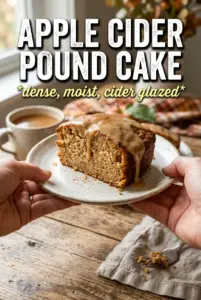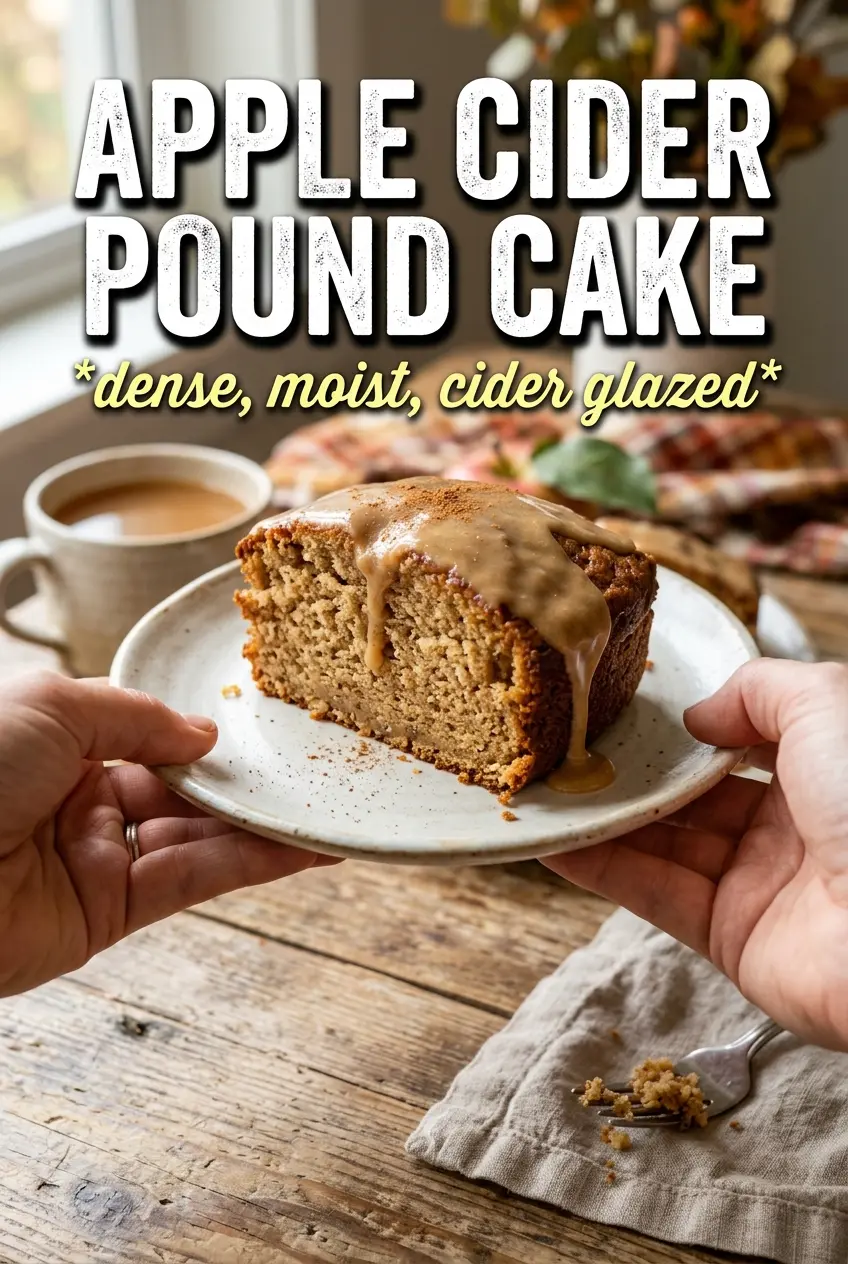
Apple cider pound cake bakes up with a tight, velvety crumb and a deep cinnamon scent that hangs around long after the pan is empty. The cider glaze settles into the ridges of the bundt and gives each slice a little crackle on top before you hit the moist center. It’s the kind of cake that tastes even better the next day, when the spice softens and the cider flavor gets louder.
What makes this version work is the reduced cider. Boiling it down concentrates the apple flavor without adding extra liquid that would weigh the batter down. The sour cream keeps the crumb tender and gives the cake enough richness to stay moist for days, while the butter-and-sugar base has to be beaten until it looks pale and almost whipped. That step matters more here than people think.
Below I’m walking through the points that matter most: how to reduce the cider without scorching it, how to keep the batter from curdling when the dry ingredients go in, and how to glaze the cake so it looks neat instead of running off the sides.
The cider flavor came through beautifully, and the crumb stayed so moist that the slices held together cleanly even on day three. I reduced the cider the way you suggested and the glaze set up instead of soaking straight into the cake.
Love a dense, buttery apple cider pound cake with a spiced glaze? Save this one for the next time you want a bundt that slices clean and stays moist for days.
The Part That Keeps This Bundt from Tasting Flat
Most apple cider cakes lean on plain cider straight from the bottle, and that’s where the flavor gets lost. It tastes sweet, but it doesn’t taste deep. Reducing the cider first changes that completely. You end up with a smaller amount of liquid, but it carries much more apple character, which means the cake tastes like cider instead of just sugar and spice.
The other thing that matters is the order of the batter. The butter and sugar need a full five minutes of beating until they look almost fluffy and lighter in color. That traps air, which is how a pound cake gets lift without becoming airy. If you rush that stage, the cake will still bake, but the crumb turns heavier and a little dense in the wrong way.
- Reduced apple cider — This is the flavor anchor. If you skip the reduction, the batter gets looser and the apple note turns muddy.
- Sour cream — This keeps the crumb moist and gives the cake a gentle tang. Plain Greek yogurt works in a pinch, but it tastes a little sharper and can tighten the crumb more.
- Cinnamon and nutmeg — They don’t make the cake taste like spice cake; they frame the cider. Use fresh nutmeg if you have it. It reads warmer and cleaner.
- Bundt pan prep — Grease every ridge and dust with flour. This cake has a tender crust, and a poorly prepped pan will tear it before it ever reaches the plate.
What Each Ingredient Is Actually Doing in This Cake
- All-purpose flour — The structure here needs regular flour, not cake flour. Cake flour makes this too delicate for a bundt that needs to hold its shape.
- Baking powder and baking soda — The combination gives enough lift to keep the cake from eating like a brick, especially with the weight of butter and sour cream in the batter.
- Butter — Use real unsalted butter and let it soften properly. If it’s too cold, it won’t cream well; if it’s melted, the cake loses that fine, pound-cake texture.
- Apple cider — Buy cider, not apple juice if you can. Cider tastes fuller and less one-dimensional. If you only have juice, reduce it a little longer and expect a lighter apple flavor.
- Sour cream — Full-fat is best. Low-fat versions work, but they don’t give the same plush crumb or richness.
- Powdered sugar glaze — This is not just for sweetness. It gives the cake that clean finish and helps lock in the cider aroma right before serving.
The Mixing Order That Gives You a Tender Crumb
Reduce the Cider First
Set the cider over medium heat and let it bubble until it’s reduced by half, then cool it completely before it goes into the batter. If it’s warm, it can loosen the butter mixture and make the batter look split. That’s the kind of mistake that leaves you with a dense stripe running through the middle of the cake.
Cream the Butter and Sugar Long Enough
Beat the butter and sugar until it turns pale and looks fluffy around the edges of the bowl, not just combined. This should take about five minutes with a mixer. If the mixture still looks grainy and heavy, keep going. That air is part of what keeps a pound cake from baking up compact.
Add the Dry Ingredients and Sour Cream in Turns
Alternate the flour mixture with the sour cream, starting and ending with flour. That pattern protects the batter from breaking and keeps the gluten from tightening up all at once. Stir only until the flour disappears, because overmixing will make the cake tough instead of velvety.
Bake Until the Center Springs Back
Pour the batter into the prepared bundt pan and bake until a toothpick comes out clean or with a few moist crumbs, usually 70 to 80 minutes. The top should be deeply golden and the sides should begin pulling away from the pan. If the top browns too fast, lay a loose piece of foil over it for the last part of baking.
Glaze After the Cake Cools
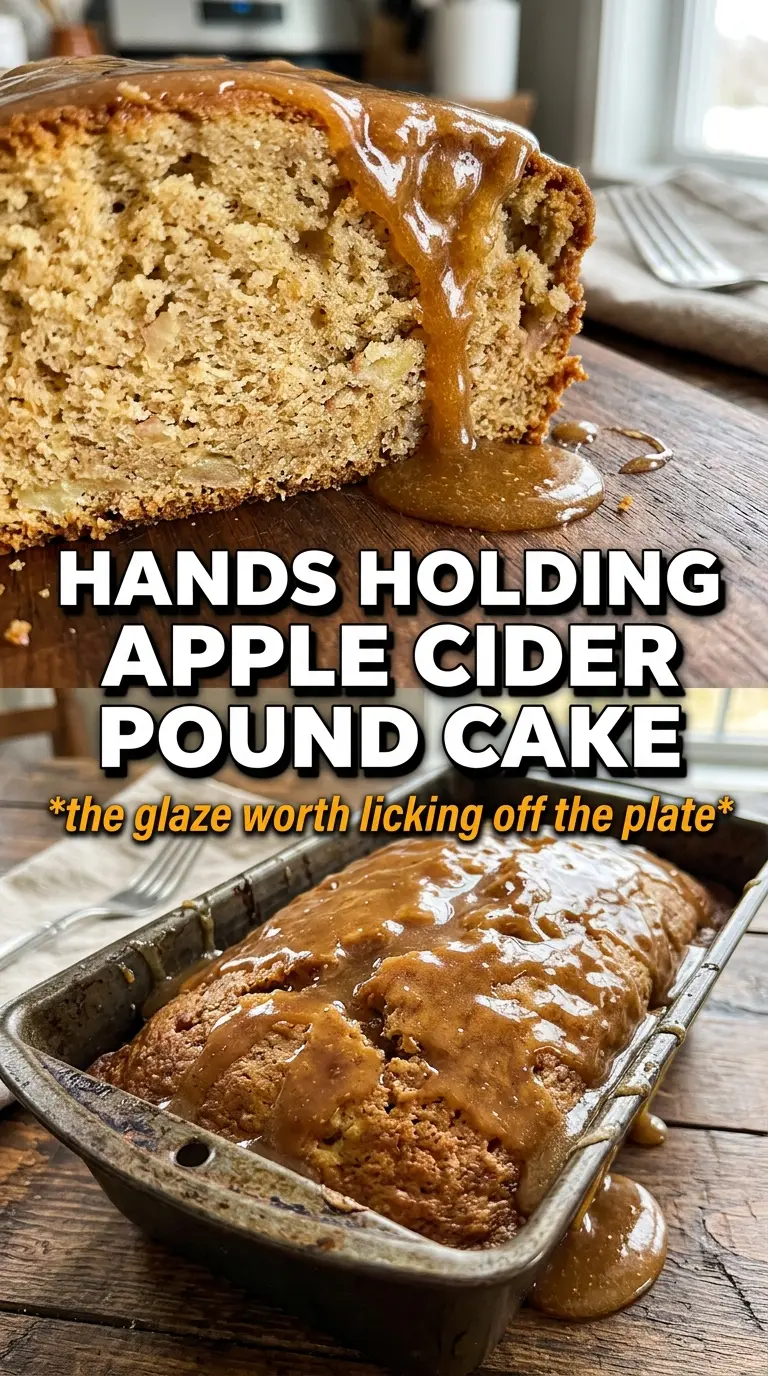
Let the cake sit in the pan for 15 minutes, then invert it and cool it all the way before glazing. If you glaze too soon, the glaze disappears into the warm cake instead of sitting on top. Mix the glaze until smooth enough to drizzle, then let it run slowly over the ridges so it catches in the grooves instead of pooling at the base.
How to Adapt This Cake Without Losing the Cider Character
Gluten-Free Version
Use a cup-for-cup gluten-free flour blend that includes xanthan gum. The cake will still be tender, but the crumb may be a little more delicate, so let it cool completely before slicing.
Dairy-Free Swap
Use a plant-based butter stick and a thick dairy-free yogurt in place of the sour cream. The texture stays close, but the flavor loses some of the buttery depth, so don’t skip the cinnamon in the glaze.
Orange-Spiced Twist
Add a teaspoon of orange zest to the batter and swap one tablespoon of the cider in the glaze for fresh orange juice. It gives the cake a brighter finish without covering the apple flavor.
Extra-Cider Glaze
If you want a glaze with more bite, reduce the cider a little more before mixing it with powdered sugar. It will taste sharper and less sweet, and it sets with a thinner shine instead of a thick frosting-like coat.
Storage and Reheating
- Refrigerator: Store covered for up to 4 days. The crumb stays moist, and the cider flavor deepens after the first day.
- Freezer: Freeze the unglazed cake, wrapped tightly in plastic and foil, for up to 2 months. Glaze after thawing so it stays neat.
- Reheating: Warm individual slices for 10 to 15 seconds in the microwave, just enough to take the chill off. Too much heat melts the glaze and makes the crumb feel gummy.