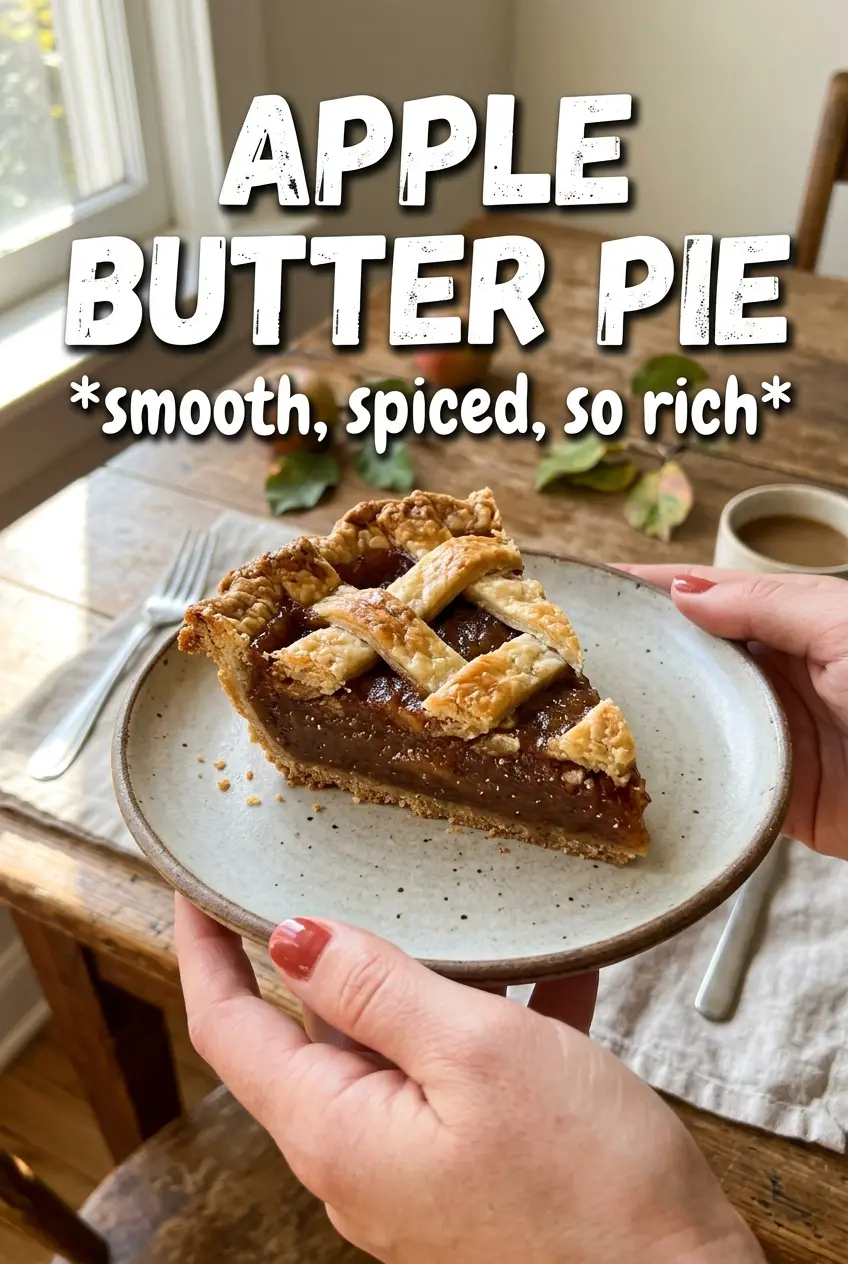
Apple butter pie bakes into a smooth, spiced custard with the deep caramelized apple flavor that only apple butter can bring. The filling sets up silky and sliceable, with just enough wobble in the center when it comes out of the oven, and the flaky crust gives each bite a clean, buttery edge. It’s the kind of dessert that tastes like you spent all afternoon on it, even though the filling comes together in one bowl.
What makes this version work is the balance. Apple butter already carries cooked-down apple flavor, so the eggs and cream turn it into something between a chess pie and a classic custard pie without needing extra apples. The brown sugar deepens the filling, while cinnamon, nutmeg, and allspice keep it warm without making it muddy or heavy. The pre-bake on the crust matters here too, because that short head start keeps the bottom from going soft under the custard.
Below, I’ll walk through the one place people usually go wrong with custard pies and the ingredient choices that give this pie its smooth texture. If you’ve ever had a filling that baked up grainy or loose, this method will help you avoid both.
The filling baked up silky and set perfectly after chilling. I loved that the apple butter flavor came through without the pie being too sweet, and the crust stayed crisp on the bottom.
Save this apple butter pie for the custard-style dessert with a silky center and crisp, flaky crust.
The Trick to Keeping the Custard Smooth Instead of Grainy
Apple butter pie looks straightforward, but custard filling can turn gritty if the eggs get too much heat or if the sugar doesn’t dissolve before baking. That’s why the filling gets whisked until completely smooth before it ever goes into the shell. The eggs need to be fully incorporated with the apple butter, cream, and sugars so the texture bakes evenly instead of separating into little pockets of eggy custard.
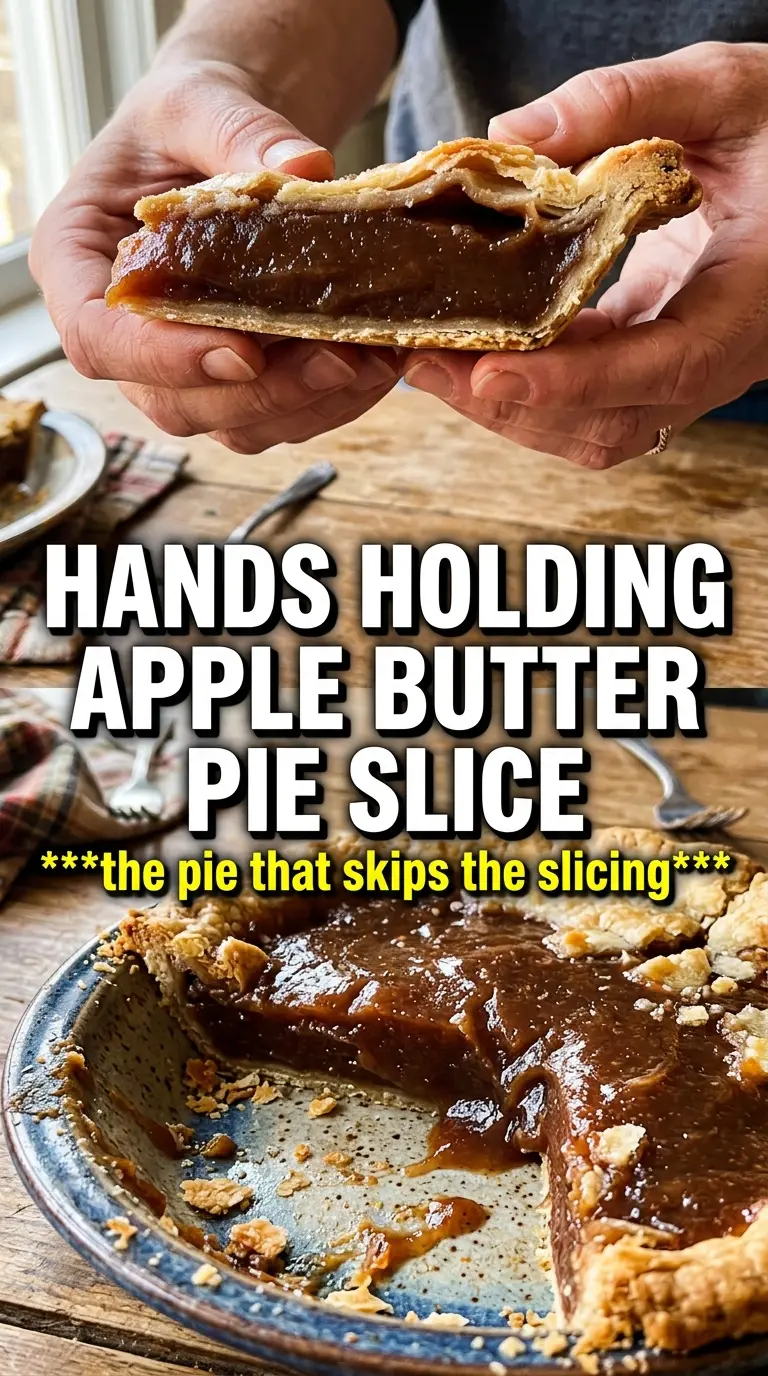
The other point that matters is the bake. You’re not looking for a firm center in the oven. You’re looking for set edges and a center that still has a slight wobble, about like gelatin that hasn’t finished chilling yet. If you wait until the middle looks fully done, it will overbake in the residual heat and turn dense instead of silky.
What the Apple Butter, Cream, and Spice Are Each Doing
- Apple butter — This is the backbone of the pie. It brings concentrated apple flavor and natural thickness that fresh apples can’t match in a custard filling. Use a good apple butter with a deep, cooked flavor; a very sweet or thin one will make the pie taste flat.
- Heavy cream — Cream gives the filling its soft, custardy body. Whole milk will work in a pinch, but the pie will bake up lighter and less luxurious. Don’t swap in half-and-half if it’s very thin, or the filling can set less cleanly.
- Brown sugar — This adds molasses depth and supports the caramel notes in the apple butter. Granulated sugar alone makes the pie taste sharper and a little less rounded. The combination of both sugars is what keeps the sweetness balanced.
- Warm spices — Cinnamon, nutmeg, and allspice should support the apple butter, not bury it. Fresh spices matter here because the filling is so simple. If your nutmeg has been sitting in the cabinet for years, replace it; stale spice shows up fast in a pie like this.
- Eggs — The eggs are the structure. They turn the filling from loose batter into a sliceable custard once baked and chilled. Whisk them thoroughly into the base so the texture stays even from edge to center.
Building the Pie So the Bottom Stays Crisp
Starting with a Set Crust
Prick the bottom of the unbaked crust, then give it those 10 minutes in the oven before the filling goes in. That short pre-bake keeps the bottom from absorbing too much liquid and going pasty underneath the custard. You don’t need to fully bake it at this point; it should just look dry and lightly set, not browned.
Whisking the Filling Until It Looks Uniform
Combine the apple butter, eggs, both sugars, cream, spices, vanilla, and salt until the mixture looks completely smooth and glossy. If you can still see streaks of egg or little sugar grains clinging to the side of the bowl, keep whisking. Uneven mixing is one of the main reasons custard pies bake in patches instead of setting cleanly.
Baking for the Right Kind of Wobble
Pour the filling into the warm crust and bake until the edges are set but the center still has a slight wobble. The middle should jiggle gently when you nudge the pan, not slosh. Pull it from the oven at that point; if you wait for a firm center, the pie will finish too hard as it cools.
Cooling and Chilling Before the First Slice
Let the pie cool completely on the counter, then refrigerate it for at least 2 hours before slicing. This is when the custard tightens up and develops that neat, clean slice you want. Cutting it early will give you a soft, runny wedge no matter how well it baked.
How to Adapt Apple Butter Pie Without Losing the Texture
Gluten-Free Crust Swap
Use a gluten-free pie crust that’s sturdy enough to hold custard. The filling itself is naturally gluten-free, so the crust is the only adjustment. Bake it the same way, but watch closely during the pre-bake since some gluten-free crusts brown faster at the edges.
Dairy-Free Version
Swap the heavy cream for a full-fat canned coconut milk. You’ll get a slightly more coconut-forward flavor and a softer set, but the filling still bakes into a rich custard. Stir the can well before measuring so the fat and liquid are fully combined.
Less Sweet, More Apple
If your apple butter is already very sweet, reduce the granulated sugar by 2 tablespoons. That keeps the pie from tasting syrupy and lets the apple flavor come forward more clearly. Don’t cut both sugars too aggressively or the custard can taste flat.
Storage and Reheating
- Refrigerator: Store covered for up to 4 days. The filling stays smooth, and the crust holds up better than you might expect if the pie is fully chilled before covering.
- Freezer: This pie freezes reasonably well after baking and cooling completely. Wrap it tightly, then freeze for up to 1 month; thaw overnight in the refrigerator. The texture will be a touch softer after freezing, but still good.
- Reheating: Serve chilled or let slices sit at room temperature for 15 to 20 minutes. If you warm it, do it gently in a low oven so the custard doesn’t weep. Microwaving can make the filling loosen and the crust soggy.
Questions I Get Asked About This Recipe
Apple Butter Pie
Ingredients
Equipment
Method
- Preheat the oven to 375°F. Prick the bottom of the pie crust and pre-bake for 10 minutes until just set, then remove to keep the crust flaky.
- In a mixing bowl, whisk apple butter, eggs, granulated sugar, brown sugar, heavy cream, cinnamon, nutmeg, allspice, vanilla extract, and salt until completely smooth, looking glossy and uniform with no streaks.
- Pour the filling into the pre-baked crust and place the pie on a sheet pan. Bake for 40–45 minutes until the edges are set but the center still has a slight wobble, with gentle jiggle when nudged.
- Cool the pie completely on a rack, allowing the filling to firm as it cools and the center to set fully.
- Refrigerate at least 2 hours before slicing, then serve with whipped cream for a clean slice and contrast.