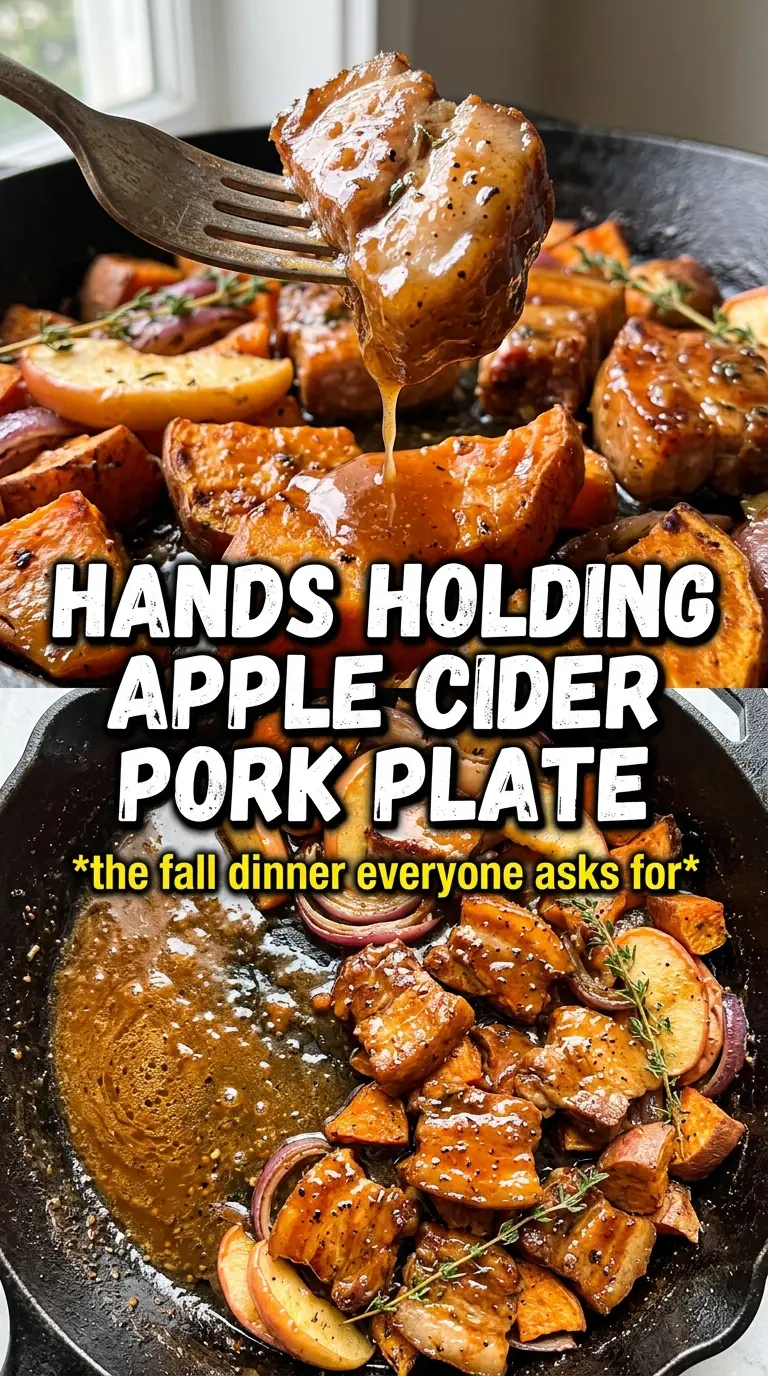
Apple cider pork lands in that sweet spot between weeknight practical and dinner-party worthy: tender slices of pork, glossy pan sauce, soft apples, and a creamy sweet potato base that catches every drop. The pork stays juicy, the cider reduces into something tangy and concentrated, and the whole plate tastes balanced instead of sweet. It’s the kind of meal that looks polished in the bowl but still comes together without a long ingredient list or fussy steps.
The trick is using the same pan for the pork, apples, and sauce. Those browned bits left behind after searing are where the flavor is hiding, and the cider lifts them cleanly into the sauce. Dijon keeps the sauce from tasting flat, while the butter at the end gives it the kind of finish that clings to the meat and mash instead of running all over the plate.
Below, I’ve included the little details that matter most: how to keep the pork tender, when the cider has reduced enough, and how to adjust the sweet potatoes so they’re rich but not heavy.
The cider sauce thickened up beautifully and coated the pork instead of pooling on the plate, and the sweet potatoes were the perfect creamy base for it.
Save this apple cider pork with mashed sweet potatoes for the nights when you want a fast pan sauce and a cozy, complete dinner on one plate.
The Shortcut Most People Miss When Making Pork With Apple Cider
Pork tenderloin cooks fast, which is a gift and a trap. It goes from juicy to dry in a narrow window, so the real job here is not just searing it well, but pulling it at the right moment and letting the carryover heat finish the work. If the pan is too hot when the cider goes in, the sauce reduces too aggressively before it can pick up the mustard and butter, and you end up with something sharp instead of silky.
The other thing that matters is the sequence. The apples go in after the pork comes out so they soften and glaze in the leftover fat without turning to applesauce. Then the cider deglazes the pan while the fond is still hot and active. That’s what gives the sauce its deep, cooked flavor instead of a thin sweet note.
- Pork tenderloin — This cut stays tender when it’s cooked quickly and sliced after a rest. Pork loin can work in a pinch, but it needs more time and is easier to dry out, so watch the internal temperature closely if you swap it in.
- Apple cider — Use real apple cider, not vinegar and not apple juice if you can help it. Cider has the round, slightly tangy apple flavor that reduces into a proper pan sauce without tasting candy-sweet.
- Dijon mustard — This keeps the sauce balanced and helps it emulsify when the butter goes in. Yellow mustard won’t give you the same depth or texture.
- Sweet potatoes — Their natural sweetness works with the cider sauce, but they need enough salt and butter to taste like dinner, not dessert. Cube them evenly so they mash at the same rate and don’t leave hard pieces behind.
How to Keep the Pork Juicy While the Sauce Reduces
Seasoning and Searing
Pat the pork dry before seasoning it so the spices cling and the surface browns instead of steaming. The olive oil should shimmer before the pork goes in, and the first side needs to sit undisturbed until it releases with a deep golden crust. If it sticks hard, it’s not ready yet. Move too soon and you’ll tear the crust off the meat before it has a chance to form.
The Apple and Cider Pan Sauce
Take the pork out before you start the sauce, then add the apple slices to the same pan and cook them just long enough to take on color. They should soften at the edges but still hold their shape. When the cider goes in, scrape up the browned bits from the bottom right away and let the liquid simmer until it’s reduced by about half. That’s the point where the flavor concentrates and the sauce starts looking glossy instead of watery.
Finishing and Resting
Stir in the butter off the heat or over very low heat so the sauce turns smooth instead of greasy. Return the pork to the pan and spoon the sauce over it until the center reaches 145°F, then let it rest before slicing. If you cut too soon, the juices run straight onto the board and the pork tastes drier than it should. A short rest keeps every slice tender.
What Each Part Is Doing on the Plate
- Butter — Butter is doing two jobs here: enriching the sweet potatoes and giving the sauce a smooth finish. If you use less, the dish will still work, but it won’t have the same plush texture.
- Heavy cream — This loosens the mashed sweet potatoes without making them watery. Milk can work, but the mash won’t be as velvety.
- Maple syrup — A small amount rounds out the cinnamon and sweet potato flavor without making the mash taste dessert-like. Honey is a fine substitute, though it brings a slightly different finish.
- Smoked paprika and garlic powder — These give the pork a deeper savory base before the cider sauce goes on. Fresh garlic would burn in the searing step, so the powder is the safer choice here.
The Fastest Way to Turn This Into a Different Dinner
Dairy-Free Version
Swap the butter in the mash for olive oil or a good dairy-free butter, and use unsweetened oat milk or coconut cream instead of heavy cream. The mash will still be smooth, but it won’t have quite the same richness, so add the liquid slowly until it reaches the texture you want.
No Sweet Potatoes, Still a Good Plate
Mashed Yukon Gold potatoes work well if that’s what you have. They’re less sweet and a little more buttery in flavor, which makes the cider sauce stand out even more. You may want to add a little extra maple syrup or cinnamon to keep the base from tasting plain.
Use Pork Chops Instead
Boneless pork chops can replace the tenderloin, but they need a little more attention because they dry out faster. Sear them to a good crust, then finish gently in the sauce and pull them as soon as they hit temperature. Thicker chops are safer than thin ones here.
Gluten-Free as Written
This recipe is naturally gluten-free as long as your Dijon mustard is labeled gluten-free. The sauce gets its body from reduction and butter, not flour, so you don’t need to change the method at all.
Storage and Reheating
- Refrigerator: Store the pork, sauce, and mashed sweet potatoes separately for up to 3 days. The sauce may thicken in the fridge, and the mash will firm up.
- Freezer: The pork and sauce freeze better than the mashed sweet potatoes. Freeze the pork with a little sauce for up to 2 months, but expect the potatoes to turn grainier after thawing.
- Reheating: Rewarm the pork gently in a covered skillet over low heat with a splash of cider, broth, or water. Don’t blast it in the microwave or the tenderloin will turn dry and stringy.
Answers to the Questions Worth Asking

Apple Cider Pork With Mashed Sweet Potatoes
Ingredients
Equipment
Method
- Boil the sweet potatoes in salted water until very tender, about 15–20 minutes, then drain thoroughly and mash until smooth and velvety, with no visible lumps.
- Stir the mashed sweet potatoes with unsalted butter, heavy cream, maple syrup, cinnamon, and salt until evenly combined and glossy, then cover to keep warm.
- Pat the pork tenderloin dry and season all over with garlic powder, smoked paprika, salt, and black pepper.
- Heat olive oil in a cast iron skillet over medium-high heat until shimmering, then sear the pork for 4–5 minutes per side until deeply golden.
- Remove the pork to a plate, then sauté the apple slices in the same pan for 2 minutes until lightly softened and glossy, and remove.
- Deglaze the skillet with apple cider, scraping up the browned bits, then stir in Dijon mustard and simmer 3–4 minutes until reduced by about half.
- Swirl in unsalted butter until melted and silky, return the pork to the pan, and spoon sauce over while cooking until the thickest part reaches 145°F.
- Rest the pork for 5 minutes, then slice and serve over the sweet potato mash with the apples and pan sauce.