The berries start popping as soon as they hit the hot syrup, and the kitchen gets that sharp, fruity cranberry smell almost right away. I like this 3 Ingredient Cranberry Sauce because it doesn’t need a packet or a long list of extras to taste like cranberry; the fruit stays front and center, with just enough sweetness to round off its bite.
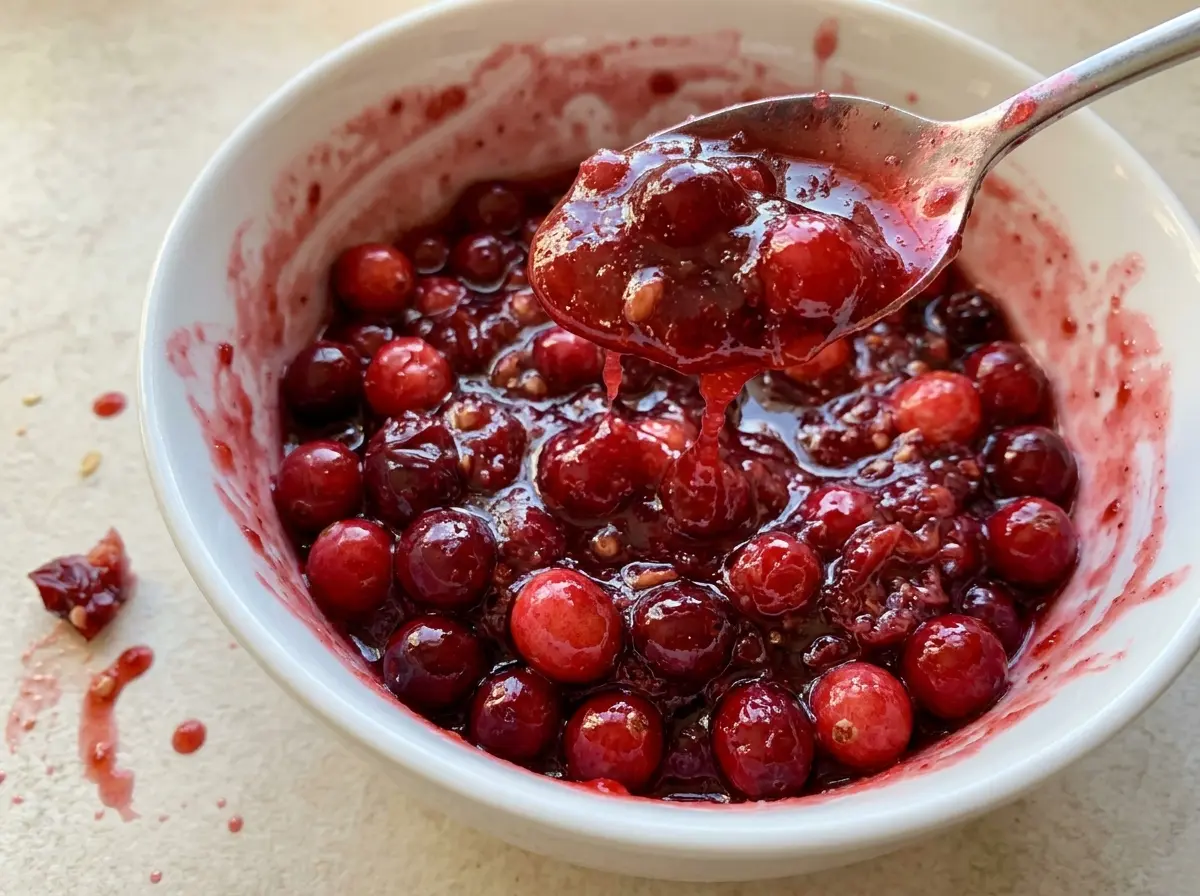
Start by stirring the sugar into the water as it heats, before the cranberries go in. That gives the berries an even syrup to cook in, rather than leaving sugar crystals caught among them. Once they’re simmering, the change is easy to see: the skins split, the berries soften, and the liquid turns glossy. After cooling, it’s thick enough to sit neatly on a spoon, with a few whole berries tucked through the sauce.
Kitchen Note
Don’t simmer until every cranberry has disappeared. The sauce is ready when most berries have burst and the liquid has begun to thicken; the remaining berries give it a little texture.
Save this 3 Ingredient Cranberry Sauce for a bright, tart-sweet side that comes together on the stovetop.
Why the Sugar Dissolves Before the Cranberries Go In
It’s easy to think the sugar can go into the pan at the same time as everything else and sort itself out as the berries cook. Giving it a head start makes the texture more dependable. Stirring the sugar into the water as it heats lets it dissolve before the cranberries begin releasing their juices, so the berries cook in a clear syrup instead of a mixture with undissolved crystals.
That order also gives you a useful visual cue: the syrup should look clear, not sandy, as you bring it to a boil. Then add the rinsed cranberries and let the simmer do its work. There’s no need to mash them as soon as they soften. Most will split on their own, and stirring occasionally is enough to keep the mixture moving without turning it into a purée.
This balance is what keeps the sauce recognizably cranberry-forward. The sugar takes the edge off the fruit’s tartness, while the berries bring enough natural pectin to give the cooled sauce body. You’re not trying to cook it down until it looks like jam in the saucepan; the final set happens after it leaves the heat.
What the Three Ingredients Bring to This Cranberry Sauce
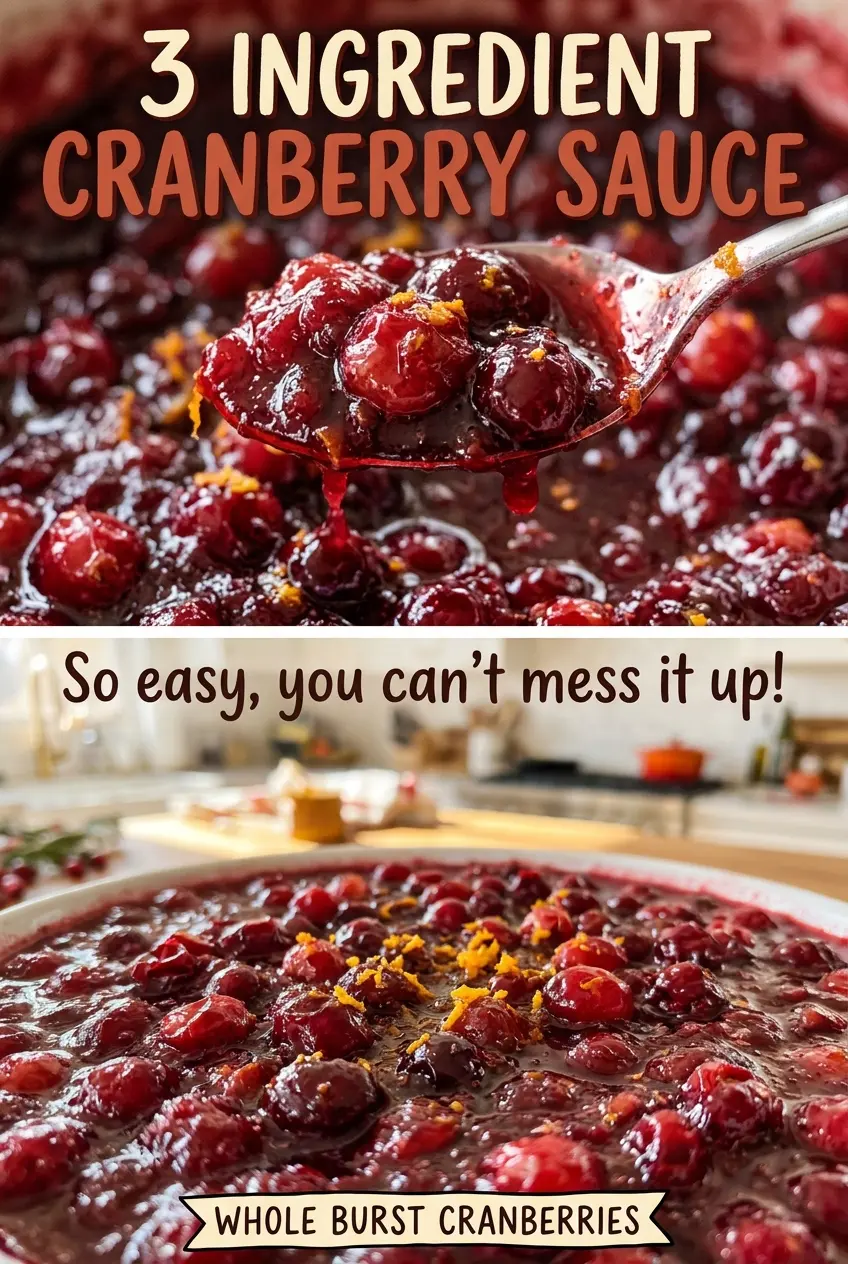
- Fresh cranberries — Choose firm berries and pick out any that are shriveled or soft before rinsing. Fresh cranberries bring the tartness and natural pectin that help the sauce thicken. Unsweetened frozen cranberries are a practical substitute; add them frozen, and judge the simmer by the berries and sauce rather than expecting the same timing.
- Granulated sugar — Regular white sugar keeps the cranberry flavor clean and the finished color bright, so there’s no need to spend extra on a specialty sugar. Light brown sugar works as a swap, but its molasses note makes the sauce warmer and less purely tart, and the color will be darker.
- Water — Plain water lets the cranberries provide the fruit flavor without adding another competing note. Orange juice can replace it in the same amount for a citrusy variation; the sauce will taste sweeter and less sharply tart. Carton juice is fine here—the berries are the ingredient where freshness matters most.
From Clear Syrup to Thick, Spoonable Sauce
Dissolve the Sugar in the Water
Combine the water and granulated sugar in a 2-quart saucepan, then bring the mixture to a boil over medium-high heat, stirring until the sugar dissolves. Watch the bottom of the pan as you stir so crystals don’t linger there. The syrup should look clear rather than cloudy with sugar granules. Keep stirring as it heats; the goal is dissolved sugar, not a long reduction.
Simmer Until Most Berries Burst
Add the cranberries and bring the mixture back to a boil. Reduce the heat to medium and simmer uncovered for 10 to 12 minutes, stirring occasionally. You’ll hear the berries pop and see their skins split; the liquid will turn glossy as the fruit softens. If the sauce still looks thin at the end of the simmer, check whether most berries have burst and whether the mixture has begun to thicken before taking it off the heat.
Let the Sauce Set as It Cools
Remove the saucepan from the heat and leave the sauce to cool for at least 30 minutes. It will thicken further as it cools, so don’t judge its final consistency while it’s still bubbling hot. The mixture should settle into a spoonable sauce, with soft berries visible through it. Stir gently once it has cooled if you want to redistribute the fruit.
Small Changes for a Different Cranberry Sauce
Add a gentle cinnamon note
Simmer a cinnamon stick with the cranberries, then remove it before the sauce cools. It adds warm spice without covering the fruit; leave it out if you want the clean, tart cranberry flavor to stay in front.
Make a smooth cranberry sauce
For a silky finish instead of a berry-studded one, press the cooked sauce through a fine-mesh sieve once it has cooled enough to handle. You’ll lose the whole-berry texture, but the result spreads easily and has no cranberry skins.
Storage and Reheating
- Refrigerator: Store covered for 3 to 4 days. The sauce firms up when cold, then loosens as it warms.
- Freezer: Freeze in an airtight container for up to 2 months for best quality. Thaw it in the refrigerator before serving.
- Reheating: Warm gently in a saucepan over low heat, stirring until loosened, or microwave in short bursts and stir between them. Avoid high heat, which can make the sauce bubble and splatter before it warms evenly.
Questions That Come Up When Making Cranberry Sauce
3 Ingredient Cranberry Sauce
Ingredients
Equipment
Method
- Combine the water and sugar in a 2-quart saucepan and bring to a boil over medium-high heat, stirring until the sugar dissolves.
- Add the cranberries, return to a boil, then reduce the heat to medium and simmer uncovered for 10 to 12 minutes, stirring occasionally, until most cranberries have burst and the sauce has thickened.
- Remove the saucepan from the heat and let the sauce cool for at least 30 minutes; it will thicken further as it cools.


