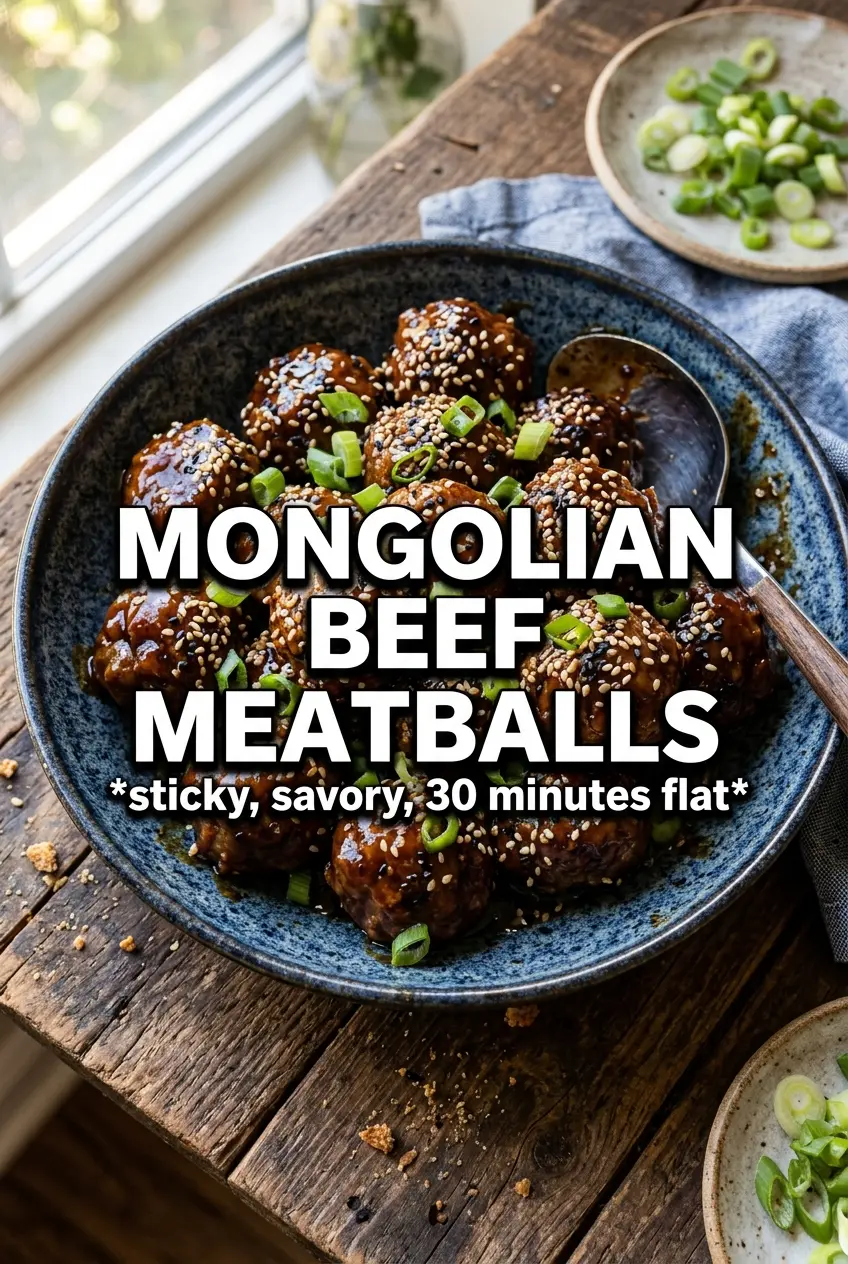
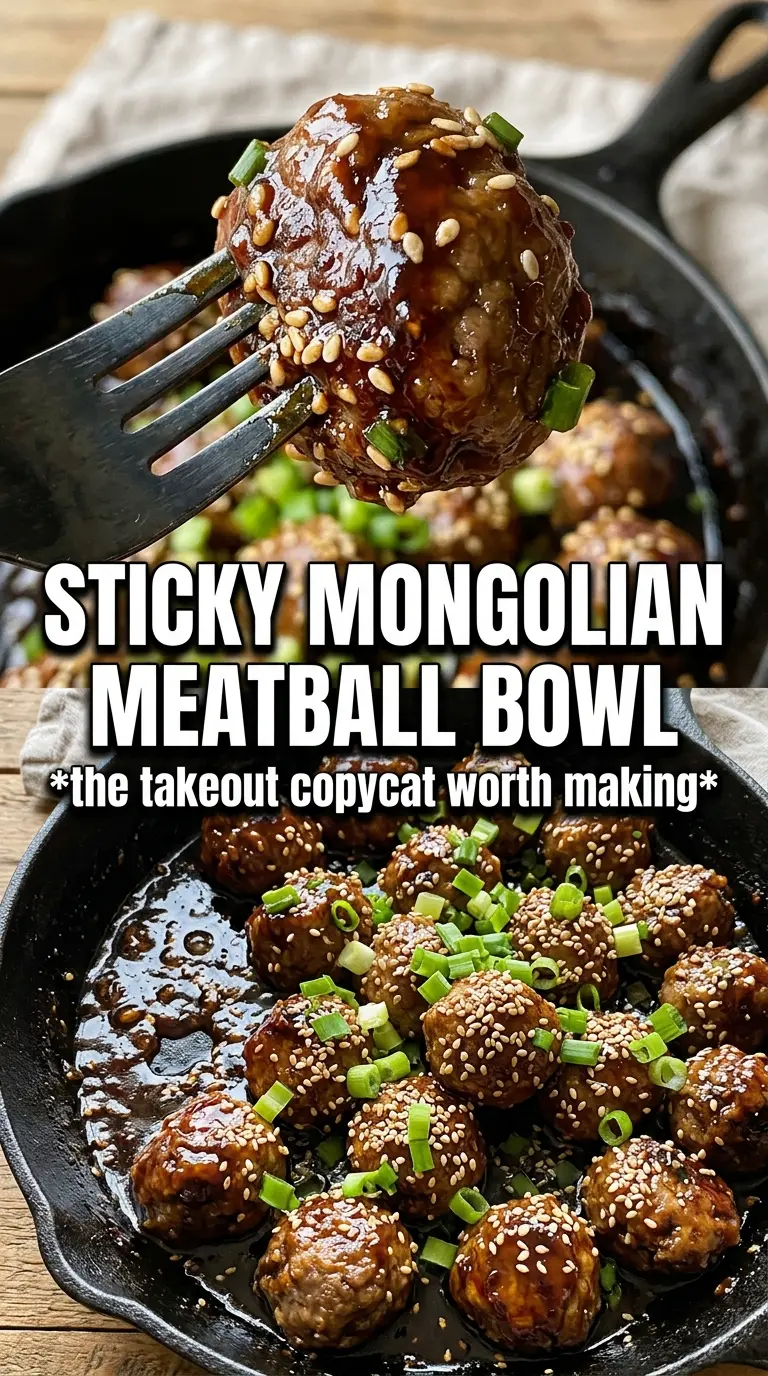
Tender beef meatballs with a sticky, glossy Mongolian glaze are the kind of dinner that disappears fast. The sauce clings instead of pooling, the edges of the meatballs pick up a little caramelization from the skillet, and the sesame seeds and green onions give each bite enough freshness to keep the whole dish from feeling heavy. It tastes like takeout, but it cooks like a weeknight shortcut you can trust.
What makes this version work is the order. The meatballs get browned first so they hold their shape, then the sauce goes into the same pan to pick up every bit of flavor left behind. Cornstarch thickens the glaze at the end, which matters here because adding it too early can leave the sauce dull or gluey before the meatballs have time to soak it up. Brown sugar and hoisin do the sweet-savory heavy lifting, while soy sauce and beef broth keep the flavor deep instead of flat.
Below, I’ll show you how to keep the meatballs tender, how to get the sauce thick and lacquered without overcooking the beef, and what to change if you need a gluten-free version or want to stretch the meal a little farther.
The sauce thickened up into that sticky glaze I was hoping for, and the meatballs stayed tender even after simmering. My husband kept sneaking them out of the pan before dinner.
Save these sticky Mongolian beef meatballs for the nights when you want a fast skillet dinner with a glossy soy-garlic glaze.
The Trick to Keeping the Meatballs Tender While the Glaze Thickens
Most meatball recipes fall apart in one of two ways: they turn dense from too much mixing, or they dry out while the sauce reduces. This version avoids both by keeping the beef mixture just combined and finishing the meatballs in the sauce for only a short simmer. You want browned exteriors and a tender center, not a long braise that turns everything tight.
The skillet does double duty here. First it builds color on the meatballs, then it becomes the base for the sauce. That means the glaze picks up the browned bits left in the pan, which gives the finished dish deeper flavor without extra steps or extra dishes. The final simmer should be active but not aggressive; if it boils hard, the sauce can tighten before the meatballs have time to absorb it.
What Each Ingredient Is Actually Doing in This Dish
- Ground beef — An 80/20 blend gives you enough fat for juicy meatballs and better browning. Leaner beef works, but the texture gets drier and the glaze has less richness to cling to.
- Panko breadcrumbs — These keep the meatballs light instead of compact. Regular breadcrumbs work in a pinch, but panko gives a looser, more tender bite.
- Egg — This is the binder that helps the meatballs stay together during searing and simmering. Don’t add a second egg unless you increase the beef, or the texture can turn a little bouncy.
- Soy sauce — It seasons both the meatballs and the glaze, so the salt lands in layers instead of all at once. Use low-sodium if that’s what you keep on hand; it won’t hurt the dish.
- Hoisin, brown sugar, and sesame oil — These are the backbone of the sauce. Hoisin adds body, brown sugar gives the sticky finish, and sesame oil brings the nutty note that makes the glaze taste finished.
- Cornstarch — This is what turns the sauce from thin and glossy to spoon-coating. Whisk it in completely before the sauce hits the pan so it thickens evenly.
- Ginger and garlic — Fresh is worth it here because the sauce is short-cooked and there’s nowhere to hide flat flavor. Jarred garlic and ginger will work, but the dish tastes brighter with fresh aromatics.
How to Build the Glaze Without Overcooking the Meatballs
Mixing the Meatball Base
Combine the beef, panko, egg, garlic, ginger, soy sauce, salt, and pepper just until everything is distributed. The mixture should look cohesive but not pasty. If you keep working it, the meatballs turn dense and springy instead of tender. Roll them into even 1.5-inch balls so they brown at the same rate.
Searing for Color
Heat the oil until it shimmers, then add the meatballs in batches without crowding the pan. You’re looking for a deep brown crust on multiple sides, not a full cook-through at this stage. If the pan is too crowded, they steam and you lose the caramelized edges that make the glaze taste richer. Use tongs to turn them gently so they keep their shape.
Turning the Sauce Into a Lacquer
Whisk the Mongolian sauce ingredients together before they go into the skillet so the cornstarch is fully dissolved. Pour it around and over the meatballs, then let it bubble for 4 to 5 minutes, turning the meatballs as the sauce thickens. The sauce should go from thin and foamy to shiny and syrupy, coating the back of a spoon. If it gets too thick before the meatballs are heated through, splash in a tablespoon or two of broth.
Finishing with the Garnish
Take the pan off the heat as soon as the glaze clings to each meatball. That keeps the sauce glossy and prevents the sugar from pushing into a hard, sticky candy stage. Shower the top with green onions and sesame seeds right before serving so the contrast stays sharp.
How to Adapt These Meatballs for Different Pans, Diets, and Leftovers
Gluten-Free Version
Swap the panko for gluten-free breadcrumbs and use tamari in place of soy sauce. Keep the rest of the method the same. The sauce still thickens well, and the finished dish stays sticky and glossy without the wheat.
Less Sweet, More Savory
Cut the brown sugar back by 1 tablespoon if you want a sharper soy-garlic profile. The sauce will still coat the meatballs, but it won’t be quite as sticky or glossy. I like this version over rice when I’m serving it with a simple vegetable on the side.
Ground Turkey or Chicken
You can use ground turkey or chicken, but add a tablespoon of oil to the meat mixture or the meatballs can turn dry. Handle them gently and stop cooking as soon as the sauce thickens, because lean poultry tightens faster than beef.
Storage and Reheating
- Refrigerator: Store leftovers in an airtight container for up to 4 days. The sauce will thicken as it chills, which is normal.
- Freezer: These freeze well. Cool completely, then freeze the meatballs and sauce together for up to 2 months in a sealed container or freezer bag.
- Reheating: Reheat gently in a skillet over low heat with a splash of broth or water. The common mistake is blasting them in a hot pan or microwave, which dries out the beef and makes the glaze seize up.