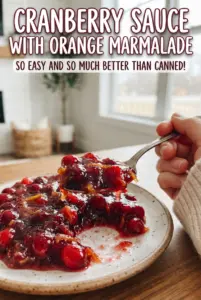
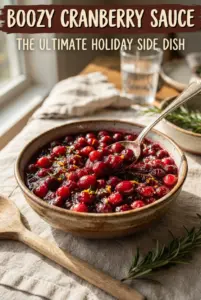
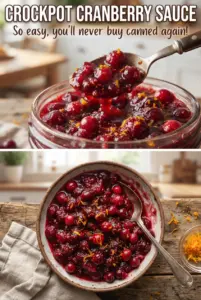
Chunky cranberry sauce with orange and pecans has a way of stealing the spotlight from the rest of the table. This version cooks down into a glossy, spoonable sauce with a bright citrus edge, warm spice, and just enough texture to feel homemade instead of poured from a can. The toasted pecans go in at the end, so every bite keeps that little crunch.
The balance here matters. Fresh cranberries bring the tartness, but the mix of granulated sugar and brown sugar gives the sauce a deeper, rounder sweetness that doesn’t taste flat. Orange juice does double duty: it loosens the sauce as it cooks and gives the berries a citrus backbone that keeps the whole thing lively. The cinnamon and ginger stay in the background, which is exactly where they should be.
Below you’ll find the small details that make this one work every time, including when to stir in the zest and why the pecans belong at the very end. There are also a few easy ways to adjust the texture if you like your cranberry sauce looser or thicker.
The sauce thickened up beautifully as it cooled, and the orange zest at the end kept it bright instead of syrupy. I served it with roasted turkey and ended up spooning the leftovers over toast the next morning.
Love this cranberry sauce’s bright orange flavor and crunchy pecans? Save it to Pinterest for Thanksgiving, Christmas dinner, or any meal that needs a make-ahead side with a little sparkle.
The Trick to Keeping Cranberry Sauce Glossy Instead of Jammy
The biggest mistake with cranberry sauce is cooking it until it looks thick in the pan. It always thickens more as it cools, and if you push it too far on the stove, you end up with something sticky and stiff instead of spoonable. The berries should burst and the liquid should look slightly loose when you turn off the heat.
Orange juice helps here because it gives you enough liquid for the cranberries to cook without scorching, but it also brings natural acidity that keeps the sauce from tasting heavy. The final texture should be chunky with some berries collapsed and others still holding their shape. That mix is what makes it feel fresh.
- Fresh cranberries — Frozen cranberries work too; use them straight from the freezer and expect the sauce to take a few extra minutes to simmer down.
- Brown sugar — This adds a mellow, caramel note that granulated sugar can’t fully replace. If you only have white sugar, the sauce will still work, but it will taste sharper and a little less rounded.
- Orange zest — Stir it in after the pan comes off the heat so the oils stay bright. If you add it too early, the flavor gets muted.
- Pecans — Toast them first. Untoasted nuts taste flat here, and if you stir them in too early, they lose the crunch that makes this version worth serving.
What Each Ingredient Is Actually Doing in This Sauce
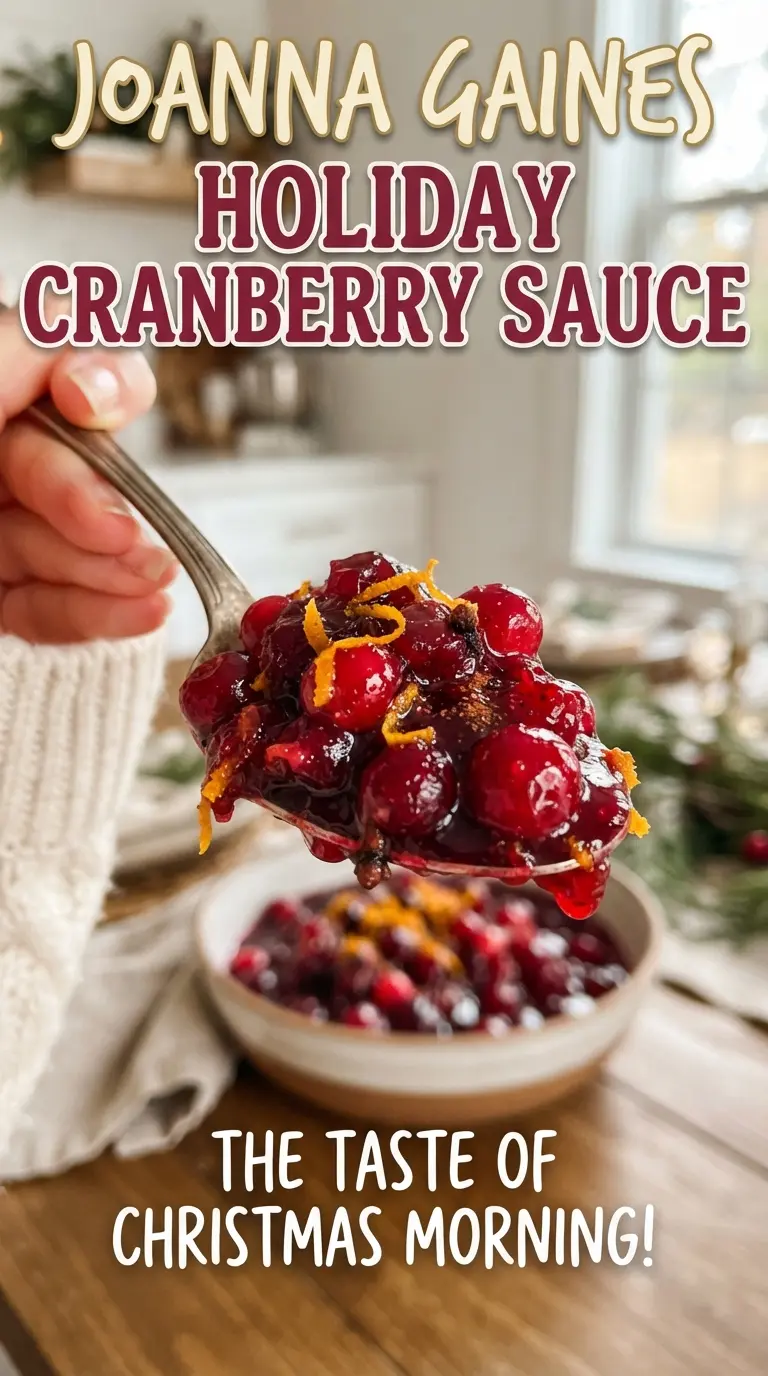
- Fresh cranberries — These are the structure of the sauce. Their pectin is what helps the mixture set as it cools, so you get that thick, glossy finish without needing cornstarch.
- Orange juice and zest — Juice cooks with the berries and softens the tart edge, while zest gives the final sauce a clean citrus pop. Bottled juice works in a pinch, but fresh orange juice tastes brighter and keeps the sauce from leaning too sweet.
- Granulated sugar and brown sugar — The two sugars work together. Granulated sugar sweetens cleanly, while brown sugar brings depth and a little molasses warmth that plays nicely with the spice.
- Cinnamon and ginger — These should support the cranberry, not compete with it. If you want a softer spice note, cut both in half; if you want a more pronounced holiday profile, add just a pinch more cinnamon rather than piling on ginger.
- Toasted pecans — Stir them in at the end so they stay crunchy and give the sauce contrast. If you need a nut-free version, leave them out entirely rather than swapping in soft mix-ins that disappear into the sauce.
How to Cook It So the Berries Burst at the Right Time
Start with the Syrup Base
Combine the orange juice, both sugars, cinnamon, ginger, and salt in the saucepan first and bring that mixture to a boil before the cranberries go in. That gives the sugar time to dissolve fully, which keeps the finished sauce smooth instead of grainy. If the heat is too low here, the sugar can sit at the bottom and cook unevenly.
Let the Cranberries Split on Their Own
Add the cranberries and simmer until they start popping, then keep going until most of the berries have burst and the liquid looks slightly thickened. Stir now and then, but don’t mash them hard unless you want a smoother sauce. The sauce should coat a spoon lightly; if it looks like a jam already, you’ve gone a little too far.
Finish with Zest and Crunch
Take the pan off the heat before adding the orange zest so the aroma stays sharp and fresh. Let the sauce cool, then chill it until serving; it will set more firmly as it rests. Stir in the toasted pecans just before serving so they stay crisp instead of soaking up liquid and softening.
How to Adapt This for a Different Table
Nut-Free Cranberry Sauce
Leave out the pecans entirely and serve the sauce as-is. The fruit still has plenty of body, and skipping the nuts gives you a cleaner, silkier texture that works better for anyone avoiding tree nuts.
Less Sweet, More Tart
Reduce the granulated sugar to 1/4 cup and keep the brown sugar as written. The sauce will taste sharper and more cranberry-forward, which is great if you’re serving it alongside rich meats or buttery sides.
Dairy-Free and Gluten-Free by Default
This recipe already fits both without any changes, as long as you check that your spices and nuts are processed in a gluten-free facility if cross-contact matters. It’s one of those side dishes that naturally works for a lot of tables.
Make It Chunkier or Smoother
For a chunkier sauce, stop cooking as soon as most berries have burst and a few still hold their shape. For a smoother sauce, mash it gently with the back of a spoon while it’s still hot, but don’t puree it unless you want a texture closer to jelly than sauce.
Storage and Reheating
- Refrigerator: Store in an airtight container for up to 1 week. It thickens as it chills, so don’t judge the final texture while it’s still warm.
- Freezer: It freezes well for up to 2 months. Freeze without the pecans if you can, then stir in fresh toasted nuts after thawing for the best crunch.
- Reheating: Warm it gently on the stove over low heat or let it sit at room temperature until softened. High heat isn’t needed and can make the sauce turn overly loose before it re-thickens.
Answers to the Questions Worth Asking
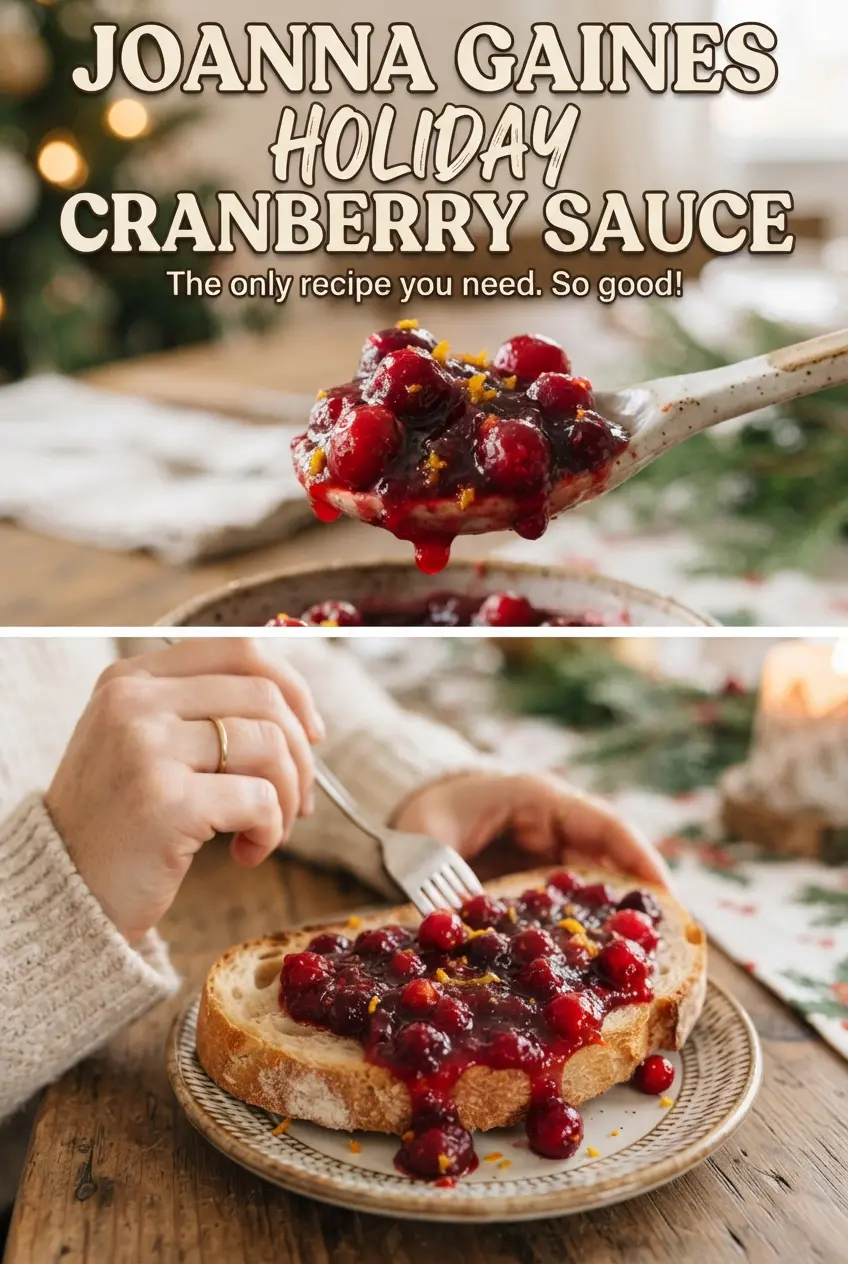
Joanna Gaines Holiday Cranberry Sauce
Ingredients
Equipment
Method
- Combine the sugar, brown sugar, orange juice, ground cinnamon, ground ginger, and salt in a saucepan and heat over medium-high until boiling, about 2-4 minutes (start to boil cue: rapid bubbling across the surface).
- Add the fresh cranberries, then reduce to a steady simmer and cook until the berries burst and the sauce thickens, 10-12 minutes (visual cue: skins split and the mixture looks glossy and spoon-coating).
- Remove from heat and stir in the orange zest until evenly distributed (cue: bright orange flecks throughout).
- Cool the sauce to room temperature, then chill until serving (cue: thicker texture after chilling).
- Stir in the toasted pecans just before serving to keep them crunchy (cue: nuts suspended on top and throughout the sauce).