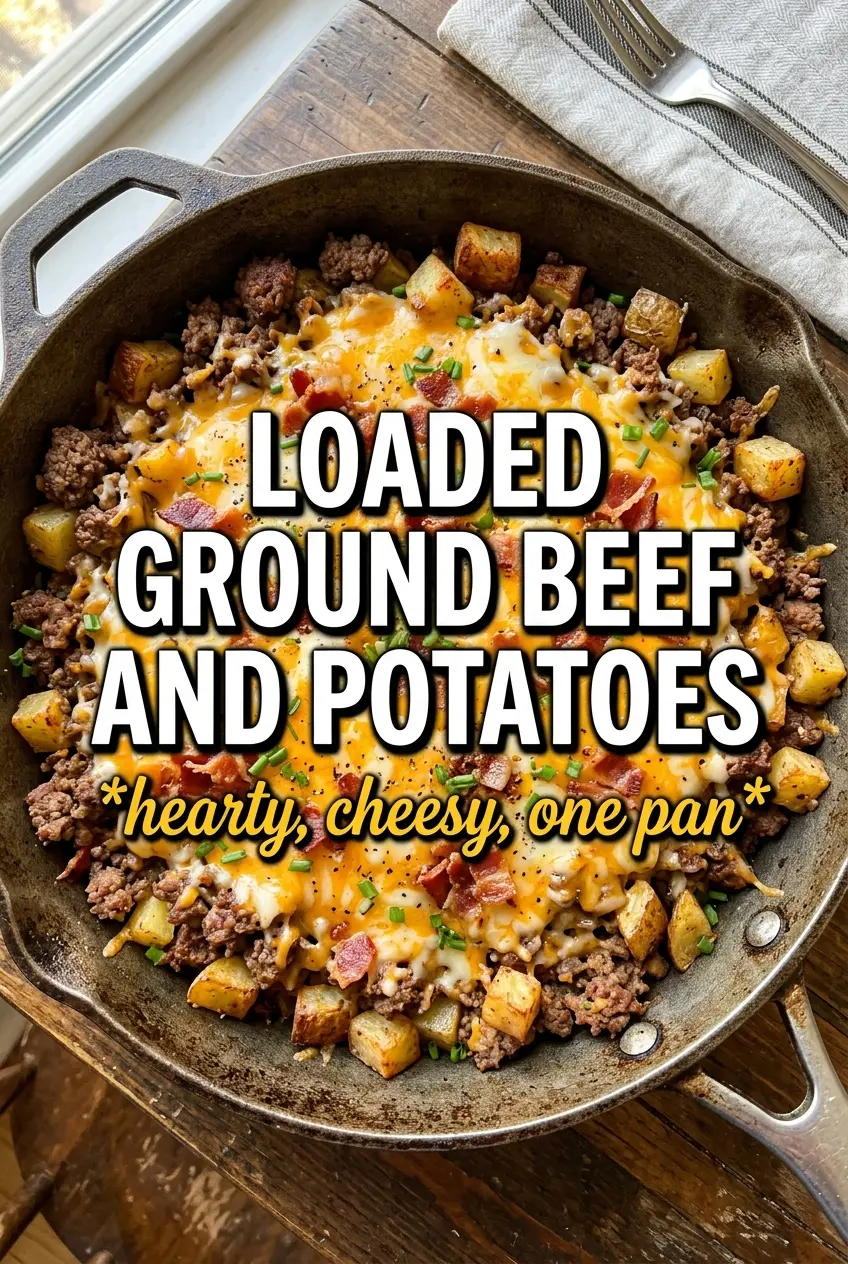
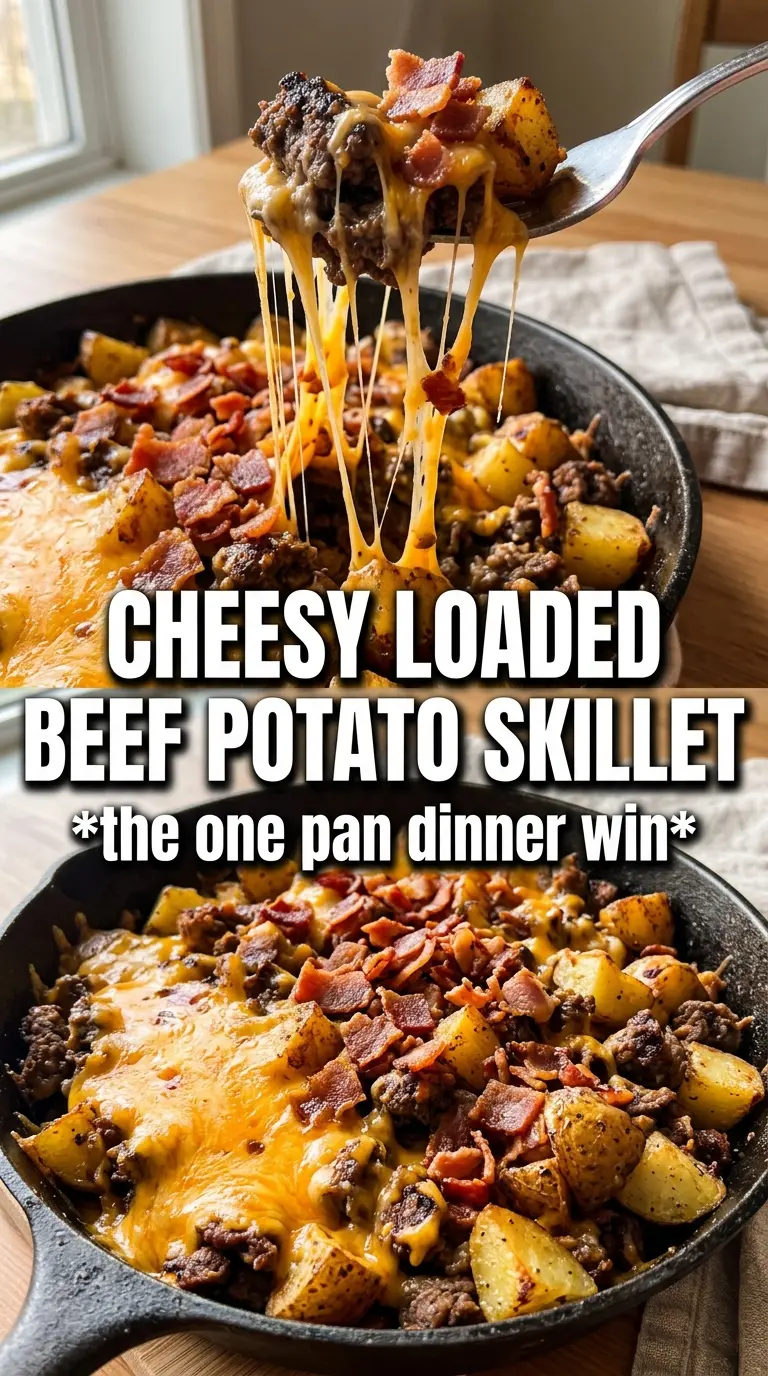
Crispy potatoes, browned ground beef, and melted cheddar make this skillet dinner feel like a full meal without turning dinner into a project. The potatoes are the part that make it memorable: when they’re cut small enough and left alone long enough in the hot pan, they pick up a deep golden crust before the beef even goes in. That gives you texture in every bite instead of a soft, mixed-together hash.
This version works because the potatoes get a head start in the skillet, and the beef is added only after they’ve already begun to crisp. A lot of one-pan dinners go soggy when everything starts at once, but here the pan stays hot and the ingredients are layered in a way that protects that crust. The cheddar melts right over the top at the end, so you still get those sharp, loaded-potato flavors without overcooking the vegetables.
Below, I’ll walk through the part that matters most: how to get the potatoes browned before they stick, how to keep the beef savory instead of greasy, and what to change if you want to stretch this into a bigger meal or adapt it for what’s already in your fridge.
The potatoes got those crispy edges I never seem to get in skillet meals, and the cheddar melted right into the beef instead of just sitting on top. I followed the timing exactly and it came out perfect.
Like this loaded beef and potatoes skillet? Save it to Pinterest for the nights when you want crispy potatoes, cheesy beef, and one pan to wash.
The Potato Sear That Keeps This Skillet From Turning Soft
The biggest difference between a good skillet dinner and a bland one is whether the potatoes actually brown before the pan gets crowded. If you dump in the beef too early, the potatoes steam in the fat and lose the crisp edges that make this dish worth making. Here, the potatoes get uninterrupted time in the hot oil first, and that’s what gives the finished skillet its texture.
Cast iron helps because it holds heat when the cold potatoes hit the pan, but the real trick is keeping the cubes close to the same size. Small, even pieces cook through fast enough to brown before they fall apart. If they’re too large, you’ll get a dark outside and a hard center, which is why 1/2-inch cubes are the sweet spot here.
- Yukon gold potatoes — They hold their shape and give you a creamy center under the crisp crust. Russets will work, but they’re drier and more likely to break down into a softer hash.
- Ground beef — Use regular or lean ground beef. If yours is extra fatty, drain it after browning so the final dish doesn’t taste greasy.
- Sharp cheddar — This matters. Mild cheddar melts fine, but sharp cheddar gives the loaded-potato flavor you actually notice once the sour cream goes on top.
- Sour cream, green onions, and bacon crumbles — These are the finish, not filler. The cool sour cream cuts the richness, the onions add sharpness, and the bacon brings salt and crunch.
What Each Ingredient Is Actually Doing in This Recipe
- Primary ingredient (the star) — Quality matters most. Choose the best you can find.
- Cooking medium (oil, butter, or broth) — This carries flavors and prevents dryness.
- Seasonings (salt, pepper, spices, herbs) — Layer flavors so nothing overpowers. Build depth gradually.
- Aromatics (garlic, onion, herbs) — Cook with fat to bloom flavors. Become the foundation.
- Supporting ingredients — Complement the main ingredient without overpowering it.
- Sauce or liquid (if applicable) — Brings flavors together. Balance richness with acid.
- Acid (lemon, vinegar, wine, or other) — Brightens and prevents flat-tasting results.
- Final finish (garnish, glaze, or sauce) — Prevents one-dimensional taste and adds visual appeal.
Building the Skillet in the Right Order
Getting the Potatoes Golden First
Heat the oil until it shimmers, then add the potatoes in a single layer if you can. Stir them only occasionally so the bottoms have time to color; constant stirring keeps them pale. Seasoning them while they cook helps the salt pull out a little surface moisture, which speeds up browning instead of slowing it down. If the pan starts looking dry before the potatoes are tender, add just a touch more oil rather than lowering the heat too soon.
Browning the Beef Without Boiling It
Push the potatoes to one side and add the beef with the onion in the open space. Let the meat sit for a minute before breaking it up so it can get some color instead of steaming immediately. Once it’s browned, drain off excess fat if needed, especially if the pan looks glossy or pooled. That step keeps the final dish hearty, not heavy.
Finishing With the Cheese Melt
Add the bell pepper, garlic, and garlic powder and cook just until the pepper softens and the garlic smells fragrant. If the garlic goes in too early, it can scorch in the hot pan and turn bitter, so it belongs near the end. Once everything is mixed, scatter the cheddar over the top, cover the skillet, and let the steam underneath melt it in about 2 minutes. Stop there; if you keep heating it after the cheese melts, the potatoes soften and lose that crisp edge.
Make It Spicier
Add a pinch of cayenne with the paprika or stir in diced jalapeño with the bell pepper. That gives the skillet more bite without changing the basic texture. Hot sauce at the table works too, but adding heat in the pan gives the beef a deeper, more even seasoning.
Make It Dairy-Free
Skip the cheddar and sour cream, then finish with sliced green onions and extra bacon for richness. You’ll lose the classic loaded-potato finish, but the skillet still has a strong savory base from the beef, potatoes, and smoked paprika. If you want a creamy topping, use a dairy-free sour cream alternative that can handle heat better than a thin cashew sauce.
Turn It Into a Vegetarian Skillet
Swap the beef for chopped mushrooms or plant-based crumbles and keep the same onion, garlic, and paprika seasoning. Mushrooms bring a meaty texture, but they release more moisture, so let them cook until that moisture cooks off before adding the cheese. The finished dish will taste lighter, but it still eats like a full meal.
Storage and Reheating
- Refrigerator: Store leftovers in an airtight container for up to 4 days. The potatoes will soften a bit, but the flavor holds up well.
- Freezer: Freezes reasonably well for up to 2 months, though the potato texture turns softer after thawing. Freeze in portions so you can reheat only what you need.
- Reheating: Warm it in a skillet over medium heat with a small splash of water and a lid for a minute or two, then uncover it to let the potatoes re-crisp. The common mistake is blasting it in the microwave, which melts the cheese but makes the potatoes soggy.